



by Flynn Shan Benson
Worth: $8.00
FilmInk rates movies out of $20 — the score indicates the amount we believe a ticket to the movie to be worth
Cast:
Sara Marielle Gaup Beaska, Simon Issát Marainen, Ayla Gáren Nutti, Mikkel Gaup
Intro:
… if Árru is an unsatisfying family drama, it does at least display genuine originality in its filmmaking
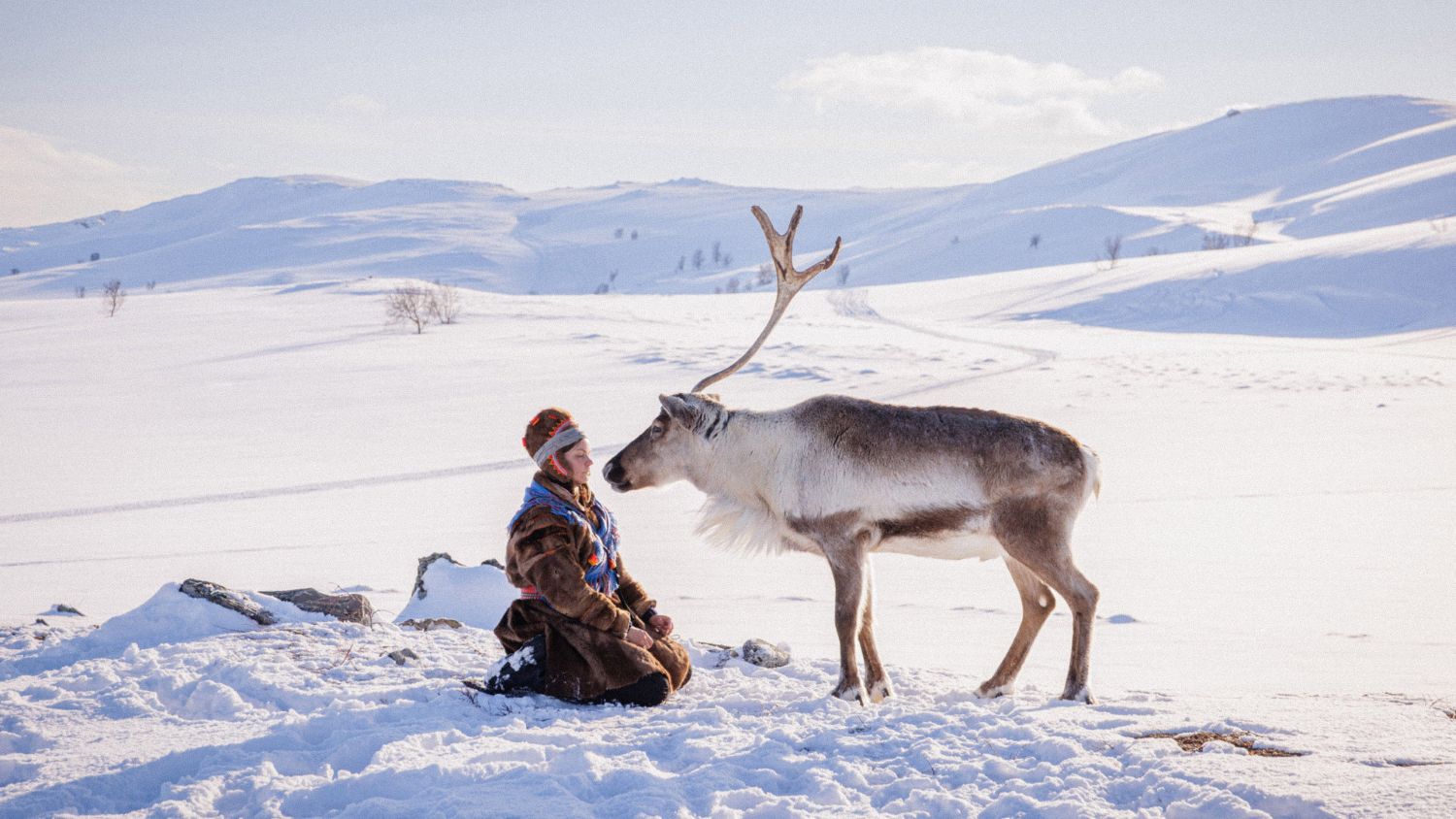
Árru, the debut feature from Norwegian Sami director Elle Sofe Sara, opens with reindeer grazing in snow-blanketed mountains; it’s a scene that could be taking place thousands of years ago, though that illusion is quickly shattered with the image of one of these animals entangled in rope. A herder then comes to its rescue, neatly setting up a film where humanity is both a threat to nature and its saviour.
We soon learn that this herder is part of a family that exists in an uneasy compromise with the comforts of the modern world, even as they maintain their traditional practice. Maia (Sara Marielle Gaup) and her brother Danel (Simon Issát Marainen) wear synthetic fleece jackets and drink beer, while Áilin (Ayla Gáren Audhild P. Nutti), the chirpy adolescent daughter who will one day inherit this land, romps around in Olivia Rodrigo t-shirts.
The immediate threat to this existence is a proposed new mine in the area, which would force the family to slaughter half their flock and lose their livelihood. In order to advocate for themselves and engage in the political process, Maia invites her brother Lemme (Mikkel Gaup) to come back home and work on the legal campaign — though his paunch and sleek black car mark him as a malign presence in the film, even before he becomes overly familiar with the teenagers of the community.
The plot then develops, through scenes that are poorly written and clumsily staged, into a moral drama about the tension between familial duties and personal conscience. Any audience would side with the family against the faceless mining corporation, but it is disappointing that there is no real consideration of the cynical transactionalism that politics entails, nor of the historical taboo of child abuse. Instead, the audience is only offered an unconvincing moral triumphalism that eschews any complexity.
Still, if Árru is an unsatisfying family drama, it does at least display genuine originality in its filmmaking: characters will periodically burst into traditional song as the emotion crests in a scene, closer to Bollywood than a traditional Western musical; the filmmakers also deserve credit simply for creating one of the first major features to depict the lives of this community. Ultimately, what leaves an impression in Árru is its attention to lives lived in a far more honest relationship to nature than modern cities allow, including scenes of husbandry, of reverence, and, in one scene that is explicit but not exploitative, of unsimulated butchering—it’s a shame that the film didn’t focus more on these lives, rather than those of the dull, unrealistic humans at the centre of its narrative.
