



by Julian Wood
Worth: $17.00
FilmInk rates movies out of $20 — the score indicates the amount we believe a ticket to the movie to be worth
Cast:
Cherien Dabis, Saleh Bakri, Adam Bakri, Mohammad Bakri
Intro:
... simple, stark even, but never simplistic.
Cherien Dabis’ long and sincere feature has been attracting praise on the festival circuit. It gets a release now at a time when the Middle East is, unfortunately, in the news all the time for all the wrong reasons.
The film is set in Palestine and takes in a long sweep of history from the time of the British Mandate and the setting up of Israel in 1947-48 to more or less the present day. That is not the immediate present though, as the story ends in 2022.
This is very much a Palestinian narrative and not an Israeli one. Dabis is a Palestinian American and, though she grounds the storytelling in humanist terms, its political edge is that the setting up of Israel as it actually happened involved a devastating sense of dispossession for the resident population. The Palestinians call that period the Nakba (the catastrophe) which tells us something about their view of it.
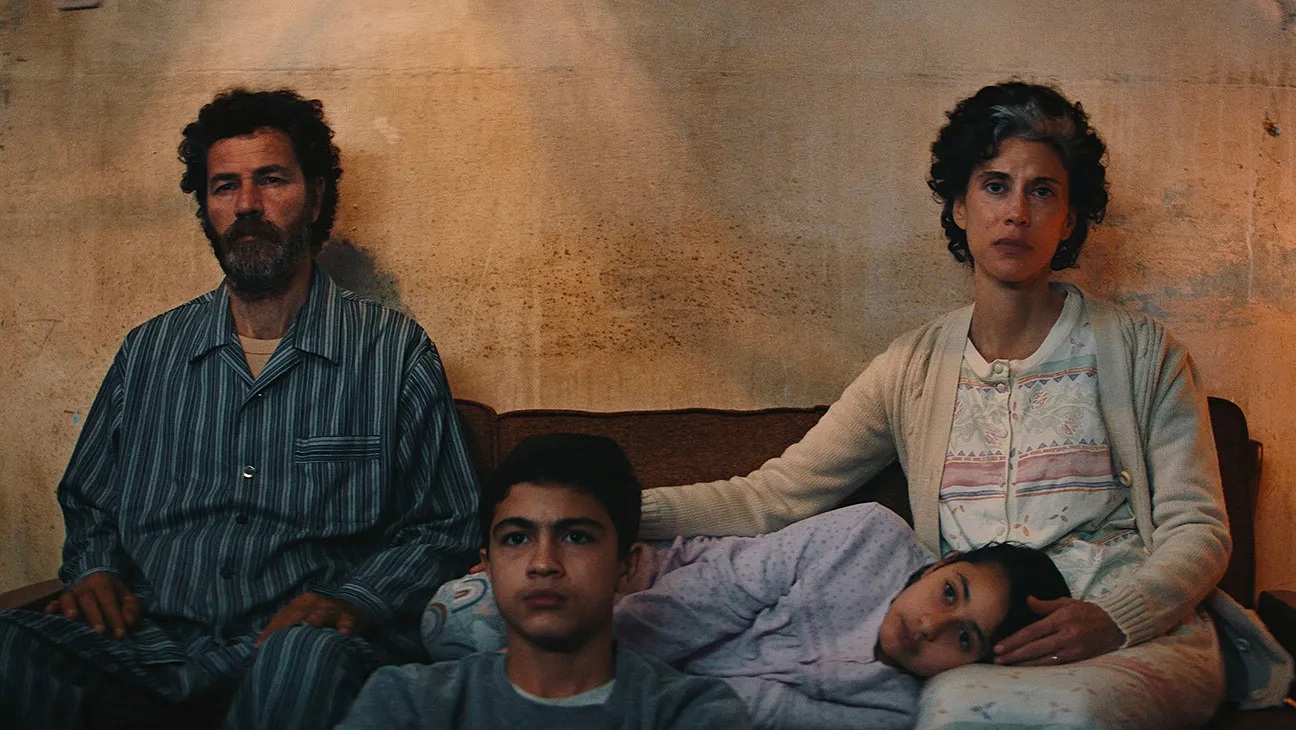
The film uses the device of showing the fortunes of one family over seventy years or so, and is divided into four chapters. Initially, we see Salim (popular Palestinian actor Saleh Bakri) and his wife Hanan (Dabis herself). The family have been growing oranges in Jaffa (as it was called then, it is now called Tel Aviv) for generations. He has title deeds to show this, but when the soldiers arrive, his bit of paper won’t save him. In this part of the film, the men of the region debate about how they should react. Some of the men have left to start a new life in America, others argue that they must fight back. However, they know (as does Salim) that this isn’t really an option in military terms. Salim and Hanan move with the kids to a different, smaller house.
In the next chapter, we see how family life unfolds for them. Salim’s father Sharif feeds his grandson Noor stories of a romantically heroic past, which breeds a kind of resentment in young Noor about what he misconstrues as his dad’s fatalism and passivity. There is a lot of pain in the scene where he calls his father a traitor.
There are many impressive aspects to the film. It is well shot and conjures up a convincing sense of period. The support acting is mostly very strong and the dialogue is believable. The leads in particular gain our full attention and sympathy.
Dabis is a creative force, combining the portrayal of Hanan with directing from her own script. She has mostly been working in America TV, directing shows such as Only Murders in the Building, which proves she can handle lighter material. Her 2008 film Amreeka explored the adjustments necessary for a Palestinian family to settle in America.
One could say that the moral debate in this film is simple, stark even, but never simplistic. Dabis is careful to show that things are complex and that there are elements of the situation that no one wants or gains from. Though her portrayal of the one significant Jewish character is not particularly sympathetic.
The other important element of the film is the long mutually-sustaining love between Hanan and Salim which, from the beginning to the very end, offers a warm human dimension to hold against the exigencies of a troubled history and region. There is a wisdom of the heart in that.
