



Cannes Indie International Film Festival winning feature created using a Blackamgic Cloud and DaVinci Resolve
Blackmagic Design announced that DaVinci Resolve Studio and Blackmagic Cloud were used in the post production of SEEK, the feature length directorial debut of Shane Kosugi. The film has won numerous awards, including Best Indie Feature and Best Color Editing, at the Cannes Indie International Film Festival one of the most prominent film festivals currently attracting attention.
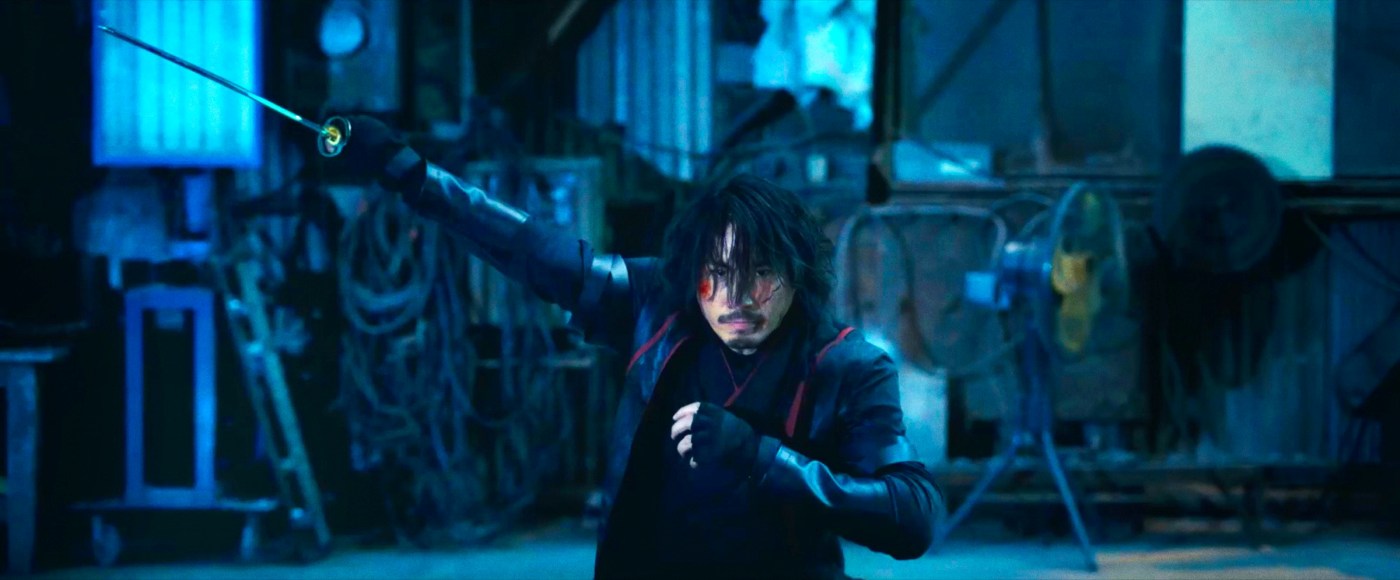
“SEEK” is an action film that follows Kyōhei Aizawa, an assassin of “SEEK,” a covert NGO spy organisation acting as modern-day ninjas, and his fellow agents as they face off against a yakuza gang attempting to take over Japan.
Regarding the project, Director Kosugi shared, “This project began when Kansuke Asano, who stars in the film, and I talked about making a ninja movie together. We produced a pilot version two years ago, and it was well received, so we were able to secure funding to create a feature film.”
The film has garnered multiple awards at the Cannes Indie International Film Festival, an international film festival held in Cannes, France. “I had amazing, experienced people supporting us this time, so I was confident the film would be well received at festivals,” said Kosugi. The project was supported by DP Yoshikatsu Yazaki, who has worked as a cinematographer in the U.S., colorist Toru Miura of Spice Co., Ltd. and editor and post production supervisor Genta Tamaki of Interceptor Inc.
“Since it was decided that grading would be done with DaVinci Resolve, we thought it would be more convenient to use the same software for editing and VFX, so I decided to use DaVinci Resolve myself for the first time,” explained Kosugi.
Tamaki elaborated, “I first synchronized the video and audio of the footage and created a project library for SEEK, which we then shared. Since the original RAW files were large, we created proxies in DaVinci Resolve and edited an initial cut. The proxy files were saved to an SSD and handed over to the director, allowing him to edit specific action scenes he was passionate about. For editing sessions with him, we worked at our studio using the DaVinci Resolve Editor Keyboard, while for solo work, I edited at home using the DaVinci Resolve Speed Editor.”
After editing, Miura accessed the shared project library to grade the footage using the DaVinci Resolve Advanced Panel. Once grading was complete, Tamaki created the DCP from the shared timeline. “Once I received the original footage, I could open the project library in my studio and work with the same timeline, which eliminated any conforming errors and ensured everything matched perfectly,” said Miura.
Regarding the look of the film, DP Yazaki commented, “I was familiar with Shane’s favourite films and tones, so I made proposals based on that. The look is closer to international films than traditional Japanese cinema. For lighting, rather than aiming for clean and even exposure, many scenes were lit to emphasise edges, often avoiding frontal lighting.”
“We wanted a dark and mysterious feel for the ninjas, so there were intentionally dark scenes where the characters’ faces were barely visible, but the mood carried the message,” added Kosugi.
Colorist Miura remarked, “The depiction of black or shadows was something Shane and Yazaki were deeply particular about, and we made meticulous adjustments. In the final battle scene, the lighting design on set was also very deliberate, with red lighting on the faces, which resulted in an excellent finish.”
The Fusion page was also used for tasks like removing unwanted elements. “In an underground parking lot scene, I used Fusion to remove a poster that had inadvertently appeared in the frame. After the timeline was finalized with grading, I made fine adjustments using Fusion,” said Tamaki.
“There’s a single take action scene that runs over five minutes, and during such long takes, things that shouldn’t be in the frame can sometimes appear. However, I wanted to prioritise realism by shooting the action scene in one continuous take without stopping the camera. While filming, I made on the spot decisions about elements that could be removed with Fusion, allowing us to capture a fully immersive action scene,” said Kosugi.
About Blackmagic Design
Blackmagic Design creates the world’s highest quality video editing products, digital film cameras, colour correctors, video converters, video monitoring, routers, live production switchers, disk recorders, waveform monitors and real time film scanners for the feature film, post production and television broadcast industries. Blackmagic Design’s DeckLink capture cards launched a revolution in quality and affordability in post production, while the company’s Emmy™ award winning DaVinci colour correction products have dominated the television and film industry since 1984. Blackmagic Design continues ground breaking innovations including 6G-SDI and 12G-SDI products and stereoscopic 3D and Ultra HD workflows. Founded by world leading post production editors and engineers, Blackmagic Design has offices in the USA, UK, Japan, Singapore and Australia. For more information, please go to www.blackmagicdesign.com/au.
