


by Damien Spiccia
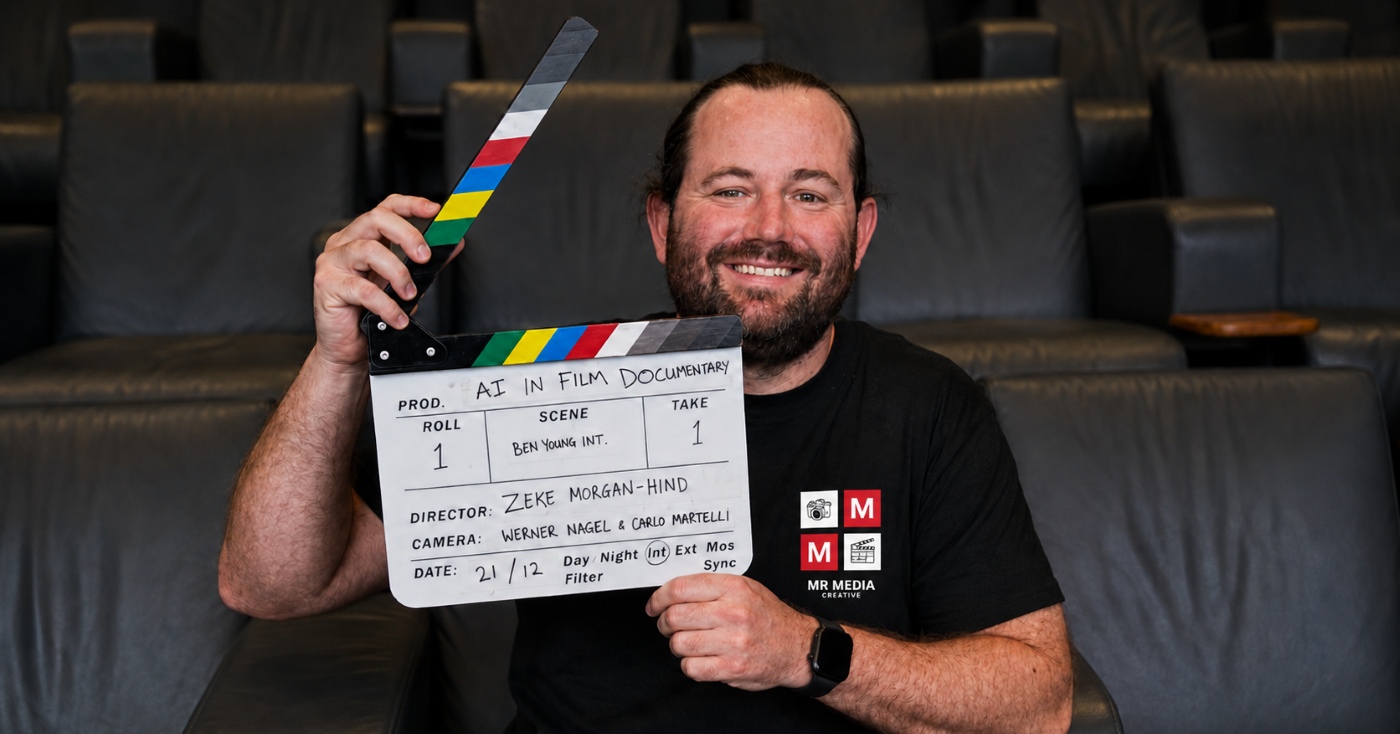
With the use of Artificial Intelligence dividing filmmakers and film lovers around the world, Western Australian filmmaker Zeke Morgan-Hind attacked the argument head on with his thought-provoking documentary, Prompt: Make a Documentary.
When you told people you were making a documentary about how AI is being absorbed into filmmaking practice, what were some of the reactions you got?
“I’m a high school media teacher, so education is always at the cornerstone of everything I go out and make, so when I was thinking about this topic, I wanted to analyse it at the industry level, but also at that tertiary and then secondary education level. When I broached the idea for different people, there was definitely a mixture of responses. Some were curious and wanted to explore the space, others had very polarising opinions about AI in art and creativity. The important thing was not to create a documentary that sensationalised either side of the debate, but to present everything as it is and create a conversation around the film, so that when people see the film, they can develop their own opinions.”
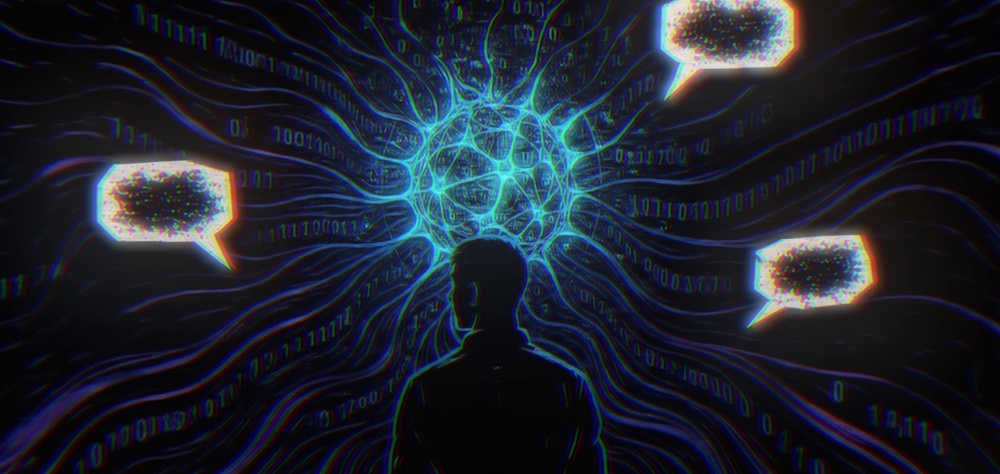
You do use AI quite a bit in the documentary itself with visualisations and storyboards. Was that a budgetary choice or a conscious decision?
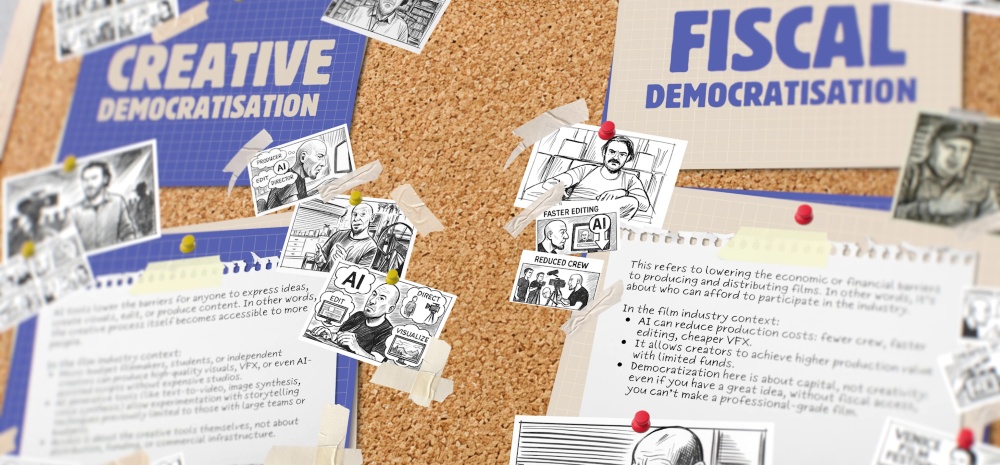
“It is a micro-budget film made without any backing, so it illustrates the point about fiscal democratisation – if I don’t have access to these tools, how do I bridge that gap? But there was also an active choice to include it, because I think if you need to understand a topic, you need to illustrate what it can actually do. The point of the film is to educate and to illustrate the impact, and you can’t do that by simply having people talk about it. I’d also add that people are still very much involved. We had someone compose the soundtrack, there were multiple cinematographers, and all the visualisations are a mixture of human creativity and AI.”
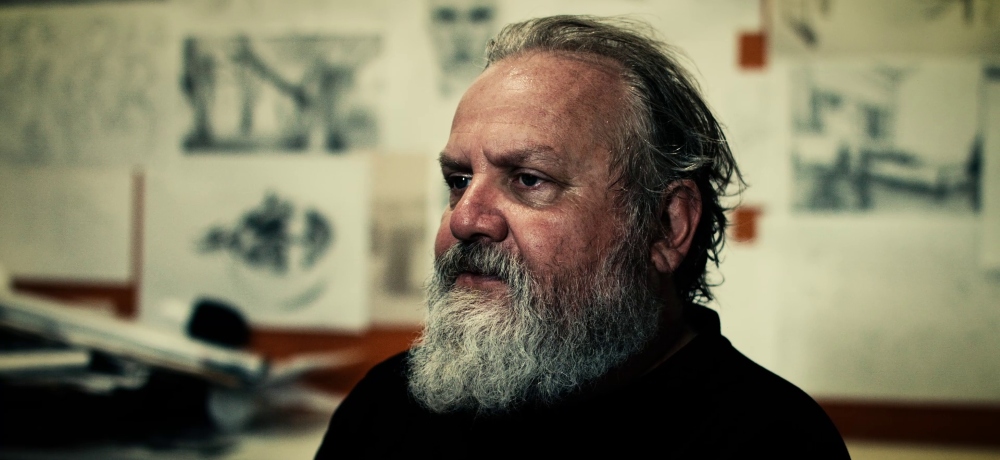
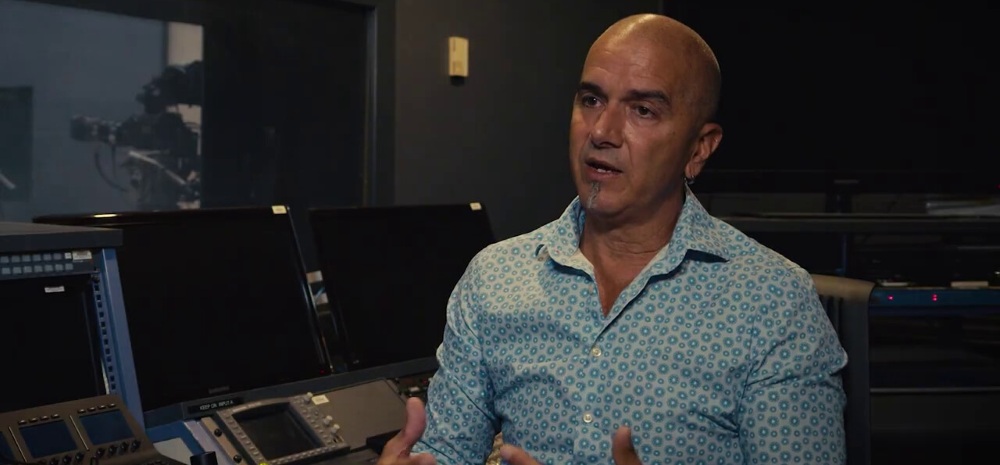
Let’s talk about the people you talk to. Glen Stasiuk [above] offers a passionate, dissenting voice. He talks about AI blackface, as he calls it. Can you tell us more about that and the problems it raises?
“What AI does is scrape and collect data, mediate it, and then marginalise it. Cultural compression in an Australian Indigenous context means all this data gets compressed and the results become a homogenate that’s completely wrong — there’s no anthropological connection to culture, no human characteristic. We do an experiment in the documentary to illustrate how quickly this happens. Dr. John McMullen [below] basically shows the problem of this cultural flattening, as they’ve coined it, where people take the easy way out and they’ll use Copilot or ChatGPT to produce an image that is derived of other people’s actual cultural works, but it gets compressed into something that’s got no cultural legacy to it. Glen illustrates the point perfectly, particularly because as an Indigenous filmmaker he knows his work is likely being scraped, and you really get to see the impact that has on an artist from a personal level.”
You’ve probably come across [AI-generated ‘actor’] Tilly Norwood. Do you think an actor’s performance can be simply prompted into existence? There seems to be an overwhelming arrogance in assuming filmmakers can replace what actors bring — the lived experience, the surprises and things you don’t expect.
“I think a big ethos of myself personally is – it is all about art as a human experience. I think AI is just a tool. [Producer] Kate [Separovich] explains it with the idea of how different types of foods refer to different types of media and content. There’ll be a space for AI, but when it comes to authentic human experiences in cinema and premium television, that will always be human driven, even as the technology improves, and it has shifted seismically even in the eighteen months since we started shooting. I think AI performance will find its place in short-form content and advertising. You’re already seeing the disclaimers on YouTube ads. But there’s nothing more empowering than being part of a team of humans making something together. I think that will always be the cornerstone that most of us will come back to, because the humanity in filmmaking is what makes film art.”
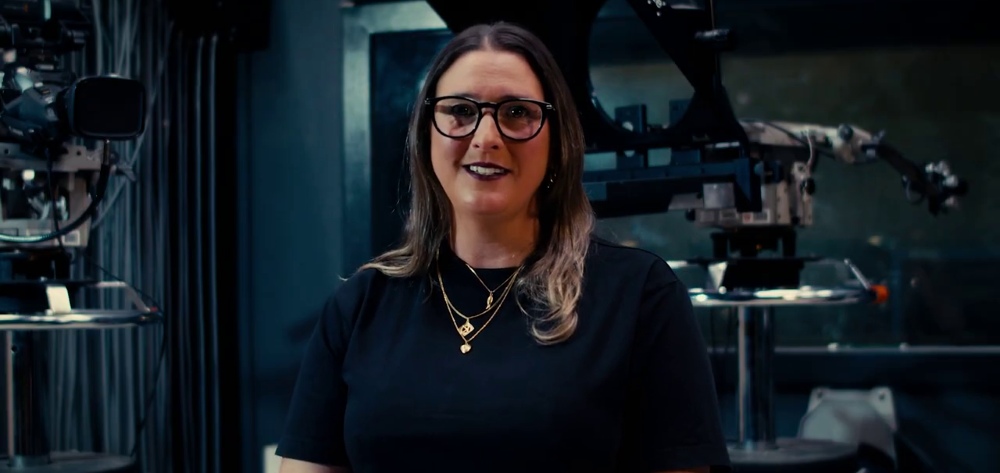
Kate also raises the survival question — if machines are doing our jobs, how do people live? As you know, that’s something that people in the industry are rightly concerned about. Who actually benefits from this, and is it filmmakers?
“It’s a multi-layered topic. Technology has dramatically changed filmmaking since the early 1900s. The arrival of sound in the 1920s rapidly changed the way actors performed, some lost their jobs because they were pantomime-based rather than voice-trained, and obviously that goes on and on, and then we move from film to digital, and suddenly other jobs have shifted and changed, and then non-linear editing comes in in the mid ‘80s, early ‘90s, and that’s a whole other aspect too. So, AI is now this next real major disruption that will definitely impact the immediate, and we already see it. Film festivals are having to either draw a line through any AI-generated content in their festival, or they are actively embracing it. As an educator, and you can attest to this, the way we teach has had to rapidly change in the last five years. AI has actually brought back the importance of kinesthetic learning, the ability to physically do things with your hands. In terms of who benefits, there’s definitely a percentage of filmmakers who never would have had a voice because they couldn’t navigate the system, and AI helps them facilitate that creative vision. At the same time, there are going to be people that just because a film uses artificial intelligence, they’re not going to engage with that particular piece, because of their values and attitudes, and there’s nothing wrong with that. One of the things I really look forward to when this film screens at festivals is chatting to people afterwards. Whether they’re an established filmmaker, an emerging filmmaker, or just a curious audience member, I want people to come, get into a space, and talk about it. I made a joke that if everyone’s in the same screening it could get ugly, because there are a lot of people with very different opinions.”
That spread of opinions is ideal, though, isn’t it?
“Absolutely. Everyone has a voice and the right to express it, and responding to anything with absolutism doesn’t achieve anything. That’s the big thing. Let’s all listen to where we think this is going to go. We all need to decide collectively where this sits in our world, and in the much bigger picture, where it sits in society.”
Prompt: Make a Documentary screens on 19 July as part of the Revelation Perth International Film Festival, click here for more information.
