


by Stephen Vagg
Peter Bogdanovich was 82 years old when he died, so it shouldn’t seem such a shock that he’s gone, but yet it does, because he always seemed to be around. In cinephile circles, that is, where I (sometimes) live… and I think pretty much every cinephile in the world knew Peter Bogdanovich well, or at least felt as though they knew him, so we’re going to feel his death with an acute sense of loss. I know I am.
I never met him personally. I came close – well, close-ish: I once attended a screening of Cheyenne Autumn at the New Beverly in Los Angeles (they were holding a Sal Mineo Festival, and if you love that concept as I do, then hello, fellow cinephile) just because it was going to be introduced by Bogdanovich. I secretly hoped to be able to talk to him somehow, and even had some rough patter figured out: I’d written a biography of Rod Taylor who had kind of made a film with John Ford (Young Cassidy, on which Ford collapsed two weeks into shooting and had to be replaced by Jack Cardiff) and thought Bogdanovich might be interested in some things I knew about the film.
He arrived at the cinema and sat in the aisle just across from me; I was going to head over and say hi but this other fan plunked himself down next to Bogdanovich and would not stop talking. I went to the bathroom and then Bogdanovich came in… but the New Beverly men’s room isn’t exactly spacious, and it felt rude to start up a chat so I never did get to regale him with my Young Cassidy material. And now I never will, which makes me feel irrationally sad.
Or is it irrational? Because, like most cinephiles, I know a lot about the life and career of Peter Bogdanovich.
Is there a film director whose biography is more famous? Amongst cinephiles at least?
Generally, directors produce just the one or two legends – Fritz Lang responding to a job offer from Goebbels by getting the next train out of town, Ernst Lubitsch dying of a heart attack in bed with a prostitute, Michael Reeves dying young, Steven Spielberg squatting in an office at Universal Studios, Quentin Tarantino working for five years in a video store etc, etc. But Bogdanovich’s life consisted of several mythic tales: the journey from critic to film directing superstar via Roger Corman and BBS, the saga of how he made Targets (Corman gave him a two-day Boris Karloff commitment, some footage from The Terror, and said “go make a movie”), the love shenanigans on The Last Picture Show (having an affair with leading lady Cybill Shepherd while wife Polly Platt was working on the film), the three-hits-then-three-flops arc of the 1970s, the whole Polly Platt saga (she is perhaps the most legendary “first wife who you shouldn’t have left” in Hollywood history), the relationship with Orson Welles (from admirer to biographer to interviewer to protege to cast member to muse to landlord and producer to enemy to friend to biographer again), the making of Saint Jack (giving Singapore authorities an entirely different script, Hugh Hefner, all those hookers), the Dorothy Stratten romance, murder and fall out (They All Laughed, bankruptcy, lawsuits against Hugh Hefner, marrying Stratten’s sister).
It could make several movies. It did make several movies… and books, and podcasts, and articles, some of which Bogdanovich was responsible for.
He was very aware of his own legend and a big self-promoter. That isn’t a critical comment, by the way, just a statement of fact: it’s show business after all, and I wouldn’t be writing this if Bogdanovich wasn’t a filmmaking “star” – a name above the title, a face on magazines, the subject of biographies and PhDs, a popular interview subject, a bestselling author, a legend in his own lifetime.
It’s often forgotten – and he himself was frustrated by this – that while Bogdanovich was known as a critic-turned-filmmaker, he actually started his career as an actor (studying with Stella Adler), and there was always an element of “the actor” about Bogdanovich. He regularly wrote pieces about himself, he featured heavily in the trailers for his own films, he guest starred on talk shows and even substitute-hosted for Johnny Carson, he cast himself in several of his films (most effectively, I feel, in Saint Jack), he played versions of himself in various films and TV shows (most effectively, I feel, in The Other Side of the Wind), he would give his actors line readings and sleep with actresses. It’s very easy to conjure up an image of Bogdanovich in one’s head: the ascot, the glasses, the mopey expression, the voice, the imitations, the stories, the opinions. I am not sure he had the greatest range as an actor, but he was a tremendous personality: he had the individuality and charisma of the Hollywood legends he so regularly championed and wrote about so entertainingly.
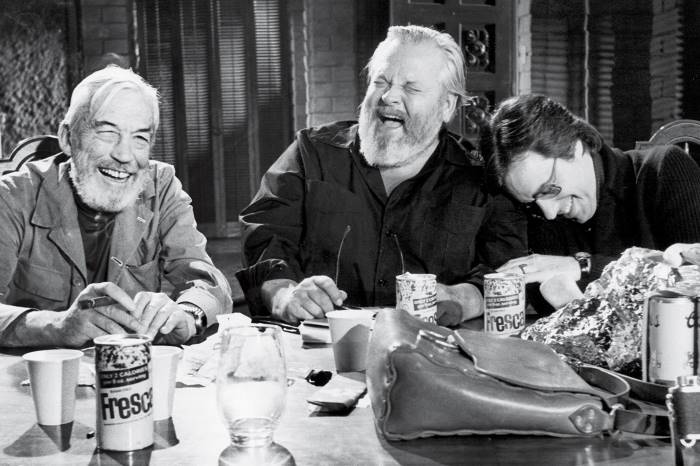
Bogdanovich was a superb film writer. He disliked the term “critic” because he always felt his role was more in the “film appreciation” realm and it was, but he wrote with a great deal of insight, perception and skill. Bogdanovich’s pieces on film directors rank up there with the best of all time, in part because he put so much of his own personality and story into them, but also because his personal taste was so good, and he did such invaluable scholarship. The 1960s were the heyday of worshipping European filmmakers among the critical fraternity but Bogdanovich did pioneering appreciation of not just famous and rich American directors such as John Ford, Alfred Hitchcock and Howard Hawks, but lesser regarded ones like Allan Dwan, Frank Tashlin and Edgar G. Ulmer. And of course, there was his relationship with Orson Welles, with all its Prince Hal-Falstaffian dimensions, ending with Bogdanovich becoming a Wellesian type figure in his later years (scrounging for cash for one last movie, being feted by acolytes, making a lot of cameos, being inaccurately accused of not having done any good work in the second half of his career, having a final blazing triumph with the restoration of Other Side of the Wind).
Welles also provided the basis of This is Orson Welles, one of Bogdanovich’s two stone-cold classics as a writer (the other one is Who the Devil Made It?, with an honourable mention for Pieces of Time). You can’t seriously look at the careers of Welles, or Ford or Hawks or Dwan or Ulmer without considering Bogdanovich.
For a non-critic, he was one of the most important critics in cinematic history.
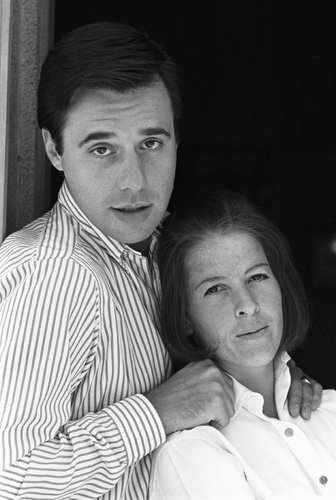 Bogdanovich was also a brilliant director. This is a fact that sometimes gets overlooked because of the variable quality of his later-career output; many feel he was never the same after breaking professionally with Polly Platt… and indeed, of the many “if only”s that litter his life, I’d argue that the number one for most cinephiles would be “if only he had kept making movies with Polly Platt”. Her absence hurt him, and the way he treated her was not always admirable, to put it politely. But he still made some sublime post-Platt pieces: my personal favourites are Saint Jack and Mask, and I think Noises Off and The Cat’s Meow are first-rate entertainments; They All Laughed leaves me a little cold but a lot of people adore it. HIs overall average definitely dropped without Polly (it’s a little hard to beat a one hundred percent strike rate), but I’d be more inclined to blame that on dodgy scripts. For here’s something I don’t think Bogdanovich ever really realised about himself: he was not a very good screenwriter. It didn’t matter on his first four features because he had Polly riding shotgun, plus A-listers helping him at the keyboard (Sam Fuller, Larry McMurtry, Robert Benton, David Newman, Buck Henry, Alvin Sergeant). But on his three flops, he ignored Fredrick Raphael (Daisy Miller) and WD Richter (Nickelodeon) and did At Long Last Love all by himself. And generally, he was the one chiefly responsible for the scripts on all his later stinkers. Mind you, he also wrote Saint Jack (with the help of Paul Theroux’s novel and Howard Sackler), so one never knows.
My second “if only” of Bogdanovich’s career was “if only he worked with better co-writers”. Because the good ones are oh so, so good – the feel, the mood, the handling, the acting, the long takes, the unobtrusive editing, the use of sound. Even an iffy project like She’s Funny That Way is nicely shot and beautifully acted.
I think also that while Bogdanovich worshipped old Hollywood and wrote about it so divinely, his personal tastes weren’t very Hollywood. Sure, What’s Up Doc? and Illegally Yours are overt homages to Hawks and At Long Last Love is his attempt at Lubitsch, but what other Hollywood movie is like Targets, Last Picture Show, Paper Moon, Daisy Miller, Nickelodeon, Saint Jack, They All Laughed, Mask, The Thing Called Love or The Cat’s Meow? For a “Hollywood” guy, he was actually more European in sensibility as opposed to being Mr Genre; closer to Jean Renoir, than to, say, Ford, Hawks, Hitchcock or Dwan.
In a way, this was a shame, because Bogdanovich could do genre so well – for instance, the handling of suspense in Targets is so brilliant one wishes he’d done a lot more thrillers and/or action films: he was attached to The Getaway before Sam Peckinpah (it was Polly Platt who talent spotted Walter Hill for the screenplay) and I would love to have seen his version; I also wish he’d been able to make his film of the Bugsy Siegel story that he was going to do in the mid ‘70s. Don’t laugh, but I also think he could have made The Hurricane (1979) – which he was offered – work too.
My third “if only”… if only he’d done a few more obviously commercial pictures. I felt the same way about Orson Welles (who could have been one of the all-time horror and action film directors)… but also like Welles, if Bogdanovich had been able to swim with the tide a little more we wouldn’t love him so much.
We all have flaws; Bogdanovich’s flaws were a lot more public than most. He wasn’t very good with money: most people know he went bankrupt trying to release They All Laughed in the 1980s; it’s less well known that he went bankrupt again in the 1990s (while Bogdanovich had an independent spirit, he spent money like a studio director). He was clearly a handful with the wrong collaborators (he was fired off Duck You Sucker! and Another You). He carried on like a pork chop over the post production of Mask, which ultimately did far more damage to his career than Cybill Shepherd (sorry, Peter, but I think the studio’s changes were fine). He could be pompous. I really wish he’d tried to help Polly Platt direct a film.
But it’s hard not to like someone who was so passionate about film, who produced so many tremendous movies and books and championed so many worthy cinematic causes, and who led such an interesting life. He just kept going – no matter what life threw at him, he ploughed on, because he followed his passion. And that’s why I love Peter Bogdanovich, warts and all, and why I am going to miss him a lot.
A brief look at the output of Peter Bogdanovich:
Feature Films
The Corman Years
The Wild Angels (1966) – Bogdanovich did second unit directing and reportedly rewrote the script for this biker movie, which might explain why it’s more visual than most of the works of credited writer Charles Griffith. A huge box office success, which launched the biker genre.
Voyage to the Planet of Prehistoric Women (1968) – one of several films Corman financed during the 1960s where he took a Russian science fiction movie, gave it to some protege (eg. Coppola, Bogdanovich, Jack Hill, Curtis Harrington) and said “make a movie out of that”. Bogdanovich made this one, which meant he came up with a new storyline and directed about ten minutes worth of additional footage with Mamie Van Doren to cut it in. This and Voyage to the Prehistoric Planet (1965), directed by Curtis Harrington, use much of the same footage but Bogdanich’s film is far superior: it’s simply better made.
Targets (1968) – stunning debut feature, from a story by an uncredited Sam Fuller. Heart-pounding climax, a subject matter still relevant, Boris Karloff’s last credit. Tim O’Kelly does sterling work in the lead but he kind of vanished after making this.
Three Hits
The Last Picture Show (1971) – its reputation is high. Deservedly. I rewatched this just a month ago and it is magnificent. Everything clicks. A box office success, helped by the fact that it’s about young love, which everyone can relate to, and had sexual content… both things were lacking in the sequel. Cloris Leachman and Ben Johnson won Oscars. Launched Cybill Shepherd, Jeff Bridges, and Randy Quaid.
What’s Up, Doc? (1972) – a complete right turn from Bogdanovich, but enormously fun, with a galaxy of superb support actors including Madeleine Khan. Barbara Streisand and Ryan O’Neal were never funnier, or sexier. The film has some consent issues.
Paper Moon (1973) – achingly beautiful, brilliant, funny, important. Tatum deserved her Oscar. Ryan O’Neal’s best work. Madeleine Kahn and John Hillerman excellent.
Three Flops
Daisy Miller (1974) – a film that holds up: beautifully shot, fine acting. If it had come along in the 1990s, I think it would have been a hit on that studio indie circuit that wasn’t really around in the 1970s for English language films. Failed to launch two new stars: Barry Brown and Duilio Del Prete.
At Long Last Love (1975) – has to be seen to be believed. Not a complete success as a film but glorious in its ambition. Once you get into the groove, it’s actually a lot of fun and Cybill is great. People were unnecessarily mean to it, but they’d been waiting with baseball bats for Bogdanovich for a long time. He tried again to make a star of Duilio Del Prete here – didn’t happen.
Nickelodeon (1976) – all the elements you’d assume would make a huge hit: two O’Neals, Burt Reynolds, silent movies… but it didn’t. It’s interesting. The studio was determined to keep control over Bogdanovich by refusing to let him shoot it in black and white or cast Jeff Bridges, Jason Ritter and Cybill Shepherd. Younger leads would’ve given more of a sense of the young people who build Hollywood. Bogdanovich wouldn’t be vindicated over his support of Shepherd until the success of Moonlighting in the 1980s. But even different casting would have fixed other issues with the film… it’s overlong running time, the fact that it spans years, all the endless zappy talk that isn’t particularly witty (a hallmark of Bogdanovich written dialogue), characters falling in love at the drop of a hat (ditto). Every now and then, the film captures a bit of magic that it is striving for, but too often it never seems to click.
Indie Comeback
Saint Jack (1979) – a great hangout movie. It just works. A peak for Ben Gazzara. It is the story of white men in Singapore, but he’s constantly bested by the locals and the British don’t come off too well – boozy whoremongerers singing songs. The female characters don’t get much of a look-in – more could’ve been done with Jack’s Sri Lankan love – but the many virtues outweigh the flaws: the matter of fact acceptance of sex (so much so that to blackmail a man because he’s gay is what makes Jack draw the line), the atmosphere, the fact that it captured a Singapore now gone, Bogdanovich giving one of his best performances as a CIA man. George Lazenby is effective in a small appearance as a senator who is a blackmail target. Denholm Elliott is perfect as a sweaty accountant who comes to be Jack’s one genuine friend.
They All Laughed (1981) – people love this movie. I do not, I find it creepy and Audrey Hepburn’s perm is distracting. There’s a lot of smoking and country music. It does have a nice sense of camaraderie. There is a tremendous documentary about it, Once Day Since Yesterday. Also, Bogdanovich’s memoir about his relationship with Dorothy Stratten, The Killing of the Unicorn, is fascinating, powerful reading… even if at times you go “too much information! Don’t tell me about you banging her in the hot tub!”
Hollywood Comeback
Mask (1985) – brilliant. A great piece of raw material – single mum who ran with bikies raising disabled child – beautifully realised. Bogdanovich did tearjerkers very well – yes, some of it is hokey (beautiful blind girl, mute biker says he’s proud of Rocky) but it works. Cher is magnificent – this put her career on another level even though she and Bogdanovich didn’t get on. Launched Eric Stoltz and Laura Dern. The cuddliest bikies in cinematic history? The cuts insisted on by the studio were actually reasonable. This film should’ve brought Bogdanovich back to the A List, but he carried on, trying to sue to studio for millions.
Four Flops
Illegally Yours (1988) – a mess. Makes no sense. Rob Lowe tries. So does Colleen Camp. It’s confusing. Dumb. Has the hallmarks of many Bogdanovich flops, i.e. endless long takes of people yabbering without it being funny.
Texasville (1990) – Bad film. It’s not all Bogdanovich’s fault – Larry McMurtry’s novel is poor (I read it after seeing the movie to check who was to blame). Aimless. Cartoony. No soul. Excellent acting from Cybill Shepherd (whose part should have been bigger), Tim Bottoms, Jeff Bridges and Annie Potts. But no nuance. It did inspire Picture This, an awesome behind-the-scenes documentary which is everything Texasville is not – brilliantly evocative of a place (love those whining cowboys who want to be in the movie), memorable characters (Larry McMurtry’s worried mother, the original inspiration for Jacy, cuckolded Polly Platt, tormented Bogdanovich, awkward Tim Bottoms), and true drama (returning to the scene of a film where so much happened).
Noises Off (1992) – version of Michael Frayn’s stage hit. A lovely movie, very well directed, a real Valentine to actors. No one went to see it but for me it’s one of Bogdanovich’s best later works.
The Thing Called Love (1993) – a film that should work: struggling musicians in Nashville, great young cast including Samantha Mathis, River Phoenix, and Sandra Bullock. But it doesn’t. This feels like one where he really could have used Polly Platt.
Final Feature Films
The Cat’s Meow (2001) – a lovely little movie. Nicely written, full of perfect performances and affection for its characters. Better than Mank, which covers some of the same ground. I wish it had done better at the box office. Bogdanovich missed that whole ‘90s – early noughties indie film wave that revived Bob Altman’s career. I wonder why? Maybe he’d just annoyed too many people.
She’s Funny That Way (2014) – some bright moments, especially the cast, but the story lacks reality (a theatre director has that much money?) and the script needed a more skilled hand on it.
Books/Podcasts
The ones everyone should read are This is Orson Welles and Who the Devil Made It? If you like those, then go for Pieces of Time and Who the Hell’s In It? For a deep dive, go to Killing of the Unicorn and Andrew Yule’s biography. For podcasts, the Polly Platt series from You Must Remember This is brilliant.
On Screen
Peter Bogdanovich’s persona was dramatised in several films – the characters played by Robert Klein in Hooper (1978), Robert Reed in Death of a Centerfold (1981), Roger Rees in Star 80 (1983), and Ryan O’Neal in Irreconcilable Differences (1984) (with Shelley Long as Polly Platt and Sharon Stone brilliant as Cybill Shepherd).
RIP Peter.

a terrific article; I ran cinemas from 1974-2018 and actually screened all but two of Bogdanovich’s films listed here. Bogdanovich and I became pen pals for a time in the late 70s when I kept screening the deliciously silly AT LONG LAST LOVE to summer holiday crowds who found it quite effervescent. But nothing ever ever in any career can match the screaming exhuberance of seeing 500 people, session after session, go absoutely berserk in the last 30 minutes of WHATS UP DOC. It’s equal to SINGIN IN THE RAIN for jolting crowd joy. Only Madeline Kahn as Eunice in all film history matches Jean hagen’s Lina Lamont for uproarious comedy perfection. I too am more than sad that Bogdanovich has died, and my personal connection throug his films at my cinema and his letters in the desk are testament to the impact he had on my life too.
I thought Peter was a true Renaissance man. His books, monographs and other writing were brilliant. I think The Last Picture Show one of the great films and losing the Oscars to The French Connection a true travesty. Had Peter not left his wife for Cybil and caused such a flap, he would have won Best Director and Best Picture in a landslide. I met Peter once. At the Egyptian Theater he was showing Citizen Kane. After the film a few of us went up and talked to hilm. I had him autography my laserdisc of The Last Picture Show (his cut). He was gracious and kind. A true legend left us.