




By Gill Pringle at IFFAMacao, Twitter #gillianpringle
A pioneer of the Thai new wave cinema of the early 2000s, Pen-ek Ratanaruang continues to present the flipside of his beautiful country, all too often utilised for crass Bangkok titty bar gags or as drug crime fodder.
“I’ve always been interested in telling different stories about my country,” says the director whose tenth feature film, Samui Song, showcases the iconic islands of Phuket and Koh Samui, probably best associated with Bond movies.
A Hitchcock-inspired black comedy, Samui Song takes a sly look at the stereotypical affluent Westerner who takes a beautiful Thai bride, in this case, a Thai soap opera actress. Employing a crime thriller device to tell Thailand’s version of the catholic priest horrors that rocked the western world, Ratanaruang lifts the veil on sexual corruption among Buddhist cults.
“This particular story began after I’d been shopping in my local supermarket and I saw this very famous Thai actress with her foreign husband,” explains Ratanaraung chatting at the International Film Festival & Awards Macao where Samui Song was presented in the Gala selection.
“They looked very good together, so I started following them round the store with my groceries to see what they bought and what they said to each other. Afterwards, I couldn’t get them out of mind and I started wondering what their lives were like at home and this whole story began,” he says.
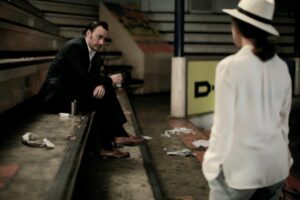 Featuring a Buddhist cult leader known only as the ‘Holy One’, Ratanaraung admits to ripping the film’s themes from the headlines. “If you grow up in Thailand, every day there’s another front page story about the scandalous things that monks do; so many forbidden things, usually with young females. They are immediately expelled but because they have collected so many followers, they are able to start new religions and their followers will come with them,” says the director who made his debut with Fun Bar Karaoke in 1997.
Inspired by everyday Thai life, he says, “I never have a plan when I sit down and write a script. I initially have an image which then develops into a story and eventually plot.”
Rapidly becoming the darling of the Thai new wave cinema, four of his films – 6IXTYNIN9, Mon-Rak Transistor, Last Life in the Universe and Headshot – were Thailand’s submissions to the Best Foreign Language Oscar category.
Born in Thailand to a US embassy employee mother and BBC engineer father, Ratanaruang spent his teens dreaming of becoming a professional soccer player; his parents even enrolling him in a US high school in the hope he would quit fantasising about soccer.
They got their wish, but instead he developed a passion for art, attending the prestigious Pratt Institute and graduating to a design job in New York.
Three years later he returned to Thailand to work at a UN refugee camp on the border with Cambodia, but instead was persuaded to work at his friend’s advertising firm. “I didn’t want the job. I hate advertising – it’s so amoral, making people buy things they don’t want. But when I saw how many beautiful girls worked there, I changed my mind,” he laughs.
Smitten with his new career, he won many creative awards, shifting focus to direct TV commercials. “I discovered I was born to direct.”
If the Thai wife/western husband scenario has become so ubiquitous, it’s almost a cliché, we can’t resist asking Ratanaruang why we never see the coupling in reverse. “I think Thai men are too intimidated by western women. Thai men are too shy and they run away.
“Also, I think Thai women see the western man as a higher status and they look better. But that’s my personal speculation. What do I know? I love western women!”
