


By Erin Free
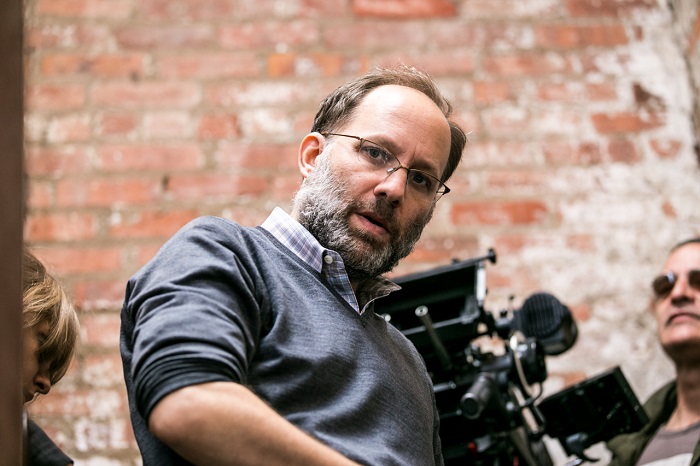
IRA SACHS Though he was born in Memphis, writer/director, Ira Sachs, has called New York home for over two decades, and has become one of the best chroniclers of what everyday life is like in The Big Apple. With 2012’s semi-autobiographical Keep The Lights On, he used Manhattan as the all-important backdrop for his story about a gay filmmaker’s troubled relationship with a closeted lawyer, while his two most recent efforts, Love Is Strange (2014) and Little Men (which is in cinemas this week) have documented the financial hardships that the city can throw down, with both films dealing with issues of displacement and the value of human decency. “I’m a New York filmmaker because I bring the city into the film in what I hope is a true way,” Sachs told The Village Voice. “But I also feel that if I get the details right, it will resonate in any city, and any neighbourhood. It’s like when you read Henry James and find it as modern as anything else. Little Men is about individuals struggling to hold on to their homes in a city in transition, and I think that people may identify on both sides with this story.”
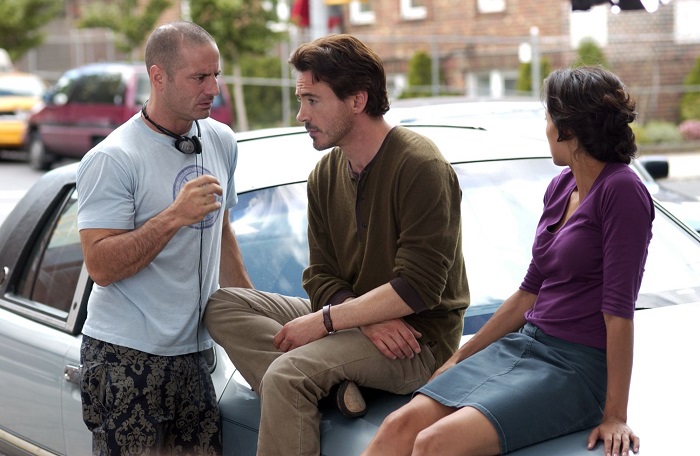
DITO MONTIEL “When I was a kid, they shot Goodfellas on my block,” writer/director, Dito Montiel (pictured above left, with Robert Downey Jr. and Rosario Dawson), once told The NYC Movie Guru. “It was the most exciting thing in the world for me. I didn’t know who any of them were, and we were running around the set stealing the craft services [food].” Does it get any more New York than that? With his 2006 debut, A Guide To Recognising Your Saints, Dito Montiel delivered a bawdy, funny, and in-your-face coming of age drama (starring then-on-the-rise talents Shia LaBeouf and Channing Tatum) that painted an unflinching picture of New York in the 1980s, all sweaty desperation and macho swagger. As with the films of the city’s great masters (Marty, Woody et al), New York (and in particular the neighbourhood of Astoria, Queens) literally becomes another character in the film. Since his bracing NYC bow, Montiel has continued to largely roam the streets of The Big Apple, detailing the world of underground urban fisticuffs (2009’s Fighting); and the lives of New York’s cops, in both gritty (2011’s The Son Of No One) and more fanciful (2013’s Empire State) terms.
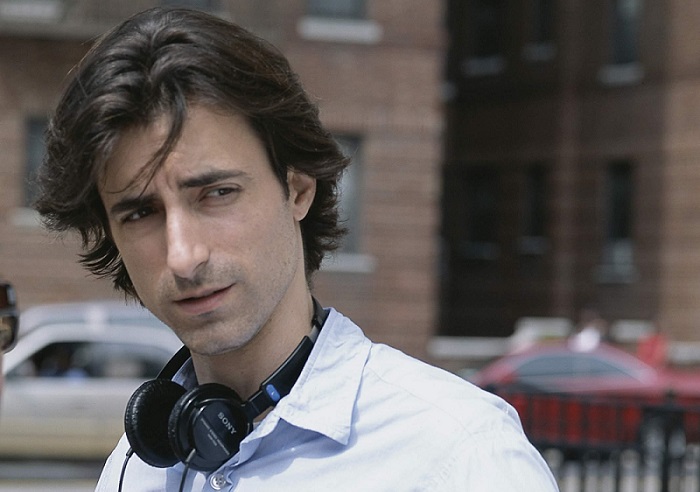
NOAH BAUMBACH “I call New York my home,” writer/director, Noah Baumbach, told The AV Club. “I grew up in Brooklyn.” And while Baumbach has effectively told his tales of existential crisis in other cities (the brilliant Greenberg was set in LA), his quiet on-screen mastery is best expressed in New York City and its surrounds, with the director crafting a burnished, telling picture of Brooklyn in the 1980s in 2005’s The Squid And The Whale, and chronicling the ever-growing generation gap in New York Village in the pithy 2014 comedy drama, While We’re Young. Baumbach’s best New York stories, however, are the ones that he’s crafted with his partner, actress and writer, Great Gerwig, in 2015’s Mistress America and 2012’s Frances Ha, the latter of which offers a painterly, black-and-white look at The Big Apple. “The Frances character has a fantasy of the city, but the city is pushing back,” Baumbach told The AV Club. “It goes with the photography of the movie. It was a chance to shoot New York in the most beautiful way possible, while shooting a character who’s dealing with the economic realities of living in New York right now, which are not romantic. You can’t live a bohemian life there anymore without money.”
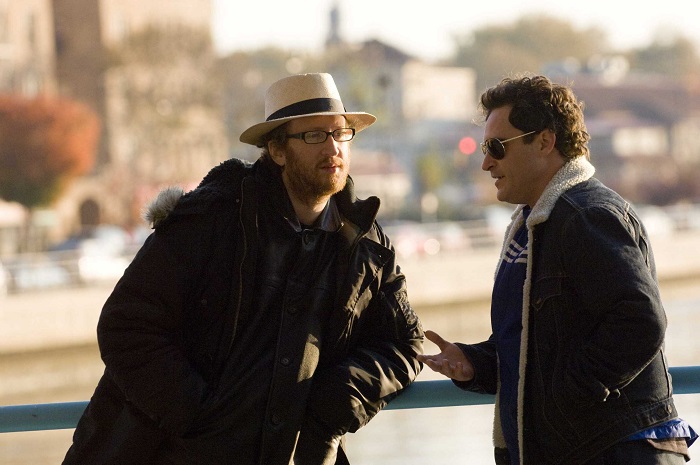
JAMES GRAY “New York is a crazy experiment, where they basically took an island, which is about 26 miles long and I think three miles wide, and packed a zillion people into it, and built concrete jungles to the sky,” writer/director, James Gray (pictured above left, with Joaquin Phoenix), told Slant Magazine. “And functioning in New York is its own form of heroism. New York life is tough…unless you’re so rich that you have chauffeurs and chefs and all that, but that’s not the way that anybody lives.” Born in Queens, New York, James Gray has remained largely within the borders of his home city for his entire career, only recently branching out with the more international-in-tone The Lost City Of Z. Before that, Gray regularly ventured into cinematic parts of New York previously unknown, setting his grim, crime-driven tales amongst the little seen Russian community of Brooklyn’s Brighton Beach (1994’s Little Odessa); the dangerous Queens rail yards (2000’s The Yards); and NYC’s smoky, corrupt night club scene (2007’s We Own The Night); while crafting less sordid depictions of the city in the Brooklyn-set 2008 romantic drama, Two Lovers, and 2013’s 1920s-set The Immigrant, which provides an unforgettably vivid picture of New York as the literal gateway to America.
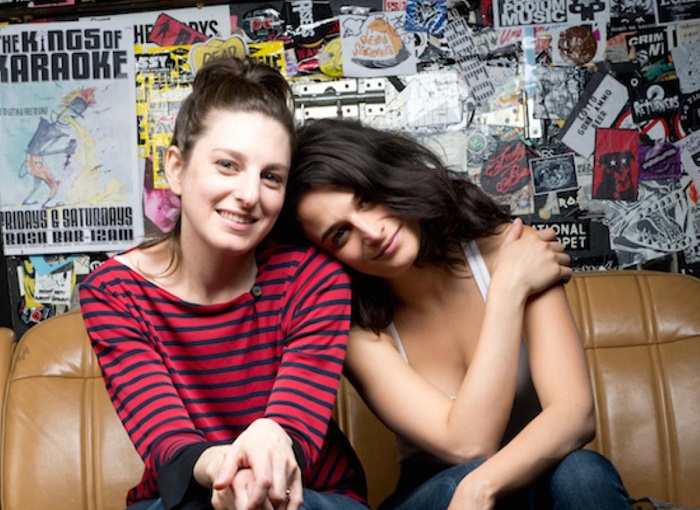
GILLIAN ROBESPIERRE Brooklyn-born writer/director, Gillian Robespierre (pictured above left, with Jenny Slate) – who began her career as a production assistant on big budget features like American Gangster – first made a splash with her 2009 short film, Obvious Child, which she eventually expanded into her 2014 feature debut of the same name. In this biting charmer, Robespierre savvily and ingeniously subverts the romantic comedy genre with her winning, highly contemporary tale of Brooklyn stand-up comic, Donna Stern (Jenny Slate), who slaves in a failing bookstore by day and hilariously overshares on stage at night. Down in the dumps, Donna hooks up with handsome, homespun Max (Jake Lacy) for a one-night stand, only to end up pregnant and contemplating an abortion. Despite the tough subject matter, the laughs come thick and inventively fast, while the film’s depiction of contemporary New York is telling and honest, with the vibe of the famous hipster enclave of Brooklyn infusing itself into every scene. Tellingly, when Robespierre was raising the finishing funds for Obvious Child on Kickstarter, she and her producing partner, Elisabeth Holm, came up with a novel reward for generous donations: a personal tour of locations used in classic New York romantic comedies.

