


by Nataliia Serebriakova
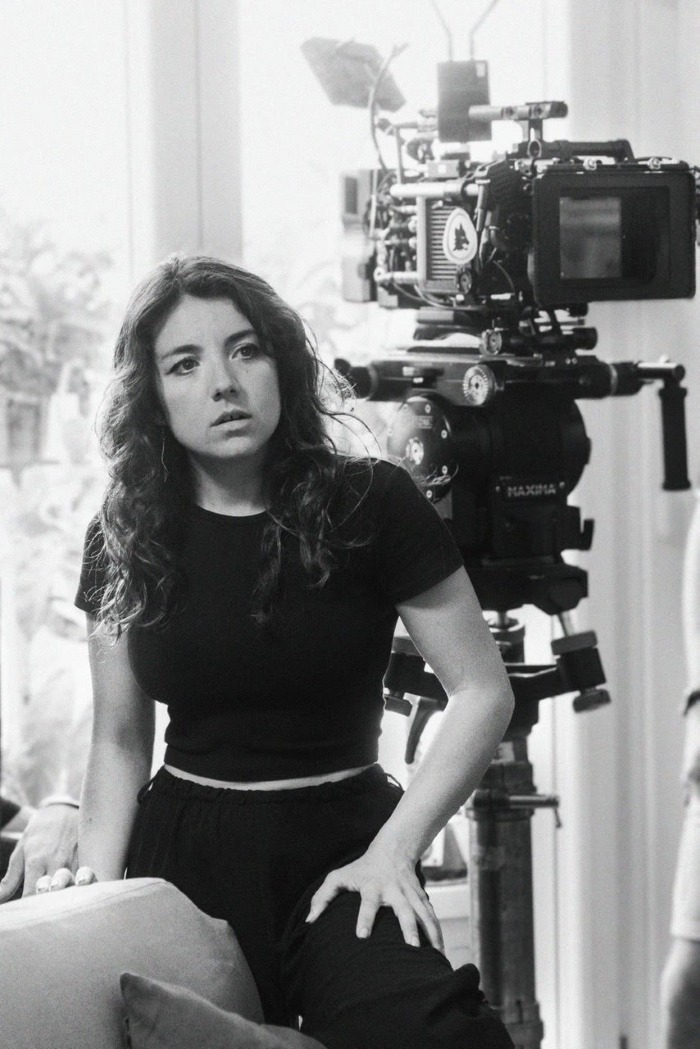
Ahead of the world premiere of her feature debut Föa – Once Upon a Future at the Busan International Film Festival, Italian filmmaker Margherita Ferrari speaks exclusively to FilmInk about the 2001 G8 protests in Genoa, a pregnant teenager at the centre of the story, memory, political disillusionment and the personal images that shaped her film.
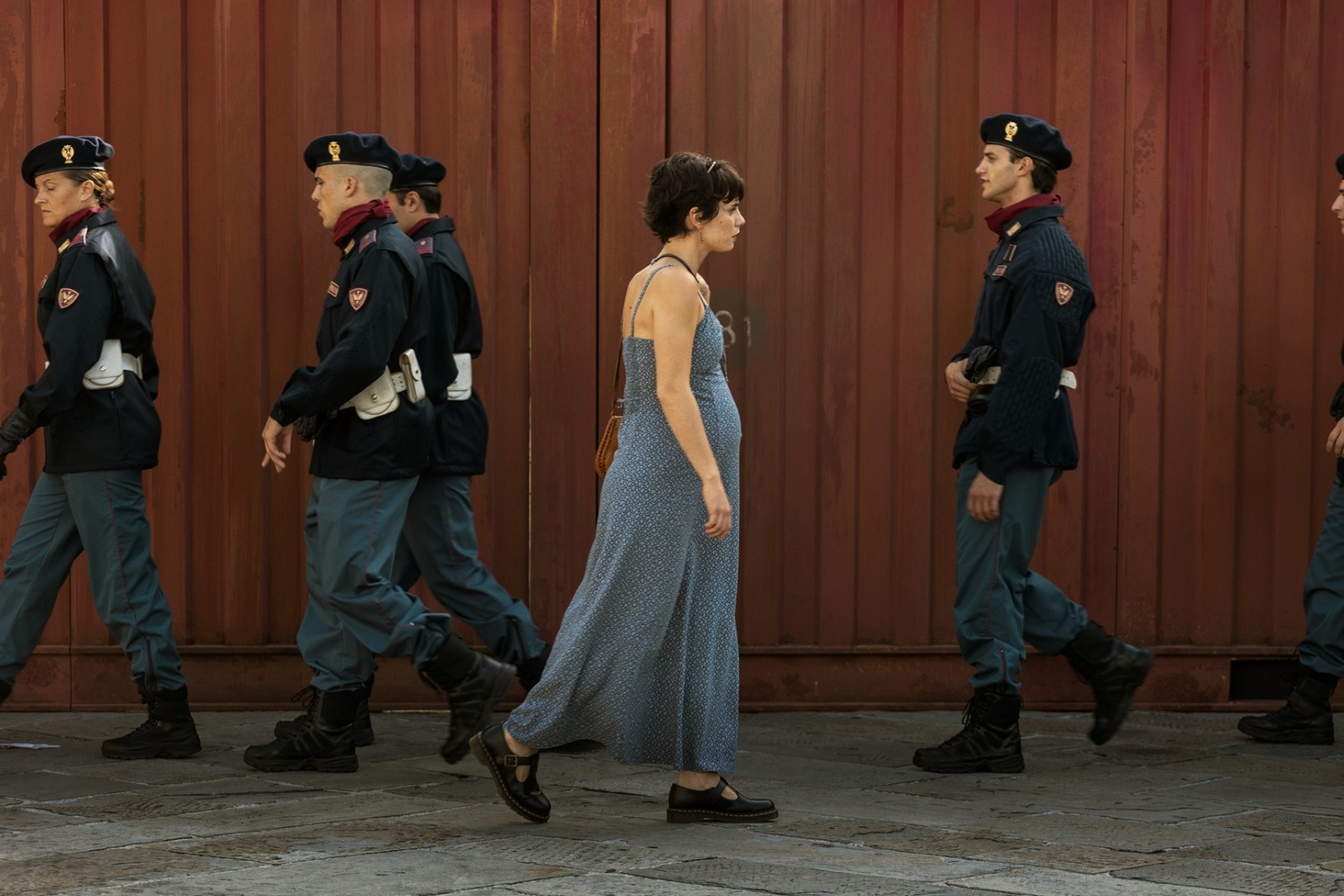
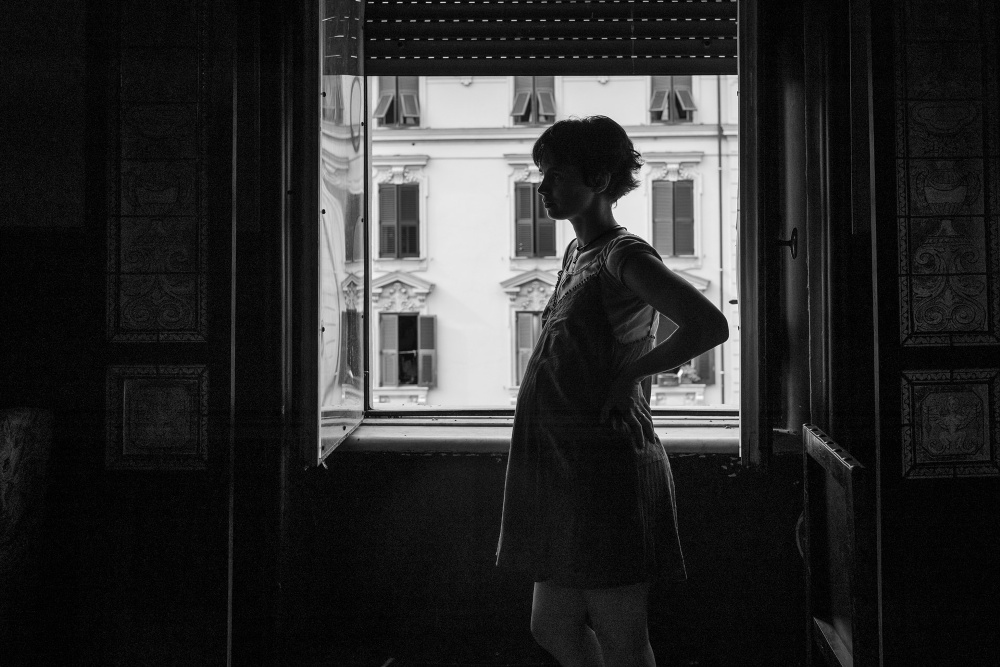
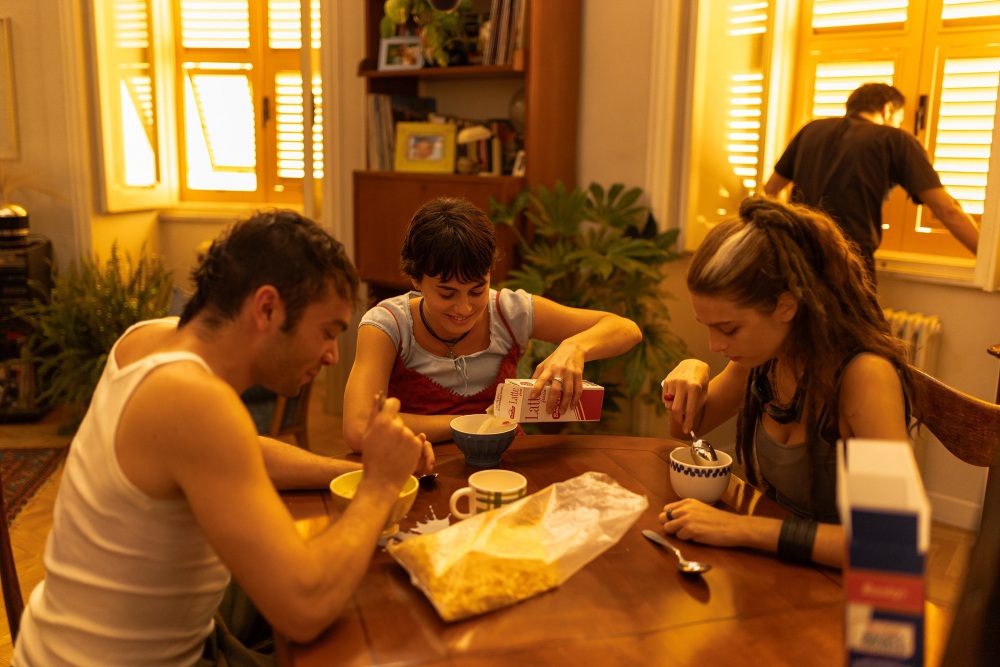
Genoa, 20 July 2001. Nicole is eighteen years old and eight months pregnant. As protests against the G8 summit fill the streets, she is alone at home when she opens her door to a group of demonstrators. Their political struggle suddenly enters her private world, forcing Nicole, Julian, Irene and Elixi into the same confined space.
For Ferrari, who was only four years old when the events took place, Föa is less a historical reconstruction than an attempt to understand what Genoa left behind. The film approaches the past through memory, emotion and the perspective of someone who grew up in its aftermath.
“ To me, it was quite important to understand that moment from a more emotional perspective, because I was young at the time, but then I grew up in the world after that moment.
“In a way, the G8 represents one of the last moments when it still seemed possible to imagine another world or another possibility, to imagine the future. And when that possibility collapsed, I felt like something had been killed. Not only a political possibility, but also the ability to imagine another future.
“I was not interested just in reconstructing the past, but more in seeing what it means to us in the present. That’s why we were interested in those events.”
At the centre of this historical moment is Nicole, whose pregnancy gives the film its most intimate connection to the idea of what comes next. Her personal life has already been disrupted before the protesters arrive.
“Nicole embodies the question of the future in a very literal way, because she’s 18 years old and she’s pregnant. She’s becoming a mother, so I think she’s carrying the future inside her. She has a lot of questions about the future because, at the beginning of the film, the future she had imagined for herself suddenly disappears because Marco, the father of her child, leaves her.
“She’s left alone with this enormous uncertainty about what her life is going to be. That’s when these three young protesters enter her home, devastated by what has happened outside. Her personal crisis suddenly meets a much larger historical crisis, and I was interested in bringing these two things together: a very intimate question about what my life will be like; and the collective one – what kind of future are we going towards?
“Nicole is a young woman who doesn’t have the answers. But I think what makes her interesting is the fact that she’s carrying a future that she cannot imagine yet. I found that contrast interesting.”
Nicole and Irene approach the world from opposite directions. Ferrari does not, however, see their differences simply in terms of who is more mature.
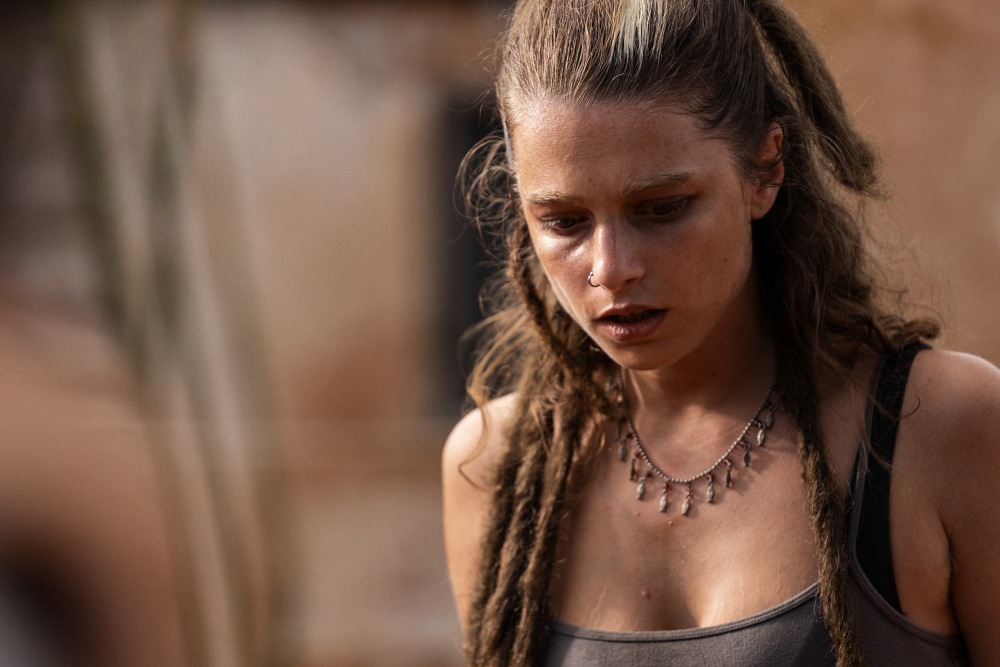
“I don’t love to judge my characters, but of course I think that in that moment they are just really different from each other. Irene knows much more about the world because she lives in a more collective, open reality, while Nicole lives in a more intimate, private world.
“But at that moment, they both have fears about their future in two very different ways. I think that it’s not about being mature; it’s about recognising both of their fears and about feeling next to each other in that moment. And I think that this helps Nicole.
“In that moment, Nicole becomes a little more mature than Irene, who needs to see Nicole’s story in order to understand that maybe there is something she can learn. The closeness with Irene helps Nicole actually to arrive at the end of the movie.”
The title Föa comes from the Genoese dialect, where it means “fairy tale” or “story”. It reflects Ferrari’s decision to approach a traumatic historical episode through fiction, memory and a dreamlike sensibility.
“We wanted to explore the meanings and emotions that this kind of collective dream, this collective nightmare, has left to all of us. We decided to look at this story in a more dreamlike way, using also my memories and some emotions that are less historical but more dreamlike, something which is more fiction, more like a fairy tale in that sense.
“Also, I hope that it could be a story of hope in the end, despite the subject of the movie and the real historical events.”
The film combines newly shot material with archival footage from the protests. Ferrari wanted the transition between fiction and historical reality to become increasingly difficult to separate.
“I shot some scenes of the protests, but not all of them. There is a lot of actual footage, archive videos and archive material.
“We shot some protests at the beginning of the movie, when Nicole opens the window after seeing a lot of smoke outside her house. We see some protests, but they are very mysterious, like a point of view or a shot inside the car. We shot them in a very classical way.
“But then, when reality comes into the movie, we decided to use only non-fictional material, real archive footage. That’s also why we decided to use the aspect ratio of the movie, because it’s the same aspect ratio as the real footage. Not just because it’s quite claustrophobic, in my opinion, but because we wanted to merge the fictional part with reality as much as possible from a certain point in the movie.”
The director also plays with the architecture of the house, repeatedly placing one enclosed space inside another. A miniature house in Nicole’s bedroom became one of the film’s most striking visual motifs.
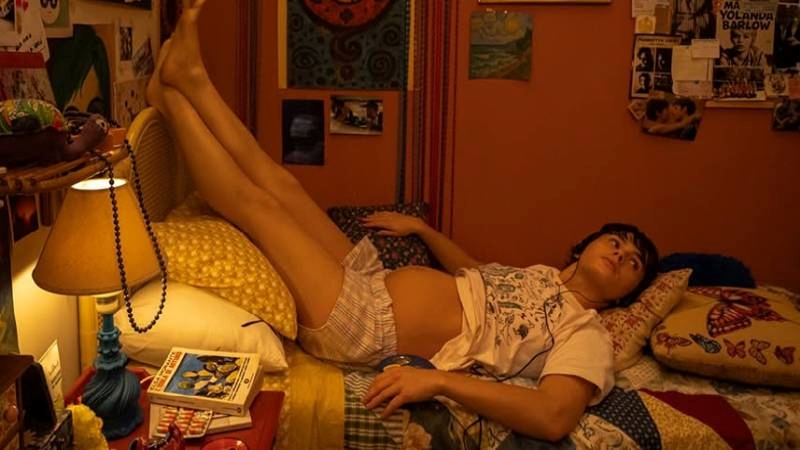
“I had the idea for this precise shot on set because of my production designer. We imagined Nicole’s bedroom with a lot of childish details because she’s 18 years old and it’s her bedroom from when she was very young. We imagined that there could be teenage stuff, but also things from her childhood.
“My production designer [Vito Giuseppe Zito] put a little house into her bedroom because the house is quite a character in the movie. I saw the point of view of the window from inside the fake house, with Irene outside, and I found it really interesting. I wanted to do that also because it’s a sort of box within a box throughout the entire movie.”
The historical material required extensive preparation. Ferrari and her co-writers [Anita Della Cioppa, Veronica Penserini] studied contemporary footage before deciding that the film should focus on the emotional legacy of Genoa rather than reproduce the events day by day.
“Despite Nicole’s story and all the fictional work that we did in the movie, at a certain point we wanted to confront her with this protester entering her home.
“We wanted to feel really prepared for those events, even if we were young at the time. We studied a lot of details and watched many hours of real footage from that period.
“But, as I said before, in the end we wanted to focus not on the reconstruction of those days, but on the meaning of those days left to us.”
The G8 summit brought the leaders of eight major industrialised countries to Genoa, while hundreds of thousands of demonstrators gathered in the city. On 20 July, clashes between protesters and police escalated, and 20-year-old Carlo Giuliani was shot and killed by a Carabinieri officer. Ferrari’s film ends on that day, rather than moving into the violence that followed at the Diaz school and Bolzaneto detention facility.
“The G8 summit took place in Genoa, which is not such a big city in Italy. The leaders of these eight major industrialised countries came together to discuss major issues concerning the global economy and international politics.
“Outside the summit, Genoa was filled with protesters. They came not just from Italy, but actually from all over Europe, from very different backgrounds. There were activists, but there were also Catholics, teachers, workers and many young people.
“All these protesters were part of a very broad movement at the time, which was the No Global movement. They opposed the political and economic model represented by the G8. They believed that another world was possible. That was the slogan of the demonstrations at the time: another world is possible.
“The city was almost militarised during those days. The historical centre was turned into a red zone, as you see in the movie, and there were a lot of police officers trying to keep the city controlled and secure. But the atmosphere was extremely tense even before the protest began.
“On 19 July, there was a youth demonstration that was very peaceful. But the following day, 20 July, which is the day that Föa is set in, things changed dramatically. During the morning, some groups known as the Black Bloc started damaging the city in different parts of Genoa. The police could not stop them, and instead the police attacked the peaceful demonstration.
“The police used water cannons, tear gas and batons. The clashes became extremely violent, and during the afternoon the violence continued. Protesters also threw stones and bottles to build barriers, as you see during the movie. There was also evidence of excessive and unlawful use of violence by the police.
“The days that followed were even more brutal, because there was also a raid on the Diaz school and a lot of abuses at Bolzaneto, which was a detention facility. But my film stops on 20 July because I was interested in what that moment represented and what questions about the future were left behind by those days.”
The consequences of Genoa, for Ferrari, reach beyond the summit itself. The political defeat she associated with that moment also changed how a generation thinks about collective action.
“I think that somehow we have become much more focused on our private lives since then. We stopped imagining the future as something that we could collectively shape. And I think that is something that goes beyond the G8 and beyond Italy. It’s a feeling that can belong to anyone.
“This is also the question at the centre of Nicole’s story, because she has a lot of questions about her future.”
Ferrari’s personal connection to the material also appears in the film’s visual details. Nicole’s bedroom contains a Titanic poster, while the filmmaker’s own memories and images became part of the fictional world without turning the film into a straightforward autobiography.
“I think it’s a masterpiece of cinema,” she says about James Cameron’s film. “But it was also an idea to make the audience think about a love story ending and also a collective tragedy that was about to happen.
“At the beginning, I tried to put a lot of little details from my autobiography into the movie. It’s not so precise, but I think I made a big mash-up with a lot of personal stuff and personal images.
“I love how directing is a play of connecting those images in new, different ways. So, it’s not a personal story in that sense, but there are a lot of personal things inside this movie.”
With Föa – Once Upon a Future, Ferrari turns a defining event of recent Italian history into an intimate story about uncertainty, proximity and the possibility of imagining what comes next. Its world premiere at Busan marks the first public presentation of her feature debut – a film that looks backwards without becoming a conventional historical reconstruction, and uses the perspective of one young woman to ask what happens when a generation loses its ability to imagine a different future.
