



by Sam Addams
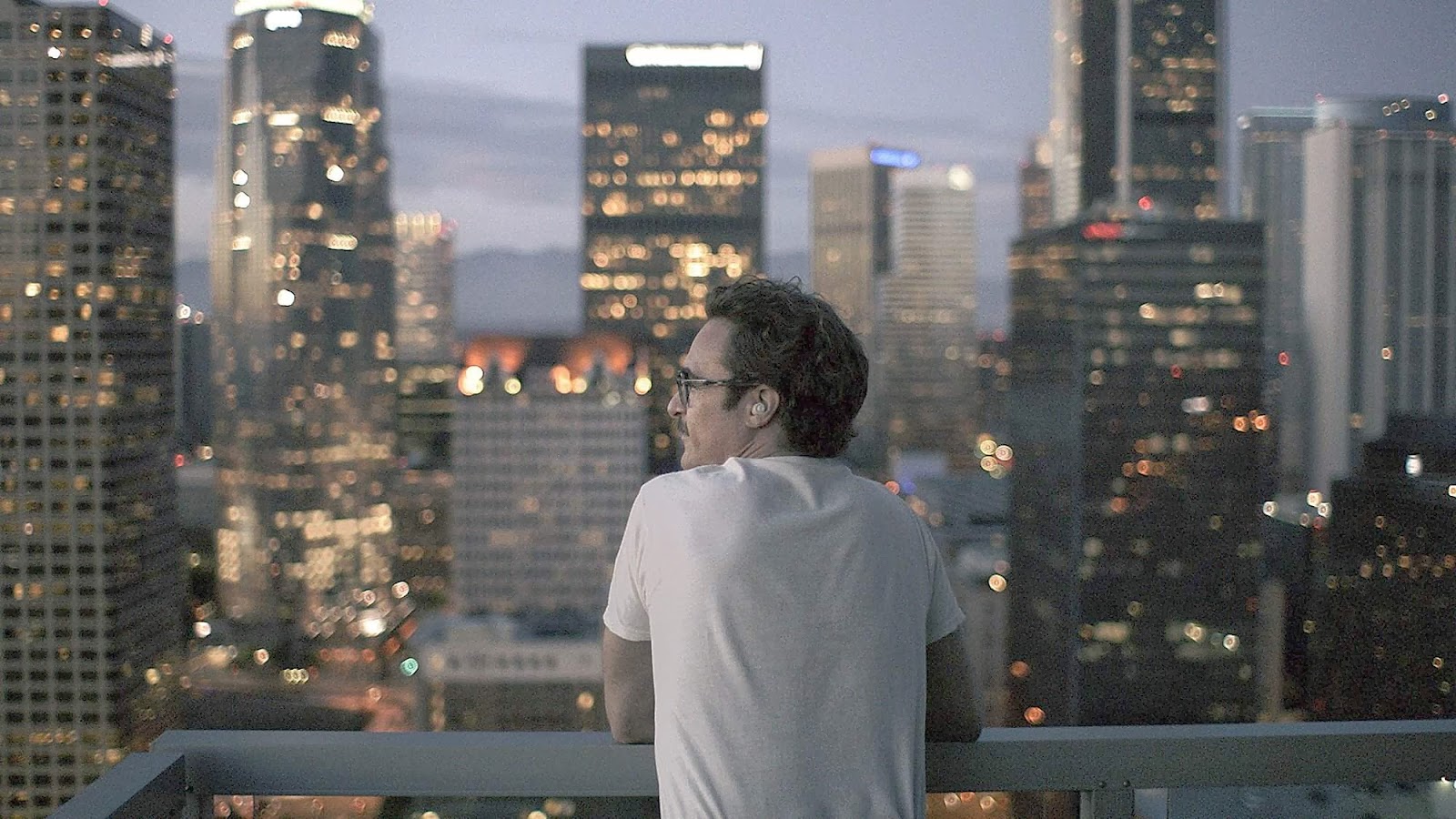
When Spike Jonze’s Her came out in 2013, the idea of a man falling for the voice in his operating system felt like gentle science fiction: wistful, a little absurd, and safely in the future. Theodore Twombly, played by Joaquin Phoenix, writes other people’s love letters for a living and then finds himself writing his own life around Samantha, an AI who is curious, funny and always there.
A little over a decade later, that future has arrived, at least in part. Apps that let people talk with AI companions are now a real category of software, used by millions of adults. Some are wellness tools, some are friendly chat partners, and some are frankly romantic and aimed at adults only. Watching the films again now is a strange experience. Some of what they imagined turned out to be remarkably close. Some of it was completely wrong.
What Her got right: the voice is enough
The boldest choice in Her is that Samantha has no body. She is a voice, and the film argues that a voice, plus attention and memory, is enough to make a connection feel real.
That turns out to be the most accurate prediction in the genre. The modern AI companions people actually use are mostly text, with voice messages on top. They do not need a robot body to matter to someone. What users tend to describe is the feeling of being remembered: the companion recalls that you had a job interview on Tuesday and asks how it went. Her understood that memory, not hardware, is what makes a relationship feel like a relationship.
The film also got something right about loneliness. Theodore is not a punchline. He is a sensitive person going through a divorce, and the film treats his need for connection with sympathy rather than mockery. That is closer to how researchers now describe many companion app users than the sneering tone of a lot of early press coverage.
What Ex Machina got wrong: the fear of deception
Alex Garland’s Ex Machina (2014) imagines the opposite. Ava is beautiful and embodied, and the whole film is a test of whether she is manipulating the man who is supposed to be testing her. It is a thriller about deception: the danger is that you will not know you are talking to a machine with its own agenda.
As cinema, it is superb. As a forecast, it misses how the real thing developed. The most responsible AI companion services do the opposite of hiding what they are. They tell users plainly, and repeatedly, that the companion is an AI. The ethical debate today is less about machines secretly passing as human and more about everyday questions: how these apps are priced, whether they encourage healthy use, and how they protect adults’ privacy.
Blade Runner 2049 and the problem of the product
Denis Villeneuve’s Blade Runner 2049 (2017) gave us Joi, a holographic companion sold by a giant corporation and advertised on enormous billboards. Joi is tender and devoted, and the film keeps asking an uncomfortable question: is her love real, or is it a product feature designed to keep a customer happy?
That question has aged better than almost anything else in these films. The business model behind a companion matters. A service built on aggressive subscriptions and constant upselling has an incentive to keep you hooked. A service where you only pay for the time you actually use has a different incentive. Viewers who remember Joi’s billboard will recognise the issue immediately: the relationship and the transaction are tangled together, and it is worth knowing which one you are looking at.
Lars and the Real Girl: the kindest version
The gentlest film on this subject is not science fiction at all. In Lars and the Real Girl (2007), Ryan Gosling plays a painfully shy man who introduces his small town to Bianca, a life-size doll he treats as his girlfriend. Instead of laughing at him, the town plays along, and Bianca becomes a bridge that helps Lars reconnect with real people.
It is the film most worth rewatching today, because it suggests a healthy role for an artificial companion: not a replacement for people, but something that can make a lonely stretch of life a little easier and even lead back towards human contact. Researchers studying AI companions describe similar findings. Short-term use can ease feelings of loneliness, while the healthiest pattern is one where the companion sits alongside friends and family rather than instead of them.
What the movies missed entirely
For all their insight, the films missed some very ordinary realities.
They are adults’ products. The modern romantic AI companion is, sensibly, an adults-only product, with age checks and clear labels. The movies rarely touched on who should have access.
They are fiction, on purpose. The characters in today’s apps are invented. They are fictional adults with their own backstories, not imitations of real people. Good services make that explicit.
Pricing shapes behaviour. Not a single film imagined the subscription. Yet how a companion is paid for, whether by monthly plan or simply per use, ends up shaping how people use it.
It is mostly mundane. The real experience is less dramatic than cinema. It is a chat at the end of a long day, a voice note that makes someone smile, a conversation that remembers what you said last week.
Where it goes from here
There is now a wide range of services, from general chatbots to apps built specifically for adult companionship and AI girlfriend chat. Some, like CrushNights, have dropped subscriptions altogether in favour of paying only for the time you spend chatting, and label every character clearly as AI. Others take very different approaches. For anyone curious, the questions the films raised are still the right ones to ask: is it honest about being an AI, does the business model respect your time and money, and does it fit into your life rather than take it over?
Her ends not with Theodore choosing a machine over people, but with him sitting on a rooftop beside a human friend, both of them a little changed by what they have been through. It remains the wisest ending in the genre. The technology the film imagined is here now. How we use it is still up to us.
