


by Dimitri Feiman
You’ve positively noticed yourself trying to pick a diverting film in this or that genre. You also know that you wouldn’t always choose light comedy after an exhausting day or a crime series to deliberately widen your detective abilities. It all happens in another, subconscious, “mood-matching” way.
Therapists say such choices are never made without reason. Our minds are pretty selective, and our brains won’t digest anything served. Understanding the mechanisms behind this selectivity has become a widely recognised method of Cinema Therapy. It helps psychologists understand an individual’s current emotional state by analysing their movie choices.
You may view it sceptically, but studies show that 67% of practicing psychologists use movies to improve therapy effectiveness, and 88% ultimately confirmed positive results. In your daily routine, you can also become your own therapist and choose features intentionally. On this page, we’ll cover specific genres and explore their healing potential.
Black Humour and Satire – Radical Relief from Existential Fear
Few people will admire the challenge of facing crises, with irreparable misfortune, mortality, illness, and the bare absurdity of existence brought to the surface. Still, we have to deal with all of this from time to time. Dark humour serves as an effective psychological defense. It’s our chance to release the existential pressure by simply laughing at the eccentric combination of the trivial and the pathetic.
Remember The Ladykillers, the Coen brothers’ black comedy thriller in which Professor G.H. Dorr (Tom Hanks) devises an elaborate plan to rob a riverboat casino. The casino setting may feel familiar to audiences accustomed to game-focused platforms like Automatenspielex, but here it becomes the backdrop for a chain of increasingly absurd failures.
Why do we laugh at such nonsense? Specialists call this phenomenon “benign masochism”. Black humour is our ticket to uncomfortable territory, where we can find relief by confronting taboos and frightening concepts in a controlled experiment.
If you want to reduce anxiety or overcome the terrifying gravity of a circumstance, try one of these top 5 black humour movies:
- Don’t Look Up (Film, 2021).
- Murder Mindfully (Achtsam Morden, Series, 2024-2026).
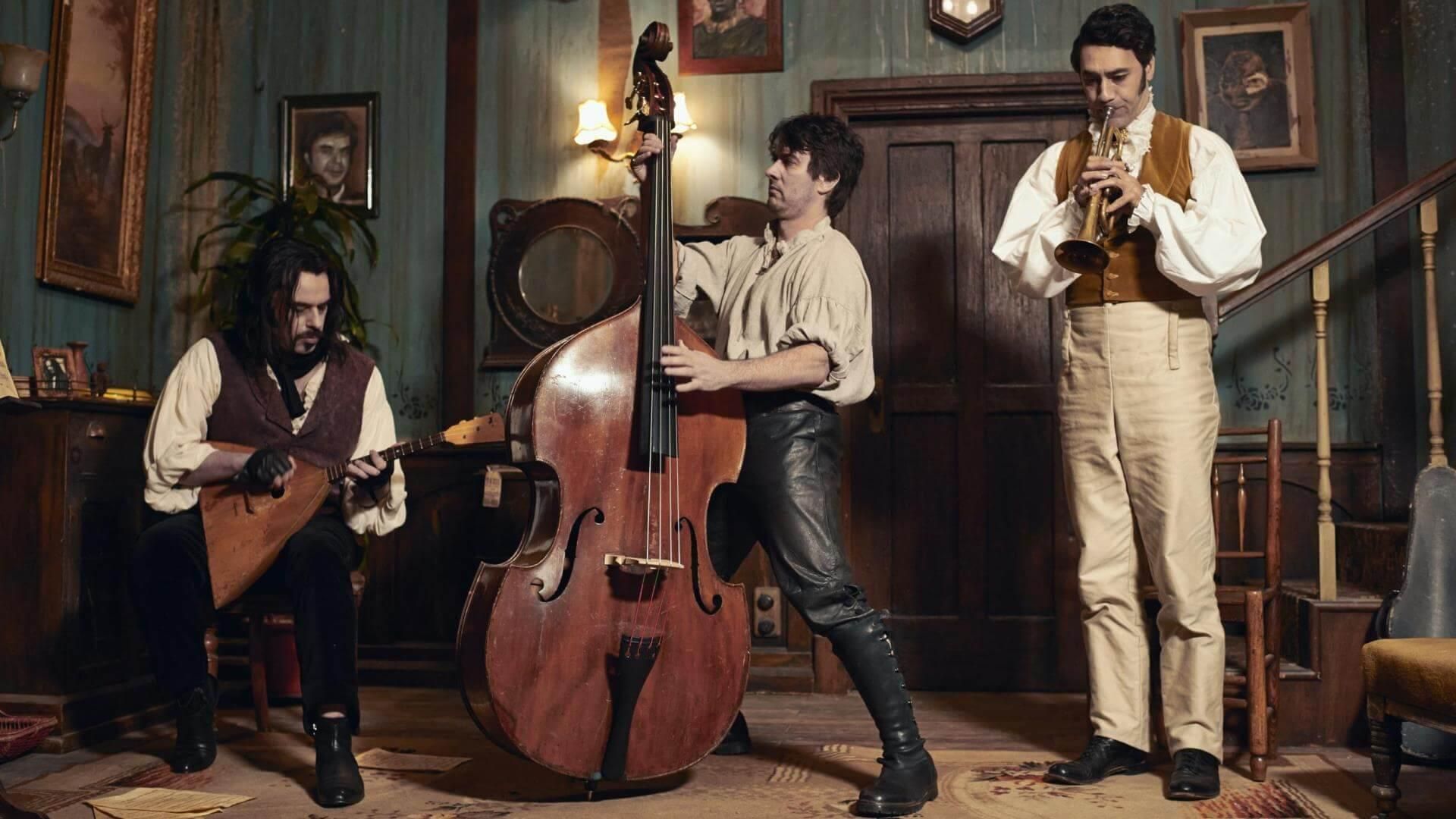
- What We Do in the Shadows (Film, 2014) [pictured].
- White Noise (Film, 2022).
- The Ballad of Buster Scruggs (Film, 2018).
You may choose some other features. However, the key idea will be the same: “What I can laugh at cannot destroy me.”
Melodrama and Tragedy – Give Vent to Emotions
You may think that people crying over touching scenes in movies are weak and too sentimental. However, your psychotherapist may see this as a sign of emotional blocks. According to them, those who remain indifferent to melodramatic moments may struggle to empathise and show emotion.
These problems are often tied to modern social norms and etiquette. People are taught to suppress their emotions right from the cradle. They have to show confidence at work; they should not upset their parents, etc. No wonder we sometimes turn out to be dried up.
So, watching dramas may be a good way to check your reactions. Use this genre to release subdued emotions and fears. Here are some masterpiece dramas and melodrama films you can start with:
- Roma (2018).
- Marriage Story (2019).
- Train Dreams (2025).
- Phantom Thread (2017).
- The Power of the Dog (2021).
Historical drama creates a very different effect. You may watch The Crown or All Quiet on the Western Front to see everything from a big historical perspective and notice repeating life cycles with problems solved in the end.
Horror and Thriller – An Unexpected Antidote to Anxiety
Imagine someone suffering from anxiety attacks in their day-to-day life. They feel uneasy about their career, their bills, their relationship, their future. Think a psychotherapist will prescribe this person to watch a comedy or a life-affirming docudrama based on true events? Nope, common advice here is to watch a horror or a cold-blooded thriller.
Take it as a paradox, but there are clinical studies proving that people with high levels of daily anxiety tend to adore horror movies. Psychologists say they choose this genre intuitively as a cure for their “abstract fears”. By watching brutal scenes, they understand that life may be full of real threats. As for all those monsters and supernatural villains, yes, they scare the pants off us, but there’s always a moment when all dangers pass (officially).
At this moment, our brains experience a drop in cortisol, thus letting us feel deeply relaxed and mentally calm – something an anxious person cannot achieve. So, when struggling with an abstract fear, try to address it by watching some of the best horror/thriller films of all time:
- No Country for Old Men (2007).
- Gerald’s Game (2017).
- Black Bag (2025).
- Gone Girl (2014).
- Nope (2022).
Whether you’re going to pick your next film intuitively or based on these recommendations, take movies as a perfect means of exploration. A good film lets you immerse yourself in an unfamiliar situation and see it with fresh eyes.
How Movie Directors Use Cinema Therapy for Themselves
Many famous directors of the past claimed they watched their idols’ movies for inspiration. However, self-healing through specific genres was also common in their sphere. Thus, Agnès Varda, the “Grandmother of the French New Wave,” watched documentary and tribute work films to overcome her acute grief at her husband’s illness and death.
For Federico Fellini, movies served as a remedy for artistic crises. His preferred genre was magical realism. Among our contemporaries, Lars von Trier addresses the same problem through avant-garde horror films, and these examples confirm the effectiveness of movie therapy. To bring a happy end to this article, let’s recall and memorise Steven Spielberg’s brilliant phrase: “I’ve avoided therapy because movies are my therapy”.
