


John Noonan
Filmmaker Mattie Do was born in LA to immigrant parents from Laos. Her latest film, Dearest Sister, is only the second horror film to come out of Laos since it became a republic. The country’s first horror film, Chanthaly, also happened to be Mattie Do’s first film. In fact, it was also her first attempt at directing!
We spoke with Mattie Do from her home in Laos, which she shares with her screenwriter husband (Christopher Larsen) to discuss the country’s film industry, women in horror and how to learn to direct from a book.
Most directors say filmmaking was a childhood dream, but yours was to be a ballerina? “Yeah, it still is, but I know it can’t be. I kinda suck at it. (Laughs) I still teach it though. I hate to say, I teach because I can’t do, but that’s the harsh reality. Because even the people who can do, aren’t qualified because of their body type. It’s a really harsh career.”
How do you go from ballet to being involved in filmmaking? “It was an accident. My husband and I always joke that I don’t know very much about film, I just make them. (Laughs) I actually have spent time on set before, because when I was a starving ballerina in Italy, I couldn’t really afford my admission and my accessories. But I’d been to cosmetology school, and knew how to cut and style hair, and how to apply make-up. I saw that the national film school were doing a programme to teach actors how to direct… so they hired me because they needed a make-up artist for when they were shooting their final projects. That was my first experience on set.
“But I still had no idea I would be in film. It was just something my husband did. He was a screenwriter; it was his dream. We moved back to Laos after we spent some time in the States, because my father was getting remarried. We stayed longer than we expected and in the meantime, my husband said ‘I’ll see if I can do something in film here.’ He had literally googled ‘Laos film’ and there was only commercial film that popped up, and it was from one company, Laos Art Media. So, we contacted them.
“Eventually, we met the president and vice president, who are now my producers, and they are the nicest, sweetest guys. They are seen as the forefathers of Laotian film. They were the first to make a film, with another guy after the revolution. They said to [my husband], ‘We need you to direct because we’re getting too old to direct.’ And he said, ‘no, I don’t direct. I’m a writer and I don’t speak your language.’ I mean, I had gone to the meeting in case something needed translating. And you could feel this palpable disappointment. But then he says ‘She can do it. She’s from Laos and she speaks Lao!’ And it was like someone flipped a switch and next thing I knew they were opening the whiskey and cigars.”
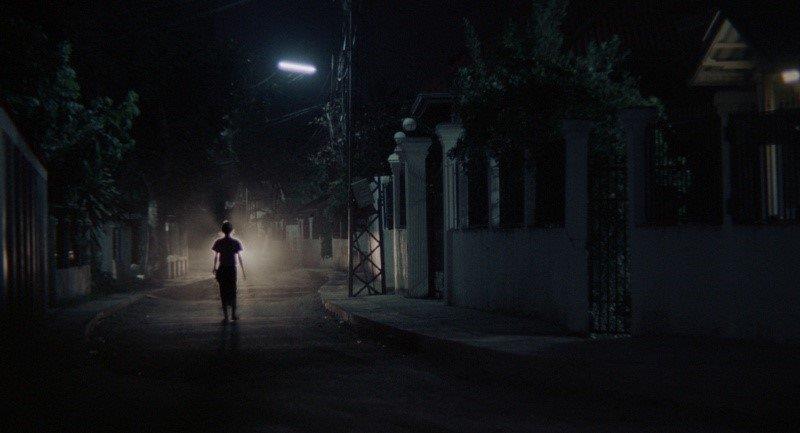
So you went into your first film with no directing experience or formal training! How do you prepare for that? “Well, this is what came out of the argument with my husband after the meeting. (laughs) How do I direct!? So my husband pulled out a book, this big black book called Directing. That was it. It was called Directing. He said, ‘Read this. You’re going to be fine.’ (Laughs) And then it kept talking about other films, classic films, that I had never seen. I’d have to stop reading it all the time and ask my husband about the film it mentioned. So, he’d have to explain to me in regards to the situation. Sometimes, he’d have to buy the movie and show it to me so I could understand what the book was talking about (laughs). It was hilarious.
“I mean, I still don’t know anything about good films. People are always comparing my work to other films. And I’m like, ‘I have no idea what you’re talking about.’ (Laughs)”
Did you feel stronger and braver going into Dearest Sister? “I don’t feel stronger and braver. Something my husband points out is that, I don’t think and because of that I go into things normal people wouldn’t do. They think I’m fearless. I just fucking don’t know any better!
“You know all those long tracking shots you see in Dearest Sister? Even my DOP was like ‘I don’t have a focus puller, I don’t have an AC. I don’t even have a team. I’m just a guy with a camera. This is going to be really hard to do.’ And I just looked at him, and not to be confrontational, I was like ‘Well, can you do it or can’t you? Because this is what I want.’ And everybody thought I was putting him on the spot, and he was like ‘I can do it!’ And we did.
“Film is like ballet. It’s choreography at the end of the day. In ballet, I’ve only got one take on the stage. Anything that happens, that’s what’s recorded and burnt into the retinas of every audience member forever. At least with film, I can go ‘Whoops! Kidding! Let’s try that one again.’”
In previous interviews you’ve said, ‘I am the horror community.’ Is that really true? “I am. (Laughs) And it’s funny because when people ask us to write an introduction about Laotian films, we talk about the melodramas, romance and thrillers. Then when we talk about horror, we say ‘Mattie Do directed the first horror movie in Laos. And the second.’”
Do you feel any pressure with that? “I don’t feel any pressure because it’s just what I do. The pressure I feel is the responsibility to do something that isn’t an imitation of other Asian countries. People in Laos are pretty horror savvy now, because they had a great pirate market with bootleg DVDs. Then they had two [cinema] theatres, when before it was bootleg theatres with an office projector. So they know Thai horror extremely well. They know some Korean. They know a lot of J-Horror because of The Ring and The Grudge. So I feel this great responsibility to do something that is Laotian, because I don’t like this idea that we have to imitate everybody else. We’re like the redheaded stepsister of Asia, (Laughs) and I don’t want the stepsister to have to dye her hair black to match her other relatives.
“To be honest, I’ve been putting what I see around me, that feels authentic to me, on screen. I mean, we don’t act like Thai people, we don’t act like Japanese people. Yes, we have the Asian thing, but we’re super different.”
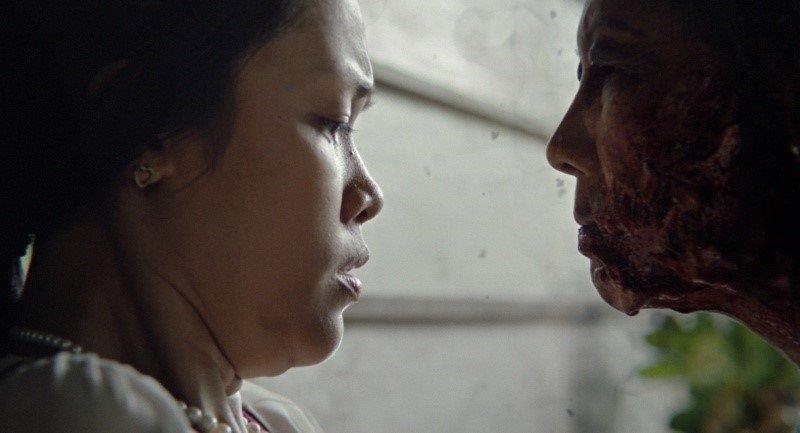
Both your films are subtle. They’re ghost stories, but you’re about the women and the characters first. “I wanted to do the subtle thing because one thing I’ve noticed about Laos is that they always feel like there’s spirits around. There’s always ghosts. Hence a spirit shrine outside every home and building. Sometimes when something happens they’ll jump to a supernatural assumption. ‘Oh maybe, we didn’t do the ceremony on this and maybe there’s nature spirits lingering. So maybe we should do a blessing on this land.’ And this stuff is normal. If we said this in the States or Europe, it’d be like ‘Are you insane?’ Your boss would pull you in and say, ‘you can’t just suggest to your team members to go buy incense and candles.’
“And that’s one of the reasons why I wanted to make the ghosts feel ever-present in my films. They’re always there and they’re part of the fabric of these people’s lives. I wanted to focus more on the characters because I feel like with a lot of old fashioned horror movies it’s jump scare, jump scare, jump scare. You almost don’t know anything about the characters and the women are just a receptacle for getting killed or being scared. And I really didn’t want that. Especially when my whole goal is to show how awesomely different we are here. In order to show that, you need to see how our stories and our voices differ from the other places. So, I wanted to make something that was ultra-character driven, ultra-focused on the lives of the people and the decisions of the individuals, and I hope I did it (laughs).”
And Dearest Sister is the middle part of a trilogy, isn’t it? “Yes, it is, but I don’t know when I’m ever going to be able to finish off the third one, because my third film isn’t a part of this trilogy. I mean, I want to do a female driven trilogy. I want do something about women because I noticed in Laos we don’t really have films about women. All the women are non-characters; they’re arm candy or victims. Women in Laos are super interesting, they’re really different from men in Laos. It is kind of a male orientated society, but at the same time, we’re proud of our strong women as well.
“In Chanthaly, it’s about a girl and her place in her family in Laos; Dearest Sister is about women and their place in society in Laos. I really tried hard to show different demographics. The third one I want to do a woman and her place in foreign society. So I want to go to a country with snow, and do something crazy in the country with my actresses who are always different characters, but I love them. They’re pure, raw talent, you know.”
Aside, from scaring people, what are you are hoping people will take away from your films? “I hope people take away that genre films can be unconventional. That what’s terrifying in film doesn’t always have to be jump scares. It doesn’t always have to be something horrific and gory. People and their intentions are much more terrifying sometimes.
“I also hope that people take away that Laos is different from the rest of the world, and yet at the same time we share many of the same problems to the rest of the world. Our plight is similar. For instance, our women and characters in film are extremely flawed. When people watch that, they can associate with it but at the same time, they can look at the film and say ‘Laos, this place is unlike anything that I have ever imagined before. It’s different from the rest of Asia, it’s different from the rest of the western world.’ And I hope that they like it!”
Dearest Sister plays at Monster Fest.
