



by Flynn Shan Benson
Worth: $15.00
FilmInk rates movies out of $20 — the score indicates the amount we believe a ticket to the movie to be worth
Cast:
Dmitriy Mazurov, Iris Lebedeva, Yuriy Zavalnyouk, Boris Kudrin, Vladimir Friedman
Intro:
… elegantly realised …
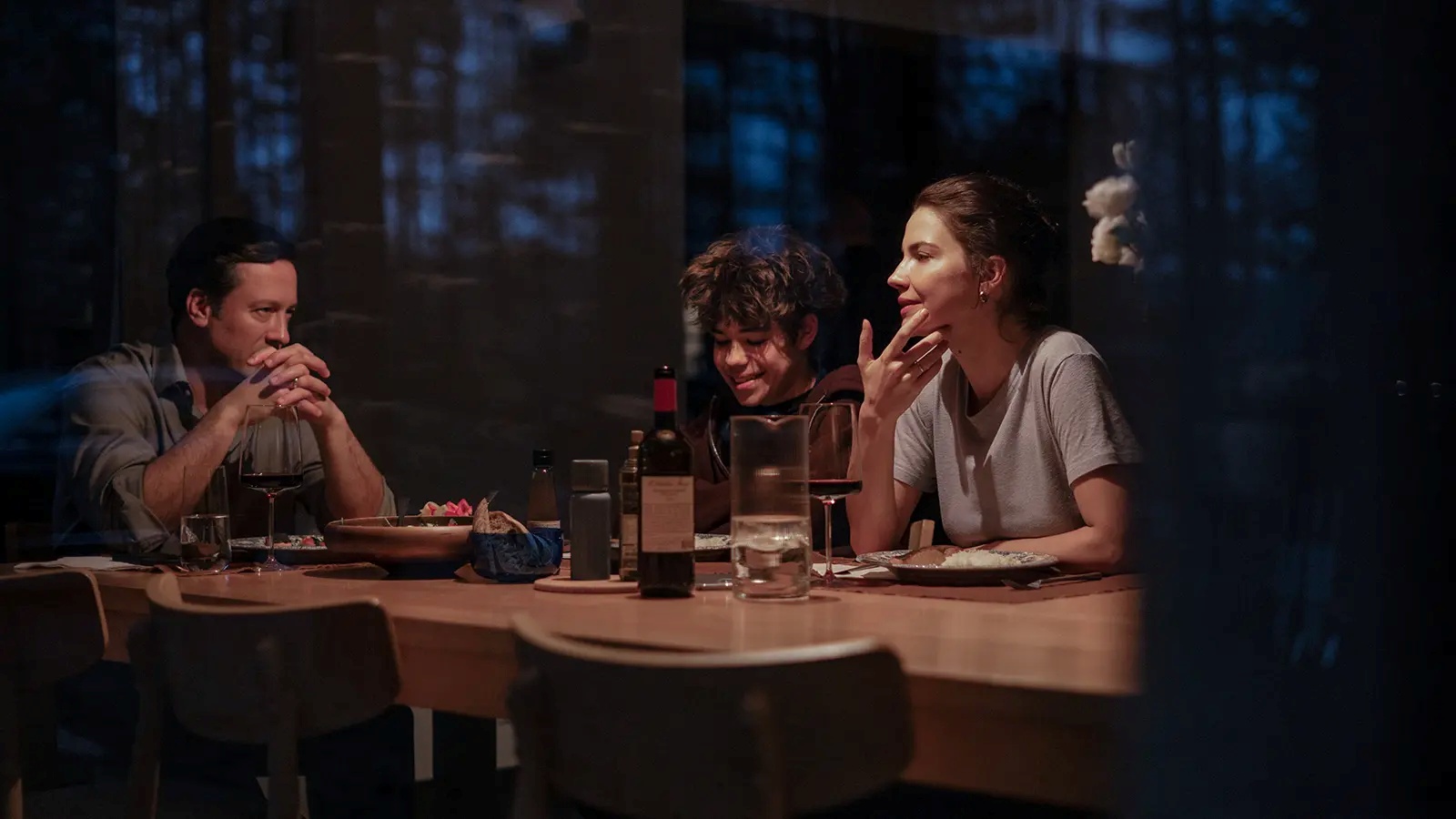
Alexander Zvyagintsev’s Minotaur is set in Russia – filmed in Latvia, and financed by France – though its central couple lead such anonymous, cosmopolitan lives, where interiors, cars, lingerie, and iPhones all come in the same palette of neutrals and darks, that they could be anywhere in the world. But because it is specifically set in Russia during 2022, these chic surfaces come tinged with the dread of what will unfold.
Our protagonist, Gleb (Dmitriy Mazurov), is the head of an import-export firm in an unnamed Russian town. He has enough status to be invited to dinner with the local business elite, who complain about having too many servants while their wives make chit-chat about plastic surgery, though he is yet to join their echelon, settling instead for a wife who does the housework and is within a decade of his age (Iris Lebedeva).
What ensues, as will be recognised to any viewer familiar with Minotaur’s inspiration, Claude Chabrol’s The Unfaithful Wife, is that this petty man discovers that his wife has taken on a lover. Though Gleb does not himself subscribe to fidelity, her actions are an affront to his reputation — all the more because he is cuckolded by a younger, lither, artistic man (Yuriy Zavalnyouk), who lives in a shabby apartment.
Minotaur is an elegantly realised enactment of a familiar plot, one where jealousy and stupidity incite murder, where guilt spreads like an infection, and justice hinges on the chances and connections of a corrupt world.
But Zvyagintsev (The Return, Leviathan, Loveless) is not interested in making something quite so simple. At the same time that Gleb is acting as the erotic thriller’s protagonist, he is also called on to provide a list of men from his company to be sent to the conflict in Ukraine — a modern play on the mythological Minotaur, the monster hidden in an underground labyrinth who requires the sacrifice of Athenian youths to be appeased.
Against this miserable proposition, the violence at the centre of the film becomes a surreal counterpoint to the horrors of the war beyond its borders. Even as he shows the grotesqueness and futility of bludgeoning someone else to death, Zvyaginstev suggests that it is more honest, more moral, if messier, than consigning legions of men to a pointless death from an office in Moscow.
The camera pointedly attends to the faces of the men chosen for the front, acting out a care and humanity that is not and could not be shown by those orchestrating the war.
Mazurov is brilliant in his performance as Gleb, portraying a man who wishes to get ahead in a corrupt society, but is not a violent sociopath. Instead, he is simply an unthinking man, one who dispenses clichéd advice, who has a generic style, ineffectual twinges of morality, and, in a more just world, would not be evil.
Although Minotaur lacks the nuance and depth of Zvyagintsev’s earlier films, feeling more like a visceral reaction to the state of Russia today, it is hard to be too critical: Ukraine is now in its fifth year of war, countless lives have been lost on both sides, countless more upended, and there is still no end in sight.
If you look to your country and see it run by a monstrous man, isolated from the world, demanding the slaughter of innocent young people, you may choose to make a film called Minotaur?
