


by Ashley Sullivan
Her directorial debut A Bold Choice focuses on the nuance of language and how neurodivergent people interpret words and idioms differently to the norm.
Here, she sits down with Ashley Sullivan to discuss A Bold Choice, making local content as an actress and neurodiverse representation in media.
Hi Jessica! Can you begin by introducing yourself?
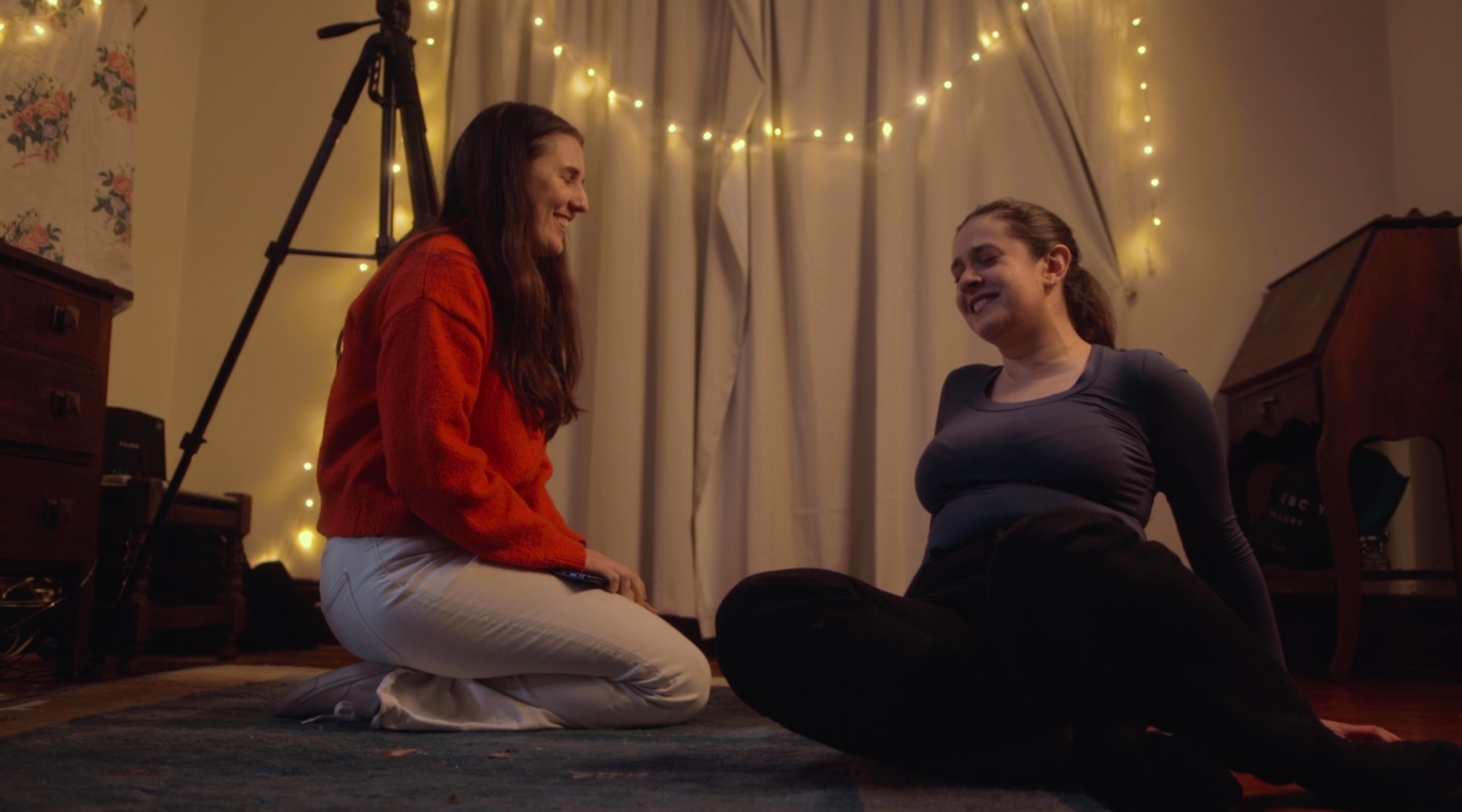
I’m Jessica, and I am the actor, writer, director and producer of A Bold Choice, which is a short film that will be featured in the Focus on Ability Film Festival this October.
Tell me about A Bold Choice.
A Bold Choice is about my experiences as an actress and about how when I was in acting classes, people would always tell me to make a bold choice when it comes to performing. It seems like the most obvious phrase, but I didn’t know what a bold choice truly meant. How bold is bold? There
never really was litmus, it was just this phrase, and it bothered me.
I dreamt up this scenario where I made this proverbial bold choice, and then realised it was “too big”, but I was like, ‘Hey, I was just performing that principle’. The film is about language and interpreting language, but it’s also about trying new things and focusing on how you can always get back up and start over. Words and phrases and actions are never finite; they can always keep evolving.
 What’s your previous history with filmmaking and acting?
I’m primarily an actor, so I’ve done a lot of community theatre, short films, commercials etc. I studied media arts and production at UTS, and I graduated just as the pandemic was hitting, so the past two years have been very quiet. That really inspired me to take things into my own hands by making my own work and starring in it, and I would love it to be the first of many projects. As much as I enjoyed acting, directing, writing, and producing, it was really difficult, so I’d love to be in a position where I can hire my own team. However, if you don’t have those resources, it’s really
empowering to be able to really challenge yourself and put yourself first and take that step. I realised that you have to put yourself out there first for people, because once you can show your potential with very limited resources, just imagine what you can do with the world at your disposal.
Is this the first time that you’ve had to tackle that many different roles?
This is really the first time that I’ve done those big four roles at once, and it’s my first time directing. It felt like a lot, even though it’s such a short film. But once you’ve done that many things, you realise how much you can do.
What was the transition like from acting to directing?
I think acting really helped me step into writing and directing and producing. Writing gives you the imagination that an actor has while directing is about actually bringing them out of yourself. I realised that I was quite decisive, and I was able to articulate what I wanted clearly, and that came from me laying it out and doing so many drafts. Producing the film connected me with so many people that I collaborate with, and it taught me that acting gives you the skills to tackle all of those different roles. It was fun to create my own work as I enjoyed not needing to wait on others or limit my ideas.
What did your creative process look like?
It was based on a lot of personal experience, but it was more satirical as I really wanted to show how ridiculous some phrases can be interpreted because a lot of people might say something but not truly know to what effect. There’s always baggage with these phrases and idioms, and that’s not always picked up on.
I also wanted to show how inaccessible the auditioning process can sometimes be for actors. The process can feel really limiting at times because we have to film in a certain way and perform the script in a certain way, yet they’re telling us to break out of the mould. It seems there’s always the concern of what’s too much and what’s not enough, and you can never really know. I think a lot of non-actors will also relate to this experience, especially neurodivergent people.
How long did the film take to complete?
I probably had eight different drafts of the script as I was going to have a different setting and different characters, but I decided to downscale it and play the self-taping angle due to COVID-19. At one point, I had written three drafts in 24 hours; that’s how quickly the film changed (laughs). The
film probably took about two months to complete. In early June I was thinking about creating it, mid-June I thought, ‘Let’s go’, mid-July I filmed, and early August was when it was submitted.
How did you find the process of trying to tell a story in such a short timeframe?
For Focus on Ability, all the shorts must be under five minutes, so I knew I had that litmus, but I don’t think it could have been told longer. Some people told me that they would have liked to see the film go on longer and learn more about the characters, but for me, in terms of the messaging and the content I wanted to get across, I think it was enough time. My approach with this film was to get the core message out as soon as possible because you don’t have to play with fancy angles and words. Sometimes the best films and the best sequences are the shortest.
What has been your experience as an actress with neurodivergence?
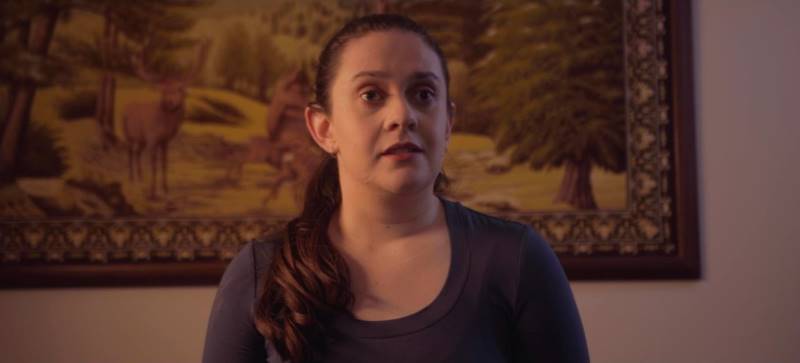
It was something I used to hide because it was something you never saw on television or in film, and in society it’s completely ostracised. I realised in the past year and a half now that things are changing; there are more roles for Autistic and ADHD actors, and I realised that if representation is going to happen, I would rather it be done properly. It was really hard because there is a lot of shame in society about those conditions, and I felt that shame for a really long time, so I guess A Bold Choice was making that bold choice to actually talk about it unapologetically.
There are definitely some moments where I think, ‘I hate this system, I hate this process, I can’t do it’, but there are other moments where I think, ‘Actually, this is a strength of mine, I have a great memory, and I have good storytelling abilities’. It’s not always that easy, but things are getting better.
How would you like to see better representation of neurodiverse people in the media?
Actual representation of neurodiverse people in neurodiverse roles is a good start. If there are roles out there that aren’t specifically neurodivergent, neurodivergent people should be in them in any way possible because neurodivergence looks different with every different person. I’d love to see more stories and more inclusion behind and in front of the screen, not just in scripted media, but also as news broadcasters and in education roles. I think we’re finally starting to get better at that, but we definitely have a long way to go. I’m glad to finally be embracing that and feeling like I can portray it without feeling afraid or ashamed.
How has this experience changed your perspective on both a professional and personal level?
In the past, I would be like, ‘Oh my God, everyone is going through the same thing; how am I really any different?’, but in creating this film, I was processing how differently I interpret things, so it was quite a good reminder of how different my brain works. I felt that it was a good way of portraying my neurodiversity, and I think that’s a great storytelling tool. It made me realise that I wasn’t alone.
Differences in interpretation can be so vast, and not everything is just this plain and simple delivery for people. Autism is really just differences in communication and processing and socialising. Our first response is always our social norms, and our second response is our non-socialised response. All creatives are insecure, and I will still have insecurities, but what I’ve realised is, if you’re aiming to connect with people, no one is going to care about how you look, how you seem, or what you’ve written about. They’re going to see that you’ve produced something that you want to connect with
others, and that’s what will matter.
What advice do you have for aspiring actors who are neurodiverse?
I would say you are the best point of difference from everyone else. I would also say to always ask questions, even if you think they’re silly, and always ask for clarity. Bring pieces of you to more than you do and know your boundaries. Know what you need and speak up for any access requirement that you require. Your comfort is the most important thing for you as a person, but it’s also going to make you the best performer you could possibly be.
What does the future look like for you?
I definitely want to perform more and want to get more projects off the ground. I don’t feel finished with A Bold Choice; there is still a lot more to do with promoting the film and going to festivals. I I want to have the opportunity to keep on creating, and there is a short film that I’m really excited
about working on soon.
