


By Gill Pringle
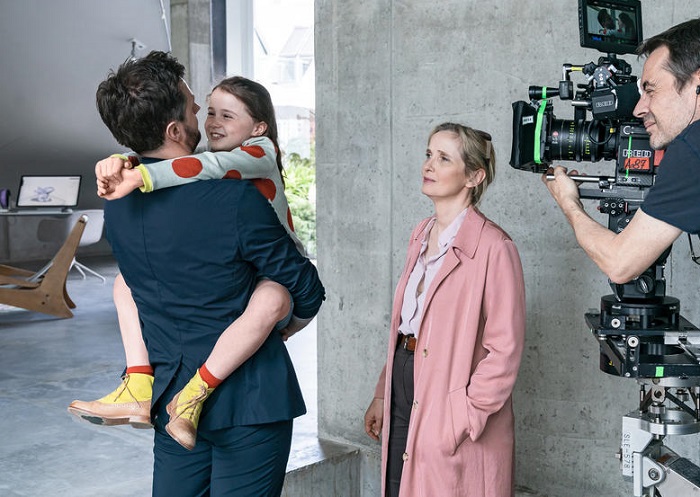
“I started thinking and taking notes about this film over 20 years ago,” writer/director Julie Delpy has said of her new film, My Zoe. “It first came to my mind discussing with [director] Krzysztof Kieslowski about parenting, love and fate. The film is about the unconditional love that you feel as a parent. It was a very profound process to write it. I gave it all the truth I had and I hope it resonates with others.” A punchy, emotionally fraught effort from ever outspoken and honest French actress turned writer/director Julie Delpy (who has proven herself a daring and gifted filmmaker with titles like Two Days In Paris, Days In New York, Skylab, Lolo and The Countess), My Zoe dives headfirst into the complex subject of broken relationships and parenting. Against the backdrop of contemporary Berlin, Delpy’s driven French/American immunologist, Isabelle, engages in a perpetual dance of slings and arrows with her British ex-husband, James (Richard Armitage), as the pair constantly butt heads over the custody arrangements of their daughter, Zoe (Sophia Ally). But when tragedy strikes, the dance temporarily slows, and Isabelle begins a dark journey in which her entire moral being is thrown into freefall.
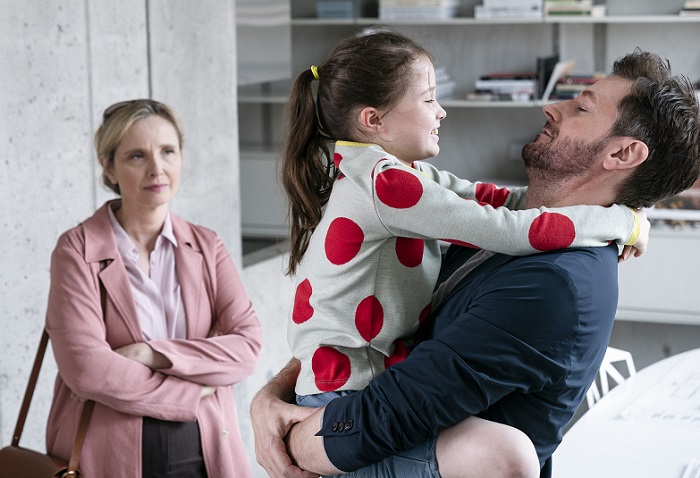
Anybody that has gone through child custody will totally relate to this…
“You know what I find interesting? I’m in California, and there is a lot of talk about equality. Men and women are not treated equally in society. It’s easier for men to make more money. It’s easier for them to get this and that. It’s easier for them to even go to the gas station and have their car cleaned. They will fuck you over in America if you’re a woman. To change your tire, they will charge you 20% more if you’re a woman. They always find a way to fuck over women. There’s no equality in opportunity, no equality in pay. But, when it comes to child custody, suddenly men can ask for equality and feel that they should be treated equally. But if that’s the case, then there should be equality at all levels. Not just when child custody happens. There’s so much more empathy towards men during a child custody battle, because there’s hundreds of films on the subject. Men have been able to express themselves on the ache of having to fight for child custody. But women, how many films have been made by women on child custody battles? Almost none. And that’s when I realised that there’s empathy, even from women, towards men during a child custody battle…as if the woman is always the one getting the house, the car, the child, and the money, when it’s not true. It’s not true at all.”
And then when the man gets the joint custody, they’re just going to get their latest girlfriend to do the job for them…
“I didn’t say that! You said that! You said that! Let’s get off this horse now! I think it’s also about nature. When a man leaves a woman at 45, he’s going to go have a new family. A woman is not going to go have a new family. It’s going to be that child and that child only. That makes a huge difference. A man can choose to have kids at 70, which is really sad. I’ve seen friends do it and it’s really pathetic. What I’m saying is that society is unfair to women in that sense, and why should it be 50/50 on children, when the men can go off and have more kids.”
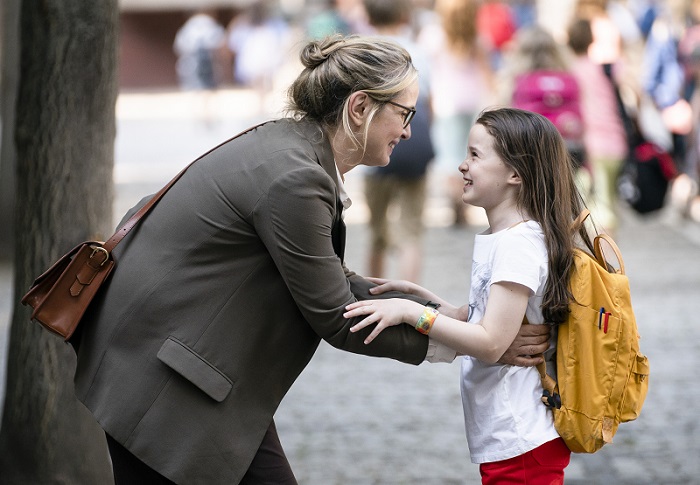
Nobody complains about men having to work long hours when it comes to custody bottles. Isabelle is always being criticised for that all the time by him.
“That is a common knowledge. When women work, they’re being judged. And if they use the nanny, they’re being judged. It’s actually funny because even my own son, when I’m working at home, he’s complaining. When his dad’s working at home, he’s not even talking to him and lets him just do his job. But with me, it’s like, ‘Why are you writing?’ It’s interesting to see that, but it’s unfair. We need a little more…50/50 is bullshit. I’m very harsh on that, because I just feel it’s not right to give share a child 50/50. The mother should have the child more. And that’s really saying something that’s taboo in a way. We don’t have a chance to have other kids. We have all sorts of issues that should allow us to not be on a 50/50 regimen. I just don’t think it’s good for a child.”
I wondered why you chose a British guy…is it just because British guys are arseholes?
“No! I love British guys. When they’re not drunk, they’re wonderful guys. I love the Brits. I’m actually part British…I’m from Brittany. I didn’t really see an American man in it, you know? It’s more of a European environment. I always envisioned a British actor for this part. Some scenes are almost theatrical, and I felt like the delivery of a British actor would be the right thing. And then I met Richard, and I was convinced that he was the right person to play that part. And he really wanted to play it. It’s not an easy part…I did speak to a few American actors and they were like, ‘Oh, can you make him a little nicer? I really feel uncomfortable with the way he says it.’ There’s that political correctness in America. Americans don’t have a problem playing serial killers and killing women, chopping them up to pieces. But when it comes to playing an everyday, abusive husband, they don’t like it suddenly. They get a little nervous in playing abusive. They want to be the bad guy that’s a little nice. They don’t want to play an abusive husband who’s just saying shit to his wife. It’s not noble. But listen, I love men. I really do. I have so many male friends. And I really have a lot of empathy for men actually. But I feel like if men can do it at 70, why can’t women do it until 55 or something? If men can do it, why not women?”
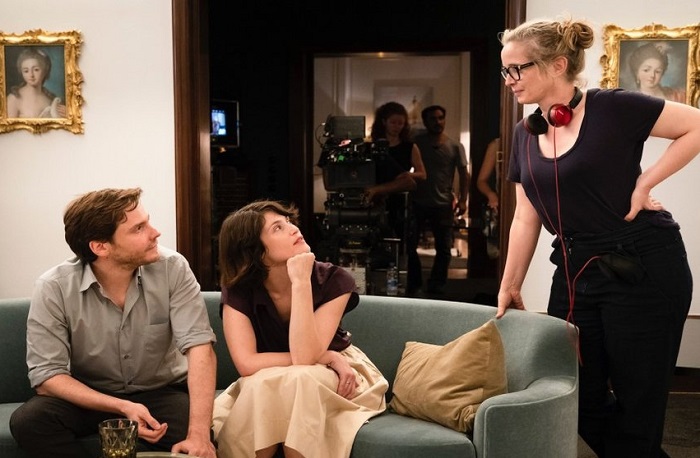
You seem to be very fascinated by motherhood…mothers and children, and how toxic it can become…
“Or obsessive. Yeah, I know. I’m obsessed with my son. He’s just amazing. He’s my favourite person on earth. I know that relationship, between parents and children. I was also raised by a mother that was very, very obsessed with her child, and also having one child, and I have one child. It’s kind of a weird thing. The only child thing also brings a lot of intensity to the table. My son knows that I’m fearful. I’m warning him about everything. But the truth is, you can never avoid some things. But I was very paranoid as a child and it made me go through life unhurt. A little degree of paranoia is not bad for children. That’s how you raise children. You tell them not to cross the street without looking. You tell them not to follow a weird guy that tells you he has a puppy in a car. You have to raise children that way. You can’t say, ‘The world is a beautiful place. Just go, my child.’”
What were your inspirations on the film?
“It’s always been in my mind. I was nine-years-old when a little boy in my school was killed on the campus. He was decapitated by machinery that wasn’t supposed to be there. I always remember the mother of that child. It was horrifying. She never recovered. And it always, always was in my mind, all my life. And this was the late seventies in France, so forget about kids being shown to a psychiatrist after seeing a child being decapitated. I was blamed for saying the truth to the police afterwards. The machinery was not protected. I told the truth, and people would scream at me saying that I was a bitch, when I just told the truth.”
That explains so much now…
“I also know a girl that lost her 11-year-old daughter and I’ve never forgotten the eyes of those people. I can never forget, and that affected through my entire life. When I was writing the screenplay, I was speaking to friends of mine and they were like, ‘Why are you writing a screenplay about this? I don’t even want to think about it.’ The film is radical and a bit taboo. And some people will be upset by it. But I didn’t want to make a depressing film. I wanted to address something that’s very deep in our fears and my fears and also to try to find a resolution to it. And not mourn, because I’m tired of seeing people mourning in films. Isabelle doesn’t go through the process of loss. In a way she refuses it. And I’ve always been fascinated by people that go against human nature and humanity. When I did The Countess [about notorious murderess Elizabeth Bathory, who bathed in the blood of her victims in search of eternal youth] my obsession was with someone who refuses death. But every medical progress is really against nature…if you think about nature. There are religious cults that don’t allow people to take aspirin, you know? But it fascinates me because it’s really, really profound in human nature: this need to transcend what we are. That’s what I was fascinated by.”
My Zoe is released in cinemas on June 17. Click here for our review.
