



by Abhi Parasher
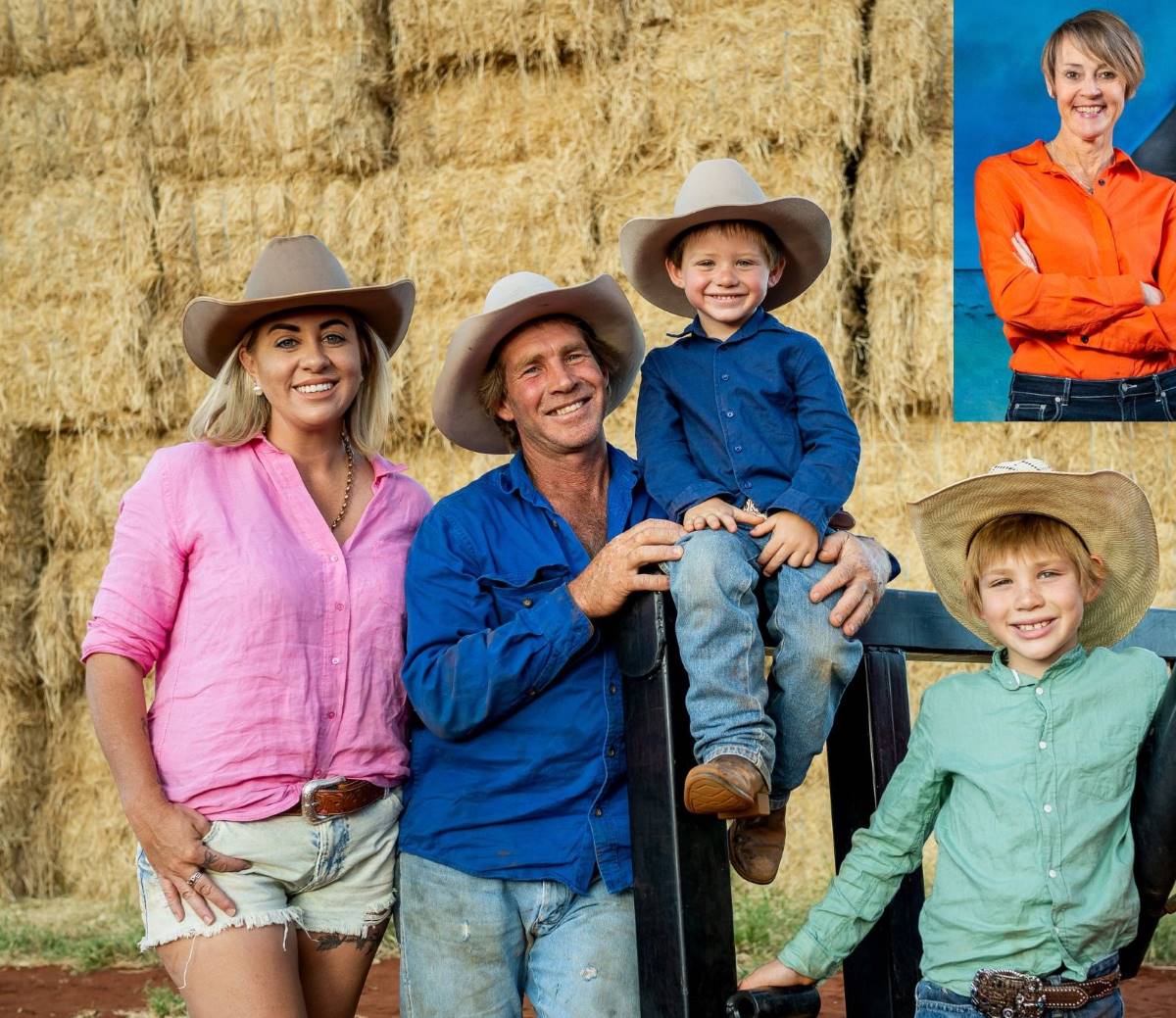
While the outback’s rugged landscape and extreme conditions remain alien to most, Julia Redwood, Managing Director of Prospero Productions, has a familiarity that brings to the screen an intriguing perspective.
“When you are remote, in an area with extreme temperatures and little to no mobile contact, you have to be prepared mentally, more than anything,” says Redwood. “Psychologically, it can get you down. It’s a grind in those types of conditions. However, as filmmakers, it is incredibly exciting to be in that environment, and you want to capture as much of it as possible. Those are the high stakes we want to play with.”
Prospero Productions’ 6x 1 hour episodes show Outback Farm deals with these elements and more. The show follows the Outback Truckers family, first-time farmers, Anthony and Danyelle Haigh, and their two young sons, who have sold everything and moved to a remote, ramshackle 5000-acre farm, slap bang in the middle of Australia to grow hay in the desert.
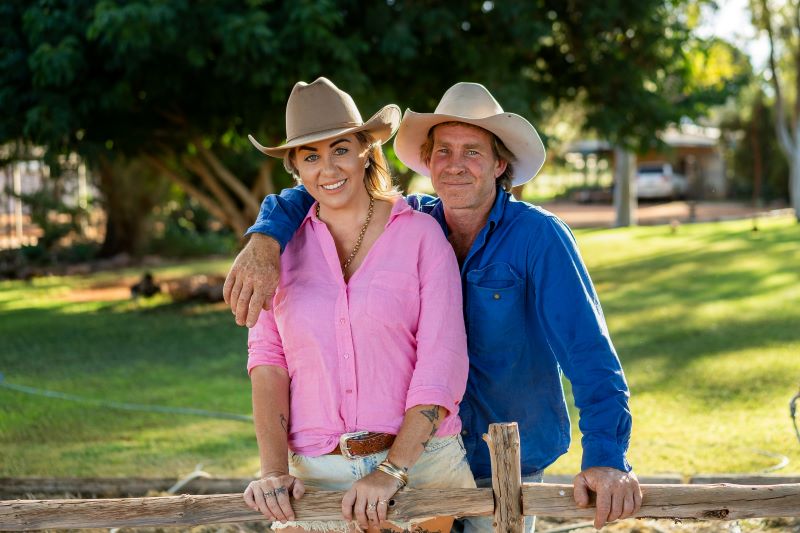
“These are people that are taking incredibly high risks with stakes that are unfathomable. They are stakes that no one would usually gamble with. You see this family put everything on the line, and the question we ask is ‘Will they/won’t they succeed?’ That is what is so exciting about the show.”
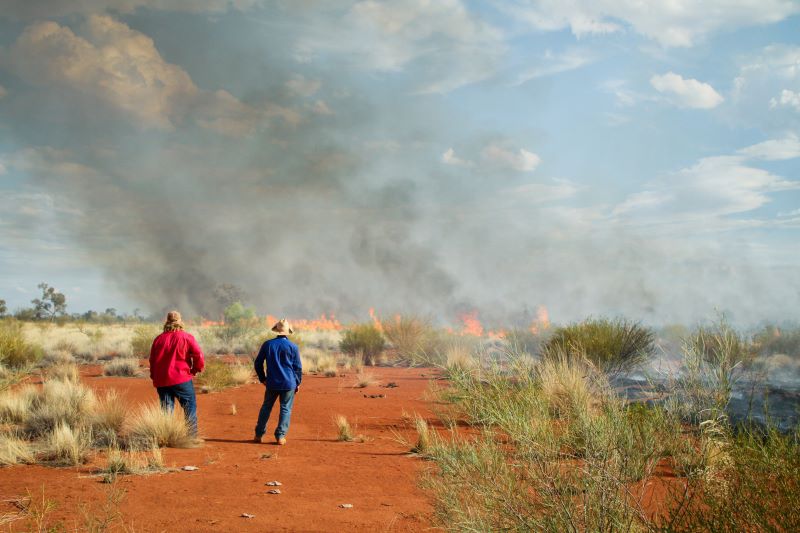
Outback Farm takes the audience into an area of the world that is foreign to almost everyone, including Australians. With the nearest hospital two hours away, even the slightest inconvenience could prove detrimental to the farm.
“It is inherently dangerous, epic and vast by nature,” Redwood says. “The show pits humans against the elements. We have that in very rare cases. Maybe Alaska is an example where we have seen something similar. There aren’t many locations in the world where we can do that, but I guess we are lucky to still have that in Australia.”
Despite its unmistakable Australian identity, Outback Farm, like Prospero Productions’ other outback-themed show Outback Truckers, resonates powerfully with international audiences, with crucial international investment from Discovery.
“Those that can survive, live in and overcome these types of conditions, are elevated,” explains Redwood. “If you can survive that, you have to be tough. International audiences tend to say ‘God, those Aussies, they are bloody tough’. I think it is that part of the Australian character that is exciting to the international audience.”
Interestingly, the appeal of these shows often sparks a surge of overzealousness.
“With these sorts of shows, there is that feeling of, ‘I can do that’. They are not alienating shows. They embrace the human conditions and the challenges of being a human. It is accessible and tangible with real people. They are not elevated, lofty characters, they are down-to-earth, could-be-me type of characters.”
Adding to the accessibility is Jason Donovan, who narrates the show.
“Jason was a decision from Discovery, and what a great call it was. But also, for marketing, Jason is a highly identifiable Australian, especially in the UK. Putting those things together, people will immediately be like ‘Oh I know what to expect’.”
Although shooting in arid Australia is a risky enough endeavour, observational docos [ob-docs] present another set of obstacles that are usually out of the hands of the filmmakers. First and foremost, the story.
“The scary part of shooting an ob-doc is the story unravelling as you go. But that is also the magic of observation. It is undeniably real. It is genuine and authentic, and the audience will pick up on that. Increasingly, in our world of television, there is a resistance to observational because it is risky for the broadcaster,” says Redwood. “They want to know what the end of the story is, and my response is always ‘I don’t know’. It is not a drama, so I don’t know what the end of the story is. All I know is that if you put these two characters in this environment with these stakes, life will happen, and it will be interesting. It is a challenge in today’s world where broadcasters want certainty. Luckily, Discovery and 7mate rolled the dice with us.”
Redwood, who recently became sole owner of Prospero Productions, has high hopes for the future of the company.
“Prospero is really busy, with 56 hours [of content being produced] this year. 5 series all in the factual space,” she shares. “We will never stop doing factual, because it is our bread and butter, and we love it. But there is an opportunity here in the West for scripted, which we are developing.”
Looking ahead, Redwood offers her insightful projections for Western Australia’s creative industry landscape.
“I really think this state is about to go off. What we need is a couple of triggers that need to click. For example, increased support from the state government will unleash the industry here. We have an industry here that is largely in the factual realm, but with increased support from the state government, which we are on the verge of, we will see a boom time in WA. Especially with the studio coming here as well.”
Outback Farm premieres in Australia on Tuesday August 22 on 7mate.
