



by FilmInk Staff
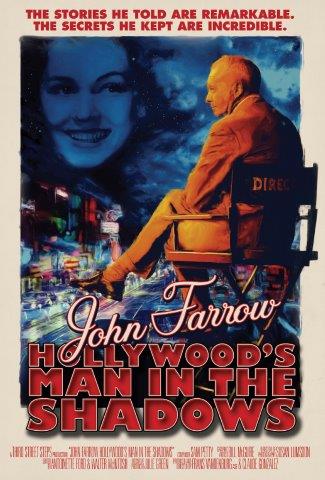
John Farrow: Hollywood’s Man in the Shadows is an outstanding new feature documentary about a major Australian director whose career has been largely forgotten or overlooked until now.
Born in Marrickville, Sydney in 1904, Farrow died young at fifty-eight in 1963 just as interest in Hollywood’s Golden Age began to grip the imagination of film buffs worldwide.
Like so many of Hollywood’s best, Farrow was adept in most genres and brought imagination and vigour to B movies, sometimes making as many as five films in a year.
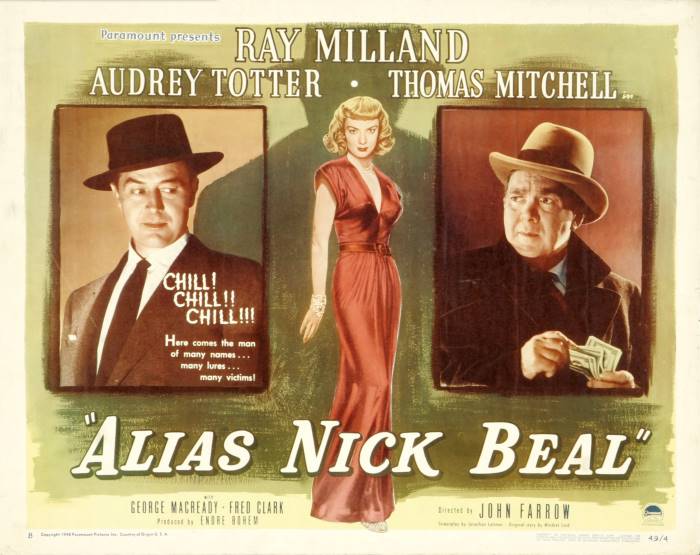
Amongst his best pictures are: Five Came Back (1939) and Wake Island (1942); the sea-going adventure Two Years Before the Mast (1946) with Alan Ladd, the western Hondo (1953) and The Sea Chase (1955) with John Wayne. Farrow was a master of film noir as seen in Alias Nick Beal (1949), Where Danger Lives (1950) with Robert Mitchum, A Bullet is Waiting (1954) and the classic The Big Clock (1948).
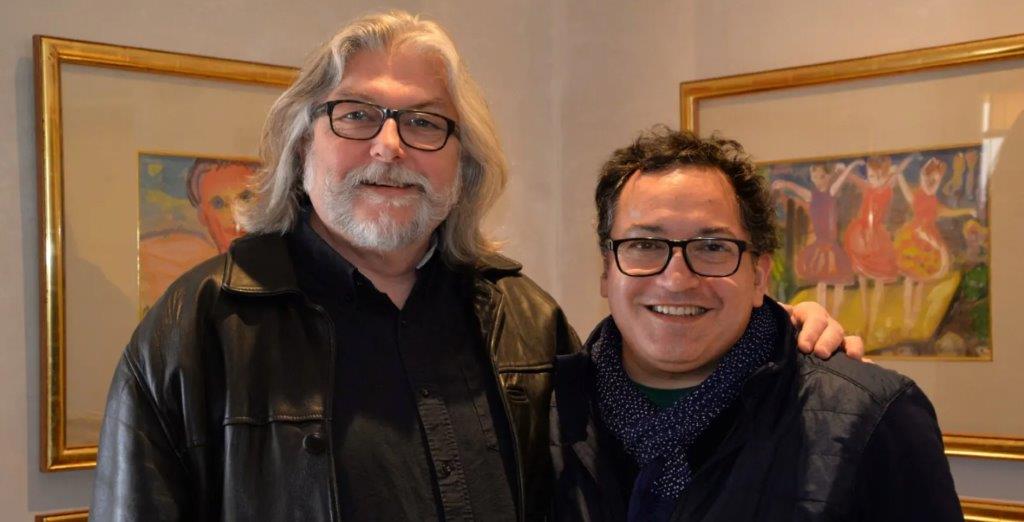
For filmmakers Claude Gonzalez and Frans Vandenburg, Shadows was a decade-long detective story and labour of love as they chased down leads and unearthed friends, associates, colleagues, family, and critics from all over the world, so they could tell Farrow’s story.
Lively, fascinating and brimming with insights, Shadows features little seen archive, and great interviews with David Stratton, Phil Noyce and Philippe Mora and many more. Meanwhile, co-directors Gonzalez and Vandenburg spoil the viewer with superbly edited excerpts from Farrow’s own pictures.
FilmInk spoke to Claude Gonzalez and Frans Vandenburg via Zoom on the eve of John Farrow: Hollywood’s Man in the Shadows’ Australian debut at the Sydney Film Festival.
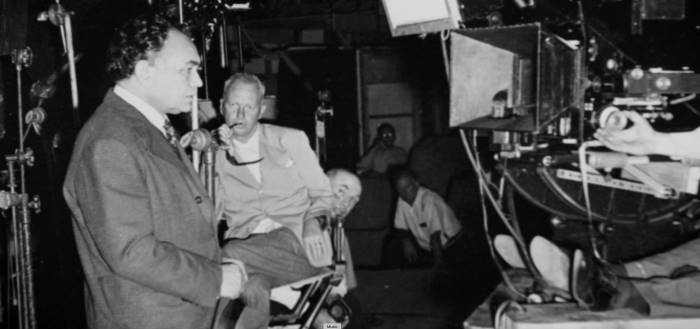
Australian filmmaker John Farrow is not a character that leaps out of the line-up of prominent Hollywood directors during the classic studio period of the ‘30s and ‘40s, even if he was perhaps the most prolific, with fifty films!
When did you discover him?
CLAUDE GONZALEZ “Between us, Frans and I have a library of about 2000 books on film related subject matter and nothing was there about Farrow.”
FRANS VANDENBURG “We both loved film noir. We both knew The Big Clock.”
Starring Ray Millard, Charles Laughton and Maureen O’Sullivan, it’s a 1948 crime thriller directed by Farrow and beloved by fans, but sadly not as well known as, say, Billy Wilder’s Double Indemnity (1944) or Hawks’ The Big Sleep (1946).
FV “I had not realised that this film, The Big Clock, which we both loved, was directed by an Australian and I thought that was extraordinary. ‘Why had I not heard about this guy before?’ That was 2006.”
David Thomson, famous author of The Biographical Dictionary of Film, and who appears in Man in the Shadows gave him an entry in that book.
FV “Thomson was very supportive. But he told us that it was a film that should have been made a long time ago. [He pointed out] that Farrow died in 1963. That was about the time the Film Generation: Bogdanovich, Scorsese, Spielberg, [those Cineaste filmmakers] started [getting serious]. Those guys celebrated those Golden Age directors – who were still alive in the Sixties; Ford, Hawks and Hitchcock.”
 Scholars and students [then] influenced each other. And there was a strong theatre circuit in the States, in the UK and even here dedicated to repertory, but somehow Farrow’s film did not rise with the now more famous names and until recently his films have been very hard to see.
FV “As Thomson says in the film, ‘we can’t write any more books about Michael Curtiz (Casablanca) and Hawks’. Farrow will float to the top because they [scholars] are waiting for the next genius to be discovered. [I think another important thing] is that he never made a big deal about his life as a filmmaker. His gravestone says: ‘Sailor and Poet’.”
CG “The [challenge] of the film for us was finding people who were still alive who might be able to illuminate something about him. Here was this very mysterious personality who left no archive, no interviews, no books, nothing really on his filmmaking or life.”
FV “[He had a reputation] as a ‘journeyman’ [Ed: code for no individual personality], a guy who just did routine assignments, who worked for the studio system. We discovered he was doing a lot more intricate work [in what seem like routine assignments].”
CG “Farrow was much like Hawks in that he gave a lot of energy and story to the female characters.”
As the film reminds us, John Farrow’s skills as screenwriter and storyteller were sought after and recognised. He was an Academy Award Best Director nominee for Wake Island (1942) and won an Oscar for Around the World in Eighty Days (1956) (best adapted screenplay.) Still, what’s great in your documentary is that you make a persuasive argument for Farrow as ‘studio auteur’ a figure with his own obsessions and very distinctive camera style… long elaborate camera moves, etc.
FV “Very few of the films we see about filmmakers actual analyse their work.”
CG “[The style of our film came out of answering the question] what makes Farrow so special.”
FV “Many [movies about filmmakers] are either talking about how many drugs the filmmakers are taking or how many people they have slept with, rather than what’s going on in their movies.”
CG “Farrow spearheaded the trip [for Australian film artists] to Hollywood. He was one of the first to go and make it. He was special because he was a stylist, excellent with actors… so the question was [for us], how do you show that? We came down to the idea that his films were reflections of himself.”
He was inserting biographical detail into his pictures?
CG “Yes. That’s why at times we stop the film to analyse those things in his films that resonate with the man. We did not want to go down the traditional road of the biopic with talking heads covering the milestones of a life.”
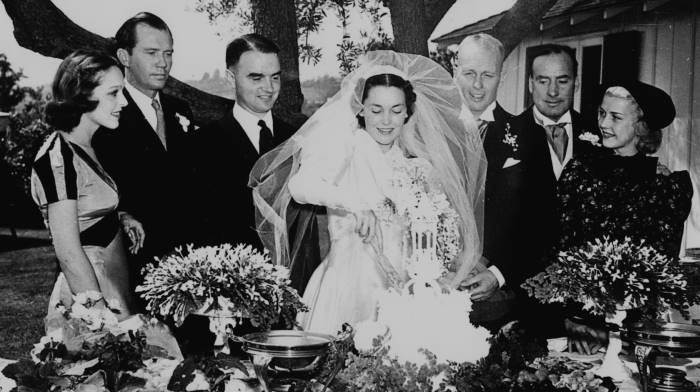
Farrow married movie star Maureen O’Sullivan (1911-1998) in 1936 and they had eight children, amongst them Mia Farrow.
She is not in the film, but there are excerpts from her bio quoted.
FV “She was the first person we approached. She was guarded. She said, ‘everybody who talks to me ends up talking about Woody’. That was 2011.”
CG “All the children were asked to participate. He was a shadowy figure, having died early in their lives. Part of his legacy was he left behind a very dysfunctional and damaged family.”
That’s dealt with very sensitively and movingly in the film. Was it the detective work that made the production take so long?
FV “Partly. But it was also that we were doing the film part time between our day jobs.”
 Did you go down the traditional government funding pathways?
CG “We did. We did not get much interest.”
FV “The big problem was ‘who’s John Farrow?’”
CG “We started to invest our own money. We were passionate about making the film [a certain way] and it is the film we wanted to make.”
In the end the film was financed privately.
FV “Claude has a lot of production experience and I have a lot of post-production experience… but we did not want to go back into the [funding process] because we would still be filling out those forms.”
How did your collaboration work?
CG “From the start, we said that we are co-directors and co-producers. We collaborated by speaking every day; by watching every one of Farrow’s fifty films and meeting every week in person or on the phone. Out of that we began to shape the film.”
This is a history film, film history, cultural history. It took over a decade to make. What do we draw from that?
CG “I don’t think we have a sense of filmmaking history [here]. I think the people who are funding films have legal or financial backgrounds – filmmakers aren’t coming up through the ranks [into those roles.] There are very few avenues for documentary makers.”
Since you started, Farrow’s movies have started to emerge…
FV “It’s great to see quite a few of Farrow’s coming out on home formats.”
John Farrow: Hollywood’s Man in the Shadows screens at the Sydney Film Festival
