



By James Mottram
“My standard purpose as a filmmaker has always been to emotionally connect with the audience, and that’s something I attempt to do in all my films,” said Jeff Nichols last year following his latest film’s premiere on the largest movie stage in the world, the Cannes Film Festival. “My approach to Midnight Special was exactly the same as my approach to Loving, which was to find the central feeling, or emotion, and try to connect it to the audience. The approach is always the same! I’m just trying to make the behaviour as honest as I can, and make the emotion land at some point.”
Nichols broke out at Sundance with the familial drama Shotgun Stories, then the powerhouse God vs. mental illness Michael Shannon tour de force Take Shelter, the Huckleberry Finn-like Mud featuring Matthew McConaughey, and last year’s deceptive sci-fi road movie, Midnight Special. You might say that his signature is Michael Shannon, who features in all of his movies so far, including Loving, his latest. However, a more fitting description would be that they are all understated stories of the South, which despite their modest box office receipts are embraced by critics and high calibre actors.
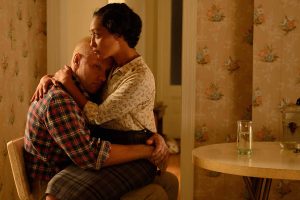
Loving is the true story of Richard (Joel Edgerton) and Mildred (Ruth Negga) Loving, an interracial couple who go all the way to the US Supreme Court to challenge their arrest for miscegenation.
So how did you find out about this story?
I’m ashamed to say, I hadn’t heard about this story before. My agent sent me an email, and said ‘There’s this documentary that they wanted to make into a narrative feature, and they’d like you to consider it’, and I watched the trailer for the documentary, which was amazing, and then I watched the documentary, which was even better, and it just immediately struck me on several levels. There are lots of things that I watch that I’m affected by, but there are very few things that I feel like I have a personal connection with. I’ve been making Southern films for a while now, and I purposely avoided the subject of race! As a contemporary Southern storyteller, race is such a huge part of life in the South, that I felt like I needed to almost avoid it and tell other stories in the South, so that topic didn’t dominate those other stories. I had other things to talk about! But that doesn’t mean I was oblivious to the issues! And so, this felt like the right story to approach that topic!
Is it true that this is the first time you’ve worked on a true story for a film? Was it very different for you?
I definitely hesitated at the beginning of the writing! Because these aren’t characters! They are people, and how dare I put words in their mouths! Especially because of all this documentary footage! It made them even more real to me, as opposed to reading about historical characters on a page and imagining them. These were people sitting in front of me, on my computer screen, and I could see them move and talk! So, it took me a little while to get over that, but at some point, you have to take ownership of who they are, and you try and do as much research as you can. You find out as much about what really happened as you can, and you try to understand the essence of who these people are. So in an event where you have to make up a piece of dialogue, or you have to make up a moment that you don’t know existed, you at least hope it’s in keeping with the integrity of the people.

What would you say is your trademark?
I think there’s a lot of specificity there. Specificity in place, and specificity in behaviour. Character behaviour, that’s what I spend a lot of time on. As I said earlier, in terms of unifying features that hopefully people are affected by my films. Obviously not everyone’s affected by them, but people who apparently like me, I think are coming to the films, and walk away with an emotional experience. That’s what I hope would be people’s answer! But to extend on that, it has something to do with specificity in the region, but also in the behaviour, how these people operate. It’s very easy as a writer to make characters do what you want. But that’s not always what they should be doing. That’s not always what they would do in this situation. And you have to be really honest with yourself about how these people would react in this particular situation. You might want the Lovings to argue, you might want the Lovings to shout and yell, and scream, but they don’t. Everyone I spoke to said that.
Could you see yourself writing a story in a whole different part of the world, or would you always go back to the South?
I think it’s very easy for me to write things in the South, because I know it. But I think if I was to write something in a different part of the world, I would need to go there, and absorb it. I don’t think it’s impossible, but I would need to spend some time kind of absorbing it. I think that’s how you fall into cliché pretty quickly, is that you’re writing about something that you don’t understand! You have to be able to pre-visualise these things on the page, so that when I write them down, an actor can pick it up and understand everything about the environment that they’re behaving in, because that all affects behaviour. So I’d just need to go soak it up.
Do you think Loving is very different to your other films? Do you see your other films as “genre” films, or touching on genre?
No! I just see them all as emotional films, and obviously, I’m not stupid! I understand the differences between a sci-fi movie and this! But I’ve never put much weight into the genre aspect of it all, that’s a means to an end. Midnight Special, I think that genre was a way to invite people into the film, and play off of their expectations. This is certainly different.
Do you think this is more straight-forward than some of your other movies?
Definitely. Way more straight forward. Although it’s not conventional! This is a weird movie too! It doesn’t have a typical narrative structure, there’s no climax. I’ve made a film about a long period of time, and about these very small moments. None of which if you were to try and pull one out to say this summarises the whole film, it’d be very difficult to do. The hope is that all of these moments accumulate to an emotional density by the end of it, so that you feel the weight of their life. And so that’s a very particular approach for this film.
Loving is in cinemas March 16, 2017
