


by Enzo Callas
For years, cloud gaming was the technology that was always about to change everything, and never quite did, at least not here. Overseas, players were streaming blockbusters to their phones while plenty of Aussies were still watching the loading wheel spin, cursing the tyranny of distance. So the fair question in 2026 is a simple one: has cloud gaming finally caught up down under? The short answer is that it’s come a long way — but whether it works for you depends on a couple of things worth knowing before you sign up.
So, What Actually Is It?
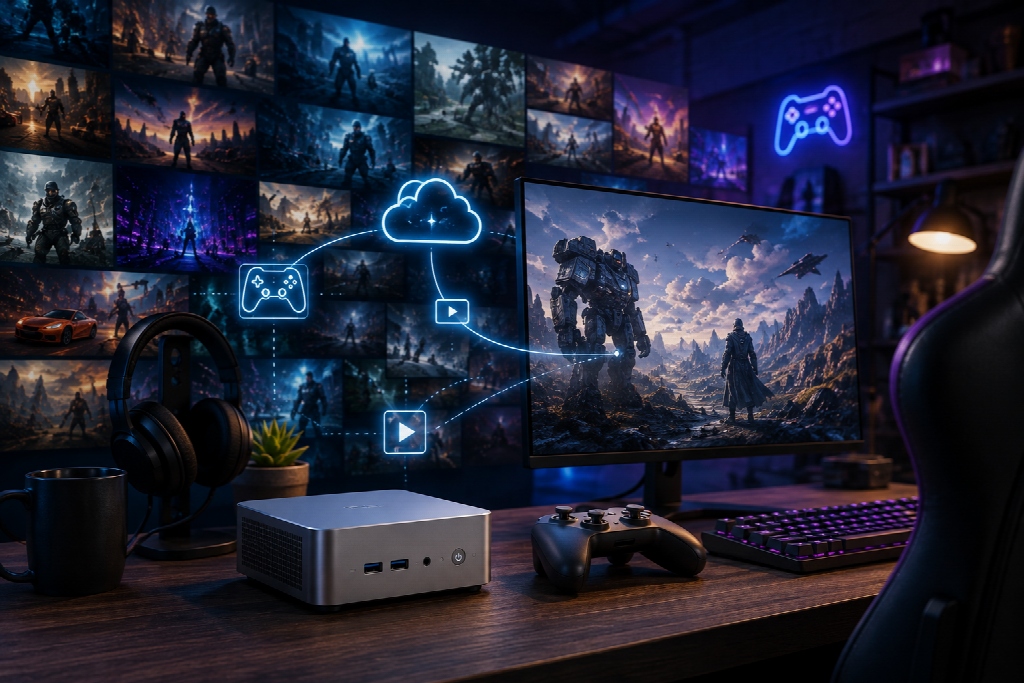
If you’re new to the idea, cloud gaming works a lot like Netflix, except you’re holding a controller. Instead of a beefy console or a graphics card that costs more than a weekend away, the game runs on a powerful server somewhere else. That server handles all the hard yakka — the rendering, the graphics, the grunt — and streams the video straight to your screen, while your device just sends your button presses back up the line. Because the heavy lifting happens elsewhere, you don’t need pricey hardware at home to play games that would normally demand it.
The Very Australian Catch
Here’s the catch, and it’s a very Australian one: everything now rides on your internet. A dropped frame in a slow-paced RPG is no big deal, but lag in a twitchy shooter can be the difference between a headshot and a respawn. And in a country this spread out, the distance between you and the server matters. The closer the data centre, the sharper it feels; route your inputs halfway around the planet and you’ll feel every millisecond. It’s why the same game can play beautifully on one service and stutter on another — and why someone in a capital city on fast fibre will have a very different time to a player out on the edge of the network in regional Queensland. The takeaway: test before you hand over any money.
Where Aussies Can Play
The good news is the options have grown up. The main players here:
- NVIDIA GeForce NOW— stream games you already own on Steam and Epic.
- Xbox Cloud Gaming (bundled with Game Pass Ultimate) — a huge library streamed straight to your devices.
- PlayStation Plus Premium— game streaming for its top-tier subscribers.
Coverage, libraries and server locations shift constantly, so check what’s actually available here before you commit. The question to ask every time is where the servers are. For anyone who loves the big, cinematic, story-driven games, the kind that play like an interactive film, and it’s a low-commitment way to work through a backlog you’d never build a whole rig for.
What You’ll Actually Need
Assuming the services stack up, the gear side is refreshingly light. A fast, stable connection comes first — most services suggest around 15–25 Mbps for smooth 1080p, and more again for 4K — but consistency and low latency matter more than a big number on your plan. A mid-tier NBN plan is usually plenty. Wherever you can, run an Ethernet cable instead of leaning on Wi-Fi; it’s steadier and shaves off precious milliseconds. After that, you just need a screen, a controller (a standard Xbox, PlayStation or Bluetooth pad will do), and something to run it all on.
Why a Mini PC Fits the Bill
That last part is where things get interesting. You can stream to a phone, a tablet or a smart TV, but for the big screen, and the freedom to do more than just game — a small computer parked by the telly is hard to beat. Because the servers are doing the work, you don’t need a bulky tower or an expensive GPU; you want something compact, quiet and dependable. That’s exactly the pitch of amini PC: desktop-class performance in a palm-sized chassis that hides behind a monitor or beside the TV, and stays whisper-quiet so it won’t drone over movie night. Dual-display support, USB4 and Thunderbolt 4 make hooking up a TV, a monitor or a controller dock painless, and because it runs full Windows, every cloud service works through its app or a browser.
There’s a neat bonus, too. A capable gaming mini PC isn’t only a streaming box, it can play plenty of games natively as well. Modern integrated graphics like AMD’s Radeon 780M are more than enough for 1080p and lighter 1440p gaming, so you can stream the demanding blockbusters and still run esports titles, indies and old favourites locally when your connection’s having an off day. When you’re not gaming, the same little box handles work, video calls and multitasking without breaking a sweat — a genuine all-rounder rather than a single-purpose gadget. Models like the GEEKOM A7 Max lean into the gaming side, with three years of warranty cover behind them.
Before You Dive In
A few ways to give yourself the best shot at a smooth start:
- Try a free tier first— GeForce NOW’s free option shows you how it feels on your line before you pay a cent.
- Go wired— an Ethernet cable is the single biggest upgrade most people can make.
- Close what you don’t need— background downloads and other devices will steal the bandwidth your game needs, so a quick word around the house on game night helps.
- Start slow— story-driven games forgive the odd hiccup far more than twitchy competitive shooters while you dial things in.
The Verdict
So — is cloud gaming finally good enough for Aussie gamers? Honestly, yes, with an asterisk. If you’ve got a solid connection and pick a service with servers close to home, it’s genuinely brilliant: a whole library of big games, no expensive rig, ready in minutes. If your internet is patchy or the nearest server is an ocean away, you’ll still hit the odd wall. The smart move is to hedge your bets, and pair a decent NBN plan with a compact, quiet machine from a brand like GEEKOM. Do that, and you’ve got a living-room setup that streams the latest releases today and still earns its keep as a full computer tomorrow — whichever way the wheel spins.
