



by Alireza Hatamvand
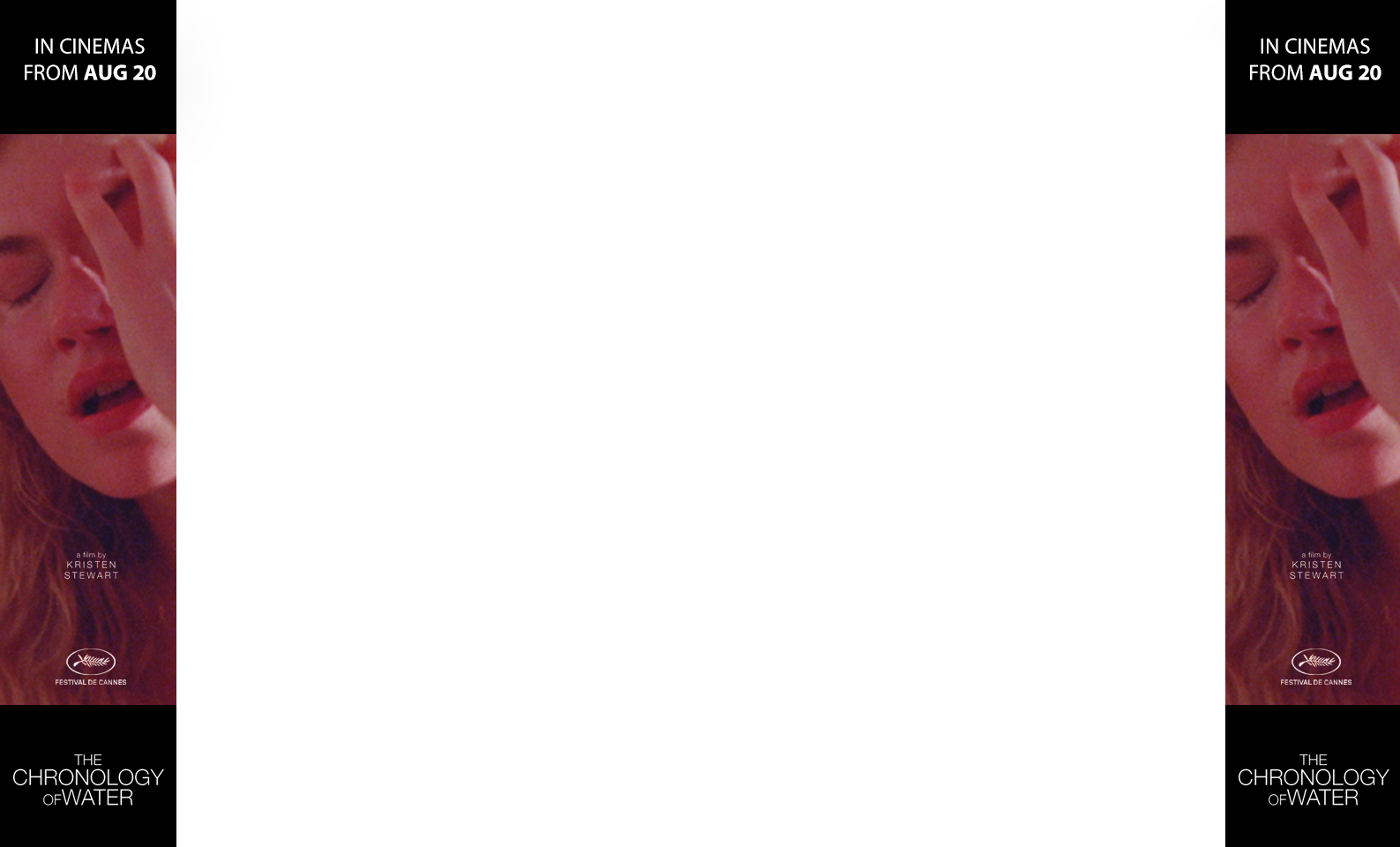
You have possibly encountered very narrow videos on Instagram that leave almost 90% of your screen height empty, and of course, are very wide. This is something that has become known as ultra-wide, with an aspect ratio of 5120×1080, or in other words, a width-to-height ratio of about 5, which in cinematic sources is usually written as 5:1.
It is still unclear what Instagram’s main goal with this trend is, which doesn’t even look very appealing on our mobile screens. Perhaps, for now, the purpose is something as simple as attracting attention, so that users, while scrolling their feed, encounter such a strange and unusual image, pause on it, and maybe even feel tempted to share it.
Regardless of Instagram’s goal, a shift towards wide aspect ratios is also one of the biggest and most important developments in the history of cinema. It is something that not only changed audiences’ experience (compared to square formats) but also provided directors and cinematographers with artistic possibilities to create extraordinary images.
Let’s see how this happened.
Aspect Ratio in the Silent Era
In the late 1880s, Thomas Edison – who had already invented the phonograph (later called gramophone) and the electric light bulb – decided to make a device for recording and playing back moving images. Much of this work was done by his assistant W.K.L. Dickson. These efforts culminated in 1891 with the invention of the Kinetograph (recording device) and the Kinetoscope (display device). For this purpose, Dickson had made films (by “film,” meaning the film negative strip) that were about 1 inch wide, with four sprocket holes on each side of every frame that the gears of the Kinetograph and Kinetoscope could fix into, thus moving the film through the device. The frame ratio in this image was approximately 24×18 millimetres, also written as 1.33:1 or 4:3. This decision and Dickson’s invention influenced the entire history of cinema. What he created became known as the 35mm frame and was recognised as the standard film ratio for many years.
The Introduction of Sound
As mentioned, Edison wanted to eventually synchronise sound with the image, but later realised that this was not so simple. Many individuals and groups tried to bring sound into cinema, but today, we recognise the origin of sound cinema as The Jazz Singer (1927).
The method that was ultimately agreed upon for recording and playing sound was optical sound recording on the edge of the negative. This caused a small portion of the frame to be removed, so that the sound could be recorded, and it changed the common and standard ratio from 1.33:1 to 1.37:1. This ratio was officially introduced in 1932 by the Academy of Motion Picture Arts and Sciences as the standard and was called the Academy Ratio.
Until 1954, except for a few exceptions, films were always shot in this 1.37:1 ratio. But events occurred that convinced filmmakers to make significant changes.
Although television and broadcast were invented in the 1930s, World War II postponed their development for several years. The 1950s, however, brought an extraordinary boom: In 1948, only about 170,000 TV sets existed in the U.S., representing less than one percent of households. By 1954, however, that figure had shot up to 26 million, covering over half of American homes.
Hollywood used two technical weapons to compete with television: Colour – technologies for this existed since the 1930s but needed further development. At that time, all TVs were black and white, and more colour in cinema could get people off their couches and into theatres.
Changing the aspect ratio and moving toward wide screens
During that period, a number of unconventional technologies were employed to widen aspect ratios, although some eventually fell into obscurity due to limited success. One of the most famous of these systems was called Cinerama. To achieve a wide image, Cinerama relied on an odd yet simple technique: during filming, three adjacent lenses on a single camera recorded the image onto three separate strips. In projection, those same three strips were played side by side through three synchronised projectors, producing a massive image with an aspect ratio of 2.85:1.
The film This Is Cinerama (1952) invited audiences to witness thrilling spectacles—such as aerial dogfights and desert expeditions—and despite its expensive tickets, it became a sensation, grossing around five million dollars.
Cinerama somewhat echoed the earlier innovations of French director Abel Gance, whose 1927 film Napoleon used three side-by-side cameras for certain sequences, later projected the same way to create an ultra-wide 4:1 image—the widest ever achieved in cinema history.
The most widely used widescreen system of that era was CinemaScope, introduced by 20th Century Fox with The Robe (1953). The camera employed an anamorphic lens that compressed wide images onto standard 35mm film—similar to resizing an image in Photoshop without holding Shift. During projection, a complementary anamorphic lens reversed the effect, expanding the image to its full width on the screen. This method offered aspect ratios of 2.55:1 and 2.35:1, with its main advantage being the simplicity of both filming and projection.
Studios didn’t stop there. In the epic Ben-Hur (1959), Ultra Panavision combined anamorphic lenses with 65mm film, achieving a 2.67:1 ratio—one of the widest ever used in a feature film. Interestingly, about 55 years later, Quentin Tarantino chose to shoot The Hateful Eight (2015) in the same format, even restoring and using the very lenses from Ben-Hur, placing himself among the filmmakers embracing cinema’s widest screens.
Widescreen systems were not limited to these examples. Several other systems emerged, and previous ones were either developed and improved—like 35mm with anamorphic lenses—or, like Cinerama, became just a historical memory in cinema.
But why is widescreen even important?
Beyond Hollywood’s commercial battle with television, the shift from square to wide aspect ratios was a transformation with inherent and aesthetic reasons.
Although no aspect ratio or broadcast ratio can fully replicate human vision, our visual field is much closer to a wide image than a square one. Wide-format films, especially when screened in theatres with large and high-quality displays, draw the audience in more deeply and deliver a greater experience.
Another thing is that the wide aspect ratio empowers directors and cinematographers for more artistic expression. For example, it is with the help of these wide images that the depth of the image is provided and more detailed and narrative frames can be created. Of course, someone like Orson Welles (and DOP Gregg Toland) in his timeless Citizen Kane, using a 1.33:1 ratio, created images so deep that they are still referenced in film schools for teaching depth in framing—but those are exceptions. Generally, wide images have more potential for creating deep frames.
Still, it must be remembered that nothing in art should be taken for granted—not even wide framing. In fact, when most contemporary films are wide, breaking this trend can itself be creative and striking. For example, the 2013 film Ida, directed by Paweł Pawlikowski, used 1.37:1 aspect ratio and created extraordinary, energetic, and creative frames that were completely in line with the film’s theme. Aspect ratio can also serve as a distinguishing element; for instance, in The Grand Budapest Hotel by Wes Anderson, multiple aspect ratios are used, each narrating the story within a different time period.
Everything in this article starts with Instagram’s 5120×1080 ratio, or roughly 5:1. Something that might seem like a mere joke to many, yet its roots lie in cinema history. Now let’s consider: could it be that, years from now, in a film journal, this Instagram innovation is remembered as a milestone in cinema?
