


by Seth French
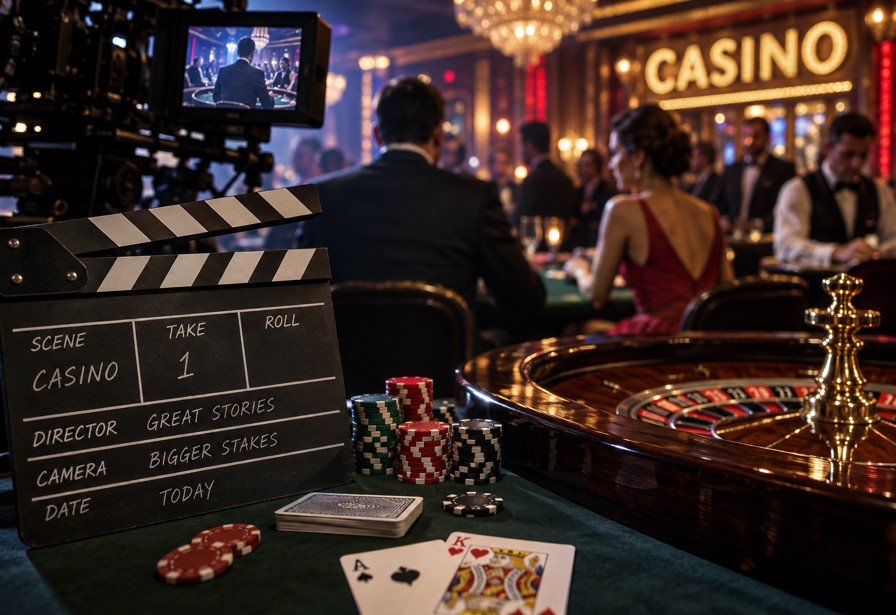
Watch almost any film set inside a casino and you are rarely shown the full reality of the gaming floor. Instead, the camera focuses on a carefully selected handful of tables, machines and dramatic moments. It feels like a natural representation of the casino experience. In reality, it is one of the many deliberate choices filmmakers make when turning a real environment into something that works on screen.
With modern casinos containing everything from rows of slot machines to roulette, blackjack, baccarat and poker tables, filmmakers have plenty to choose from, yet only a tiny fraction usually makes it into the finished movie. Nothing appears in front of the camera entirely by chance. Every game has to serve the scene, the characters or the visual identity of the film, and understanding that calculation changes the way you look at casino sequences in cinema.
The Movie Set, Not The Whole Casino
The first thing to grasp is that a casino shown in a film is a movie set, not a complete representation of the real thing. Behind the few tables and machines visible on screen may sit an enormous gaming floor filled with dozens of different options, far too many to give equal attention, so filmmakers must choose which tiny fraction to put front and centre. That choice is never completely neutral.
Just as a director chooses a particular street, car or costume because it communicates something immediately to an audience, casino games are selected according to what works best for the scene. Poker allows characters to study one another. Roulette creates visual movement and a natural countdown. Slot machines fill the background with light and sound. Blackjack can create a fast sequence without requiring lengthy explanations. The layout is the product of storytelling, cinematography and editing rather than an attempt to document every part of casino life, and it is carefully arranged to direct the audience’s attention exactly where the filmmaker wants it.
That is why it helps to look beyond the game being shown. The titles or machines that might appear on a modern platform such as crown pokies belong to a much broader gambling culture than the narrow selection usually presented by cinema, where filmmakers tend to favour games that audiences can recognise instantly and that communicate risk visually. The table or machine in the foreground is therefore part of the storytelling, not necessarily a reflection of what is most common outside the film.
What Wins A Place On Screen
A casino game reaches the screen by scoring well on a handful of factors filmmakers care about, weighed against one another throughout the production. Few of them have much to do with which game is actually the most popular among players, and most trace back to what works dramatically or visually for the movie.
These are the main things that earn a game its place:
- Visual appeal, not just popularity — roulette wheels, cards, dice and stacks of chips give cinematographers movement and recognisable imagery to work with.
- Dramatic potential — games that allow tension to build between characters are more useful than those where the outcome carries little emotional weight.
- Audience familiarity — filmmakers often choose games viewers can understand without stopping the story to explain complicated rules.
- A fit with the character — the game can reinforce personality, with poker suggesting calculation and bluffing while high-stakes baccarat can communicate sophistication or confidence.
Weighed together, these decide what parts of the casino make it into the finished sequence. The common thread is that every factor asks what the game does for the film, whether through visual spectacle, tension or character development, rather than how accurately it represents the wider gambling floor. The choice can be surprisingly selective, since a game that is extremely common in real casinos may receive less screen time than poker or roulette simply because those games give a director more opportunities to create suspense.
Featured Versus Buried
Because the same criteria keep reappearing, it helps to see how two games that are equally familiar in real casinos can end up with completely different roles in a movie. One becomes the centrepiece of an important scene while another remains somewhere in the background, and the reasons rarely have anything to do with which is the better or more popular game.
The contrast between a featured game and a background one is telling.
| A game that gets featured | A game that stays in the background |
| Creates strong visual tension | Offers little dramatic movement |
| Lets characters interact directly | Mostly involves individual play |
| Familiar to a broad audience | Requires more explanation |
| Matches the personality of the scene | Adds atmosphere without driving the story |
Read down the columns and the cinematic logic is unmistakable: the games that rise are the ones that help filmmakers create tension, reveal character, communicate information quickly or simply produce memorable images. A popular game without those qualities can remain almost invisible, even in a film largely set inside a casino. The choice is often established long before filming begins, with writers, directors, production designers and cinematographers deciding how a particular game will function within the sequence and what the audience needs to understand from it. The finished scene may look spontaneous, but nearly everything visible in the frame has been deliberately placed there.
The Casino That’s Built For The Movie
Perhaps the most interesting part is that there may be no single cinematic version of a casino at all. Filmmakers reshape these spaces according to the needs of each story, meaning the glamorous gaming floor in one movie can look completely different from the dangerous or chaotic environment shown in another.
Production designers refine this through lighting, costumes, extras, table placement and decoration, quietly controlling which parts of the environment attract the viewer’s eye. They think about far more than the games themselves, considering how characters move through the room, what appears behind them and whether the space should feel luxurious, intimidating, crowded or strangely empty. It is a powerful filmmaking tool, and it is aimed squarely at supporting the story, which is precisely why casino settings can feel so different from one movie to another even when they contain many of the same basic elements.
Why Featured Doesn’t Mean Most Popular
Put all of this together and one point stands out: a prominent game in a casino movie tells you a great deal about what the filmmaker needs and relatively little about what people actually play most often. A poker table is not necessarily shown because poker dominates every casino floor; it may be shown because two characters sitting opposite one another provides a perfect setting for confrontation.
Cinema has repeatedly demonstrated this principle. Casino Royale turns poker into a prolonged psychological battle, while Ocean’s Eleven uses the casino floor as part of a much larger system that its characters need to understand and manipulate. Martin Scorsese’s Casino goes further still, using the entire gambling environment to explore power, money and the machinery operating behind the glamorous public surface.
Reading Past The Gaming Table
Filmmakers decide which casino games to put on screen through a blend of practical and creative factors, above all visual appeal, dramatic tension, audience familiarity and the needs of individual characters. The casino we eventually see is a carefully designed cinematic environment arranged to serve the story, not a neutral picture of everything happening on a real gaming floor.
Seeing it that way makes casino scenes more interesting to watch. The next time a film cuts to a roulette wheel, a poker table or a glowing row of machines, it is worth considering why that particular image was chosen. More often than not, the game is doing far more than decorating the background. It is helping the filmmaker tell us something about the characters, the stakes and what might happen next.
FAQ
How do filmmakers choose which casino games to show?
Through a combination of storytelling and visual considerations. Directors and production designers consider how recognisable a game is, how it looks on camera, whether it creates tension and how well it fits the characters involved in the scene.
Are the most common casino games also the most common in movies?
Not necessarily. Cinema tends to favour games such as poker, roulette, blackjack and baccarat because audiences recognise them easily and they provide strong opportunities for visual storytelling and character interaction.
Why do casino scenes look different from one film to another?
Because filmmakers design the environment around the tone of the movie. Lighting, extras, costumes, games and camera placement can make a casino appear glamorous, dangerous, sophisticated or chaotic depending on what the story requires.
Why is poker featured so often in films?
Poker naturally creates interaction between characters and allows filmmakers to build tension through betting, bluffing, expressions and delayed reveals. That makes it particularly useful for scenes built around psychological conflict.
