



by Julian Wood
Some films are meant to be enjoyed for their own atmosphere and for the glimpse of a world that they can bring rather than being driven by a strong singular narrative. Film critic turned filmmaker, Gabe Klinger’s Isabel is such a film.
When we meet Brazilian-American Klinger, he relishes the chance to chew the fat about movies and movie making.
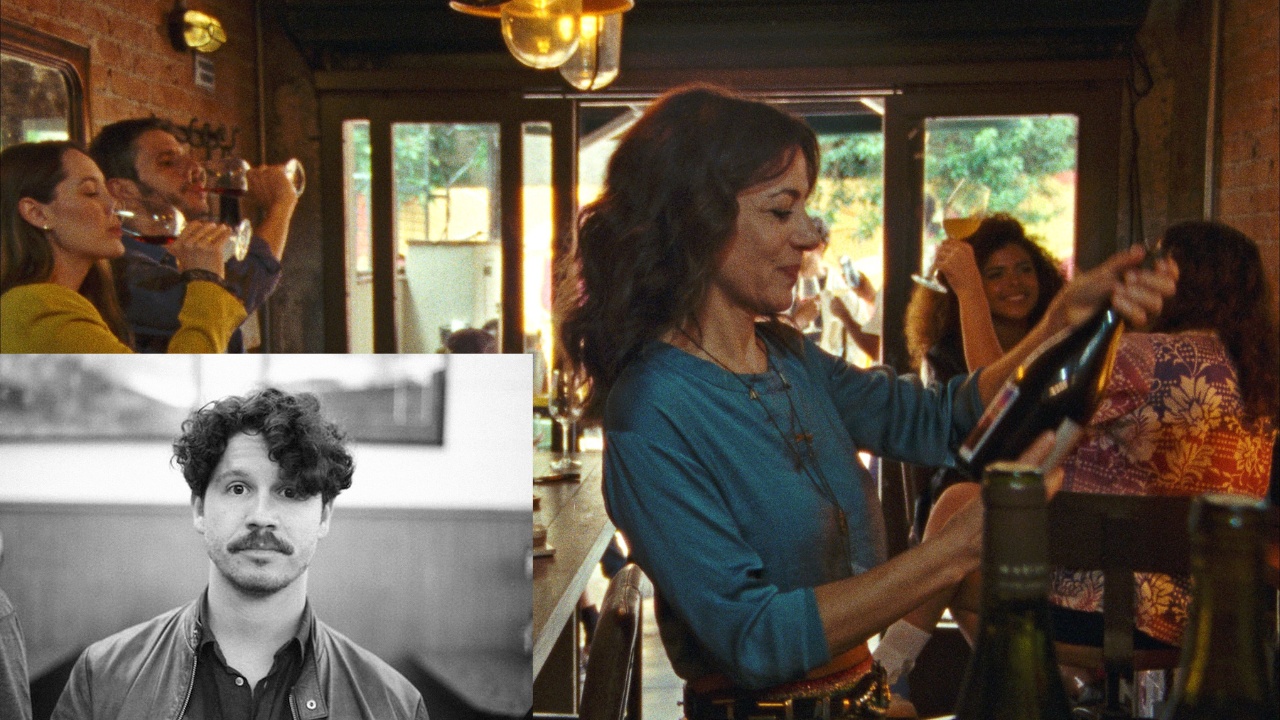
Isabel is set in the world of hospitality, where its eponymous lead, played by co-writer Marina Peron, wants to open her own wine bar in Sao Paulo. Klinger could easily slot right into the milieu he was filming. However, no alcohol was served during our interview.
We started by talking about a lively scene towards the end of the movie when Isabel divests herself of surplus stock by having a kind of impromptu street party. Was this typical of Brazilian culture, and was it completely spontaneous, we wondered? “I mean, we tried to do that scene first on a rainy day, but we had to reschedule. It was only a bit organised, but I did call up friends, and we did an open call and so some showed up that way. Then there were passers-by who were just curious. With the whole movie, we invited chaos a bit. We didn’t close the street at any point. We used real locations and about half the people in it are people who are from the wine and gastronomic industry.”
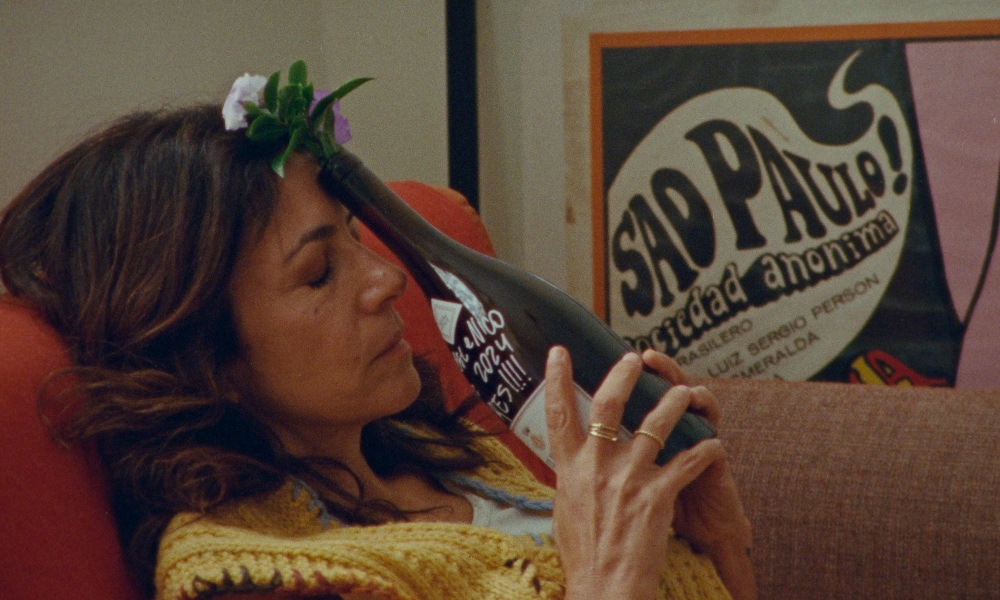
Does that locate with the idea that Brazilians love to have a party? “Yes, here in Australia you inherited the British concept of the pub. We don’t have pubs in Brazil; we have street parties. Carnival! We got that outdoor vibe from Europe; Spain and Portugal and Italy, and Africa too because Brazil has the biggest African diaspora in the world. The pub is the place you escape the street. It is cosy. You have a fireplace, a bartender, low light etc. You are there for a while and you hide away from the world – not so in Brazil. Outside life is completely integrated with inside life so you have nowhere to hide. It’s something that is very culturally distinct about Brazil. The only people who can escape that are wealthy people who want to have their own private space. My film is more about democratic spaces. Isabel’s work [in a fancy restaurant] before she leaves, is above ground but her own bar is at street level. Her house is at street level; she takes the subway etc. It was my conscious decision to shoot the movie at street level.”
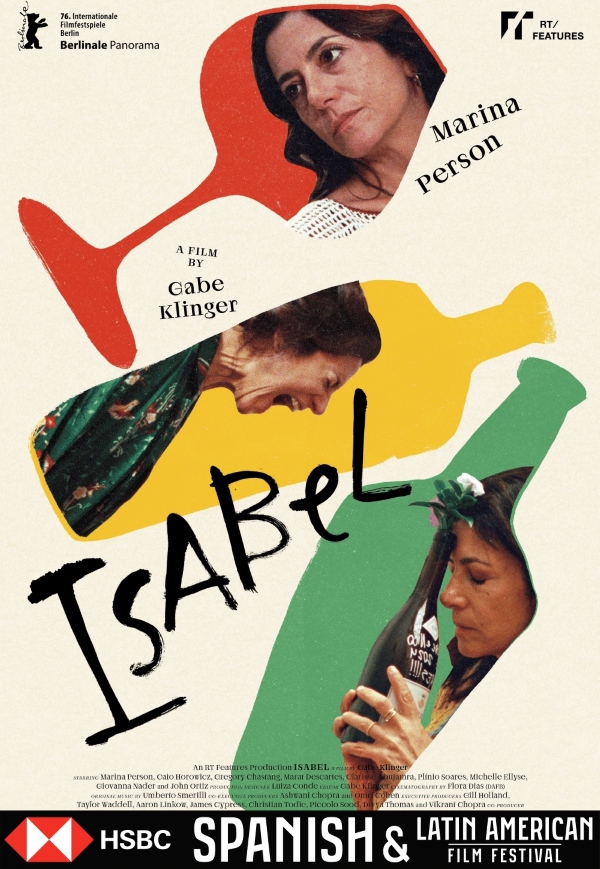 Talking of democratic spaces, and space to make art, we wondered if things are better politically now that the dictatorial Jair Bolsonaro has been ejected from power. “Yes, now it is better in a way. We have a moral position from the Centre Left government and that is important, but it is not like it’s completely consistent in terms of how the government helps to fund movies. My film received no government support. It was scrappy. We pull it up by our bootstraps and we made it happen for the budget that we had. But also, sometimes the financial intervention comes with creative interventions. I mean, they fund the types of stories that they want to see on the screen. That can be limiting for artists because you can’t just tell a normal story about a woman who wants to open a wine bar! You have to layer it with a bunch of issues and social themes. So, it was challenging to get it made in that way.”
The director confesses that he does not particularly like to make films that are ‘message films’. There are always issues of course, and he feels that these should arise naturally from the situations depicted on screen. For example, there is a feminist reading available in relation to Isabel. The protagonist has to struggle to be independent and to make her own way in the hospitality world where many of the established male restauranteurs just patronise her or assume that she is limited by being a woman.
Given the film’s low key semi-improvised approach, would the director feel that it could be consumed as a documentary in some ways? His answer acknowledges his documentary filmmaking years but leans into something that hybridises various approaches. “I made one doco (Double Play (2013)) and so people said, ‘oh now you are a doco filmmaker?’ And I said, ‘no that is not what I want to do’. With this one, we leaned into certain documentary techniques for sure, and I like that hybrid approach.”
Isabel (both the film and the character) is pretty much steeped in booze. Almost every scene involves either wine making or tasting or sharing. Given that alcohol is actually quite a dangerous substance, did the filmmaker feel that there is something to discuss there? “Yeah that [the alcohol issue] is a thing people bring up, and it is interesting and I am happy to talk about it. But let’s not get too moralistic. I remember somebody read the script and they said, ‘so the movie is about alcoholism?’ And I said, ‘NO! you didn’t get it at all’[laughs].”
The director warms to his theme. “I mean, is Homer Simpson an alcoholic? In almost every episode, he is in Moe’s. There is that wonderful line where he says, ‘to alcohol, the solution to, and cause of, all of life’s problems!’ It is such a grey area in everybody’s life. It does get medicalised. We get lectured about it. In a clinical way, you could say she [Isabel] is alcoholic because she consumes that much, but also, you don’t know how her body metabolises that. Also, is that better or worse than a pharmacy drug that might eliminate your anxiety [as booze can]? Your body has to remove toxins there too. But also [let’s not forget that] wine is so historic. It is part of ancient culture, it is festive and it is ‘alive’ in the bottle.”
Also, as the director points out, this has to be shown as part of the working lives of people in the wine and restaurant business. There are lot of day drinking scenes because that is when they have to drink, but at night they are not drinking because they are working. As far as a judgement on how people live their life, he feels that we should try not to be holier than thou or hold ourselves and others to an impossible standard. “I mean, the movie talks a lot about being imperfect; her justifying an imperfect wine or living an imperfect life. They are different things. We can put the burden of perfection on an object [a make of wine], but we can’t [or shouldn’t] put the burden of perfection on ourselves. The kind of drinking we see in the film is not destructive, it is lessening social anxiety, it is celebratory and it is cultural. Yes, sometimes there is a bit of dependency, but we were careful in the way that we treated the issue in the film actually. As a director I said [about these issues] I am not going to have a moralistic view, I am going to be neutral.”
