



by Dov Kornits
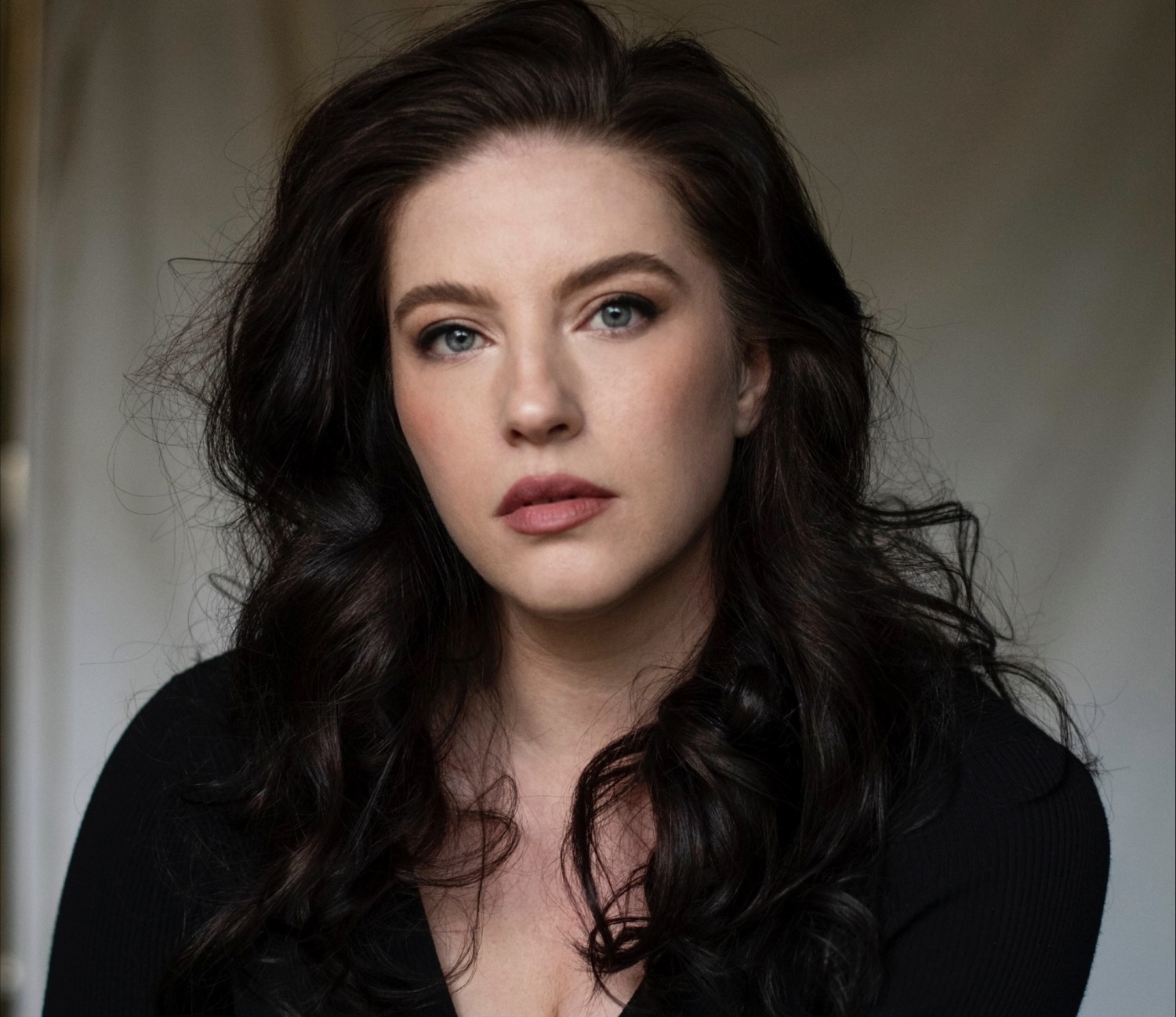
With award winning short films on her resume, a history in acting on Australian TV, and a feature film directorial debut just around the corner, AFTRS Master of Arts Screen: Business graduate and producer, writer and director Francisca Braithwaite endeavours to marry artistic creativity with a solid business sense.
Career-wise, Chilean-born Australian actress, writer, producer and director Francisca Braithwaite has a lot going on. She’s currently working for the BBC on Australian-based projects like the South Coast-shot mystery series Return To Paradise, while searching out potential new TV fare. “Our day-to-day is pretty much that we read a hell of a lot of scripts and pitch decks and then we have discussions with writers and guide them … there’s lots of note-taking, and all the bits that you would do in a writer’s room.”
It’s been an unusual journey to Braithwaite’s current berth at the BBC, with the multi-hyphenate first starting off as an actor on TV series like A Place To Call Home, Black Comedy, Hyde & Seek, Reckoning and Home And Away. “I did the general jobbing here and there and everywhere, and it was just not satisfying for me,” Braithwaite tells FilmInk. “I wasn’t really finding the work I wanted to do. I wasn’t getting the auditions I wanted to get, and it just became very frustrating. I did a couple of years on Home And Away and all those little things, but then I started looking for other avenues. I can write. I’ve always written. I just never really gave myself the opportunity to do it because I think I was afraid. I was afraid of my own voice, and I wasn’t sure if the stories I wanted to tell, people would want to listen to them.”
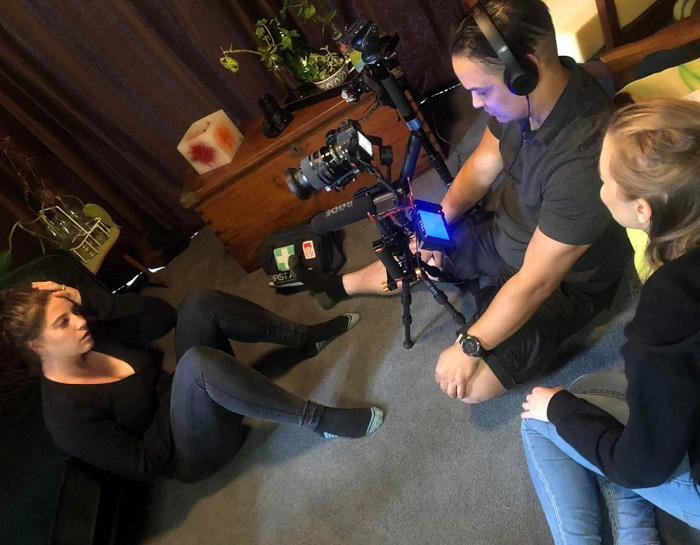
Braithwaite overcame that trepidation, however, and wrote and directed her first short film in 2021 with the deeply personal Seven Stages. “It’s a story of grief about the death of my sister, who passed away when I was six years old,” Braithwaite explains. “It takes you through the stages of grief through the lens of a couple, and basically talks us through his side and her side. It’s a very beautiful little film, which is very close to my heart … I haven’t released it because it’s so personal.”
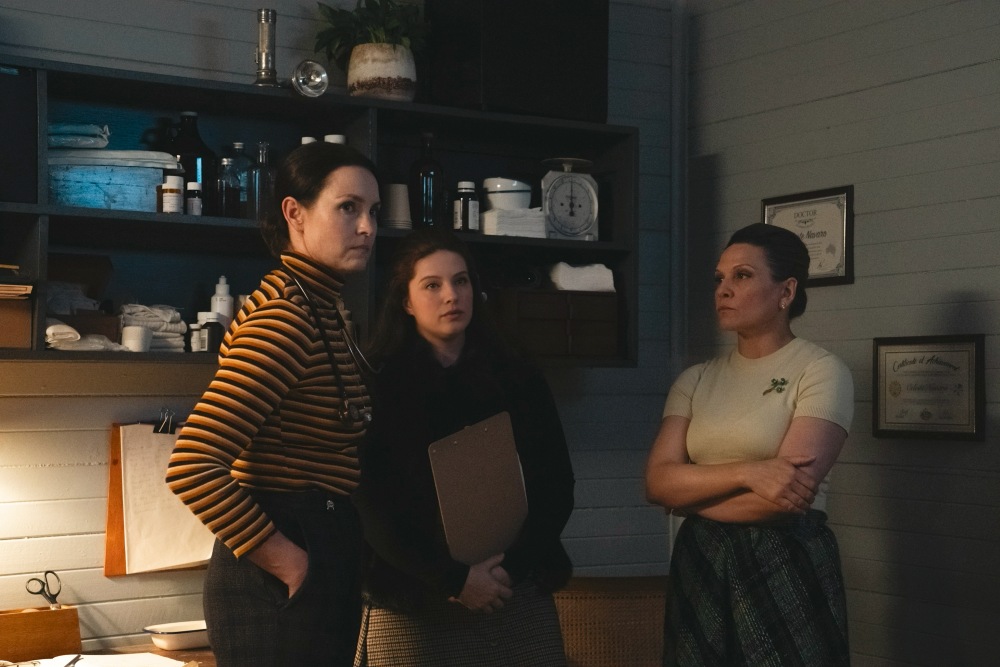
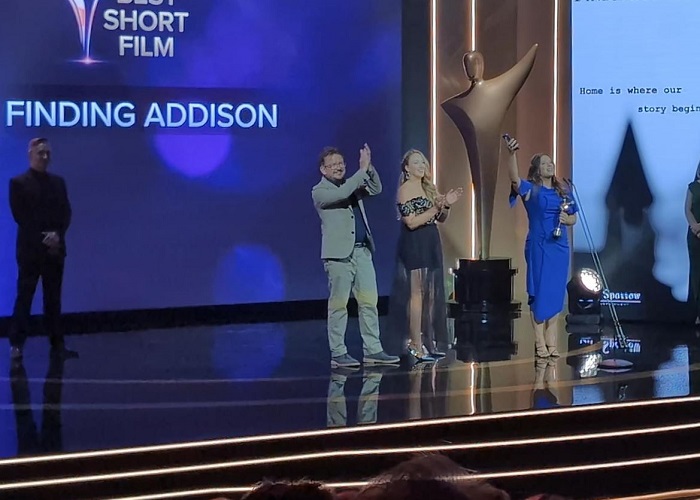
While Seven Stages remains tucked away, Braithwaite went far wider with 2023’s Finding Addison, the story of a childhood secret which rears its ugly head many, many years later. Dark and moody, the impressive short took out The AACTA Award for Best Short Film in 2024. “That experience was what really started to catapult my career,” says Braithwaite, who also completed an emerging producer placement through Screen NSW. “I ended up really taking a path as a writer, director, and producer. Finding Addison brought on other work, and from there I made Safe Haven. That film is a little bit controversial. It’s about a woman’s right to choose. It was very hard to find its home. We pulled the film from the festival circuit, did a re-edit, and it’s about to hit the world again.”
Now represented as an actor, writer and director by Sophie Jermyn Management and gripping the reins tightly on her own career, Braithwaite was helped immeasurably by the Master of Arts Screen: Business [MASB] course that she undertook at The Australian Film Television and Radio School (AFTRS) in Sydney. “I’d done little short courses on directing and producing and things like that,” Braithwaite explains. “I was starting to get momentum within my own production company, Blue Sparrow Entertainment. I got in contact with AFTRS’ Head of Screen Business Peter Herbert, and we just had a very brief chat about what I wanted to do and where I wanted to expand. I wanted to learn more about business, and he suggested the Master of Screen: Business. And I kid you not, I think it is the catalyst of what got me into Screen NSW in the first place and has helped me really find my feet within the industry.”
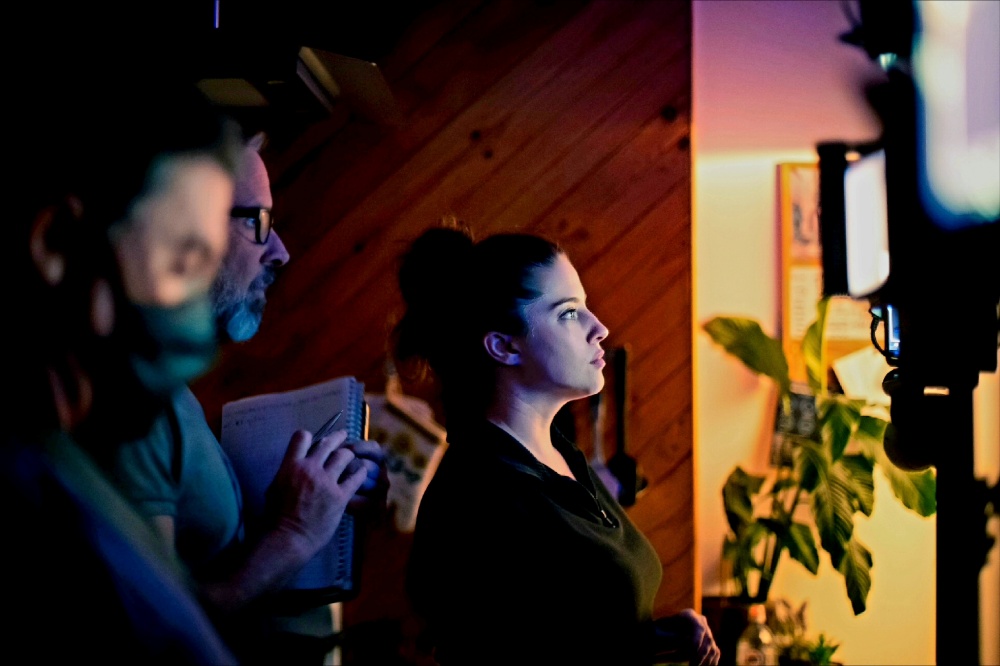
For Braithwaite, the MASB “was a really great experience,” she says. “The teachers are phenomenal. That course taught me so much about business, how to be business savvy, how to set up my company properly, and what I need to do to make a successful production company, particularly in this difficult landscape. The course has shaped the way that I’m working with Blue Sparrow now, whether I’m doing online content work, or looking at pushing features and television series. It’s really helped me in working through a structure of what the company would look like and then being able to actually execute that into the world. The Master of Arts Screen: Business was really, really great for me.”
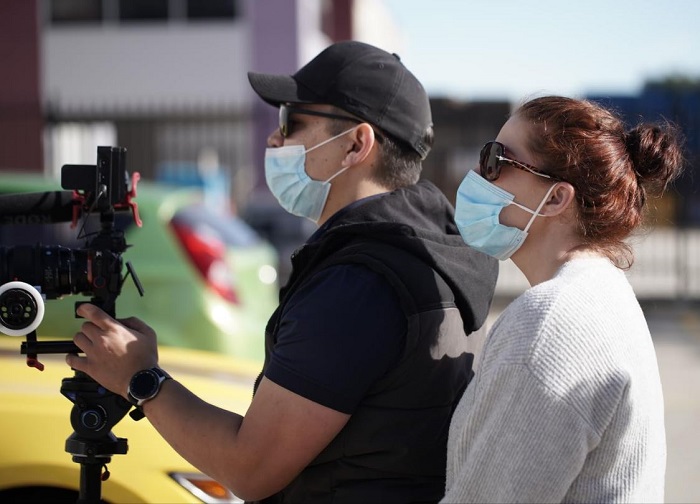
It was the practical nature of the course that really helped Braithwaite get herself into a more business-focused mindset. “You’re learning how to budget, and you’re learning how to execute projects … that kind of stuff,” she says. “You really have to take what you are learning from the course to put into real life. For instance, I’ve never been great at mathematics … I wasn’t 100% clear on budgets. In the course, we talked through budgeting … how to structure it and how to actually do it. We had to put it into practice with one of our own projects that we were working on. How would we do the budget for that? How would we execute that budget for a Screen Australia application, et cetera, et cetera. That was really good for me.”
Though the MASB is obviously about the business of film and television production, it covers a lot of other things as well. “It teaches you how to structure a pitch deck,” Braithwaite explains. “It teaches you how to write copy. It teaches you how to generate the idea. Is it just the seed of an idea? Where do I go from here with that? How do I actually develop a project? That comes into my work on a daily basis, obviously, with what I do. I already had a really strong foundation of project development before doing the Master’s, but the course definitely brought in a lot of elements that I wouldn’t have thought about to begin with. I see now why this works or why that works in regards to an application that I might do for Screen Australia, for instance.”
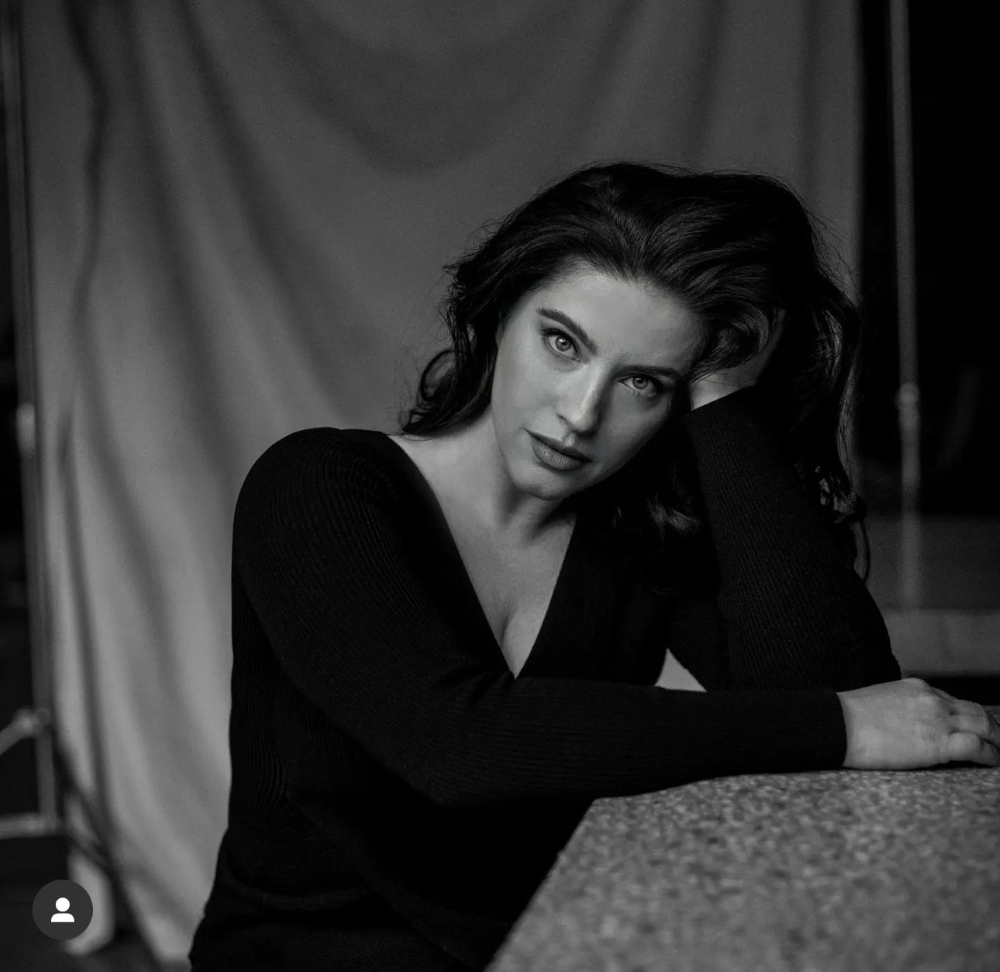
With the rich combination of her own personal experience and the practical, hands-on learnings from the MASB, Francisca Braithwaite is building an impressive career in film and television. Up next, she is in line to adapt, produce and direct a feature film based on Australian author John Larkin’s book The Shadow Girl. “It’s the story of a young woman who ends up homeless and lives on the train systems and puts herself through school,” Braithwaite explains. “It’s very much a coming-of-age story. It’s beautiful, and it’s beautifully written. It’s such a powerful story for today, and it really packs a punch. It’s very much up my alley.”
Braithwaite will be producing The Shadow Girl with Judi Levine (Falling For Figaro), Stephan Wellink (Rod Taylor: Pulling No Punches) and Wayne Camilleri, who completed his MASB at AFTRS at the same time as Braithwaite. “That’s the other great thing about the course,” she says. “You can find a really good group of people to work with. Wayne brought The Shadow Girl to me about a year ago. He’d seen Finding Addison and he’d seen Safe Haven. He said, ‘I think you are the right person to direct this.’ So, I had a read of the book and I absolutely fell in love with it. And here we are now.”
For all information about The Australian Film Television and Radio School’s Master of Arts Screen: Business, click here.
