


by Stephen Vagg
We’ve done pieces in this series on the various heads of EMI Films – there was Bryan Forbes, then Nat Cohen, Michael Deeley and Barry Spikings, and Barry Spikings alone. As mentioned in the piece on Spikings, a series of flops (Honky Tonk Freeway, Can’t Stop the Music) led to him departing what was now Thorn-EMI in 1982, leaving a vacancy for head of production.
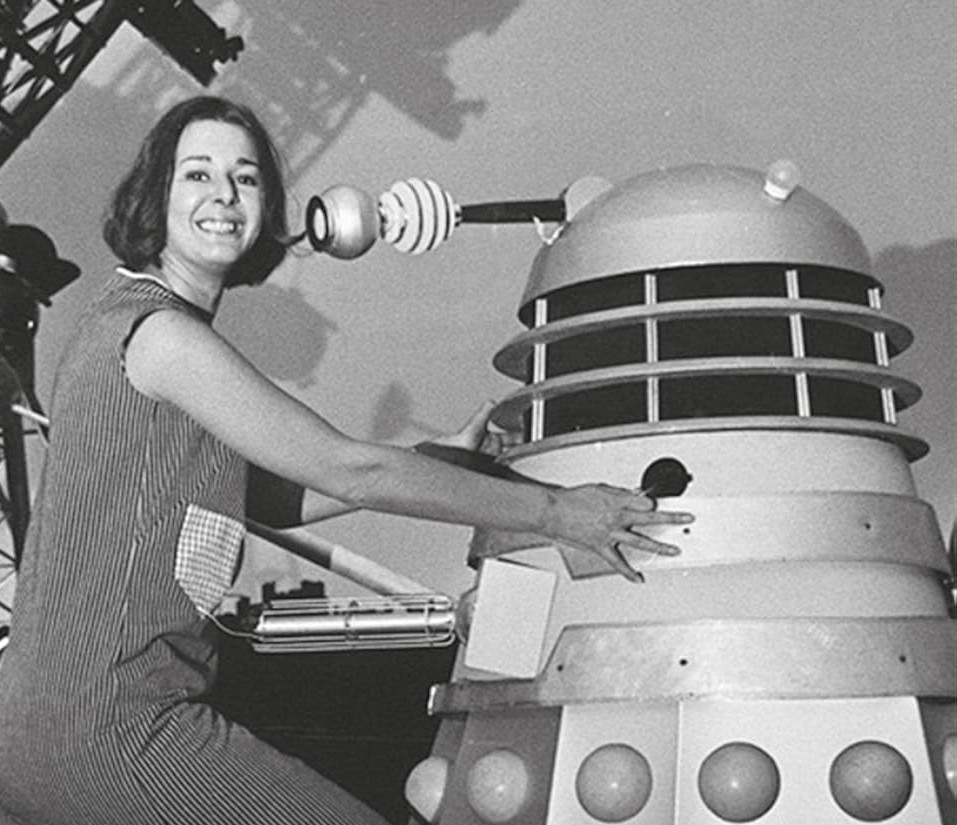
The studio remained committed to filmmaking, which meant a new production head. Nat Cohen was still around the place, but Thorn-EMI decided on fresh blood… and that was Verity Lambert, who became the first woman to helm a British movie studio (we’ve also discussed Lady Yule who actually owned one).
In the early 1980s, Lambert was a legend in television circles for her achievements: the founding producer of Dr Who; personal assistant to David Susskind and Sydney Newman; a gun producer at the BBC, London Weekend Television, Thames and Euson Films; a key force behind iconic shows such as Rumple of the Bailey, The Naked Civil Servant, Minder, Widows and Reilly Ace of Spies. She had incredible experience… almost entirely in television.
Still, why not? She couldn’t do any worse than Bryan Forbes or Barry Spikings. Lambert was given a three-year contract as head of Thorn-EMI starting late 1982 and she made it until 1985. Lambert wound up having a rotten time there – in 1991, she called it “the most frustrating and miserable” period of her career. “I suppose I came from a place where if I had an instinct and said I wanted to do things, nobody tried to second-guess me. (There)… everybody was trying to second guess each other, and I found it extremely difficult to get anything made and extremely difficult to control what got made.”
It didn’t help that she had to deal with the Thatcher government, notoriously unsympathetic to the film industry, or that filmmaking was a very different game from television, with its audiences not as surefire, the market more splintered, and more time for other execs and creatives to get up to mischief.
Still, Verity Lambert came up with an interesting slate. Films made (or mostly initiated) under her watch were:
– Slayground (1983) A crime thriller, an adaptation of a Donald Westlake novel with Peter Coyote (this was just after ET) and comedian Mel Smith.
– A Passage to India (1984) David Lean Raj rape drama from the novel by E.M. Forster with lots of mostly white stars being superior to white racist support characters, Judy Davis launching her international career, and James Fox being annoying.
– Comfort and Joy (1984) Bill Forsyth’s follow-up to Local Hero (which EMI had turned down) with Bill Paterson involved in the Glasgow ice cream wars (a real thing).
– The Holcroft Covenant (1985) Robert Ludlum adaptation from two old boozers, director John Frankenheimer and screenwriter George Axelrod, with Michael Caine stepping in for James Caan who dropped out at the last minute.
– Restless Natives (1985) Scottish buddy comedy about modern day highwaymen.
– Dreamchild (1985) The story of the girl who inspired Alice in Wonderland from a script by Dennis Potter
– Morons from Outer Space (1985) Comedy from the duo Mel Smith and Griff Rhys Jones about aliens on earth with, for some reason, Mike Hodges directing.
– Wild Geese 2 (1985) Guys on a mission action film with the mission being to rescue Hess from Spandau prison, with Edward Fox stepping in at the last minute for Richard Burton who had died, and co-starring Laurence Olivier who was about to die. Directed by Peter Hunt.
– Clockwise (1986) John Cleese comedy from a Michael Frayn script (Nat Cohen’s last credit – he helped set it up)
– Link (1986) Chimps on the rampage film from Australia’s own Richard Franklin with Elisabeth Shue.
– Highlander (1986) Fantasy/sci fi swashbuckler from Australia’s own Russel Mulcahy with Christopher Lambert (no relation to Verity).
We really like Verity Lambert’s slate at Thorn-EMI. It was varied, ambitious and aimed at quality. We can understand why all of the films were made, except Slayground, which was very random – little known source material and a C-list star. However, the others made sense – thrillers from best-selling books, leading directors, comedies, some classy literary stuff (the Lean, the Potter), sequels.
And there were some commercial successes – Passage to India and Highlander were hits, with Clockwise doing well in Britain (though not in the US, making John Cleese be more conscious of humour that translated when he did A Fish Called Wanda). But the rest of Lambert’s slate either turned out surprisingly poorly as films, or turned out well but audiences simply didn’t come.
For instance, there was a muted commercial response to the charming Comfort and Joy or the excellent Dreamchild (maybe they needed bigger stars? Better reviews? More romance?) The engaging Restless Natives struggled outside Scotland. The Holcroft Covenant felt old timey. Films which should have been slam dunks – Morons from Outerspace, Link and Wild Geese 2 – all went wrong in the execution, for a variety of different reasons.
Incidentally, Lambert announced some films that weren’t made: El Diablo from a script by John Carpenter, The Wolves of Willoughby by Fay Weldon, R and R by Nancy Dowd. She turned down My Beautiful Laundrette and Letter to Brezhnev. These things happen.
Lambert’s stint at Thorn-EMI was lively. In September 1983, she was arrested for suspected drink driving after dining out with Dennis Waterman and George Cole of Minder and wound up in a cell after refusing to give a blood sample. She later said “I never achieved what I set out to do,” at Thorn EMI. “My judgement was not trusted, all kinds of comprises had to be made. I couldn’t use my instincts. I had to try and persuade people and therefore I had to take on board whether they would think they could sell it. And so, the most powerful thing I had in my favour, which is my nose, my instinct, was difficult to use. And therefore, the films that we made were uneven and I was only entirely happy with two of them — Dreamchild and Clockwise.”
Like Spikings, perhaps Lambert’s taste was a little too high brow to run a big fat studio – someone with more experience making schlock, for instance, might’ve helped out more on Slayground, Holcroft, Restless Natives, Link, Morons or Geese 2.
Lambert resigned in July 1985 and went back into television. After this, Thorn-EMI wound down its in-house production arm and relied on films from independent outfits, but the company was bought out by Cannon and stopped making movies, firing Nat Cohen. It was a shame because the studio had tried to make decent films. But then that’s the story of British cinema – the constant battle against overwhelming odds. And no one represents that more than Verity Lambert.
