




by Stephen Vagg
We’ve previously done a piece in this series on Typhoon Treasure, the 1938 adventure movie that was the first feature from documentary maker Noel Monkman. Reception to this movie was solid enough for Monkman to raise funds for a second movie. It would be his last dramatic feature, but indicated a significant improvement on his first and in a less hostile environment would have marked the beginning, rather than the end, of his career: The Power and the Glory, mostly remembered today for providing an early film role for Peter Finch.
It’s a war propaganda movie, of which Australia made some during World War Two, albeit not as many as we should have considering our abilities. The majority of our war films were either documentaries (eg Kokoda Front Line, Jungle Patrol), documentary-style shorts (eg 100,000 Cobbers, South West Pacific) or drama features based on fact (Forty Thousand Horsemen, The Rats of Tobruk). The Power and the Glory is, by way of contrast, a juvenile, over-the-top, “Boys own” pulpy melodrama – the sort of story pumped out in the early days of the war in Hollywood (eg Black Dragons, Desperate Journey) and on Australian radio (eg Air Spy, Sabotage, Secret Informer, The 89 Men, Underground). The genre faded in popularity as casualties piled up and war dramas became more grounded in reality, but before then, Noel Monkman gave us The Power and the Glory.
It was made by Argosy Films, a company established in 1937 after the introduction of the New South Wales quota, which we discussed in our piece on Rangle River. Uncertainty about the quota meant Argosy didn’t make anything until 1940, and then only because the New South Wales Government guaranteed an overdraft; this enabled the company to make two films, That Certain Something and The Power and the Glory.
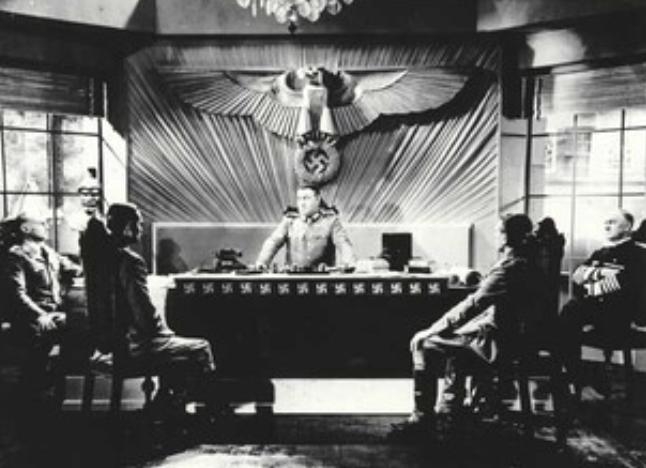 The Power and the Glory begins just prior to World War Two with a bunch of Nazis (including Sydney Wheeler and Eric Reiman) sitting around planning world domination rather in the style of old Monogram pictures with Bela Lugosi. (Wheeler actually says “nothing stands in the way of world domination by Nazi Germany” and “I have no conscience but Germany”, while Reiman declares “The new Germany will never rise except by blood and iron”). They’ve developed a nasty nerve gas, a side effect of efforts by a Czech scientist (Lou Vernon) and his daughter (Katrin Rosselle) to invent a new fuel. The scientist doesn’t want to use his invention for evil, but he’s threatened with detainment in a concentration camp; he destroys his lab and manages to escape with his daughter, but they are captured. We meet two members of the British secret service who are in a café – when another man is arrested the two of them flee, they trick a passing German car into stopping and knock them out, then discover the scientist and his daughter are in the back seat. The secret service agents take the Germans’ uniforms and drive the prisoners to the airport and manage to escape in a plane.
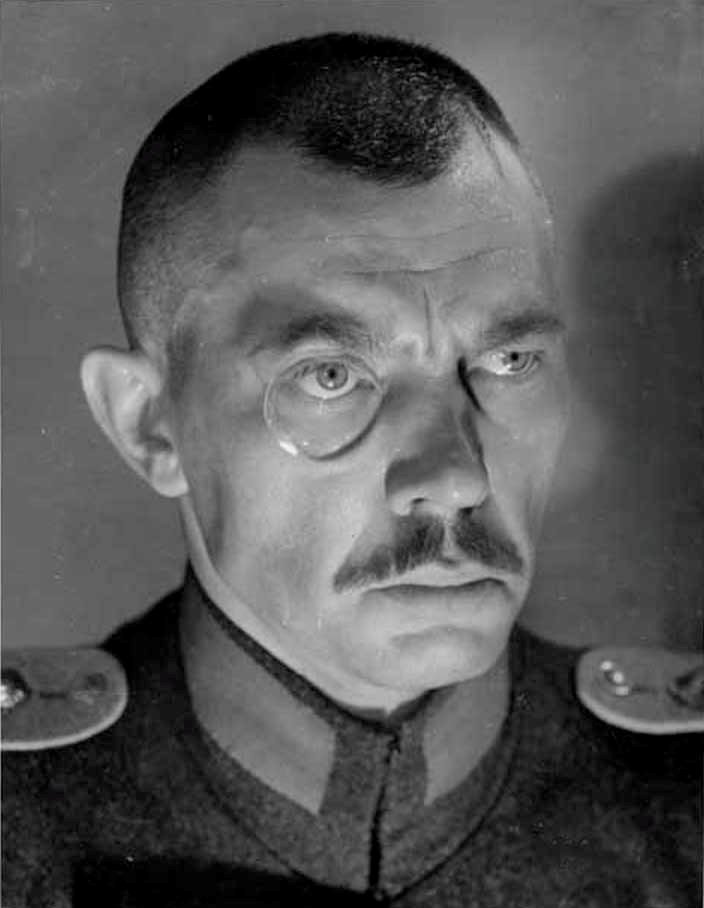 The scientist goes to Australia with one of the agents, but the Nazis find out about it and decide to track him there. The scientist starts working for the Royal Australian Air Force – and Peter Finch comes into the film as a pilot. Eric Reiman arrives in Australia and meets up with Australian fifth columnists (led by John Fernside) who are planning sabotage on planes – Finch ends up crashing and winds up in hospital. By this stage, the war has started and there’s a scene where Reiman and John Fernside look at some Aussie soldiers marching past; Reiman says “we did not expect the enthusiasm of the dominions” for the war, Fernside says he’s been to Australia for a number of years and still doesn’t understand them, adding that “you expect from their interest in sport that nothing else matters but in war the greater the danger the harder they fought.”
Finch and his friend (Eric Bush) visit the scientist and his daughter in their rural hideaway, where they are looked after by a comic Chinaman (an unfortunately common character type from the time); Bush is keen on the daughter. Then the fifth columnists and Reiman are sitting around waiting for their spy to come along – it’s Peter Finch! Reiman slaps him in the face for slack effort, so Finch gives a speech explaining his history. Finch tells the Germans where to find the scientist, and they duly rock up and start torturing the latter to find the formula.
The Germans are about to take the scientist and daughter back home but Joe Valli – who pops up in pretty much every Australian film of this period – manages to sneak off and inform the authorities. Bush goes over there along with Finch (NB none of the good guys know Finch’s involvement yet). Bush and some of the others rescue Vernon but Finch’s treachery enables the Germans to take off with the formula. Bush hops in a plane and flies after him – there is a dog fight, Bush manages to shoot down Finch and Reiman and destroy a German U-boat in the process.
 The Power and the Glory is glorious over the top fun, with top-notch Nazi ham acting from Wheeler and Reiman, a typically strong performance from Finch, a script that feels as though it was made up as it goes along, and plenty of pace and action – last minute escapes, car crashes, fifth columnists who press a button in their living room making a painting revolve around to reveal a picture of Hitler, etc. It has faults – silliness of course, and 1940s cinematic racism, but also we don’t know who our main hero is until the film is more than half over, and when we do know who it is (Eric Bush), he isn’t very charismatic. But it is entertaining.
Monkman flashes his directorial muscles every now and then, such as a tracking shot with various Germans talking in a restaurant. And he keeps things at a fast, skilled pace – it was a shame that he didn’t do more movies as a director. We know you can say that about a lot of Aussie filmmakers, but in his case, it’s especially true.
Australia’s [idiotic, ED] head censor at the time, Creswick O’Reilly, banned The Power and the Glory from being seen by children. Although this decision was over-ruled on appeal, it’s just one of the many examples of cultural gatekeepers trying to hurt the cause of Australian cinema. As mentioned, the movie would not have been made without an overdraft guaranteed by the New South Wales Government (they did this for three other movies – Dad Rudd MP, That Certain Something and Forty Thousand Horsemen) but this government support was criticised in parliament and by newspapers. Eventually, New South Wales premier Betram Stevens – a genuine backer of Australian filmmakers – was deposed by a party coup, replaced by his treasurer, Alexander Mair, who did not share his predecessor’s enthusiasm for moviemaking, and put a halt to any more government support for the film industry. Mair was voted out in favour of a Labor government led by Bill McKell, who also did nothing for the film industry.
We mention all this to point out that while Labor’s record on supporting Australian artists is generally better than the conservatives, it’s not always the case: plenty of conservatives have been very helpful for filmmakers, like Stevens, John Gorton and Malcolm Fraser, while plenty of Labor politicians have done very little, like McKell, Ben Chifley and Stephen Conroy.
Some trivia – the female lead of The Power and the Glory, Katrin Rosselle, was a Viennese ballet dancer (she dances briefly in The Power and the Glory) who arrived in Australia in 1939 before war broke out. While here, she inadvertently attracted the interest of a stalker who once embraced her on stage during a performance, and was then bundled off to a mental institution. She married and moved to America.
The male lead, Eric Bush, was an experienced radio and stage actor who later became a producer, advertised hair replacement tonic, and burned to death in a fire in his bedroom caused by his electric heater. It’s interesting that he was given the romantic male lead in The Power and the Glory over Peter Finch – indeed, Finch made seven Australian features but got the girl in just one, Red Sky at Morning – he was considered a character actor rather than a leading man.
Anyway, The Power and the Glory – despite a pompous title that is used on too many other movies – is silly and fun.
The author would like to thank Graham Shirley and the National Film and Sound Archive for its assistance with this article. Unless otherwise specified, all opinions are the author’s.
