



Danny Peary
Director-cinematographer-producer-screenwriter Ferne Pearlstein’s provocative – and very amusing – documentary brings together a terrific all-star comedy roster of Jewish comedians. Mel Brooks, Sarah Silverman, Carl Reiner, Rob Reiner, Susie Essman, Judy Gold, Gilbert Gottfried, and many other headliners agreed to discuss whether humour can be mined from perhaps the most taboo subject of all – the Holocaust (as the way to get the last laugh on Hitler).
Not lost among the legends is the central figure of the movie, 90+-year-old Renee Firestone, a concentration camp survivor with indomitable spirit whose personal mission is to spread good will around the world.
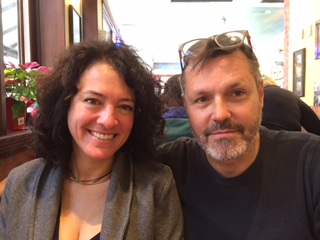
We spoke with Ferne Pearlstein and her husband and screenwriting/producer partner Robert Edwards about their brave movie at the Tribeca Film Festival.
What’s interesting about the whole concept of having comics talk about what they think is funny and what’s appropriate means you’re open to whatever they say. There’s even some disagreement in the movie. Was that always your thought, ‘We’re going to talk to twenty-five comics and see what they think?’
FP: I am a cinematographer, I shoot in film. I struggled for a long time with making this film because I did not want to make a film that was entirely interviews, talking heads, and clips. I had that in mind but I wanted to find something visual. I always knew I had to find something to weave through it, even if that was hard and disparate.
Are we now talking about your main subject, Renee Firestone, an elderly Auschwitz survivor who has a joy of life and tremendous sense of humour?
FP: That’s what I came up with. Before I was searching and searching for what could this story be, who could I follow? For a while I thought, ‘What if I follow a group of second generation subjects?’ They call themselves 2Gs in some cases. It just means second generation survivors. Soon they’re going to be the only ones left.
RE: They tend to be mostly in their sixties. I guess it depends on how old their parents were at the time they were in camps.
FP: Amongst themselves, they have such a dark sense of humour. They can make jokes about their parents that nobody else can. They can make jokes about the Holocaust that nobody else can. I thought, ‘Wow that’s something nobody knows about.’ The reason that dark sense of humour is still in place is because they don’t share. It’s inside jokes. It’s private. It’s their way of releasing their own anxiety over the life they had and the life their parents had. In my process of trying to find different people that were second generation, I found Hanala Sagal who is one of the writers of the movie Elvis and Nixon. She’s very funny and wrote a book called My Parents Went Through the Holocaust and All I Got Out of It Was This Lousy T-Shirt. As soon as we had a shoot going, I had three interviews on Skype with people in LA, and she was one of them. I told her that I was looking for both a survivor that was okay with humour about the Holocaust and who wasn’t. And she was like, ‘I have the perfect person for you. Renee Firestone.’ She said that Renee’s daughter Klara started Second Generation, Los Angeles, which is a support group. I Skyped with them and knew immediately that they were people I was going to follow. I was so interested because Renee’s not just concerned about the Holocaust. She’s concerned about genocides worldwide.
What about getting everyone else? Did you meet resistance?
FP: It was very hard. Nobody said that but they were just like, ‘We’re not interested.’ Nobody wanted to be in the first one to say yes. So a lot of comedians said ‘no’ and some of them we eventually got.
RE: We weren’t connected in the comedy community. It wasn’t like we had a Rolodex and could just call up people.
FP: We had that original connection to David Steinberg, and a woman that works with him as a co-producer and a casting person came on to help us. She’s a co-producer of the film and she helped us with contacts. Between that and Bob’s agent and manager at CAA at the time, we were able to start. What happened was, Bob’s agent called up Rob Reiner and said, ‘You want to be in this film?’ And he said, ‘Sure, I’ll do an interview a week from Wednesday.’ So, we went from just having a check in the bank to having to mobilise a crew in Los Angeles and come up with other things to shoot during the week we’d be there. Just having Rob Reiner alone brought us so much respectability. Based on that, we got Susie Essman and Harry Shearer. Then Susie Essman told us, ‘When you’re in New York, you have to film Alan Zweibel and Rosalind Wyman,’ the NBC censor who’s also a second generation.
You got Rob Reiner and through him Carl Reiner. And Mel Brooks?
FP: Mel was harder because he gets a lot of offers. But in the end, Michael Gruskoff, who was a very good friend of his and the producer of Young Frankenstein, convinced him. In the same way, Mel Brooks convinced Sarah Silverman to do it. It was very hard to get her because she’s so insulated.
Did you have a checklist of comedians you were going after?
FP: It wasn’t a checklist so much as three or four people that we knew we had to have in the movie. We knew we had to have Mel and Sarah. Those two were right at the top. We felt the same way about Joan Rivers, and she was one of the first people to say yes but being the most busy person at the time, and it was just impossible to get her. We finally tragically did have a date set with her but it was a week and a half after she had passed. We worked very hard to keep her in the film, to keep her presence there and I think it’s very poignant now.
Did you find that comics had discussions about this topic with each other?
FP: The benefit of having so many years to think about it and process it was that so many things come up. One was a conference of comedians on taboo humour and they spoke about the Holocaust. And there had been a podcast with Lisa Lampanelli and Marc Maron and a couple of people talking about it. There was overlap with some of the people and things that came up. The discussion of taboo humour has become so much more relevant in the last few years that I even think the response to my film is going to be different than it would have been five years ago, or ten years ago for sure. I think people would have been angry and protested just hearing what the topic was. Now I think we’re living in a society where people are talking about satire, about tragic things.
RE: While we’ve been making the film, the issue of what’s off limits has moved much more to the forefront of people’s minds. As time passes, the Holocaust or the Spanish Inquisition become approachable as a topic for humour and satire. Other things are way too sensitive. It’s hard to joke about abortion, it’s hard to joke about 9/11, it’s hard to joke about AIDS.
I get upset when people joke about Karen Carpenter and anorexia. And it’s very upsetting that when Donald Trump mocks the handicapped.
RE: It’s unconscionable.
FE: The last I heard, it was unacceptable. It’s bizarre.
So having made this movie do you think there should still be taboos in comedy?
FE: As the editor of the film, there were some things I left out. So I have a line.
RE: There’s debate and conversation but as Ferne says, it’s all about context: who says the joke, when they say it, where they say it, how they say it. It’s not a bright line all the time.
Would Renee laugh at the same joke being told by a Christian?
FP: This may be controversial for me to say but I always wondered if Life is Beautiful had come out and he was Jewish would it have had a different reaction with survivors. I don’t know. Or maybe it’s just a time issue. There’s a comedy right now in Germany called Look Who’s Back.
RE: It’s a satire about Hitler reappearing in Germany in the present day. I don’t think you could have made that movie twenty years ago.
FP: I think that it does matter who says it. I think that’s a huge part of it, who makes the joke.
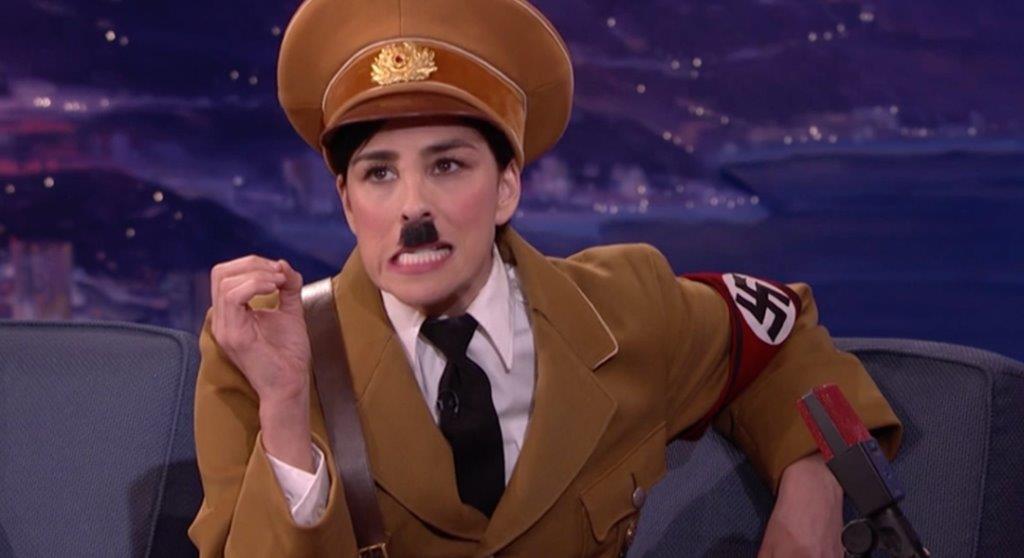
There’s also a distinction between making fun of Nazi soldiers and even Hitler out of the context of the concentration camp element. We’ve always seen Nazis portrayed as buffoons and that’s always been acceptable – but finding humour in the Holocaust is, according to some, stepping over the line.
RE: That was one of the first distinctions we began to uncover when we were first researching the film and talking to people. It’s in the film and it’s interesting. At the same time, other people challenge that distinction. Gilbert Gottfried challenged it because he says, ‘If you’re talking about Nazis you are talking about the Holocaust.’ Mel Brooks makes that distinction also, although he makes the joke in To Be or Not to Be about the Nazi who is proud he’s called “Concentration Camp” Ehrhardt. I know it’s a remake, but still.
The original, Ernst Lubitsch’s To Be Or Not to Be got some really lousy reviews. Bosley Crowther in the New York Times criticised it, saying, “They’ll do anything for a laugh.”
RE: But now it’s considered a classic seventy years later, so time changes our perspective on that.
“Anything for a laugh.” How much do you go along with that?
RE: A number of people in the film talk about using prurient lines for a laugh and for shock value as opposed to taking on a controversial subject in a way that illuminates it. Which is different. This is a film that deals with bad taste. That’s the topic of the film but Ferne has made a film that’s in good taste. We’re not trying to shock people. This film is not a comedy even though it deals with comedy and has funny things in it. It’s an examination of this issue.
FP: This was a struggle in the editing process for me. When people would ask, ‘What’s your film about?’ if I said ‘Humour in the Holocaust,’ they would blanch. Understandably. If that same person saw a rough cut and heard all the jokes, it wouldn’t be as shocking. They’re going in expecting to be even more shocked but seventy years have gone by. You know Mel Brooks. You know Larry David. So you’re not shocked by what they say. It wasn’t until we were able to tie it together with modern day taboos that are touching them now that we could make it gel.
RE: Like when Louis CK was on SNL and made a joke about child molestation. People sat up and took notice. They were upset. That’s still hitting a raw nerve.
Similarly, on Curb Your Enthusiasm, Larry David invited a child molester to Thanksgiving so he could get golf tips.
RE: There are still things that are sensitive. There’s no doubt. As you said, it’s also who says it. If a Neo Nazi tells a joke, it’s punching down. The same joke told by a Jewish person can feel self-deprecating. You understand that it’s within that community. It’s not an attack. It’s not ridiculing. They tell the same joke but when the Jewish person tells it, it’s a completely different joke.
Similarly, do you think when the Jewish Sarah Silverman tells her joke in the movie, what makes it okay to a listener is that we realise that underneath it all there is some pain in her?
RE: Oh, yeah. Although we can’t speak for her.
FP: One of the lines that didn’t make it into the movie was when Rob Reiner said it helps to have pain.
RE: The question Ferne asked him was, ‘Do you have to be Jewish to make these jokes?’ And he said, ‘It helps. It helps to have pain.’
You start the film with these words: “Whoever has cried enough, laughs.” What does that line mean to you? Why is it there at the beginning?
FP: I feel like it was there as an indicator to the audience to say, ‘This is what we’re embracing in the film but also, it’s okay to laugh in this context.’ Audiences when they first saw cuts of the film were worried about laughing. I wanted to give them permission and assure them that this is a safe place to laugh.
What is your reaction when you see footage of Jews in concentration camps performing for the Nazis?
FP: Well, I was shocked. Now I’ve seen it hundreds of times. It actually made me feel really good. To me, knowing that there was humour in the camps was my okay for what we’re talking about. If anybody blanched, I could say, ‘You know, Jewish people were entertaining in the camps. Doing everything from cabarets to joke telling to pantomime.’ Deb, the woman who performs in Las Vegas, is a second generation. She had this one woman show about her father, about his going to Auschwitz. She became her father in the show and he was funny and he told jokes in the camp and his line was, ‘If you were funny before the camps, you were funny in the camps.’ It makes sense. If you are a person that tells jokes or has a sense of humour, that doesn’t go away. We also hear Robert Clary’s funny stories, knowing what he went through [that he was the only member of his large family not to perish in the camps]. I am in awe.
There is a line in your movie: ‘Laughter is the only weapon in the ghetto.’ Were you seeing laughter as a weapon?
RE: Etgar Keret [Israeli author who’s a child of survivors] says it is a weapon of the weak because when you don’t have anything else to fight with, you fight with that.
FP: David Steinberg talks about it being a weapon but says it didn’t stop the Nazis from killing the Jews. For your morale and getting through day to day, I think it is a weapon.
RE: It is a coping mechanism.
The important word you mentioned earlier is time. Time makes things easier to handle.
RE: I don’t know if that’s a good thing. In the movie, Susie and others talk about the Spanish Inquisition. Nobody bats an eye, it was five hundred years ago but it was beyond horrible. In five hundred years will the Holocaust be that anecdotal? If it is, we’ve really lost something.
FP: One of the things I was hoping to do with this film was find a way to get a younger generation to relate to this and think about it and who won’t just write it off because it was so long ago. It’s a way to teach them while they can be entertained in a way that’s more interesting to them.
RE: There’s a kind of Holocaust fatigue. You can’t see any more black and white footage with a cello score in a minor key as Woody Allen jokes. When Night and Fog came out [in 1955] and we first saw what happened in the concentration camps, it was powerful. Now, it has become almost a cliché. So there are new ways of approaching it. Humour is one of them.
The Last Laugh is screening at the 2017 Revelation Perth International Film Festival.
