


by Dov Kornits
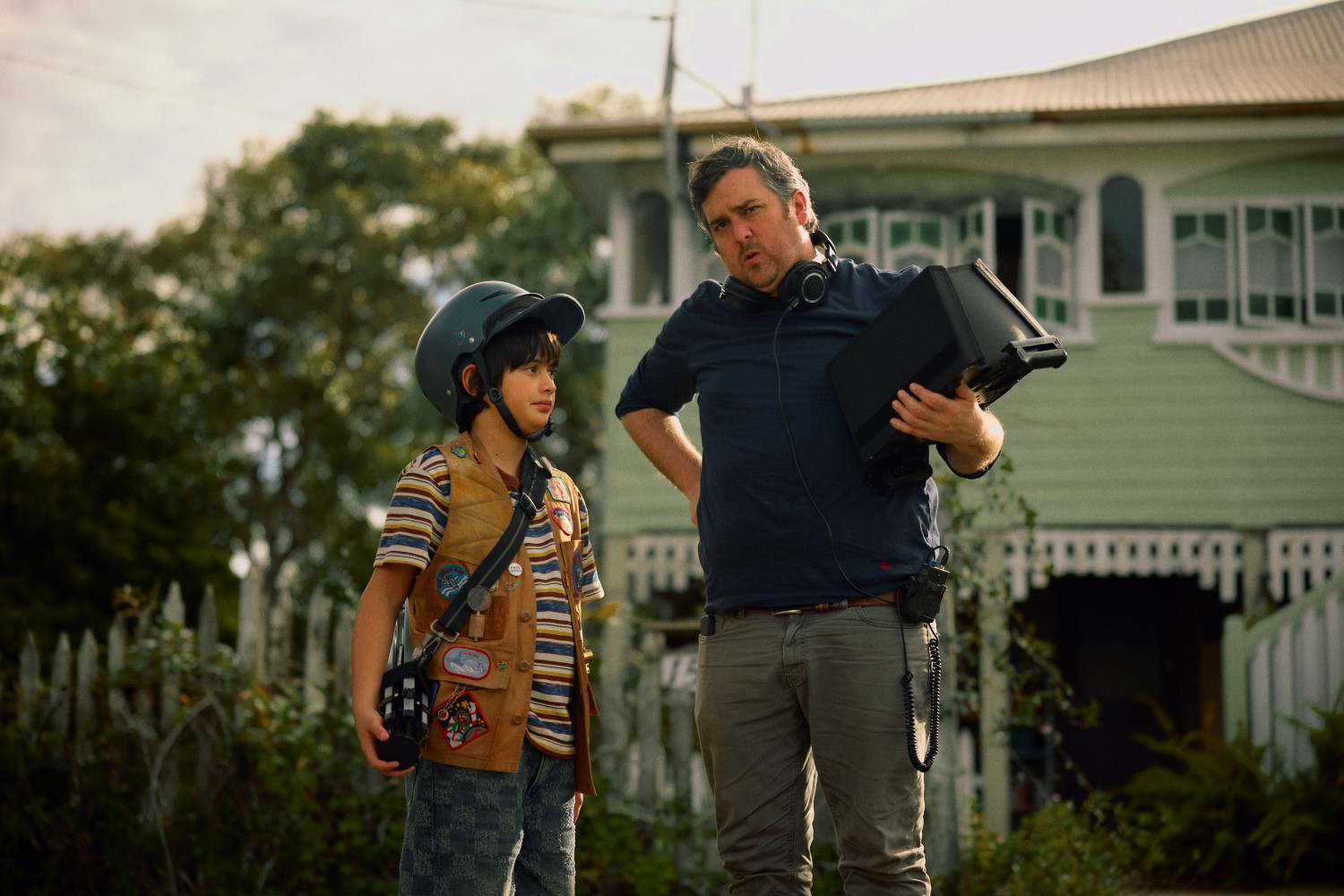
“Yeah, but better looking and taller,” jokes Daley Pearson when we ask him if Petey, the character played by TJ Power in Allen, is him as a leading character in a movie. “TJ came in quite late, very late, and he was like a shooting star. We had been auditioning these brilliant actors, and it wasn’t to do with their talent, it just needed someone who can balance the wonder and the ridiculousness and the heart, but also just seemed like a bit of a kid – have a bit of an openness to them. I think we spoke about performances we loved, and the thing we wanted with this was just somebody who was open and allows the audience in.
“On the first day, TJ and I were trying to be a bit funny or we were trying to hit jokes. And then we realised that we just had to make the decision, and it was TJ’s decision just to love Allen, and that’s it. Don’t try to be funny, don’t try to hit the jokes, don’t try to do anything, but just have this love for this thing, and that’s a full stop. He loves his family, he loves everyone around him, but he’s got this past and this thing he can’t let go of.”
Petey’s past is that as a kid, a playful alien visited him, made a very strong impression, and promised to return. Named Allen by Petey and his brother and their friend Carly, the cute alien’s absence has put a pause on an adult Petey’s life, which is opened up when Allen finally returns.
Daley Pearson is speaking to us from Ludo Studios, the South Brisbane based company that most famously gave birth to Bluey. Daley is the co-founder of Ludo, along with Charlie Aspinwall. When we congratulate him on the company’s success, like the best ‘doers’, he is quick to talk up his collaborators. “It really is just all the people here. On Allen, we got so lucky. The VFX and puppetry was always just going to be this huge gamble and huge part of it. We had Steve Boyle who built and designed Allen, and then we had Jordan [McInnes] and the Alt.vfx team who took the torch and ran with it. If we had a big plastic dome, like some sort of Batman villain built to put over the town, they would be within five kilometres of each other. It was just so lucky to be able to walk to both of them or drive over to both of them.”
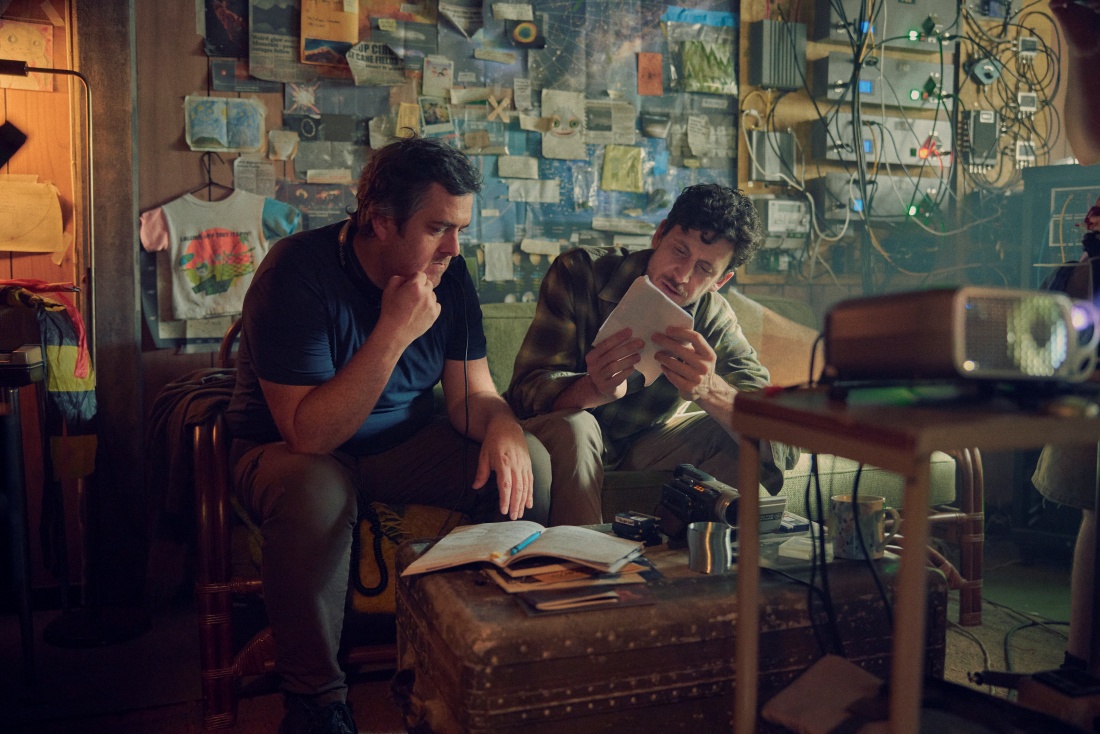
Tell us Daley, what’s the significance of having Allen set in Coolum?
“It’s where I grew up. My parents moved there about halfway through my childhood, and I was a bit of an outsider there because I had grown up in Brisbane, I had this group of friends, and I think I changed schools about six times, which was not for any nefarious reasons… I wasn’t starting fights or anything, but my parents were moving around with work, and so I ended up getting shuffled around a lot in school, all very happy schools, but they’re all generally in Brisbane. But then when I moved to Coolum, which was in the ‘90s, I think I definitely felt like a bit of an outsider. It was a tough place at that time to plug yourself into if you weren’t from there. And just as a kid, like any place would be. It’s like those Disney movies where a skateboarder moves to somewhere where they surf… Airborne, that’s that movie. We had a big race down Mount Coolum to earn the locals respect…
“I was always a bit creative, and I got a lot more in my own head and a lot more creative there. And then I had a few family events happen during that time. So it felt like a place that was like a coastal hamlet where stuff could happen, and the world would never hear about it. Especially at that time when there’s still not quite a way to get to Coolum other than to drive there, public transport and train. It did feel like a place, a beautiful oasis where stuff could happen and the world wouldn’t hear about it.
“It’s up to the audience whether it was done successfully in this film, but I just don’t think that place has been shown on screen as beautiful as it is.
“It’s just so beautiful and a bit strange and a bit prehistoric. And there was something about growing up there, I think whatever childhood I had felt like it got set in concrete while I was there. I just started writing stuff there. I worked at a shop overnight from 11pm till 6am, which was literally called The Shop, which is the shop in this film. And David there was my boss. He plays Petey’s boss in the film.”
We really loved the specificity of place, which Australian films don’t do enough of.
“I think it’s just the stuff I love the most and the people I love the most as filmmakers, from John Hughes or even singers, songwriters, they write their lives. Johnno by David Malouf; I love the most when people bleed a little bit, bare their lives into their story a bit. The genre element is the wild card with this film of how the audience will go with it. I hope I dripped a little bit into it of my real life, but it definitely has an alien in it…”
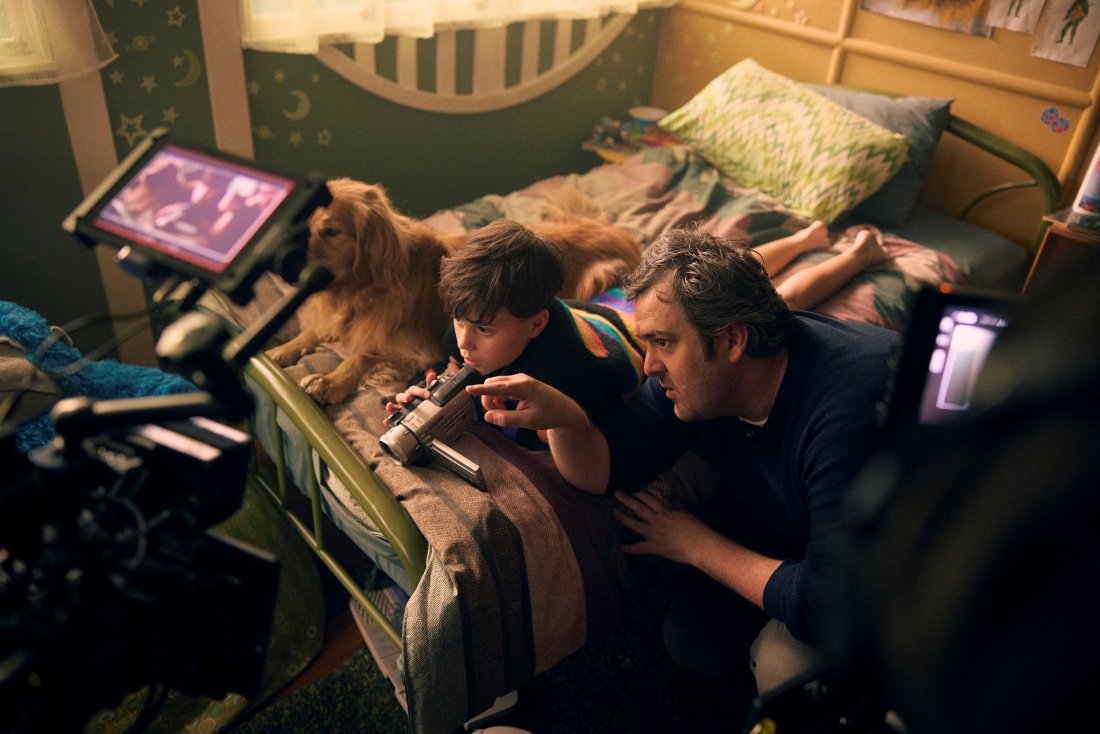
So, who voices Allen?
“Oh, we haven’t told anyone. Similar to the Bluey voices remaining anonymous… We got worried that having that Eddie Murphy name there or something took ownership of it when I think there was such a craft and such an army of artists that went in to bring him to life that… I don’t know whether it works or not, but I think that’s what we hope. We hope that that can have a little bit more light on it without the shadow of that name there.”
Can you discuss why Allen didn’t receive a cinema release?
“It’s not a straightforward film. It doesn’t necessarily have huge stars in it. Those actors are the most wonderful actors in the world, I just love them, but they’re not huge billboard names. And I think I never had that romanticism with this film, maybe for future films, but the idea of just having this sort of film backed by Netflix with that sort of audience felt like that was more than enough for me.
“I definitely feel romantic about cinema. I want cinemas to stay around forever. The films that made up my childhood, that was how they attached themselves to my soul. I was in a cinema when I saw those films, from the huge stuff like Jurassic Park to all those others that latch onto you, I saw them in a cinema.
“Maybe it’s just through Ludo, the projects we do, we never imagined ourselves doing preschool animation. And even with content, which was a vertical video show, I think we followed the story and the characters and just the natural rhythm of the project to wherever it ended up. And this has just ended up being adopted by the right place. Netflix backed it, something that is risky, that isn’t straightforward. They’ve given us enormous support, and it is in front of a huge audience who I think are the audience for this film, or I hope that they are the sort of Peter Pan audience of Neverolds…
“We made it for a family to enjoy, but our protagonist is a sort of Neverold that these people who’ve grown up shaped by this very specific childhood and are somewhat unable to let go of it. They seem like that audience was there with Netflix. So, nothing was ever decided in any pre-planned way. We just kept developing the story and writing the story, and Netflix came on board, and then it became a puppet film, and then it became a puppet with VFX film, and then it became a film that was allowed to shoot in Coolum and be very specific. Then I was writing and directing it with Jeff Walker. It all just was something that kept evolving very naturally. I’m not even trying to appease the gods. I feel very lucky that it’s going out on Netflix across the world for this type of film for that sort of audience. I think it’s the right time, right place, right people, I hope.”
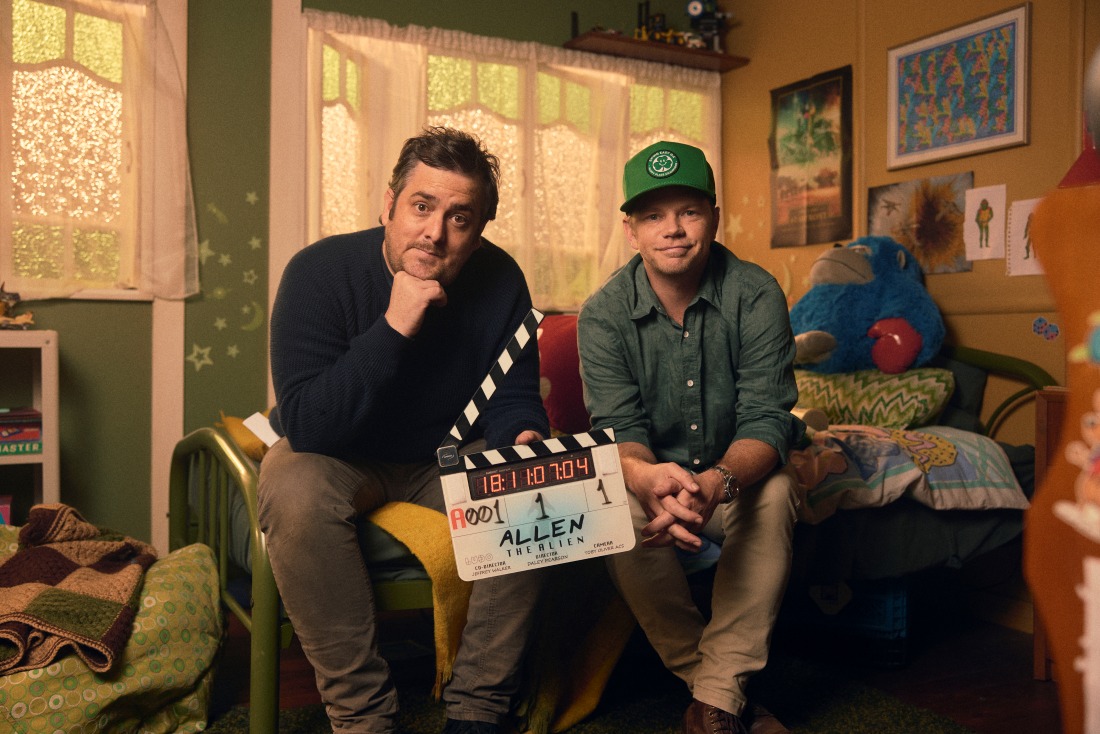
Can you talk about working with Jeffrey Walker?
“He’s in Brisbane with us, and he started coming along to these Bluey screenings every Friday where people would come… It just was crew at first, but then it became friends and family, and I think old prime ministers, eventually it got a bit out of hand.
“Jeff was in Brisbane and we wanted to make stuff together before this, and I think he was making Apple Cider Vinegar. I was producing, writing, directing, it was sort of a kitchen sink film, but it has this huge visual effect character and puppet. So, there was a bit more to it. And together with Netflix, it was just a very natural evolution to ease that pressure of production to bring on Jeff. I remember calling him and asking him to do it, and he was in the car. He must’ve been driving from set, and he agreed on the call, which was the most incredible thing.
“I have learned so much from Jeff. It’s like all these sort of diamonds in the rough seem to exist in Brisbane, and he was here, and he just had this incredible comedy experience, but also this incredible ability to run a team, helping the culture and helping oil to the machine and getting everything running and people talking well. He’s just a great culture maker, and I would make another film with him in a second.”
You’ve recently added your voice to a campaign run by producers to stop the cap on above-the-line costs on Australian films. Can you speak to that?
“I feel like if everything was to close shop on me tomorrow, I’ve had a wonderful time. But what about the filmmakers coming up behind me. I still hope I have a hundred more years to make stuff, but I feel like I would hate the idea that, like the Indiana Jones hat, that this door came down on other people, the door on those opportunities that have given us so much. And also, they haven’t just given us opportunities. We hope that there’s evidence in what we make through the Bluey movie coming up.
“I used to think that good stuff will just happen. If they’re really brilliant, it’ll happen. If the idea’s good enough or if the people are talented enough, they’ll figure out a way. You don’t need this assistance, you don’t need support… This is a business, you have to figure it out. But the more that I’ve looked back on the history of it and all the films I’ve loved from Priscilla and Muriel’s or whatever they are … Policy has created culture. I just hope that people coming up after us have the same opportunities that we’ve had. And I know and I hope that like Danny and Michael [Philippou], they’ll do more with it than us. And so that was the reason there for me get behind it.”
You mention Danny and Michael, are you able to talk about your writing credit on Talk to Me?
“I had hung around them a few times, we spoke on an AFTRS panel. That’s where I first saw them. Then I saw them in Adelaide at the conference they had there, and I just really loved them. And then we made an animated show together called Strange Chores for ABC where they were the voices. And because of that, I just kept checking in with them every week because we would record together.
“I wrote this 20-page… I think it was basically that middle, the fun and game, section of Talk to Me where everyone goes crazy. And the idea was that if people behave realistically, they would film that. In American horror films they would run away, but in Australia, you would film it. I remember maybe it was Brendan Gleeson or someone like that said, ‘the difference between Australia and American stuff is in America, if a dinosaur walked down the street, people would flip tables, they would call the government and scream. And in Australia, if people were having coffee and a dinosaur walked down the street, the other person would say, ‘someone will do something about that…’
“And I think there was something about that in Talk to Me. So I sent it across to them, and I would’ve loved to have made it with them. That was the idea. I was hoping I would make that, and they would star in it in some capacity. And then Robbie Hood and Strange Chores happened, and Bluey happened, which just bowled everyone over. And we were making about four shows at once at Ludo, and it was just very intense, and it was in the growing stage of Ludo, and they were having weekly story sessions, and I just knew I wasn’t able to turn up. And then Danny just wrote this brilliant, beautiful script and ran away with it. And so it’s all his and Michael’s. They made this beautiful thing from a little ball I threw at them, and they really made it their own.”
Allen is streaming now on Netflix
