

By Patrick Scott
We spoke with the up-and-coming director about his experience at college, the importance of expressing emotions and the strange feelings of winning Best Narrative Feature at South by Southwest 2020 during Covid.
This film is largely based off your own experience and understanding of college. What inspired you to make it into a film?
“It was based on a person I met during my freshman year of college. I don’t know if it was based on actual events that occurred. I think the question of why I made a movie about myself is just the write what you know advice that people give you. I think if I was trying to write a movie about experiences that happened, I would have thought it was too boring. It was nice to write something that kind of emulated what I was feeling, putting a character into circumstances where it can shine a light on what college is and what it means to leave home and stuff.”
I understand you’re an entirely self-taught filmmaker. What process did you go through to learn to make films?
“I did theatre in high school and I really wanted to be an actor. I got into writing in my senior year of high school. And then in college, I kept writing. I really never wanted to make a movie. I never wanted to direct a movie. I really wanted my writing to be directed by someone else. At some point I realised, if anyone’s gonna do that, it’s gonna be me probably because no one will want to direct my college love story.”
I’ve read you tweeted at Jay Duplass to watch the short film that this feature was based on, Madeline and Cooper, and subsequently Jay mentored you through making this film. Can you tell us how that relationship started and what his role for the film was?
“Yeah, so I tweeted and said ‘Bet you won’t email me’ and he won the bet. He emailed me after watching the short film. Then we got lunch because we live really close to each other…I knew that cause I’m a stalker. I was just following him.
“Anyway, we really hit it off. We were talking about his work and my work and what I was wanting to do and what he was wanting. And then at some point, we came up with the idea, well it was my idea, that what if he helped me make Madeline and Cooper into a bigger movie with more resources and he wanted to help with that. We’re still friends now and he’s a really good mentor.”
What would you say is the biggest thing he’s taught you about filmmaking in his mentoring role?
“Really, I’m not kidding, like literally everything. It wasn’t just filmmaking. He’s into acting too so we talked mostly about that. Then when I said ‘hey, I want this movie to be made into a bigger thing’, he said ‘well you’ll have to be the director’. So, then he just taught me literally everything about filmmaking.
“I guess the biggest thing he taught me was that you have to do it all yourself, especially at the beginning, because like there’s no one that’s going to come and do it for you. He was really good at teaching me how to be resourceful and how to save money. Also, writing in a way so you don’t have to go to a million different locations and making the conversations interesting because conversations are the key to how you make a film.”
Did Jay Duplass’ films inspire you stylistically for this film or were there other films you had in mind while making it?
“He has a TV Show called Togetherness, that’s like my favourite thing ever. That’s always an inspiration to me. I know his movies as well. He’s got a very distinct style, especially in his earlier movies where the camera is not quite shaky, but he’ll do a zoom in which is very classic Duplass.
“I’m obviously working with the DP (Rachel Klein) on Freshman Year. She loves things locked off. I honestly didn’t have a preference so that became my style, I guess. She’s a photographer also, so a lot of the shots were beautifully composed. Jay and Mark [Duplass] are not like that at all. I think if I worked with a different DP, it might have been more like Jay and Mark. But they’re so good and confident when they shoot that they can get everything out of someone and be amazing with the actors. I’m not at all confident.
“I think the main thing we have in common is that it all means something and the characters are full-fledged real people that are dealing with small things but taking it really seriously because they’re working really hard to live a good life. So, I really like the themes that he explores. I think that’s the biggest thing to take away from watching his stuff.”
The dialogue in this film feels very authentic. Was there much rehearsal time for the film?
“With the roommate, we had zero rehearsal time. Logan’s (Logan Miller) amazing. I knew that going into filming. But with the timing, it was really hard to get any rehearsal time. He’s a very busy person and I was so thankful for his time. I knew he was going to knock it out of the park and he did.
“Then with Dylan (Gelula) who played Maggie, we did do like, probably a week of rehearsal where it was just us trying things out. That was probably the most collaborative experience I had with another actor. But yeah, I don’t care at all about how things are said, I just want them to feel good in people’s mouth. That was the main thing I said when I first sent the script, I said to the actors, ‘I want you to rewrite it’. A lot of directors might say we’re going to do it without the script. I don’t feel comfortable doing it that way. I always tell them – ‘does that feel weird coming out of your mouth?’ And if they say ‘yeah’, then how can we change it to feel better? And they’re all such good, strong actors that they can do that really easily.”
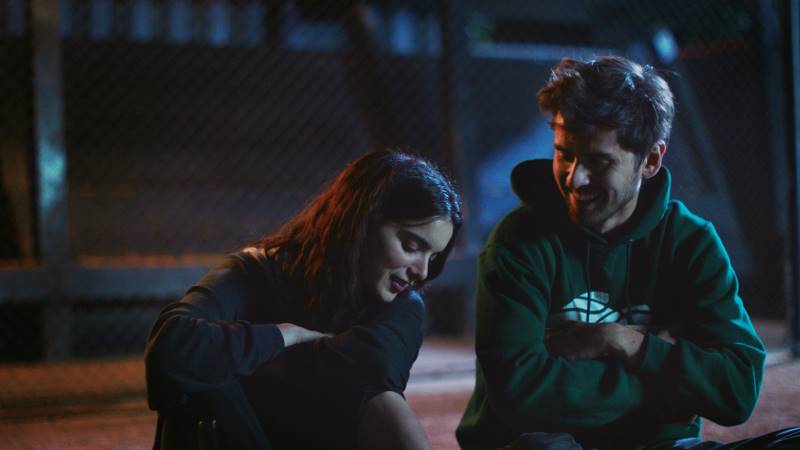
Congratulations on winning Best Narrative Feature at South by Southwest last year. What was the feeling of winning during COVID? And with so many people watching it, was it hard to let go of such a personal film?
“Yeah, it was really hard. Really honestly, winning was so amazing and so exciting but it’s so scary. All of a sudden more than just my family and friends were going to see it. Everyone in that movie just thought our friends and family are going to see it and hope they like it. But more and more people were seeing it and I became really defensive. I was like, ‘they don’t even know how much money it was made for, they need to know how little time we had’.
“I didn’t want people watching it thinking it’s a movie that it’s not. I think it’s a movie where you have to meet it where it is. It was really terrifying to release. It wasn’t at first because when we got in South by Southwest, I was just excited to see everyone else’s movies and be a part of it. But when you get the release dates in the States, that was really nerve-wracking horrible. I was so nervous about people seeing it.”
Are you surprised by how positively people have reacted to the film?
“Yeah, I’m also surprised by how much certain people hate it. There’s been a ton of surprises. You never realise how your movies will land. I’ve let go of people’s reactions. There was this review that came out from IndieWire from this guy David Ehrlich who I’ve been following, like I read all of his reviews all of the time. And when he gave it a good review all of a sudden, I released the movie.
“When I see certain positive or negative feedback, I think a lot of it’s just their experiences. I shouldn’t spend too much time dwelling on people’s reactions because it probably says more about them. So, I don’t like to bother myself with how did everyone receive the movie.”
A strong theme in the film is saying goodbye to your family and looking after yourself for the first time. Given it’s loosely based off your own experience, are there things you’ve learnt to help cope with that experience?
“That’s a great question. I try to remind myself to take the advice that I give people in the film. Like, I still don’t make my bed a lot. I always try to tell myself to do those things and that it would help if you had things together and doing things yourself. But yeah, I don’t know.”
Just on that, did you experience a similar thing yourself?
“Yes, definitely. I mean, it wasn’t obviously as well written. It wasn’t one particular moment. Like the scene with the mum, I feel like I’ve been there. I’ve had that kind of moment where I just felt like the world was ending. That was more replicated as opposed to ‘oh that was so cathartic’. I think I was trying to make a movie about a story and a kid. I think I have nicer, healthier relationships with people now. I’ve learned a lot in my relationship with the girl Maggie is based on.”
There’s a moment toward the end of the film where your character and Maggie are having an argument outside the party. Maggie is telling your character to stop crying and grow up. Your character Alex says there’s nothing wrong with crying. Do you think being open with emotions is an important message for younger people to embrace?
“I don’t know if I was trying to send a message. I mean, I was cognisant of the role reversal but I don’t think I set out to send a message that crying is great. I think Maggie has a point sometimes when she’s like ‘stop crying right now, you need to pull it together’. But I think Alex has a point when he’s like ‘there’s nothing wrong with needing hugs’. They both have a point.
“It’s funny, with the phone call with the mum when he’s crying. I never even thought to cry more to show that it’s okay to cry. Like, it was just the reality of the character. I cry a lot. And I think the way that I was raised, it was okay to express your emotions. But it’s nice to see people comment on a vulnerable protagonist.”
Is that something you’ve learned from a young age, that it’s okay to be open with your emotions?
“Definitely, yeah. When I was in kindergarten, I would always come into the car with my mum, after school and say ‘Hey, mum, can I share feelings?’ And she would say ‘of course you can share feelings’. So, that’s how it’s always been.”
What was the transition like from making the short film to working with a professional crew on a feature film?
“It was horrible. The first movie was made with me, the girl who it was about and then my friend Will who was holding a camera. We were booming each other. It was so small it was my two best friends so that if I got frustrated, we could just work it out and communicate with each other. It was hard because there were no bodies helping us make it. But it was so much easier because there was less to communicate, and I knew that they had my back.
“When you are making a movie that is much more professional, and I don’t recommend this, but there are so many people that you don’t even know before Day 1 of shooting. It’s just hard because when you go into overtime, you have to look them in the eye and say we’re going into overtime, and the movie doesn’t have that much money so you might not be getting paid overtime. It was really tricky to have to communicate with so many people how I was feeling. I don’t really feel like a leader, so that was the most challenging part, knowing I had to bring people together as a leader. I think a lot of times I had failed miserably. It’s really hard to direct a movie and keep people together and keep people focused on the goal of making a good movie.”
What are you working on next?
“I don’t even know all the things I’m allowed to say. I’m currently working on a movie…”
Are you planning on directing again?
“Yes, I’m directing it and I wrote it and I’m doing all those things again.”
