


by Nadine Whitney
Sarah (Rebel Wilson) is an archaeologist working on reconstructing a human skeleton. She hasn’t been in the field for a while and is numbing herself with alcohol. At first, the audience doesn’t understand why; she makes a call to a helpline saying that her husband is missing and yet soon we see him, Joe (Celyn Jones) very much present in the house. He has a TBI from the removal of a brain tumour that also meant the loss of the area in the brain that stores memory. The couple are obviously very much in love, but Joe doesn’t realise that he has a TBI – he keeps a journal to explain what happened but cannot keep the memory of the information in his mind long enough for it to stick.
In another part of town live Toni (Charlotte Gainsbourg) and Gwen (Trine Dyrholm). For fifteen years after a terrible accident, Gwen cannot form new memories, with Toni spending every day reminding Gwen that they are together and despite the fact that they look older, they still love each other. Gwen was once a prestigious cellist but hasn’t picked up the instrument since the accident. She suffers panic every day as she lives in an eternal loop of amnesia.
Both couples end up at an institution run by Dr Falmer (Meera Syal), where Joe and Gwen are offered onsite respite. Toni and Sarah meet and form a bond that eventually becomes romantic.
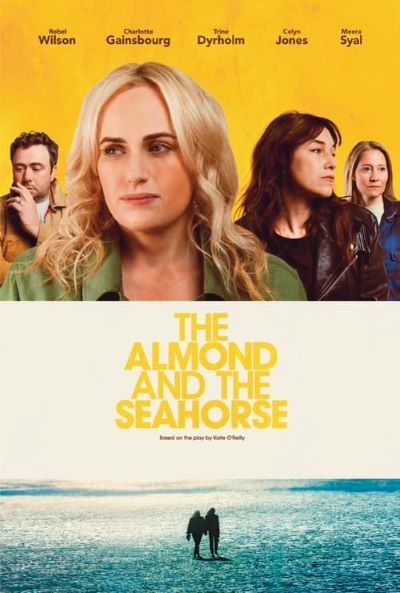 The Almond and the Seahorse is a powerful film depicting what it is like to live with someone who is no longer who they once were and the deep sense of loss those who love them feel. It is quietly melancholy, yet also dignified and true – Gwen and Joe aren’t victims; they are people who have changed. The struggle is for their partners and those who love them to realise that they too have changed, and although their love for their partners does not waiver, they need to find time and space to love themselves.
FilmInk had the pleasure of speaking to Celyn Jones.
Firstly, congratulations on The Almond and The Seahorse. It’s a powerful piece that gives a lot of dignity both to the people who experience TBIs and the people who care for them, so often unassisted.
“Thank you, I really appreciate you saying that… dignity should always be given. The late Oliver Sacks described it as ‘The silent epidemic’, as it seems to be hiding not too far from all of us in one form or another and effects everyone in its orbit, not just the victims of TBI. Usually, the loved ones are left picking through the debris in its aftermath. I think that’s why audiences are reacting so emotionally and primally to the film… it hits us in a deep place we never thought it would hit and reminds us that we are human, and memory is fragile, but love is robust.”
I believe this is the fourth feature you’ve been a writer on, and the first you have been a director. Firstly, what were the challenges you faced in adapting Kaite O’Reilly’s play for the screen? I’m aware that you played Joe in the stage production, but it must be a very different experience creating a story for the screen.
“Yes, it’s my fourth produced screenplay. Like all writers, there are a few more left in the drawer but this is my fourth produced feature. And yes, it’s my first as a director, a move I always wanted to do but never thought it would be this film. Like William Goldman says ’Nobody knows anything’. I played Joe on stage in the original production, which I enjoyed immensely but it was a long time ago and the film is very different. Our challenge was to expand on the world and characters, develop a screen language and visual style whilst heading to a satisfactory ending for the audience. Kaite O’ Reilly was brilliant and not precious about adapting the play, she wanted it to stand alone and the film to be the film. The brain is such an unchartered ocean in a lot of ways, like the bottom of the Mariana Trench, so the possibilities to tell a unique and rich character story were there. I knew actors would relish it because I’m an actor.”
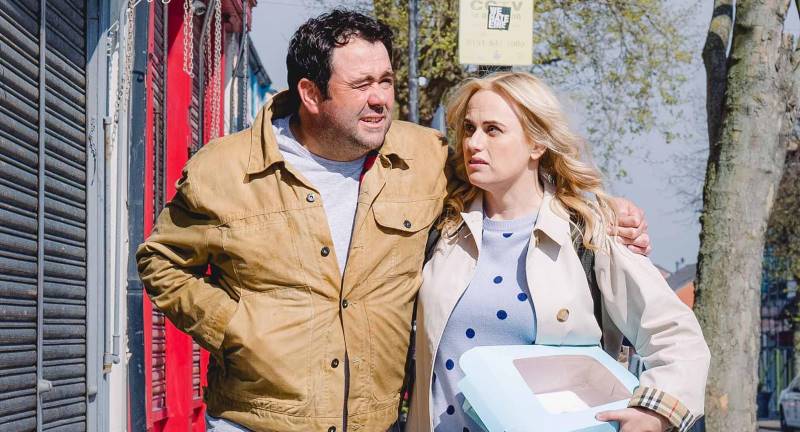
As an Australian, it’s essential I ask you about working with Rebel Wilson and directing her first dramatic role. As you play husband and wife, you must have spent a great deal of time with her finding a rapport that would seem authentic but also echo Joe’s experience of losing himself and her fears about loving someone who isn’t who they were?
“Rebel is a wonderful actor and generous soul; I love the story she tells just by being present. I know it was a challenge and a brave step for her, but she grasped it and trusted the process together. She was concerned that the emotion wouldn’t be there, but I wasn’t, the audience is on her side. I think there’s a real chemistry between us on screen, I like her company. As Sarah and Joe, you can feel the echoes of the characters’ past love and relationship… how they were together and what they want to fight to keep. It’s a love story that gets ambushed. We talked a lot before filming, read scenes on zoom and rehearsed together on location ahead of the shoot. I feel this is the type of work Rebel has always wanted to do and show the world and I respect that. For me, as an actor I like freedom and the opportunity to play in the moment and find a shared truth, however difficult the circumstances… I’m proud of our work. Rebel has a great emotional range and an alive quality that beguiles.”
View this post on Instagram
You co-directed with Tom Stern (Sully), one of the most respected cinematographers in the business, but this is a very different film for him. It’s much more meditative. How did you share your knowledge of the material with him to create a character driven study?
“We spent a year on zoom together. Tom Stern is a gifted storyteller and master technician, his experience is unparalleled. He was moved by the material and not fazed by the break-neck speed of 24 days, small crew and tight budget. When Tom read the script, it moved him enough to come on the journey as we put the film together, I learnt a lot from him. From the start, I wanted it to be a performance piece, a film for actors to feel safe enough to be courageous so it would connect with audiences. It was important for the camera to not be too intrusive, simple and uncomplicated for the acting to breathe. Big, long, fluid takes that would move, so the audience can experience the full performances. We watched a lot of Cassavetes, bittersweet dramas like One Flew Over the Cuckoo’s Nest and even old melodramas like Now Voyager to get into the blend of styles and storytelling. We also wanted to make it elegiac and get it away from the kitchen sink and promised not to make a misery fest!”
You’ve worked with some amazing people, from Hollywood royalty like Elijah Wood in Set Fire to the Stars, to Dame Judi Dench in Six Minutes to Midnight. In The Almond and the Seahorse you have encountered world cinema royalty, Charlotte Gainsbourg and Trine Dyrholm. Was it a little daunting working with such prestigious actors?
“It’s only daunting in your mind before you meet these people and it absolutely disappears when you start working. Judi and Elijah are incredible. I love actors and think of them all the time when I’m writing, which has helped because it’s attracted wonderful actors to come and work with me, an embarrassment of riches. I always get excited about actors doing something new, rising to a challenge because it doesn’t scare me as an actor or now as a director… You want reinvention, then I’m your guy. As for Charlotte and Trine, they are two of the most powerful and gifted actors I’ve ever had the privilege to work with. Their acting instrument is so finely tuned, I quickly realised that it would be a foolish director to impose anything on them… I trusted their talent and instincts and listened when they needed me to. It’s important to be kind. They are seriously talented, so it’s no surprise they have success and iconic status. But what must be said too, is that they are both solid gold human beings, kind and courageous and great fun to be around.”
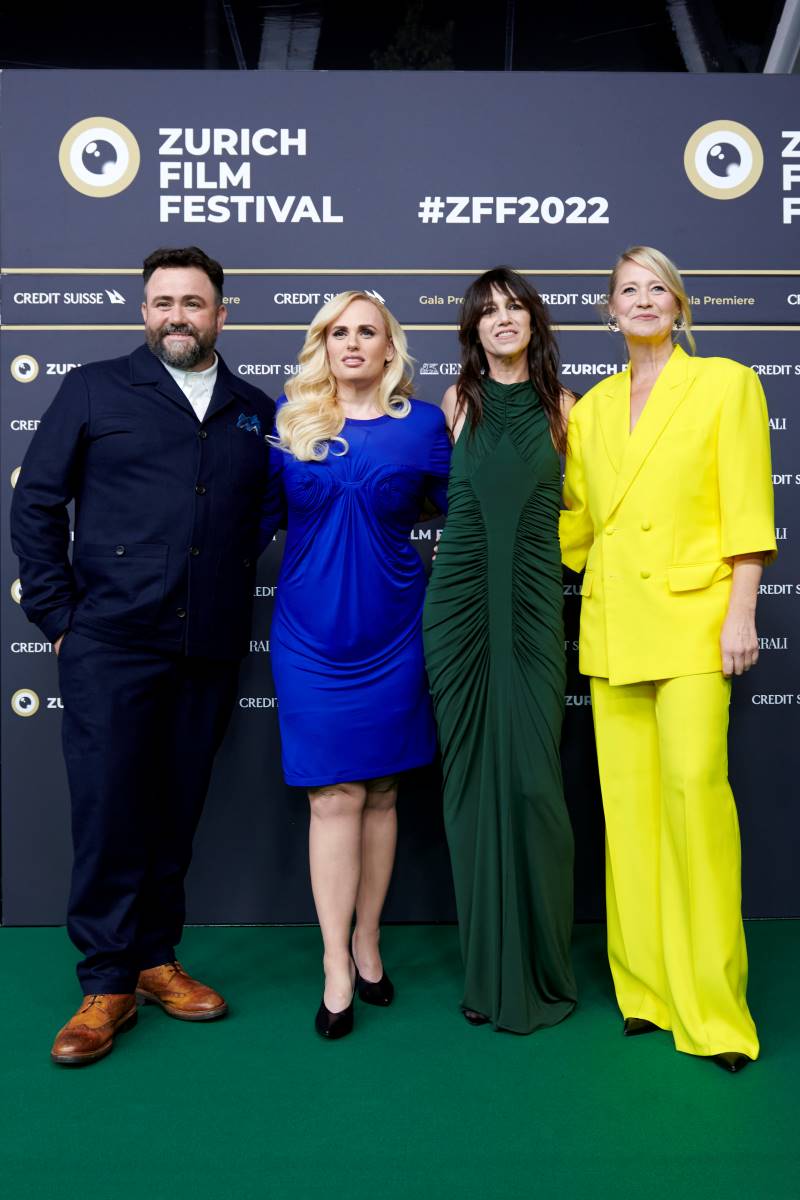
The setting of the film in Liverpool was a deliberate choice but also allowed for some poignant moments – Gwen calling the decaying sea sculptures beautiful. Did Liverpool itself offer a specific sympathetic character to the film?
“It was a deliberate choice, full of symbolism and poetry. We knew it should be a recognisable world but not an eclipsing one like a capitol city. The story needed coast and city, university and high street and it needed to be diverse enough for all these lives to authentically inhabit and disappear into. Liverpool and North Wales have that. I also live there so know it well. The characters that Rebel, Charlotte and Trine play were purposefully not local, strangers left in a new world because it amplifies the drama and dilemma by not having a support structure to lean on or into. I feel Liverpool is this reliable presence in the film and also very relatable to people across the world… we all know a place like that or can at least imagine one.”
How important is authentic representation of disability on the screen. Kaite is a disabled writer and an activist. What methods did you use to ensure that you were creating complete people who the audience can empathise with but not feel overwhelming pity for.
“That was paramount from day one. Kaite is an amazing writer, activist and person… we promised each other to make this film and tell the story in a certain way, avoiding a non-disabled lens or rubbernecking into the lives of different people. We wanted to present these characters clearly and balanced, with no judgement and give them space. For example, when Joe breaks down after losing his pill, we keep back and show the whole range of the emotional experience in the moment as he breaks down and then comes out of it and eventually forgets why he’s sad. The audience watch it all in one shot as we resisted the urge to push in and poke at the so-called strangeness.
“This story is about the people without TBI, they are the victims of the story and they are the ones broken by the change of their relationships. Kaite is so renowned in the disability arts world that lots of fantastic artists were able to review and feedback on the film to make sure we upheld our objective.
“Representation is key also; the role of Jenny was always going to be played by an atypical performer, but the role has nothing to do with disability… Jenny is a firecracker no one would mess with! Ruth Madeley plays her brilliantly and one of the most moving moments in the film is when she gets out of her chair to sit next to Dr Falmer (Meera Syal) to comfort her friend. It was Ruth’s suggestion, she’s ambulatory and wanted to offer that action to the scene and it makes the moment which leads to the killer line from the Doctor, that’s aimed at Rebel and Charlotte, ‘They are the brains I can’t mend’.
“We call it a trojan horse film, all the fight, fire and politics lie in the guts of the beast and they’re there if you want to look for them. If you don’t, then that’s cool… just enjoy the magnificent horse but in the knowledge that they are there waiting.”
TBIs are as said in the film a silent epidemic and they are underfunded. Are you hoping to raise awareness of the issue?
“Yes, I hope people get as much help where it’s needed. If this film raises awareness, then great. If it acts as relief and catharsis for people because they see themselves in it and can then find it easier to share or ask for help, brilliant. If it just acts as 90 minutes respite and entertainment, then that is really worthy too. It’s about love as much as its about TBI… broken hearts and broken brains.”
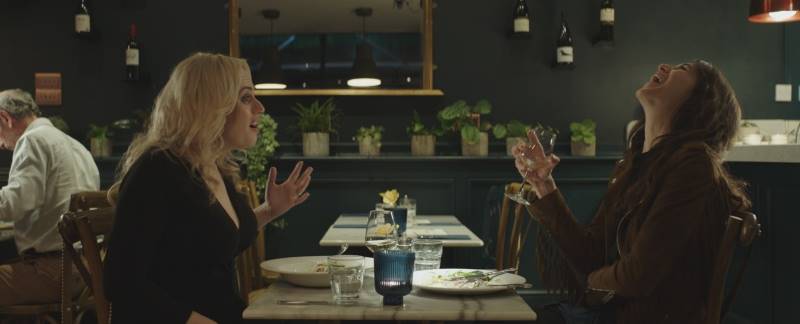
Was the character of Toni always a woman or was she gender swapped for the film?
“The character was originally Tom in the play, which we changed to Toni. It’s a really tough role that scared a lot of people, so it needed great courage. I specifically re-wrote it for Charlotte because that lady is fearless. Now, we can’t see it or believe it any other way, Toni and Gwen being in a same sex relationship adds a deeper richness to the story too.”
Can you tell me what it was like to direct yourself, especially in a part you know so well?
“It was a challenge, but one I relished. Playing Joe and directing worked okay because Joe is always in the moment, he doesn’t carry around baggage or a preconceived idea of the situation. He is gloriously disinhibited. I feel it helped the scenes with Rebel, because we were both doing something for the first time and by being in the scenes together, it created an intensity and trust that translates. Also, Tom did it for Clint Eastwood for years, so I had the best support. It’s my debut, which also helps because I’ve nothing to compare it to. We were prepared, thoroughly planned and knew where we had to get to each day… the rest was just taking a big leap into the universe hoping it would catch us.”
