




by Racheal Leigh
Globally, the vertical microdrama format is exploding.
In Asia, the United States and now the United Kingdom, mobile-first platforms like ReelShort [pictured] and DramaBox are generating revenue through short, addictive, episodic storytelling designed specifically for mobile phones. Episodes generally run for one to three minutes, with a full series stretching to 60, 80 even 100 episodes. And audiences aren’t just watching—they’re paying to unlock what happens next.
In Australia, however, the format barely registers. So, why hasn’t Australia embraced vertical microdrama—and what might that mean for local creators?
Part of the disconnect comes down to perception.
When vertical drama is talked about in Australia, it seems the industry is generally referring to social media content (TikTok, Instagram Reels, or YouTube shorts) — sometimes dismissed as fast, disposable, and low-value. But that assumption misses the reality of how the microdrama format operates globally. This isn’t just short-form content; nor is it a short film cut up into mini-episodes; it’s structured, high-volume, serialised storytelling with its own grammar.
Microdramas are engineered for retention. Every episode ends on a hook. Every narrative beat is designed to pull the audience into the next instalment. It’s less about cinematic polish and more about momentum. It has more in common with traditional soap operas than with independent film — just compressed, accelerated, and delivered through mobile apps.
Australia’s screen industry, by contrast, seems to be built for a very different model. Development cycles are long. Funding pathways prioritise features, television, and prestige, long-form storytelling. Projects are often refined, workshopped, and assessed before they ever reach production.
Vertical microdramas don’t fit easily into that system. These dramas thrive on speed, iteration, and volume. Microdramas are produced quickly, often with small cast and crew, and minimal locations. A 60 episode microdrama production will often film 10-15 pages a day over a two-week period and sometimes are adjusted based on audience response. The goal isn’t perfection—it’s engagement. This creates a structural mismatch. It’s not that Australian creators aren’t capable of working in this format — it’s that the systems around them don’t seem to be designed to support it.

There’s also a gap in how vertical storytelling is currently supported locally. On one end, initiatives tied to platforms like TikTok are encouraging short-form, creator-driven content — often experimental, often free to view. On the other, traditional funding bodies continue to back long-form film and television.
What’s largely missing is the middle ground: commercially structured, long-form microdrama designed for monetised app ecosystems. The kind of content built around 60+ episodes, high-frequency cliffhangers, and audience retention as a core storytelling tool.
That’s where much of the global growth is happening —and where Australia is notably absent.
There’s also possibly a cultural factor at play. Australian screen storytelling has long leaned toward realism, social commentary, and festival-driven narratives. There’s a strong emphasis on meaning, message, and craft.
Vertical microdrama leans in a different direction. It embraces melodrama, heightened stakes, romance, betrayal, twists—stories designed to be consumed quickly and compulsively. That doesn’t make it lesser. It just makes it different.
But that difference has contributed to a perception that the format sits outside “serious” filmmaking, which in turn slows adoption.
So… Is Australia Behind?
I believe in some ways, yes. Australia hasn’t yet developed a visible vertical microdrama industry. There are no major local platforms, few production pipelines, and limited public conversation around the format. But that doesn’t mean the audience isn’t there.
These apps are global. Australian viewers are already consuming this content—often without it being recognised as a distinct category.
What’s missing isn’t demand. It’s supply. And that’s where things get interesting.
There are currently less than a dozen film production companies across the whole of Australia, working in this format. So, whilst Australia may be late to the space, it’s also uniquely positioned to take advantage of it. The local industry is largely made up of freelancers, small production companies, and micro-teams. That kind of structure—often seen as a limitation in traditional filmmaking—could actually be an asset here. Vertical microdrama doesn’t require large crews or extended timelines. It rewards agility, speed, and the ability to produce at volume.
Short-form vertical dramas (that run for 10 episodes, as an example) offer an accessible entry point for filmmakers wanting to experiment with the format for social platforms. They’re contained, relatively low-risk, and allow creators to build both skills and audiences.
Longer-form microdramas, meanwhile, open the door to entirely different distribution models — ones driven by mobile apps, international audiences, and monetisation strategies that don’t rely on traditional funding pathways.
In other words, this isn’t just a new format. It’s a new ecosystem.
Vertical microdrama is still evolving. Platforms are competing. Formats are shifting. No single model has fully stabilised. Which means we’re still in the early adopter phase. The microdrama industry has been growing by around 25% each year.
For Australian creators, this presents a choice: wait until the system catches up—or start exploring the space now, while it’s still open. Because by the time it’s widely recognised here, the advantage may already belong to those who moved early.
Australia may be sleeping on vertical microdrama, but that might be exactly why it’s an opportunity.
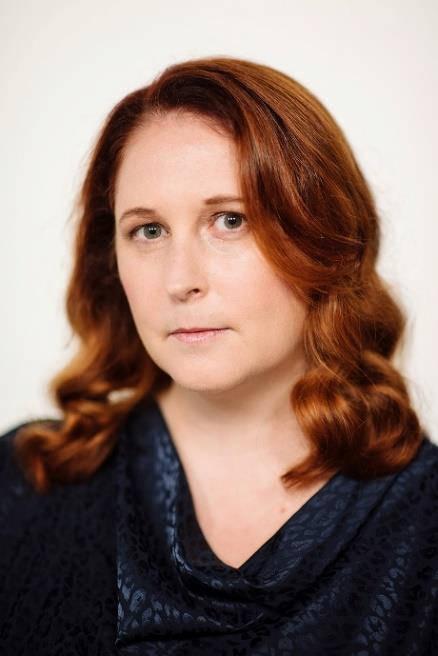 About Racheal Leigh
A graduate of The Performing Arts Conservatory (QLD, Australia), Racheal has been acting in film and theatre productions for over 20 years. In 2009, Racheal started her own production company – Star Rae Productions – which eventually led her to working behind the scenes in various film roles. Now based in Launceston (Tasmania, Australia), Racheal has been Producing, Directing & Editing various film productions, and in early 2025 she started the annual Tamar Valley Film Festival. This led her to discovering the world of vertical dramas. Since then, Racheal has been researching and attending various vertical drama workshops, learning more about the format and style. In October 2025, she wrote and produced her first 10-episode vertical comedy Christmas series (expected to be released in late 2026), and has since written several other 10-episode short-form vertical dramas, which she has now listed on her own website – www.verticaldramascripts.com
In January 2026, Racheal started working on writing full-length, 60-episode microdramas, and is also developing one of her earlier stories into a 30-episode supernatural thriller microdrama.
