


by FilmInk Staff
Dubbed America’s Chekov, Horton Foote’s work was always much more famous than he ever was. He won an Oscar for his screenplay of To Kill a Mockingbird and wrote great roles for stars like Steve McQueen and Lee Remick (Baby, The Rain Must Fall) and Robert Duvall (Tender Mercies – he won an Oscar for that one too.)
In the Golden Age of Television in the 1950s, the highpoint of which was live to air drama, his scripts were ranked with peers like Paddy Chayefsky (Network), but Foote shunned the limelight. He spent most of a prolific career writing stage plays set in tiny Texas towns about the kind of ‘ordinary people’ who are rarely given a voice or understanding… the small time, the desperate, the lonely. Deceptively simple, his best work, sentimental on the surface, like The Trip to Bountiful (1985) quakes with emotional violence.
Anne Rapp knew Foote for thirty years. Best known for fine screenplays for Robert Altman’s Cookie’s Fortune (1999) and Dr. T and the Women (2000), Horton Foote: The Road to Home is her first documentary, a labour of love as our interview reveals.
We spoke to Rapp on the eve of her films debut at this month’s Melbourne Documentary Film Festival.
You forged a connection with Foote early on in your career. Tell us about that.
“I met Horton Foote on my first big film Tender Mercies.
“Horton and I just hit off. He was from Wharton, Texas. I was from a place called Estelline. We’re from opposite ends of the state, both small-town. My home was about one hundred miles from Amarillo in the Texas Panhandle (noted for its flat grassy plains.) The population was about 300 people. We had a cotton farm that was bought by my great granddaddy for $1.50 an acre. You know that movie The Last Picture Show (Peter Bogdanovich, 1971.)? That was my life! Larry McMurtry’s first novel, Horseman, Pass By was turned into a movie with Paul Newman called Hud and it was made in the early ‘60s…It has this ranch. We used to drive by it when we were kids.”
Rapp was a maths major and athlete before she lucked into production assistant gigs before specialising in continuity which in the US is called ‘script supervisor’.
“Film was something finally I could sink my teeth into. I love being a script supervisor. It’s the epicentre of a film set. Tender Mercies really made my career.”
Rapp befriended Bruce Beresford and later worked on Crimes of the Heart. Since then, she has worked with Steven Spielberg (Color Purple), Robert Zemeckis (Death Becomes Her), Bill Forsyth (Local Hero), Lawrence Kasdan (Wyatt Earp) and Rob Reiner.
“My real street cred came from doing This is Spinal Tap; I was the script supervisor, but it didn’t have a script!”
Since 1981 Rapp has amassed fifty credits or more. She kept in touch with Foote and was close to him right up until he died at 92, in 2009.
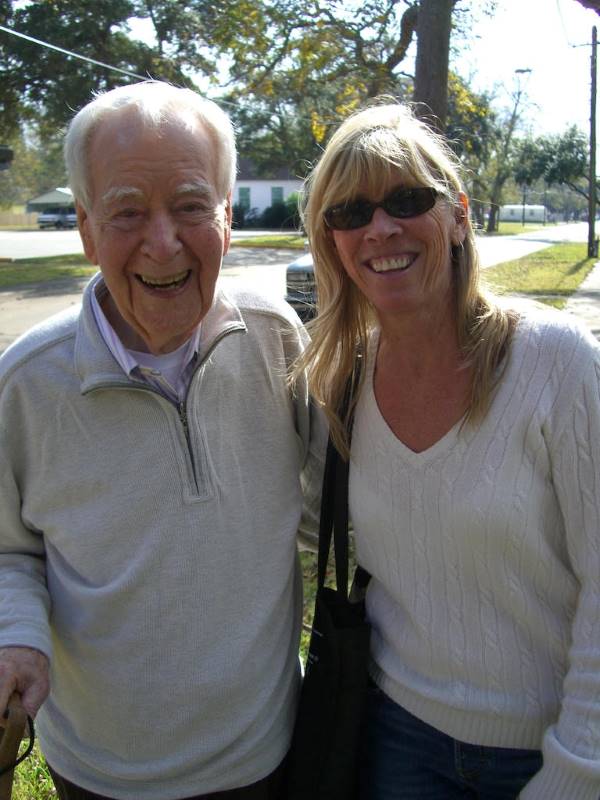
“We wrote letters to each other over those years and when he turned ninety, I had moved back to Austin, Texas and we started to see each other every time he came to town. His favourite thing was to drive around and point out landmarks and tell stories about people.”
Those moments you managed to capture on film.
“Exactly! It occurred to me that what I was getting the backdrop of 70 years of work. One day, I asked him whether I could put a camera on him. He had to think about it! Finally, he said yes, he trusted me. That car footage is the first stuff I shot. Every time he came back to Austin, I had a camera on him. I had no idea what I would do with the material. It went on for three years, just following him around. I come from the Hollywood movie business, and this was my first job at directing, at producing, and my first experience with documentary. I had several groups of editors. About three years ago I finally said: ‘I gotta finish this or walk away’. There was no way I was walking away. It’s taken close to fifteen years.”
The finished work is very sweet and surprising. It interrupts the conventions of the talking heads doco with these stylised black and white passages where actors perform excerpts from Foote’s plays 1918, The Habitation of Dragons, John Turner Davis, The Midnight Caller and others.
“Oh, yes they are my favourite bits in the film. You notice there’s clips from the movies, To Kill a Mockingbird (Robert Mulligan, 1962), Tender Mercies, The Trip to Bountiful (Peter Masterson,1985)… but there is very little [archival] material from his stage plays. That stuff is hard to get. It’s even hard to preview! A lot of people wanted me to get big names, which I most likely could have through my Hollywood connections. I used local actors. Because I wanted people to focus on the words. If I had of used Tom Hanks [its distracting.]
Bruce Beresford appears in the movie, along with Robert Duvall, Matthew Broderick, playwright Edward Albee (Who’s Afraid of Virginia Woolf), Betty Buckley, Elizabeth Ashley, and Richard Linklater and others. Their comments are revealing. Here is a figure who won the Pulitzer Prize and two Oscars…but Beresford says it’s odd he is not better known since he’s a major playwright of the 20th century.
“Well in the theatre world, in the US, he is very well known and revered. He is known in the movie world too. But the movie world does not necessarily know his plays.”
Yes, as someone says in the movie, ‘everyone knows To Kill a Mockingbird but they don’t know Horton Foote.’
“Well, here’s the thing about Horton Foote, he never tooted his own horn. A lot of famous people like to hold court. He was very eloquent, and he liked to engage but he was always the quietest man in the room. The best listener. Soaking it all up. “
That reflects in the work. Its dominant stylistic thing is a deep, nuanced observation of human frailty.
“That’s what connects for audiences and artists. He’s the most honest writer I’ve ever known. He sticks to the truth, and he knows how to tell a story. There’s no gimmicks.”
Yes, Edward Albee says he writes people, there’s nothing grotesque or oddball…
“When people relate to it, they relate to their own truth. It’s not like you are looking through the window; it’s like you are in the house.
“It’s very intimate, emotional, there’s a love of place, people, and the redemptive power of Art.
“That’s what I what I wanted my documentary to be. I said if it ends up like a Horton Foote film I’ve done my job.”
