



by James Hughes
When a girlfriend brought home Brokeback Mountain a year or two after its release, I looked at it with nothing better than the mildest curiosity. A few mornings later, home from a nightshift, I made a sandwich and a cup of tea, and put it on.
There may have been a more challenging, evocative, gutsy, emotionally knotty American movie made since Brokeback Mountain, but I couldn’t say what it is. (Maybe Manchester by the Sea gives it a run.)
From its first image – dawn sky unfurling and a truck making soundless progress – Ange Lee’s film exhibits a magnitude and unrushed self-rule. The next image is probably a fluke: three telephone poles framed to appear side-by-side, suggesting crucifixion. Either it’s the Catholic child in me, or it’s Ange Lee’s forewarning: heavy stuff ahead.
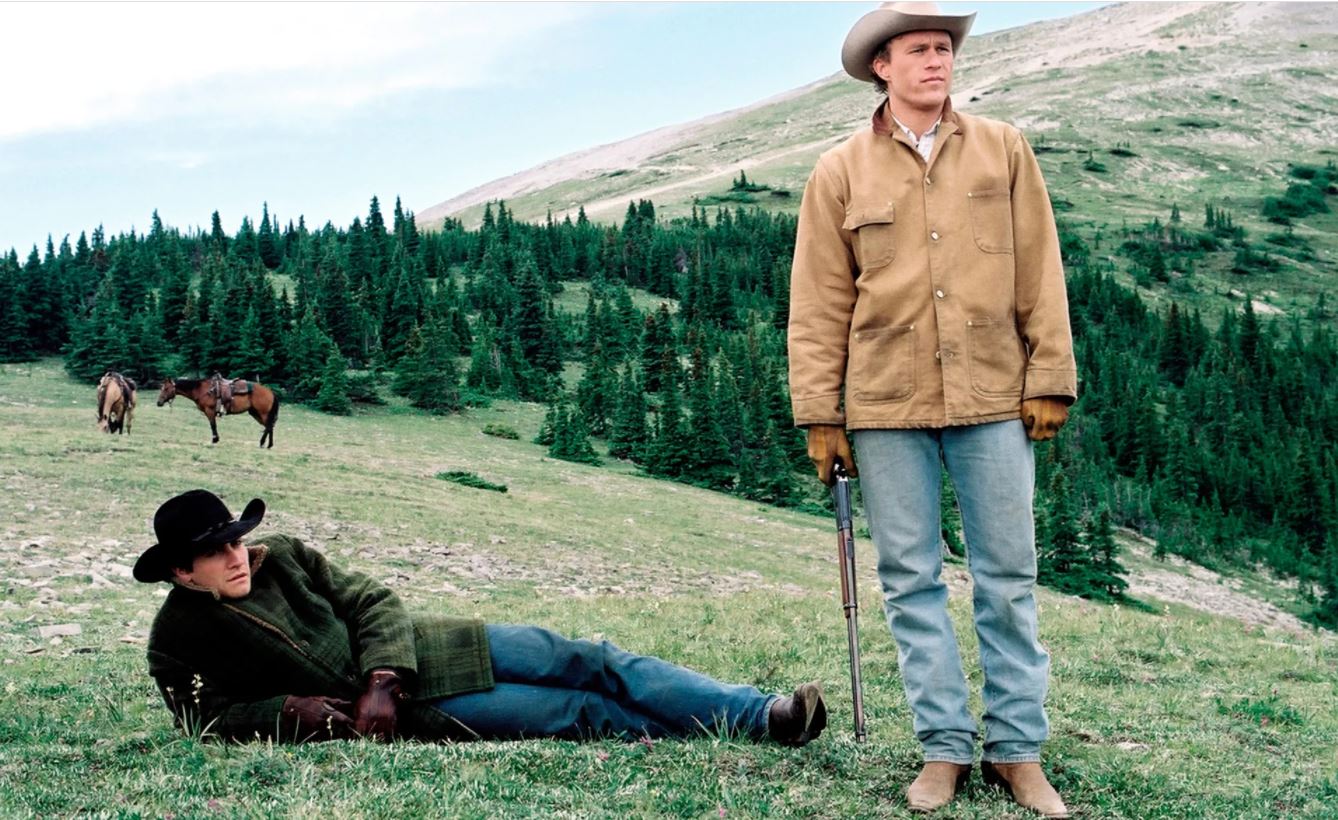
The scene turns to daylight and something unusual happens – we’re asked to wait again. Two men wait outside a trailer. Nothing more is established yet. We’re not sure who they’re waiting for. One is an almost clandestine presence, concealed under his hat like a crab under a rock. The other seeks eye-contact; strikes a pose.
Thirty years ago, novelist Norman Mailer referred to homosexuality as fiction’s ‘last frontier.’ Mailer must have been aware that writers like James Baldwin and Edmund White and Gore Vidal had crossed this purported frontier. But we know what he meant. In thirty years, so much has changed. Things are much more egalitarian, and most would agree more interesting. One bridge to this new terrain was Brokeback Mountain. Some might say it demolished a steel wall.
Brokeback Mountain made a point not many films had tried for: people of the same sex can experience romantic love on the same plane as a man and woman. Whether that comes as a revelation to a viewer (it did for me, I admit) is not nearly so interesting as how the film does it.
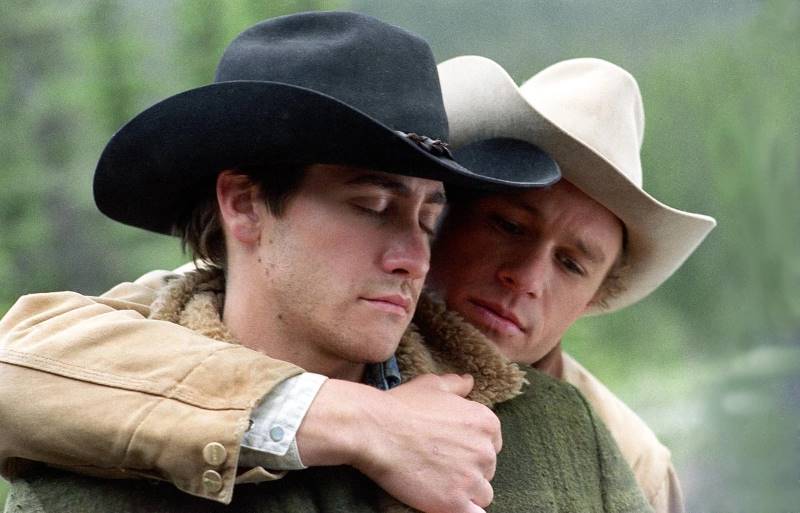 Partly, it’s because we feel that we’re watching real people, not inventions. Before we see them in love, we see them at work. We watch them set up camp and herd and stick at thankless tasks and wash their own clothes in the river and cook and hear them complain. We hear them chew the fat and sing and confide about their families. We’re not set upon by their love story, but simply led to it as part of a broader story.
Why should that matter? Not sure. Somehow it just seems to. Perhaps it’s because we dislike being harried – that’s the role of advertising, not film. We like our art to do more than stun or strongarm us into reacting immediately.
But that quality alone, this unhurriedness, is hardly enough. To have us share the characters’ exhilaration and fear, and to sympathise with their bind, takes more. That only happens through emotion.
Brokeback has emotions in crosscurrents and surges and bolts from the blue: emotions as big and changeable as the skies it plays out beneath.
The joy is vivid but only ever fleeting. Ennis and Jack’s thirty-foot nude leap into the river is a moment of innocent exhilaration. And their first kiss without shame or drunken mystification or rough play is uncommonly mature, provocative cinema.
And the heartbreak? Not so fleeting. Brokeback Mountain admits that some people do indeed live out their days battered by experience. It admits that love does not always conquer all – and too often goes to agonised waste. The film doesn’t wallow in this fact, but neither does it repress it like a dirty secret. It reminds us that sometimes our lives are directed – which is not to say dictated – by things we simply do not understand. For many watching, for many reasons, these truths are appreciated, even if not relished.
The film is heavy, but not humourless. In moments, in its way, it’s very funny: the way Ennis’ daughters respond to him from the swings; or his rigidly repressed dance with a barmaid; or the electric carving knife slicing through an awkward pause with frivolous ease, at Christmas dinner.
The cast is a force. Initially, it’s the men we watch closely. When Ledger, crouched in an alley, puts his fist into a wall, it’s unforgettable. And note how, very late in the film, in a phone-box, he touches the receiver to his lips; a soulful, subtle touch. Jake Gyllenhaal, too, is so immersed and nuanced, it’s hard to see him in anything else without seeing Jack. He can make the quietest moment telling: the trace of puzzlement, in his silence, when Ennis asks him if Lureen ever suspects. Or the way Jack seems to flood adrenalin when he confronts his father-in-law. “You SIT your ass down you ol’ son-of-a-bitch.”
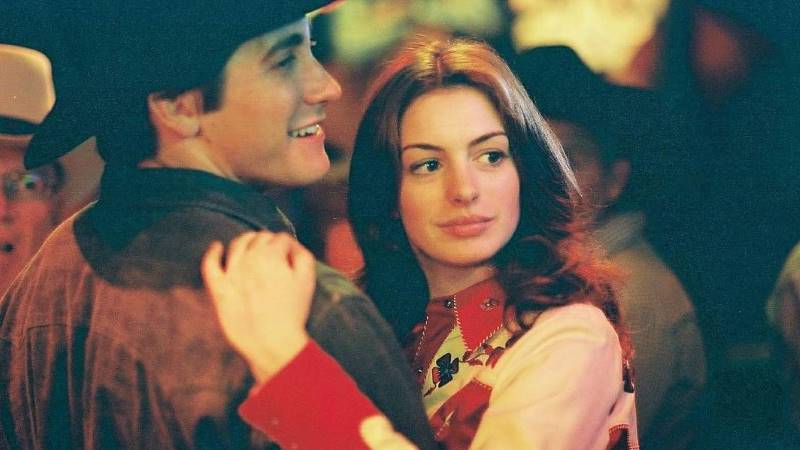
Second time around, it’s the women you can’t take your eyes off. The wives in Brokeback Mountain are devastated (but not done in) by the duplicity. Count the emotions Anne Hathaway, as Lureen, works into her face and voice during a phone call from Ennis. The eyes and top lip and deviating tone convey lingering uncertainty, residue curiosity, envy, enmity, numbed resignation, self-dislike and somewhere in the rubble, sorrow.
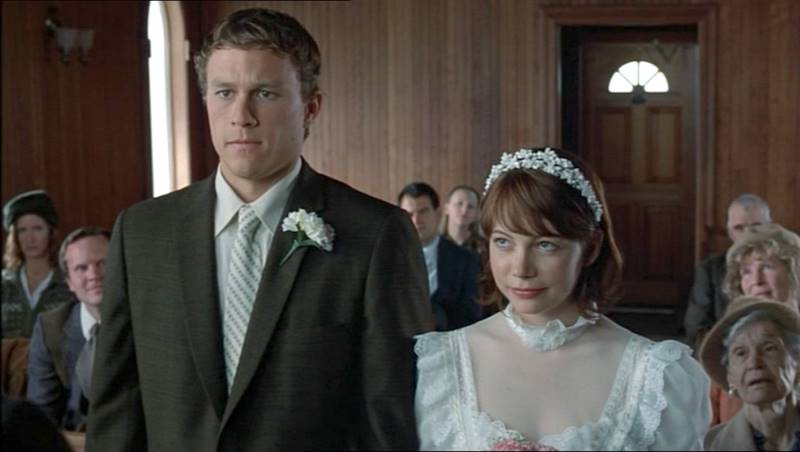 Then there’s Michelle Williams as Alma. What about her frozen hello to Jack Twist, when he first sets foot in her home? She’s an actor who can hold an infant or a coffee mug and either action rings true for the character and scene. Look at her wince when Ennis flips her over in bed.
Carl Jung once said: “The privilege of a lifetime is to become who you truly are.” Brokeback Mountain is an achingly accurate description of what happens when a person is persistently fundamentally impeded in accomplishing that – or forbidden from even pursuing it in safety. It illustrates that for some, identity is not just elusive but maddeningly paradoxical. It inspires us to think, not patronise or judge, or worse, look on as if it’s all the same to us.
