



by James Mottram
Big surprises come in little packages, as they say. Take Martin McDonagh’s The Banshees of Inisherin, a delicious low-budget drama set on a small (fictional) island off the west coast of Ireland.
The time is the 1920s, and civil war rages on the mainland. But on Inisherin, another conflict is brewing. Cattle farmer Pádraic (Colin Farrell) discovers that, out of nowhere, his old friend Colm (Brendan Gleeson), wants nothing more to do with him. A simple man, Pádraic is bemused by this sudden rejection – and so begins a war of words that escalates in ways you wouldn’t imagine.
“It was as much about being truthful about any breakup, not necessarily just two guys,” says writer-director McDonagh, when FilmInk meets the silver-haired 52-year-old at the Venice Film Festival, the day after the film’s rapturously received world premiere. “Just to put in this sadness of any love affair that ends… I kind of wrote it from that perspective. That was the most important thing for me. It just happened to be a platonic male one; it could have easily been a divorce movie.”
Sitting next to McDonagh is Gleeson, the 67-year-old actor who first worked on screen with McDonagh in his 2006 short Six Shooter, which won an Oscar for Best Live Action Short. “What I love about this is…[for] the dumper and the dumpee… if the people actually do have a proper connection, it’s just bloody miserable on both sides,” the actor says. “For both the person who’s trying to sever it and the person who has been severed… on a personal level, I just know that it’s pretty shit either way.”
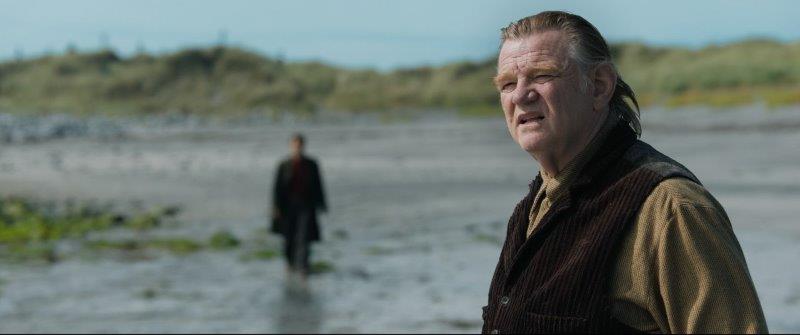
Yet Banshees… is anything but a bromance gone sour. Scripted by McDonagh like a fable, Gleeson feels like the film depicts man’s savagery, symbolised by the gunfire that can be heard and seen on the mainland. “I’ve seen that happen [in] so many places, so often. Suddenly, somebody’s cousin is killed, and next thing, there is a reprisal or something else happens and it descends into the barbarity that [in this film] is happening on the mainland. So, it feels to me that this loss of innocence, this is the price it comes at. This is how people descend into war.”
Gleeson and Farrell previously starred in McDonagh’s feature debut, In Bruges, playing two squabbling hitmen hiding out in the “fairy-tale” Belgian town. Since then, Farrell co-starred in McDonagh’s follow-up crime comedy Seven Psychopaths (2012), but this reunion seems to have touched a nerve. In Venice, Farrell took the Best Actor prize, the Volpi Cup – setting the tone for what looks to be a profitable awards season for McDonagh and co. His last film, 2017’s revenge tale Three Billboards Outside Ebbing, Missouri, won two Oscars for stars Sam Rockwell and Frances McDormand; this could well top that.
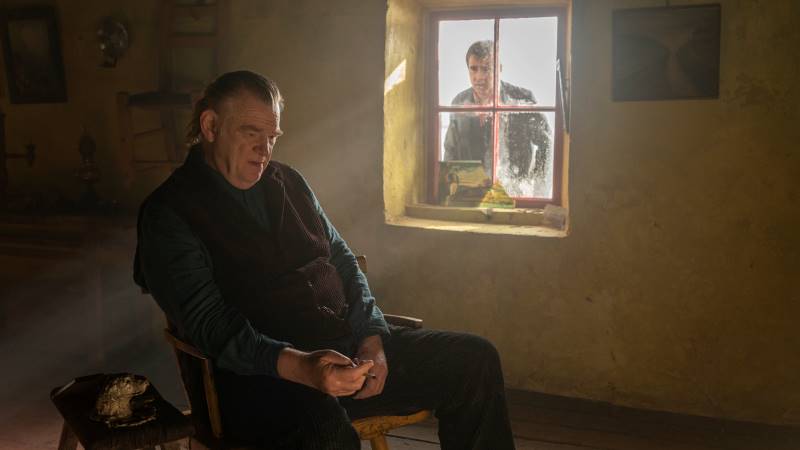
On set, Gleeson and Farrell stayed friendly, despite their characters’ escalating tensions. “We asked each other: ‘do we need to keep any distance?’” recalls Gleeson. “But neither of us work like that.” Instinctively, they always seemed to sense what the other needed. “There were times when, especially with the two guys in the bar, you’d say ‘cut’, there was just a big laugh, and then you get back into it. There were other times [that] one or the other would have to walk away and make distance. And there was total respect for that.”
For McDonagh, who was raised in London by Irish parents, Banshees… brings him back to the terrain of his forefathers. While he’s set some of his plays – including The Cripple of Inishmaan and The Lieutenant of Inishmore – in this part of the world, Banshees… marks his first feature film on Irish soil. “It was always going to be set in Ireland, and then on the West Coast, and on an island. I think the island gives it an added dimension. You have to see the person that you’ve broken up with every single day for the rest of your life. And that adds the sadness.”
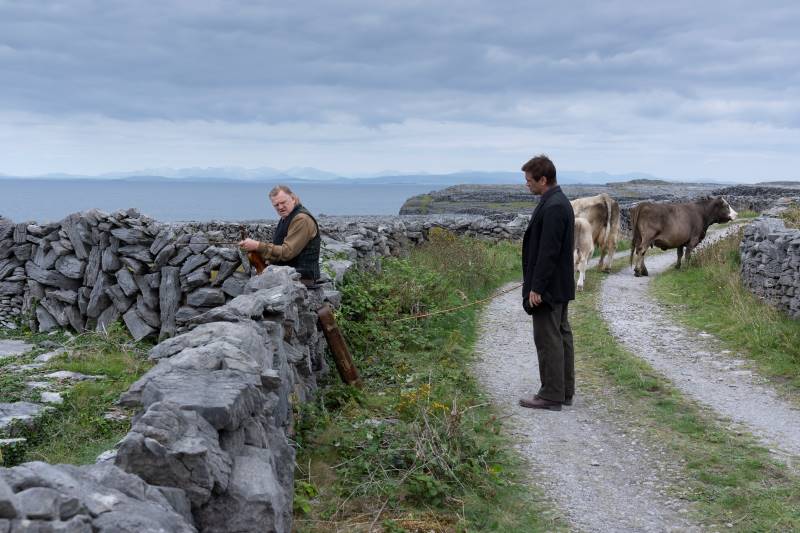
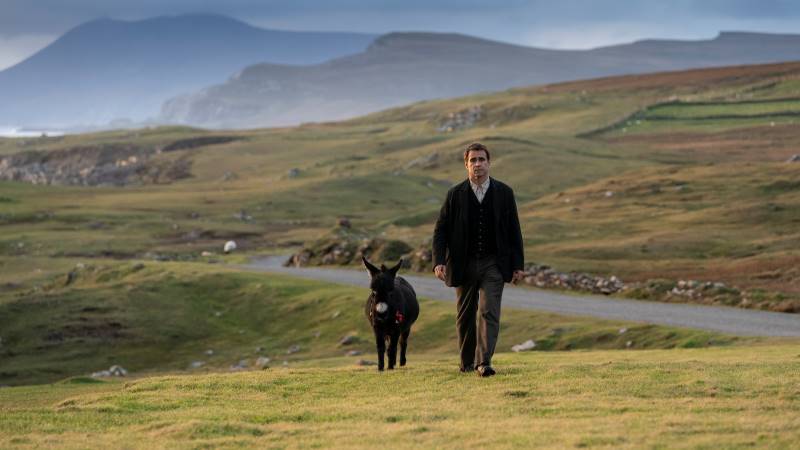
Shot on Achill Island and Inis Mór, the largest of the Aran Islands, McDonagh praises Ben Davis’ beautiful cinematography, which lends the setting a resplendent quality. “Definitely capturing the beauty of the West Coast of Ireland was very much uppermost in our minds,” he says. “The story is grim enough, but we didn’t want the cinema of it to be grim. We wanted it to be the most beautiful version of the story that we could do.” The pub and Pádraic’s house, where he lives with his eminently smarter sister Siobhan (Kerry Condon), were built by production designer Mark Tildesley’s team, allowing for spectacular views over the Irish coastline.
The question is, why does Colm reject Pádraic? He says that he has limited time left and he wants to spend it composing music for his fiddle rather than aimlessly chewing the fat with Pádraic, who he accuses of being dull. “It’s just based on myself!” jokes McDonagh about Pádraic. But it opens up an interesting debate: does great art require solitude, stress and strain? “I know as a writer, you have to have some solitude,” he adds. “I go away, I travel, I like being alone when I do it. But to make [a film], it’s better to be inclusive and decent.”
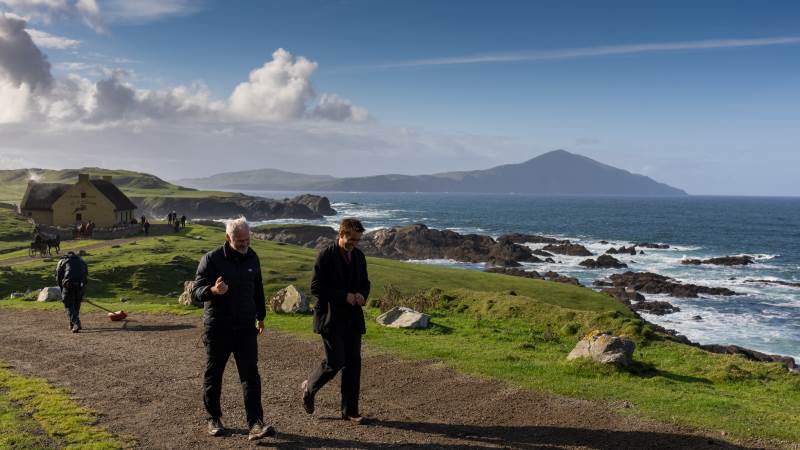
As Colm says, in a big confrontation in the pub, nobody will be remembered in years to come for being nice. “I think I’m a nice guy, but you see how that can be seen as dull,” the director continues. “And I guess that’s imbued in Colin’s character particularly. But that’s still sort of the debate of the movie. Isn’t it okay to be just a nice quiet guy? Isn’t it okay to be that way in life? Does it have to be anything more? That’s where the whole problem for the story arises, I guess, that one person doesn’t think that’s okay anymore, doesn’t want to deal with niceness or dullness.”
While Pádraic may not be the sharpest tool in the box, he’s a good-hearted and gentle soul, who loves tending his animals, especially Jenny, his miniature donkey. “I think he has cracked life in a way that everybody nowadays talks about – being in the moment,” says Gleeson. “And I think he is of that place, he is [at one with] the animals and the place. He’s of the whole setting. He’s entirely contented with his lot. He’s not seeking, he’s not unhappy or discontented. Contentment is almost impossible in the modern world unless you’ve physically wrenched yourself away from it. And he has that.”
On set, Gleeson recalls that Farrell wasn’t so happy when his character was being put upon. “Colin had a hard time, just from the constant disrespect on set every day from the cast, when we went into a scene, when it all turned pear-shaped. It was really difficult. At some point, Colin said, ‘If anybody else says something disparaging to me, I’m gonna clock them’. It’s so wearing. And it’s a perception…because prior to that, they all thought he [Pádraic] was a lovely fella. So, the idea of simplicity is interesting.”
Fortunately, it never kicked off during the shoot. Gleeson calls it “the happiest set” he’s ever been on, and if Banshees… wins big at the Oscars, that feeling will likely continue. While the film has so far made modest returns – $19 million worldwide – all McDonagh cares about is the reaction from viewers. “We were happy with the movie, but you never know how it’s gonna work until you give it to an impartial audience, to hear the laughter and the shocks.” Fortunately, the reactions have been uproarious to Banshees… You might call it this year’s surprise package.
The Banshees of Inisherin is in cinemas on Boxing Day
