


By Gill Pringle in Jeddah, Saudi Arabia
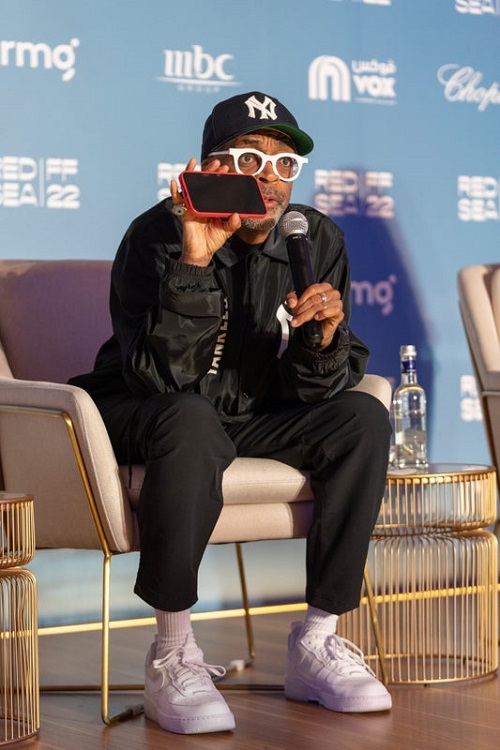
Spike Lee had football on his mind when he visited The Red Sea International Film Festival in Saudi Arabia this week. Not just because of The World Cup being held in neighbouring Qatar, where he was upset to see the U.S. team booted out by the Netherlands, but also because he has recently become a Cameroon supporter after a DNA test proved his ancestry from the west African country.
“I desperately wanted Cameroon to win,” says the New York Knicks superfan, whose father’s family side is from Cameroon, and his mother’s side from Sierra Leone. “My ancestors were stolen from Africa. They weren’t slaves. They were enslaved,” he emphasised. “And Thomas Jefferson enslaved 600 people…but we were never taught that in school,” he says referring to the third president of the United States.

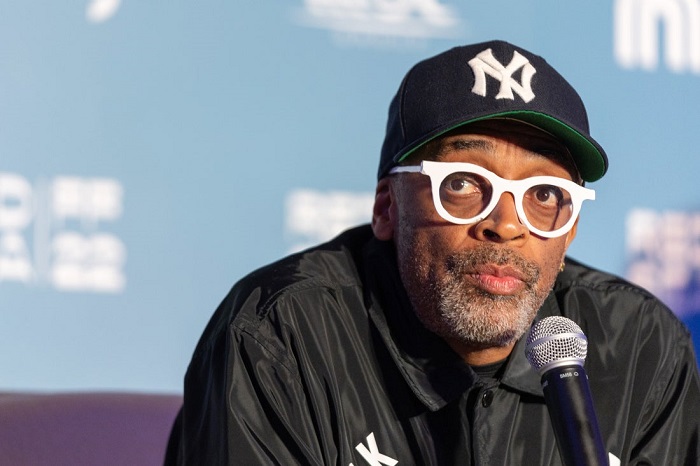
The other reason for Lee’s football passion – albeit American football – is that he is currently making a documentary about former San Francisco 49ers quarterback and civil rights activist, Colin Kaepernick, who was effectively cancelled in 2016 after he began kneeling during the national anthem to protest racial injustice. “They say he’s been black-balled,” Lee says, today wearing a New York Yankees baseball jacket. “But we say he’s been white-balled. He still works out six days a week just waiting for that phone call to return to the NFL. He took the knee to bring awareness to the murder of black and brown people in the U.S.A., and was deemed a pariah. Kaepernick sacrificed his career because he said we must bring attention to racial injustice. He took the knee in 2016. This was four years before the murder of George Floyd. People were kneeling around the world after his murder. After those eight minutes in which that racist cop had his knee applied to George Floyd’s neck and murdered him. Many teams around the world, like England, now take the knee. But Colin Kaepernick is still out of work.”
Joining Sharon Stone and Oliver Stone as one of the higher profile Western guests at this year’s second edition of The Red Sea International Film Festival, Lee couldn’t turn down the invitation after programmers agreed to screen his award-winning film Malcolm X, the first ever public screening of his 1992 movie starring Denzel Washington as the revolutionary civil rights leader. Over thirty years ago, Lee was given unprecedented access to shoot key scenes in Saudi Arabia’s holy Mecca, but the film has never been screened in the kingdom, due to the 35-year ban on cinemas that only ended in 2017.
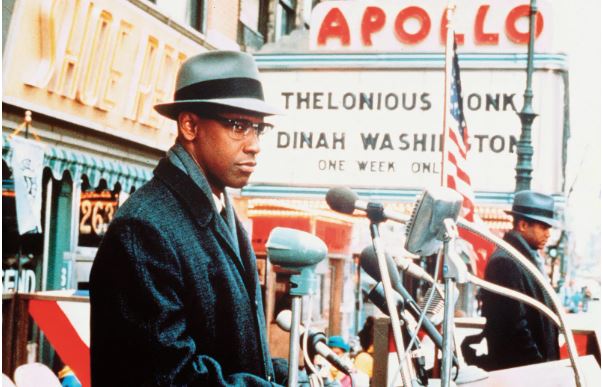
Explaining the importance of filming Malcolm X’s participation in the Hajj, the annual Islamic pilgrimage to Mecca, in Saudi Arabia, Lee says, “It was imperative that we film Malcolm’s hajj, so we made the first film that was ever allowed to bring a camera into the holy city of Mecca during hajj. Of course, I hired a full Muslim camera crew. The highest Islamic court didn’t agree to this because of me, but because they realised how important Malcolm X was for Islam. We were blessed. Yesterday we came full circle,” Lee says referring to the public screening.
An alumni of New York University – where his classmates included Ang Lee and director/cinematographer Ernest Dickerson – Lee spoke about how Dickerson shot the key Malcolm X sequences at the Hajj. “Ernest shot all my films up until our final collaboration, on Malcolm X. We wanted it to be an epic film, like David Lean’s Doctor Zhivago or Lawrence Of Arabia. We knew that by hook or by crook that we had to shoot Malcolm X’s hajj, where he broke into true Islam. It added so much spirituality to the film. In his autobiography, he wrote about being with fellow Muslims ‘whose eyes were the bluest of blue.’ That’s when he came to the realisation that some of his previous thoughts about Islam were false. There’s no other way we could have shot those scenes in Mecca. You cannot fake those huge crowds. No budget could achieve that. It’s amazing. It gave the film that special feel we needed.”
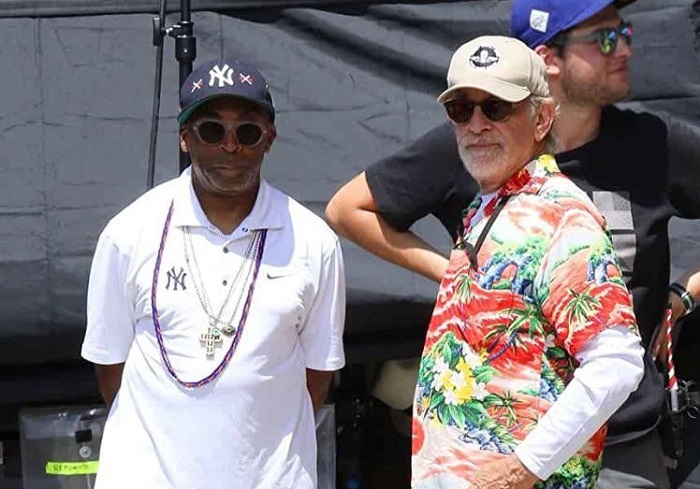
Talking about the importance of collaborating with peers during his 45 year career, Lee reveals that he has recently become friends with Steven Spielberg, after the famed director invited Lee to visit the set of his recent musical West Side Story. “I was just amazed to see West Side Story, a most favourite film, and the fact that he [Spielberg] invited me to pull up a chair right next to him,” Lee recalls. “So I was sitting next to him watching the monitor and just seeing him work. It’s just amazing to see a master anywhere.”
A life-long activist and independent voice, Lee is alarmed by the current state of the world. “It’s troubling to see what is happening in Russia. What happened with the Jan. 6 insurrection. With ‘Agent Orange’, who is now running again. This right-wing thing is happening globally. The U.S. just banned abortion. Crazy stuff is happening,” says Lee, who has recently become a lecturer at his old school, NYU.
Discussing the dangers of cancel culture, he muses that “art has changed the world for good and bad. So it really depends on the artist who’s doing the art. And this is really happening today where a lot of artists are condemned because of what they’ve done. So it seems even more current today where there’s debate about art that’s coming from someone who might be looked down upon so that’s a very tricky thing. But there are choices we make as individuals: I’m not gonna like this person’s art because what they did…these are all individual choices we make. And sometimes, for me, it’s hard to separate the art from the artists, and now with all the technology and stuff. That’s something we all have to deal with. And sometimes, speaking for myself, there are artists that I love who have done some things that ….and they probably say the same thing about me. You know, they might like my film, but I said something, you know, and they’re like, ‘uh uh.’ So it’s an individual choice that we have to make.”
Having paved the way for black filmmakers – by decrying the false narrative that there was no overseas audience for American-made black films – Lee pays homage to Ryan Coogler. “My brother Ryan has changed that,” Lee offers. “Black Panther blew that false narrative out of the water, and studios could no longer say that black subject matter does not work in the world market. And you see Black Panther: Wakanda Forever, and he will make many, many more.”
But the fight is far from over, Lee cautions: “You’ve got to fight the powers that be, so when you’re going up against institutions, it’s not easy. And the reason why they are institutions is because they have power, and power does not give up without a fight. No matter whether it’s films or whatever you’re doing – people in power just don’t give it up. That’s the challenge.”