



by James Mottram
Since his 2011 film A Separation, Asghar Farhadi has seen his reputation in world cinema explode. That film, about a couple mid-divorce, won Berlin’s Golden Bear and became the first ever Iranian movie to win an Oscar for Best Foreign Language Movie.
His 2016 film The Salesman won Best Screenplay in Cannes and, again, the foreign language Oscar.
He’s since worked with Javier Bardem and Penélope Cruz on the Spanish language drama Everybody Knows. And last year, his latest film, A Hero, which hits Australian screens this week, claimed the Grand Prix in Cannes.“I know that when you have this kind of exposure, this kind of success, it brings you more friends and more enemies,” he told me when we met in July last year during the festival. Curiously, that was before a former student, Azadeh Masihzadeh, accused him of plagiarism, allegedly taking the premise for A Hero from her 2018 documentary All Winners, All Losers, without giving her due credit. Her film explores the fate of Mohammad Reza Shokri, a man on leave from a Shiraz debtors’ prison, who finds some lost money and returns it.
Masihzadeh claimed that the documentary was developed at a 2014 workshop taught by Farhadi, who went on to use that non-fiction film’s premise and other details for A Hero. Alexandre Mallet-Grey, Farhadi’s producer, stated “the prisoner’s story has been disclosed in both press articles and TV reports years before Mrs. Masihzadeh’s documentary was published”. While Farhadi, 50, filed a countersuit against Masihzadeh for defamation, this was later thrown out of court in Iran for “insufficient evidence” to support the claim that his reputation has been deliberately damaged by his ex-student.
This year, Farhadi was back in Cannes, part of the nine-person jury that awarded the Palme d’Or to Triangle of Sadness. During the jury press conference at the beginning of the festival, where he sat alongside jury president Vincent Lindon and others, he addressed the issue for the first time in public. Although he admitted seeing Masihzadeh’s work, “You can make a story or a film from the same event, without plagiarizing the other,” he said. “A Hero is one interpretation of the event. The documentary is another approach, they are not the same at all.”
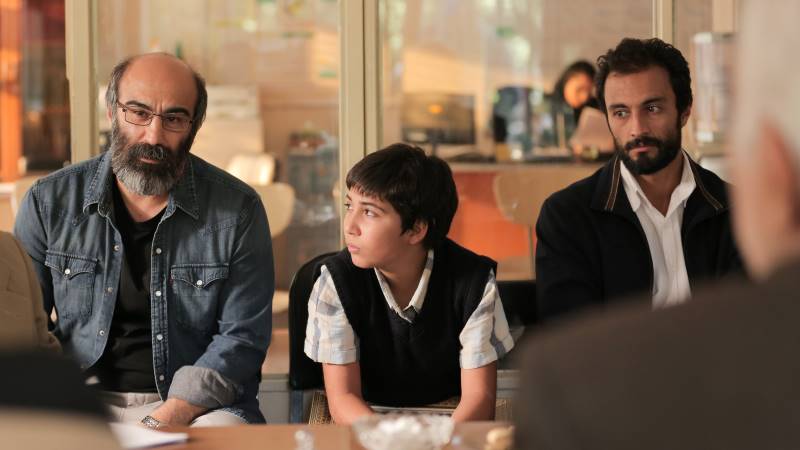
The case remains ongoing, but whatever the source, A Hero remains one of Farhadi’s most engaging and thought-provoking works of his career. Much like A Separation, which introduced the world at large to the complexities of Iranian divorce law, A Hero shows that it’s possible for Iranian citizens to be imprisoned for debts owed to another. In the film, family man Rahim (Amir Jadidi) is serving a sentence for a failed business loan borrowed from his former brother-in-law, the vindictive shopkeeper Bahram (Mohsen Tanabandeh).
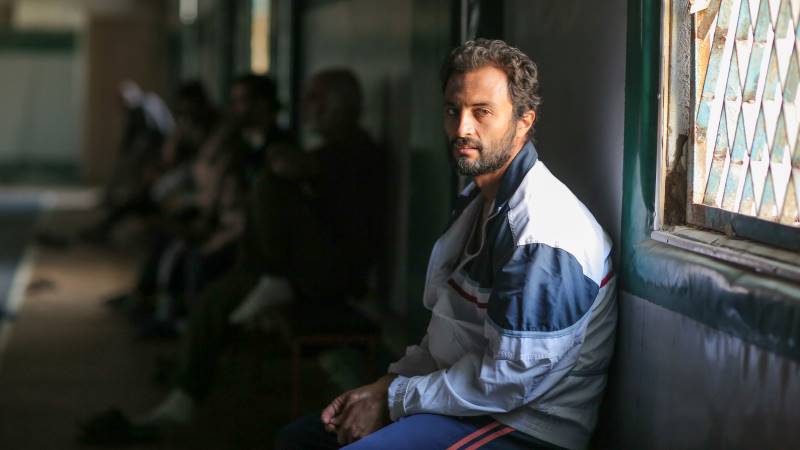
“It’s a very complex judicial system but I will try to make it as clear as possible,” Farhadi explains, when FilmInk expresses surprise at this law. “In the case of a private loan, when it’s two people that agree over an amount of money leant, according to the type of agreement and the type of documents they sign together, under specific circumstances the creditor can file a complaint against the other if he doesn’t receive the money back and then that person can be put in prison for the debt he’s not been able to pay back.”
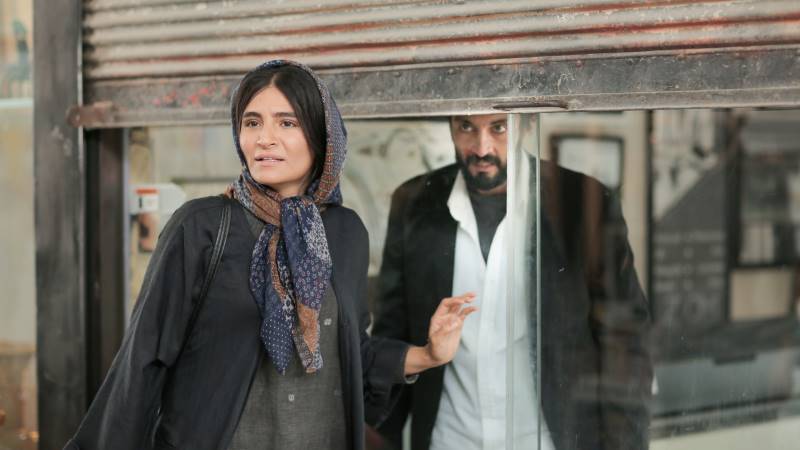
When the film begins, Rahim is on two-day leave from debtor’s prison. Farkhondeh (Sahar Goldust), the girl he intends to marry, has found a lost handbag with 17 gold coins in it. His first impulse is to sell this bounty to pay off the debt that still hangs over him, but when his conscience gets the better of him, he advertises the find and seeks out the owner. While this act of kindness sees him unexpectedly celebrated, as prison authorities even promote him on television, it soon backfires when rumours about Rahim begin to circulate on the internet.
With its deeply ironic title, A Hero is a morality play – very much based around the idea that no good deed goes unpunished. “I didn’t set out to make a film about social media,” adds Farhadi. “I didn’t even know that it would take such an importance in the storytelling. The main topic of the film is the very high rise and fall of a person, of somebody who is taken and put in the spotlight without doing anything for it and, suddenly, is taken down from it. So of course, this very quick ascension had to be through the media… and naturally social media.”
Farhadi largely stays away from social media, though he did use his official Instagram page recently to state that he was “fed up” with suggestions in the Iranian media that he is on the side of Iran’s hardline Islamic government. After A Hero was put up for the foreign language Oscar by Iran’s authorities (this time it didn’t make the final selection), he said: “If your introduction of my film for the Oscars has led you to the conclusion that I am in your debt… I am explicitly declaring now that I have no problem with you reversing this decision.”
Yet, after his work on A Separation, it might seem that Farhadi is keen to view his nation through Iran’s byzantine legal system? He shakes his head. “In order to tell a story, you need some conflict, and you need some crisis,” he answers. “If an elevator goes from floor 1 to floor 8 and nothing happens, there is nothing to talk about, but if it gets stuck between two floors, then you have something to elaborate on and a story to tell. It’s a dramatic device and a good way to elaborate on the story and create conflict inside society.”
Whatever the aspects of Iranian society the film explores, one of the key lines appears to be when a taxi driver comments: “Nothing is fair in the world.” Is that Farhadi’s viewpoint? “It’s hard to say if I agree with what my character says – if it’s his point or my point,” he says, cautiously. “Through his mouth, sometimes I share the views of my characters and sometimes I don’t. In general, I beware of these generalities, these maxims, these general truths, that are supposed to be valid about every case. Saying that the world is fair is not right because you can think of many cases where the world is not fair, and saying the world is unfair doesn’t seem more accurate to me.”
Indeed, as a truth-seeker, Farhadi clearly wants to find common ground the world over. While The Past saw him work in France and Everybody Knows took him to Spain, he has considered making more films abroad for this very reason. “I may continue doing this in the future, and I deeply believe contrary to what the media say: human beings are not different, when it comes to emotion, when it comes to feelings. We’re all basically the same. We’ve very similar: love, hatred, anger. Feelings that you find in all four corners of the world. It’s just the modes of expression that vary with the culture.”
A Hero opens in cinemas on June 9, 2022
