

By Cara Nash
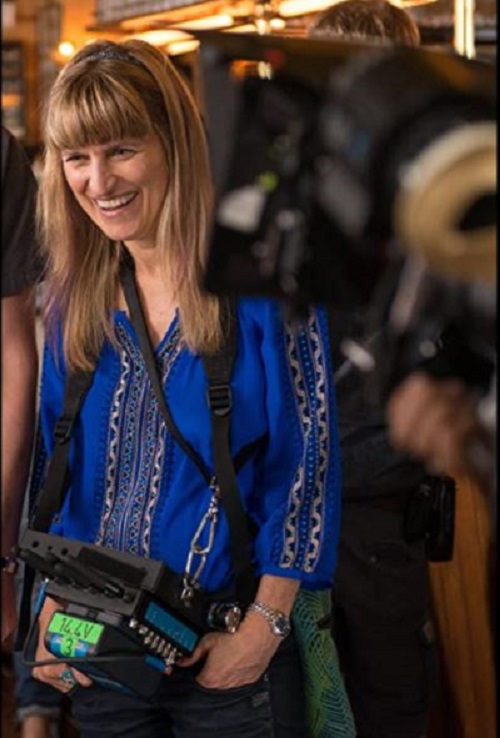
“Tough and ballsy” are two adjectives that can be used to describe Catherine Hardwicke as a filmmaker and her eclectic collection of films. From her tiny-budget indies through to her more commercial efforts, there’s a darkness and grit that sets her storytelling apart. She’s a compassionate storyteller, but an admirably unsentimental one. Perhaps Hardwicke’s artistic approach can be traced to her own adolescence growing up in McAllen, a rough Texas border town. “It’s one of the smallest towns in the US,” Hardwicke told FilmInk in 2015. “You have a lot of people coming straight from Mexico, and you have a lot of violence because of the poverty and the drug trade. It was a violent place to grow up, and it was absolutely devoid of all culture, art, architecture, and music…maybe that made me starve for culture and art. I was craving nourishment in that way.”
Her surroundings as a teenager definitely made her resourceful. “My sister and I were always trying to find something fun, creative, and wacky to do in a conservative and Catholic place,” Hardwicke told FilmInk. “My family had no money – my dad was a farmer and my mum was a school teacher. Sometimes as a farmer, you’d have no money because you lose your crops to the weather or the bugs or whatever. That actually makes you more creative because we didn’t have fancy toys; we made our own toys. So in some ways, that was good.”
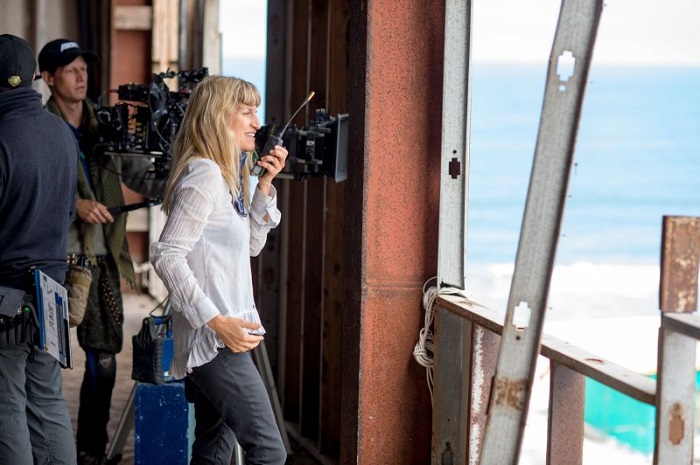
Craving creative stimulation, Hardwicke had her heart set on becoming an architect during her high school years, and she went on to enroll at The Austin School Of Architecture. While she was “in heaven drawing, sketching, and building” and graduated as class valedictorian, Hardwicke quickly realised that it was a career path that didn’t necessarily inspire creativity. “Architecture by nature is conservative,” Hardwicke told FilmInk. “People don’t want their house to be too weird because that affects the retail value. Architecture didn’t encourage creativity as much as I thought it was going to. I needed to be in a job that actually encourages creativity. Very mistakenly and naively, I thought that film would encourage creativity. I thought that Hollywood encourages creativity…little did I know!”
Immediately after that revelation, Hardwicke enrolled at UCLA film school, where she studied animation, and won numerous awards and accolades for her first student film, Puppy Does The Gumbo. But it didn’t yield any job opportunities. Soon, Hardwicke was unable to pay her tuition fees. “I was making my own films and writing screenplays,” she explained. “It just caught fire in me, and it was awesome. But I didn’t even have money to finish grad school, so after a year, I had to start working. People would say, ‘You’re an architect, why don’t you production design my movie?’ So just for economic reasons, I started doing that, and I loved it. I had so much fun getting to build interesting things, travelling around the world, and working with these great directors.”
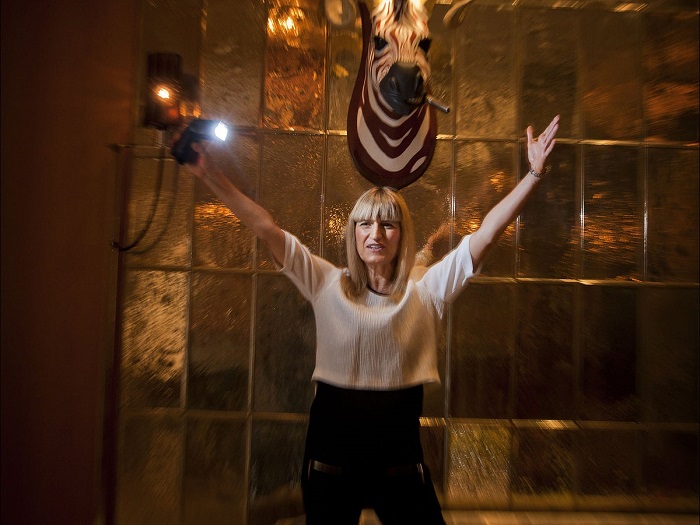
Those great directors included David O. Russell, Richard Linklater, Cameron Crowe, and Lisa Cholodenko, all of whom Hardwicke worked as a production designer for. “I basically clawed my way in to these amazing movies,” she laughed. Hardwicke was instrumental in creating the worlds of films like Three Kings, The Newton Boys, Vanilla Sky, and Laurel Canyon. “I learned a lot and I loved it, but between every job as a designer, I would be writing my own screenplays and making my own short films. I’d be taking intensive acting, screenwriting, and directing workshops. It was just non-stop trying to make a movie.”
While working as a production designer, Hardwicke was in negotiations for two feature films, but neither came to fruition. “I had this awesome movie that everyone loved about a woman who fought in The Civil War,” she revealed to FilmInk. “I designed the Civil War costumes in my lounge room, and I shot a short of how I planned to do it. I budgeted it up for nine million dollars, but no one would let me make it as a first-time director. I’d worked on numerous films with first-time filmmakers who had gotten more than nine million dollars, but they were always guys. Then I thought of one that I could make for five million dollars, and Fox actually started making a deal with me to make that movie. But it took so long that I wrote Thirteen, shot it, and got it into Sundance before they’d even made the deal.”
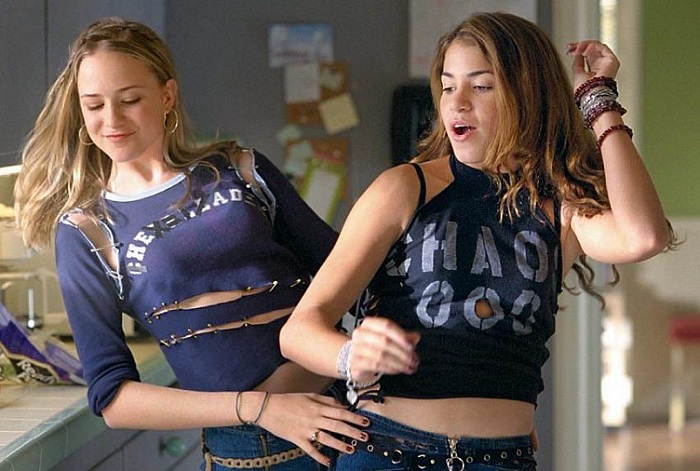
Thirteen was an emotional firecracker of a film, and it exploded with a bang in 2003, deservedly launching the career of Hardwicke, who was in her early forties when it was released. A super intense, searingly raw, and frighteningly realistic glimpse into the media-saturated lives of contemporary teens, the screenplay was penned by Hardwicke in collaboration with a then thirteen-year-old Nikki Reed. Hardwicke was in a relationship with Reed’s father for a number of years, and when that came to an end, the filmmaker remained friends with the young girl, who hit a particularly self-destructive phase when she entered her teens.
As a way of helping Reed, Hardwicke introduced her to acting, and the pair co-wrote Thirteen, largely based on the youngster’s experiences. “That idea came like a lightning bolt,” Hardwicke told FilmInk. “I loved working with Nikki, and I knew her family very well. I also knew that I could direct this on the cheap. I could use my own furniture, car, and clothes in the movie. I was determined to get this thing made one way or another, even if it meant that I shot it with a video camera in my own house. I thought, ‘I’m going to make a movie, and they cannot stop me!’ With that attitude, I somehow got to do it.”
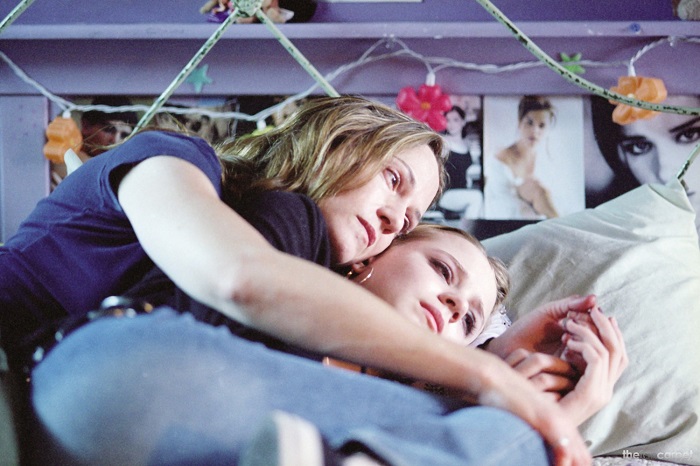
Reed made her acting debut in the film as the teen temptress, Evie, and Hardwicke recruited more experienced talent for the two other central roles: Evan Rachel Wood as the deeply troubled Tracy, who falls under Evie’s influence, and Holly Hunter as her struggling mother. The film didn’t make Hardwicke any cash, but it earned Hunter an Oscar nomination for Best Supporting Actress and Hardwicke the Director’s Award at Sundance. Did the Hollywood door suddenly begin to open for Hardwicke? “Thirteen did well and won awards, so that was awesome,” she replies. “But you still have to fight. Even if people win top prizes at Sundance, careers just don’t keep going. Men’s careers keep going. But I just keep battling my way through.”
A somewhat surprising choice, Hardwicke’s sophomore effort arrived in 2005 with Lords Of Dogtown, a fictionalised account of The Z-Boys, who revolutionised seventies Venice skateboarding culture. At its heart though, it’s another coming of age story about a bunch of teen misfits turned into alternative culture superstars by their eccentric mentor, Skip Engblom (Heath Ledger, in one of his most memorable performances). A long-time friend of former pro skater and one-time Z-Boy himself, Stacy Peralta (who penned the screenplay, and also directed the 2001 doco, Dogtown And Z-Boys, that inspired it), Hardwicke was drawn to the culture, and it was a story that unspooled in her backyard. “It was a challenge because there are a lot of people in Venice that feel that this is their story,” Hardwicke told NPR. “There were many occasions when I walked out of my back door and somebody literally came up to me and said, ‘Hardwicke, if you don’t get this right, you’re going to have to move.’ They were sincere about that. I was pretty threatened. But that’s why I tried to make it right there in the neighbourhood and use people in the neighbourhood. We tried to make it as real as we could.”
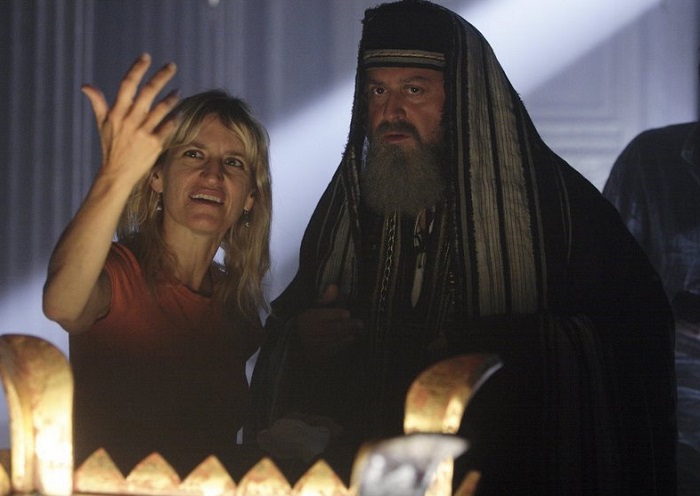
Hardwicke’s third feature, 2006’s The Nativity Story, a retelling of the Biblical tale that saw Keisha Castle-Hughes essay the teenage Virgin Mary, saw the filmmaker again explore the adolescent psyche, albeit in a vastly different context. “In many ways, I view The Nativity Story as the third in my teen trilogy,” Hardwicke told FilmInk upon the film’s release. “After all, this is a movie about the most famous teenager in the world.” The story was also a way for the filmmaker to reconnect with her religious upbringing. “I went to church every Sunday, and every Christmas,” Hardwicke told BeliefNet. “But I never thought very deeply about the story. I loved the mythical, gorgeous, mystical elements of it. But I didn’t really think that these were real people with real emotions, problems, and issues. That’s what I thought was so interesting about Mike [Rich]’s screenplay; it made you think about things that connected it to our lives now. I grew up in the church, and it’s in my bones. The movie helped me connect more deeply with it.”
While her fourth film would see her navigating the perils of teen romance, it was a huge change for the filmmaker in terms of budget. That film was Twilight, the 2008 adaptation of the first book in Stephenie Meyer’s popular series about a teenage girl willing to risk everything when she falls for a sensitive vampire. Initially, however, Hardwicke wasn’t sold on the film. “The script that the producers were shopping around wasn’t good,” Hardwicke told FilmInk frankly. “When I read that script, I said, ‘No, I don’t want to make that movie.’ But I read the book, and I thought that there could be something closer to the good parts and the spirit of the book. The book is about that dizzy, madly-in-love feeling. That’s what attracted me – I wanted to see if I could translate that to screen. So I worked on a whole rewrite with the writer of the screenplay.”
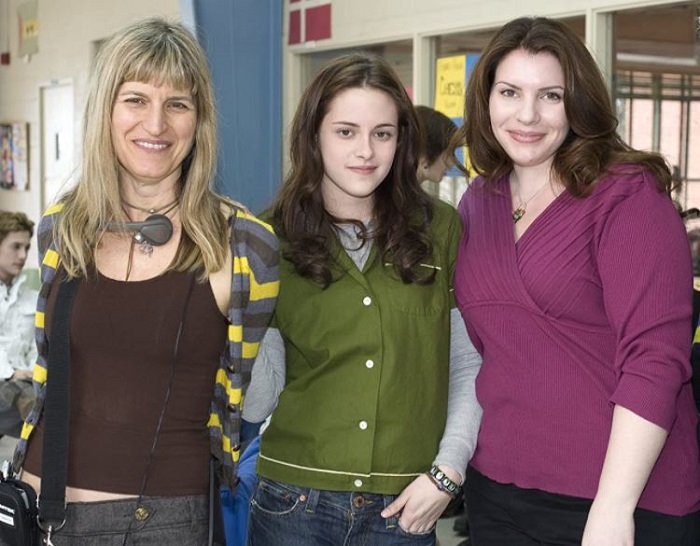
The studios, however, failed to see that same spark, with the popularity of the books largely exploding after production was underway. “It was turned down by every studio,” Hardwicke sighed. “People didn’t want to take a risk on those books. It took bravery from Summit to try and make something different. They created a whole YA formula that has since brought about the Divergent and Hunger Games films, and they’ve been extraordinarily successful. But it was a massive struggle to get up. Even five weeks before shooting, they said that if I didn’t figure out a way to cut $4 million from the budget, they were going to pull the plug. They didn’t think that it was going to be a success. I was lucky, because my Twilight didn’t have the level of expectation that the other films did. The pressure became way more intense, and the subsequent filmmakers were probably less able to make their films as personal as mine.”
Twilight, of course, was an unprecedented success at the box office, and it catapulted its young leads, Kristen Stewart and Robert Pattinson, to superstardom. Ironically, however, it didn’t quite push Hardwicke into the same league. “I didn’t want to do another Twilight,” the filmmaker says when we ask about her headspace after the film’s success. “It was in my contract, and I could have directed the second one. I was obligated to have first choice, but I didn’t really like the second book, and I didn’t want to do a repeat sequel thing. I wanted to do other cool stuff, but I didn’t get the calls that you would expect after having made a $400 million success and launching a billion dollar franchise.”
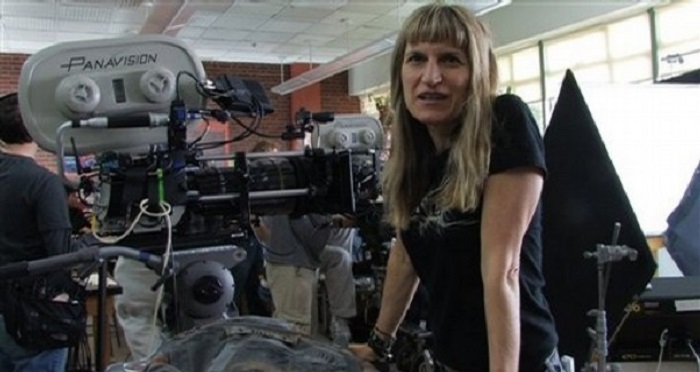
Hardwicke has largely attributed this to the sexism that exists in Hollywood, and it’s tough to argue. In the wake of Twilight, she tried to mount a handful of projects, but there were two stories that she was particularly passionate about. One of these was The Fighter, the 2010 biopic about boxer, Micky Ward, which was eventually handed over to David O. Russell. Hardwicke loved the screenplay, but wasn’t even given an opportunity to pitch for the project on the grounds that it was a male-oriented action movie. “There’s no man on the planet that wouldn’t have gotten that meeting after directing a $400 million movie and starting such a huge franchise,” she told S Magazine in 2012. “I don’t want to be a baby, but I’m thinking, ‘Okay, a guy gets to direct all the other Twilights, and those are the most girly books ever. And a guy gets to direct Sisterhood Of The Traveling Pants and Sex And The City. Guys can direct girly movies, but girls can’t direct a ‘guy’ movie. So it’s pretty frustrating.”
The other project that Hardwicke tried to get greenlit in the wake of Twilight was an adaptation of Hamlet, scripted by the Oscar-winning screenwriter, Ron Nyswaner (Philadelphia, The Painted Veil), and set to star Emile Hirsch. “It was a modern, radical, and intense adaptation of Hamlet, and Ron wrote a very artistic, potent screenplay,” Hardwicke revealed to FilmInk. “We could have done it on a very tight budget, or it could have been one of those breakout things, like Baz Luhrmann’s Romeo + Juliet, which I love. It had to be a no-brainer because it’s sexy and wild. We finally got someone to put their hand up, but by the time that we wanted to get started, that company was out of business. I’d still love to see it get made, but even post-Twilight, it was hard to get someone excited and to trust you.”
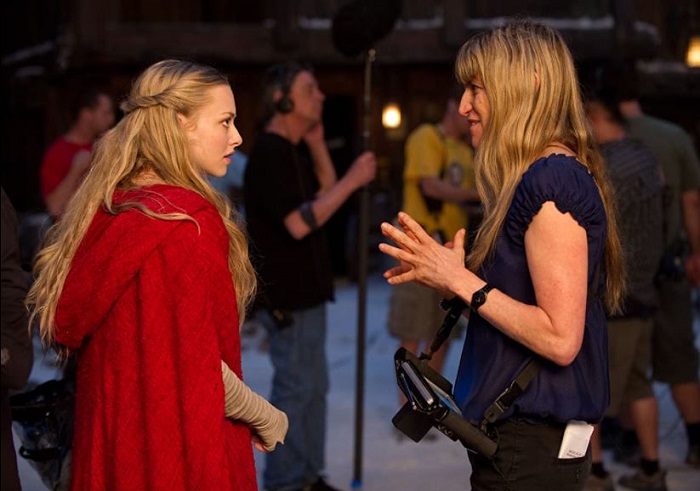
Instead, what Hardwicke ended up being entrusted with was 2011’s Red Riding Hood, a scary, sexy revamp of the children’s fairytale, which saw Amanda Seyfried play the caped heroine caught in a love triangle. Many were quick to criticise Hardwicke for choosing to helm what they saw as a rehash of Twilight, not knowing of the films that she fought to make in between. The filmmaker, however, didn’t see Red Riding Hood as any pale imitation. “When I read Twilight, I didn’t see it as fantasy. I saw it as a love story,” the filmmaker explained to Seventeen. “With Red Riding Hood, there was a whole different feel. Although there is that sense of falling in love, it’s different than Bella and Edward’s relationship. Valerie [Seyfried] has suspicions of the person that she loves, which is a very real theme. Sometimes you’re looking at someone that you love and you’re thinking, ‘Could they have a secret?’ Maybe you don’t think that your boyfriend is a murderer, but you’re wondering if he’s cheating behind your back!”
After her stint with the studios, Hardwicke returned to her edgier roots for 2013’s Plush, which she co-wrote. An erotic thriller set in the world of rock’n’roll, Plush stars Australia’s Emily Browning (who Hardwicke considered for the role of Bella in Twilight) as a young mother and band frontwoman who loses her fellow band member and brother to a drug overdose, and seeks solace in a dangerous new romance with a guitarist (fellow Aussie, Xavier Samuel). “I was just trying different stuff with this one,” Hardwicke told Collider. “It was fun to explore all of the different aspects of it. Can you have it all, as a woman? Can you be a creative artist, and have stability and a home life? How much can you stretch yourself, as an artist? Where does that confidence come from? How do you get it back? I was trying to explore a lot of different things.”
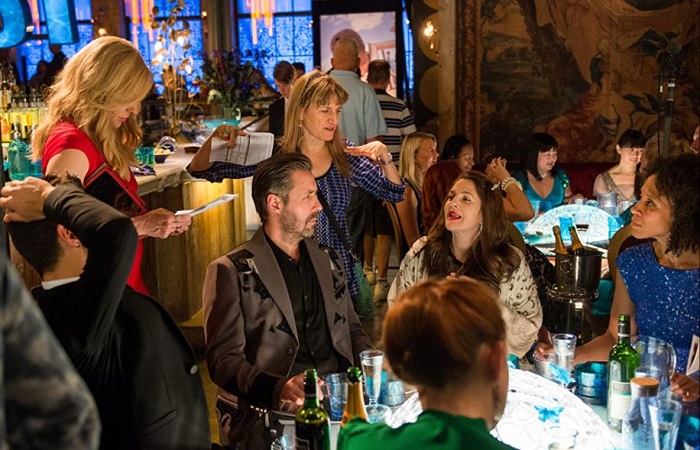
Hardwicke’s 2015 film, Miss You Already, saw her venturing into new terrain. Skipping through the turbulent teen years, the film tells the story of two lifelong best friends in their thirties – Toni Collette’s impulsive Milly and Drew Barrymore’s more sensible Jess – who have both married and settled down. This picture of domestic bliss, however, is shattered when Milly is diagnosed with breast cancer. Despite the heartache central to the story, it remains Hardwicke’s warmest and funniest film, and it’s a project that the filmmaker was circling since she made Thirteen. “I read the script and I was definitely intrigued,” she told FilmInk in 2015. “I just started getting more and more drawn into the world. It’s a subject that touches everyone. A story looking at the struggles of cancer, especially breast cancer and what that does to a woman and her sense of identity, felt so relevant and meaningful and heartfelt. But we also wanted to make it as fun as could be. The script was initially a little more sentimental, and I wanted to make these women tougher.”
After some shorts and TV, Hardwicke returned to big screens in 2019 with Miss Bala, an English language remake of Gerardo Naranjo’s 2011 Mexican film of the same name. Typically tough, uncompromising and female-forward, the gritty thriller stars Gina Rodriguez (TV’s Jane The Virgin) as Gloria, a bold young woman who takes on the Mexican drug cartels. “The original character is very passive – she doesn’t do anything active to save herself and many bad things happen to her,” Hardwicke told TheWrap of her approach to the material. “We made a bigger effort to show Gloria with agency and trying to figure out how to save herself. I’ve always loved Mexico, and I’ve always loved the culture and that fertile mix of two cultures along a border. All these combinations I got excited about, and I thought, ‘Let’s do a re-imagination of the story and identity.’ I got excited to show Mexico in a different way.”
And for something completely different, Hardwicke’s latest is female-led mobster comedy Mafia Mamma starring Toni Collette and Monica Bellucci.
Toni Collette and Catherine Hardwicke at the NYC premiere for Mafia Mamma. ???? @bleeckerstfilms @mafiamammamovie pic.twitter.com/ZsoooBt1Ms
— Letterboxd (@letterboxd) April 12, 2023
A constant fighter against Hollywood’s continuing practice of ingrained gender disparity, the criminally under-celebrated Catherine Hardwicke has been denied the large-scale films that her talent and track record demand. While she’s been vocal about the various challenges that she has faced throughout her career as a female storyteller, she was stonily optimistic during FilmInk’s fascinating 2015 chat with the filmmaker. “The more that we make our voices heard, the times will change,” Hardwicke asserted. “At least now people are starting to know the statistics when it comes to films directed by women, and they’re starting to know that’s not fair. Somehow I’ve battled those odds, and I’ve actually gotten to direct seven movies in twelve years, which is very hard as a director, especially as a female. Men and women both have to work hard to get their movies made. Maybe we have to work harder as women, but let’s do it.”
If you liked this story, check out our features on other unsung auteurs Dennis Dugan, Allison Anders, Daniel Petrie Sr., Katt Shea, Frank Perry, Amy Holden Jones, Stuart Rosenberg, Penelope Spheeris, Charles B. Pierce, Tamra Davis, Norman Taurog, Jennifer Lee, Paul Wendkos, Marisa Silver, John Mackenzie, Ida Lupino, John V. Soto, Martha Coolidge, Peter Hyams, Tim Hunter, Stephanie Rothman, Betty Thomas, John Flynn, Lizzie Borden, Lionel Jeffries, Lexi Alexander, Alkinos Tsilimidos, Stewart Raffill, Lamont Johnson, Maggie Greenwald and Tamara Jenkins.