


By Jarrod Walker
The September 11 terror attacks have now gained a sacrosanct status, making them problematic fodder for the Hollywood gristmill. It’s little wonder that there was initial ballyhooing and commentating on whether or not the subject should ever be writ large on the silver screen. The events of September 11 have now been dramatised and trawled over ad nauseum, but back in the mid-2000s, it was still a very hot topic. Despite the protests, films were made early in the piece on the topic, and not just within the Hollywood system. In 2004, filmmaker Antonia Bird (Priest) directed The Hamburg Cell for British television. A fictionalised account of the recruitment and training of the 9/11 hijackers, it was a well executed and deftly handled drama. In 2005, British filmmaker Michael Winterbottom completed The Road To Guantanamo, a searing account of three Pakistani friends from Birmingham, England who were held in detention at Guantanamo Bay for two years, before being released without charge. Given the hypersensitivity that Hollywood has towards this topic, it was no surprise that the best early films to tackle the subject were being made by European filmmakers.
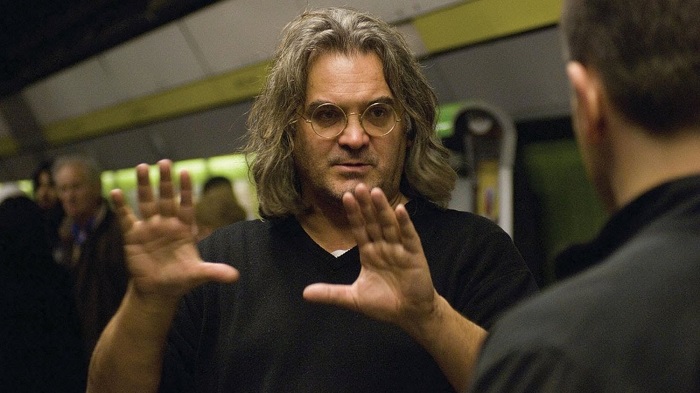
British writer/director Paul Greengrass has frequently tackled highly charged socio-political subjects in his films. As a young journalist, Greengrass worked on the UK current affairs programme World In Action. In 1987, he co-authored Peter Wright’s controversial MI5 tell-all Spycatcher shortly before making the move into feature filmmaking, helming several made-for-TV docudramas that garnered him high praise. He helmed The Murder Of Stephen Lawrence, about one of the UK’s most notorious racial killings, and wrote the screenplay for the intense drama Omagh, which told the story of a 1998 IRA car-bombing. In 2002, Greengrass directed Bloody Sunday, which dealt with the 1972 civil rights protest march and subsequent massacre by British Troops in Northern Ireland.
Bloody Sunday brought Greengrass to the attention of the Hollywood studios and in 2004 he directed The Bourne Supremacy (replacing The Bourne Identity director Doug Liman, (he would eventually go on to take charge of the Matt Damon-starring franchise), the success of which enabled Greengrass to make a bold first move in examining yet another highly charged subject on film: the 9/11 hijacking of United Airlines Flight 93, which crashed en-route to its intended Washington DC target.
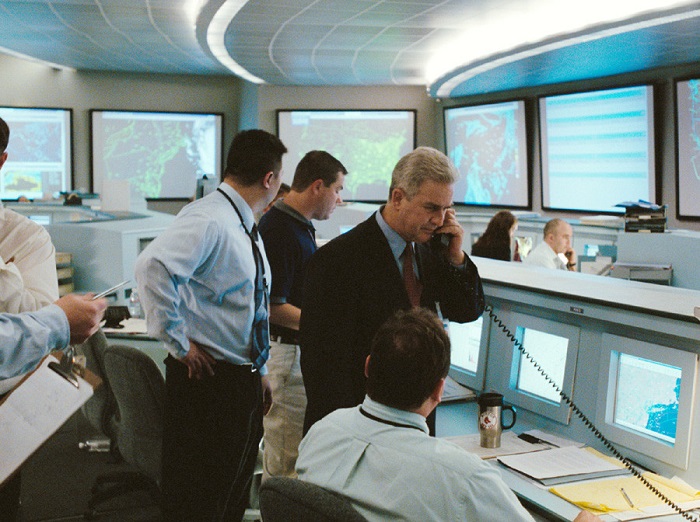
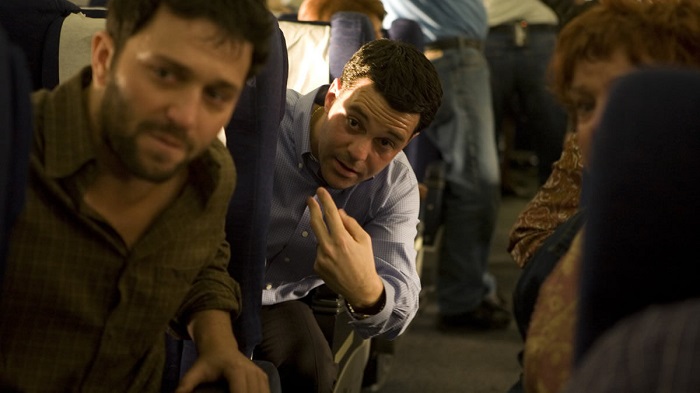
From the outset, with remarkable subtlety and grace, we are thrust into a first person experience of the flight and the resulting hijack. Greengrass’s preference for merging the real with the unreal has many of the military and air traffic control personnel depicted in the film playing themselves. This eye for verisimilitude spills over into the depiction of the hijackers and the crude methods by which they are able to take control of the plane. The film’s early stages comprise of tail ends of conversations between cabin crew and brief exchanges between passengers. The naturalistic delivery serves to strengthen the documentary feel, a testament to the solid performances that Greengrass was able to extract from his cast. Families of the victims of Flight 93 supplied the actors with a vast amount of information on the real people they were portraying, right down to the clothes they wore, the sort of music they were listening to on their personal stereos and the kinds of chocolate bars they would’ve eaten. It’s this scrupulous eye for detail that shows the extent of Greengrass’s vision for total veracity.
Clearly informed by his early years as a documentarian, Greengrass’s signature cinema verite style impacts the film greatly, helped in no small part by cinematographer Barry Ackroyd, who lends a high degree of authenticity to the proceedings. Although there has been some conjecture about certain events that transpired on the flight, what is known is that a large number of the passengers decided to rush the cockpit and take control of the plane. It’s this aspect of the account that packs the greatest punch and propels the film towards its terrible yet inevitable conclusion. The final moments of the film redefine the words “edge of your seat” as the people on the ground and the passengers in the air race to avoid what we know is inescapable. The fear of the passengers, the brutality of the hijackers, and the confusion on the ground all combine to deliver a forceful cinematic uppercut that leaves the audience reeling. It eschews cliche and avoids the exploitative, presenting a truthful and very human viewpoint of a tragedy that has changed the world we live in. It is a gut-wrenching, bravura work, and a true must-see.