


By Erin Free
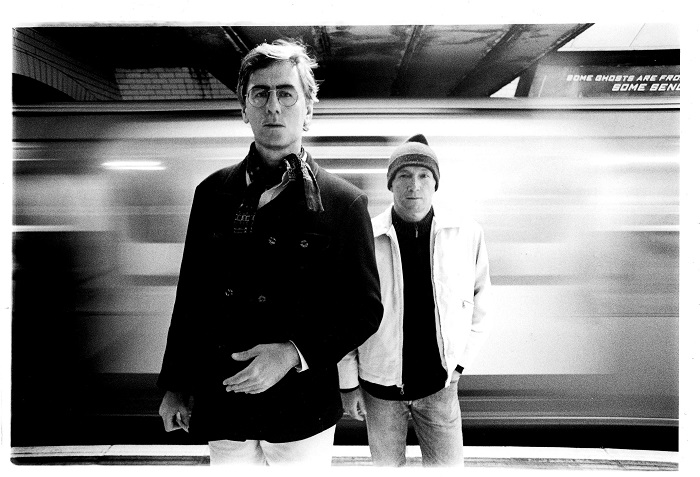
Now the prolific, acclaimed director of films such as Red Dog, Boxing Day, Kill Me Three Times, Lucky Country, and TV’s The Principal, the latest project from filmmaker, Kriv Stenders, began when he was just sixteen-years-old. The busy helmer’s new documentary, The Go-Betweens: Right Here, tracks the ups and downs of one of Australia’s most seminal and influential groups, whose songs – most notably “Cattle And Cane” and “Streets Of Your Town” – are now justifiably part of the national lexicon, despite having never slithered their way to the top of the charts. The nexus of the band was always the song writing duo of Robert Forster and Grant McLennan, and it was Stenders’ first meeting with them while still in his teens that ignited his long time love of the band.
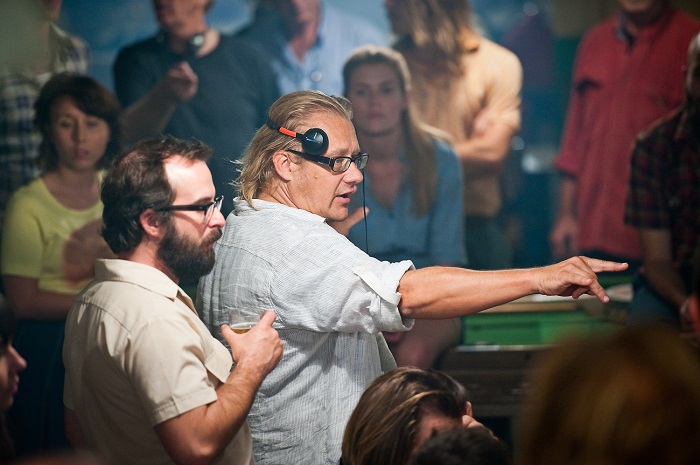
“I grew up in Toowong in Brisbane,” Stenders tells FilmInk, “and I used to hang out in this record store called The Toowong Music Centre. This wonderful man called Damian Nelson owned the store, and Robert Forster and Grant McLennan worked behind the counter.” Burgeoning players at the time, it was Nelson and the duo who actually recognised Kriv Stenders. He’d been on TV after receiving a special grant to make a film at his high school, and Nelson saw an opportunity, promptly recruiting the youthful Stenders to work as a cameraman on a short film that Grant McLennan had written called Heather’s Gloves. “That basically changed my life,” Stenders says. The nascent filmmaker subsequently stayed in touch with the band (“It was a bit like Almost Famous,” Stenders laughs), and eventually directed the video for their single, “Streets Of Your Town.”
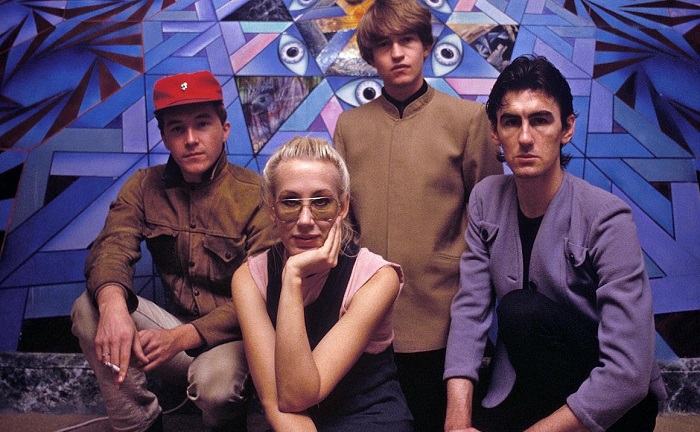
The Go-Betweens’ tortured, angst-ridden history is deeply, heatedly complex, with the twisting relationship between Forster and McLennan in line with that of most long time song writing duos. This was further impacted by the group’s internal romantic machinations, which are the stuff of legend. The relationship of Forster and the band’s eccentric and wonderfully self-possessed drummer, Lindy Morrison would eventually loudly crumble, only to be replaced by the equally intense coupling of McLennan and the group’s gifted and beautiful violinist, Amanda Brown. As with all broken relationships, there were resultant scars, all amplified by the intensity of the band’s often fraught creative process.
“The responsibility to tell that story correctly, and to tell it well, was huge,” Stenders says. “The stress that I put on myself was enormous. It was difficult. There’s still a lot of latent anger and bitterness about the break-up of the band. I really wanted to make sure that everybody had their say, and that everybody’s story was told, but it was difficult. I wanted to remain friends with everybody as well as telling the story properly,” he laughs, “and there were times near the final lock-off of the film when I wasn’t sleeping. It was probably the most difficult editing process of my career, but I’m very happy with the result.”
As a director who works primarily in drama (The Go-Betweens: Right Here is his first feature documentary), Stenders approached the piece in much the same way that he would any of his other works. He went into filming with a theme and narrative arc pinned down, rather than discovering it through his multiple interviews (with the band, their friends, and various music commentators) for the film. He even penned a linear feature film script to give the project a rigid sense of structure. “I’d always wanted to make a film about the band,” Stenders says. “It’s pure melodrama, but it’s essentially a film about friendship. Some friendships are meant to last forever, and some friendships aren’t. That’s a fundamental truth in life. I wanted to make a film about friendship and love and the incredible journey that bands go on together. The Go-Betweens had that story in spades. It’s also a film about what happens when you choose to live a creative life, and the price that you pay for that. That was very much the thesis for the film.”
“Holding the band captive” on his sister’s remote farming property, Stenders literally interviewed them for days, breaking down any initial reticence to get right to the heart of the matter. “Lindy was candid,” the director laughs, “sometimes even a little too candid! She and Amanda were initially a little suspicious about the project, and they believed that it was going to be biased toward Robert and Grant, but we got past that. Lindy was this amazing, opposing colour to Robert. He very much has two personas. He’s a lovely man…a real gentleman, and a warm and caring father, but the persona that he presents to the outside world is very different. The man on the cover of The Go-Betweens’ albums is very different to the real Robert Forster. When I was interviewing him, it was almost like he was playing a part. He was editorialising on his life, and that’s his right. I eventually realised that I couldn’t get past that. Robert was constructing the story, but Lindy was deconstructing it, which was amazing. I soon realised that I had this incredible love story too, and that I had enough contrast to tell the story.”
One person missing, of course, from these interviews is Grant McLennan, who sadly passed away in 2006 at the age of just 48 from a heart attack. The songwriter had dallied with drugs and booze, and was plagued by bouts of depression, but Stenders takes the creative high road, avoiding the temptation to focus on this difficult corner of the band’s history. “That was the part of the film that was changed most radically,” Stenders reveals. “It only happened in the last weeks of the edit. We had lots more stuff in there about Grant, and Grant’s drinking, and about his trajectory towards death. But it just felt implicit earlier in the film anyway. It felt like we were repeating ourselves, and that we were driving in a nail that didn’t need to be driven in. To me, the tragedy was that his death was sudden, and that it did come out of nowhere. It was a very tragic end to what was an amazing friendship. It was very clear in the doco that Grant drank and took other drugs, and that he lived a very different life to Robert’s. We ended up taking more and more of that stuff out. It felt more elegant to end the film suddenly, because that’s what Grant’s death was like. It really did come out of nowhere, but in some ways, it didn’t. When you unpack it, that was his destiny.”
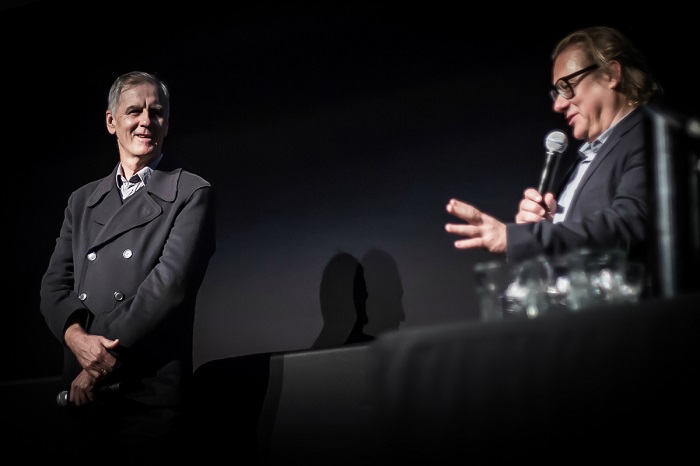
And one final and obvious question: have the surviving Go-Betweens seen the film, and what did they think? “Yep, they’ve seen it,” Stenders laughs. “They’ve been at special screenings and Q&As. They’re very happy with it. I think that Amanda is still a little confronted by it, and Robert has his issues with it, but on the whole, they’re happy with it. They’ve always been a band that have lived on the fringes of Australian rock culture, and there’s always been an element of obscurity about them, so they’re happy that their story is now out there.”
The Go-Betweens: Right Here is released in cinemas on September 28.
