


By Julian Shaw
It’s 10:30AM, and Rob Stewart is lounging around his Paris hotel room – a rare moment of repose in a promotional trail that has lasted eighteen months. He’s understandably stoked about how the French are receiving his undersea opus. “It’s going out on 100 screens – it’s the biggest release of a documentary ever in France. The posters are everywhere. They’re calling it Lords Of The Sea – very poetic and French.” What might read as dizzy elation on the page couldn’t be further from Stewart’s relaxed, Canadian low-tone delivery. It actually doesn’t ever sound like Stewart is fazed, ruffled or overawed in the slightest – which is fortunate, because the making of Sharkwater would have ended most people. Stewart overcame a dozen near-death experiences, including taking a year out from production to shake off West Nile Virus, tuberculosis and a flesh eating disease.
While it features magnificent underwater photography, the real marvel of Sharkwater is Stewart himself, who appears on-screen throughout, with his contagious passion pulling audiences deep into the film. Sharkwater explores how we are conditioned to fear sharks, with the myth of their savagery reinforced by cultural touchstones like Jaws and the wide-ranging media exposure that a rare shark attack draws. But as Stewart points out, with five people dying from shark attacks each year, you’re more likely to expire from a vending machine falling on you. “Sharks have been around for 400 million years, which is 100 million years before the dinosaurs. They’ve survived this long, and they’re an essential part of the ecosystem. But we kill 100 million of them yearly.” Sharkwater will make even the biggest shark-aphobe ask the question: who should be afraid of whom?
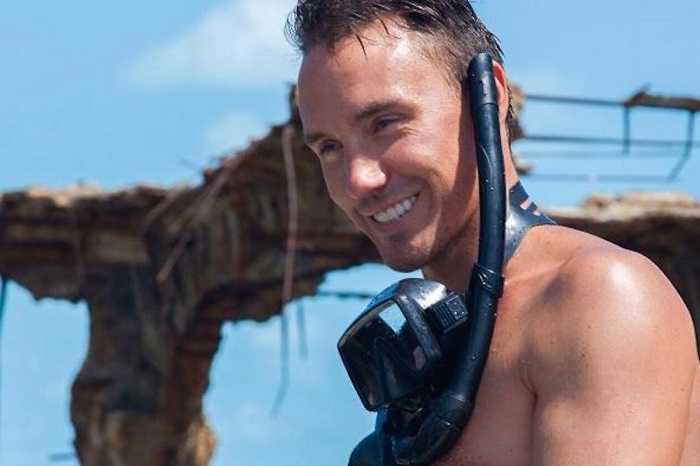
“I never liked documentaries at all,” Stewart implores. “I liked nature docs, because of the animals, but I preferred action movies. I didn’t like how documentaries always seemed like medicine. You know, it’s not going to taste good when it goes down – it’s not cool banana flavoured medicine.”
Sharkwater, however, is definitely a banana-flavoured antidote to drier documentary fare. It’s personal, action-packed and noticeably long-in-the-making. “Sharkwater has been part of most of my adult life. I’m 28 and still very much involved, so while filming may have finished a couple of years ago, it’s still a cause that I believe in totally. Sharkwater made me grow in every way. I was just a 22-year-old wildlife filmmaker. I had a passion for animals. Now I have a passion for people. I always wanted to save animals, and now I’m passionate about saving people.”
This turnaround is ironic considering that many of the people in Sharkwater are engaged in reprehensible acts – particularly the long-line fishermen of the Galapagos Islands, or those at the heart of the billion-dollar shark fin trade originating in Costa Rica (a key sequence in the film has Stewart exposing a link between the Taiwanese mafia and the Costa Rican government). Stewart is philosophical about the villains in his film. “I see all the mistakes I’ve made in other people,” he says. This is a typical stance from a man who lives by an adage that is beautiful in its simplicity – negatives inevitably become positives. “All the negatives at the time of making the film made the story into something much bigger, so I’m grateful. The film was a series of seeming negatives: getting arrested, almost dying from diseases, being chased by a gunboat. But these became a great part of the story. So now when something bad happens, I just think that it will turn into a positive. It always seems to.”
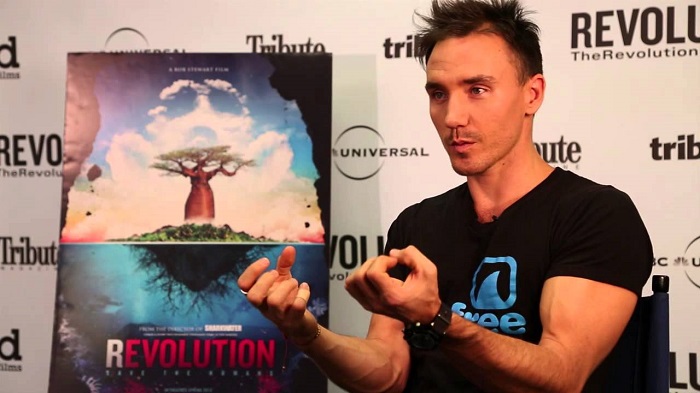
Somewhat hilariously, it was the Robert McKee Story seminar that woke Stewart up to the dramatic potential of personally appearing in the film. “I only realised a long time after I began filming that what happened to me – all of the events like almost being arrested and killed – was textbook story structure. What McKee described about story structure and the ‘instigating incident’ and the main character going through rites of passage – this all applied to me. I slowly came around to the idea that maybe it wouldn’t just be an underwater movie.”
Most satisfying for Stewart is the fact that he has been able to inspire the next generation of conservationists. “Speaking to young people has been amazing,” he enthuses. “Whenever I get a break, I go to a school. Young people are sponges, and they’re rebellious. 15-year-old girls that I spoke to in Toronto raised tens of thousands of dollars. It’s not Greenpeace or Al Gore that’s exciting them. It’s not hypotheses about gasses that get them excited. The hook is that they can prevent death and destruction. That means a lot to them.”
For Stewart, despite the grind of international touring and countless speaking engagements, the rationale has never changed, and his clarity of vision has never been compromised. “When I made Sharkwater, my goal was to change perceptions. I made it to inspire people to save the last dragons of the planet, the last dinosaurs – the sharks.” And, then – with that zenned-out Canuck drawl – he says with a sangfroid bordering on poetry, “It’s actually pretty rad.”
