


By Danny Peary
National Bird: Drone Wars, Sonia Kennebeck’s enlightening documentary about drone warfare whistleblowers, is about both the collateral damage that US strikes do overseas in the war against terrorism, and also the mental anguish suffered by the military at home who are responsible for those long-distance strikes. Executive produced by Wim Wenders and Errol Morris, National Bird: Drone Wars introduces us to three whistleblowers who once had top-secret clearance: Heather, a former Drone Imagery Analyst who was recruited by the Air Force when she was eighteen and participated in her first deadly drone strike when she was just twenty; Daniel, who was homeless when enlisted by the Air Force and became a Signals Intelligence Analyst who tracked down high-value targets for drone attacks in Afghanistan; and Lisa, a former Technical Sergeant on Drone Surveillance System whose computer skills led to her working on the Distributed Ground System (DGS), a weapons system that makes use of drones to collect vast amounts of data and track down targets. Today, all three suffer guilt, anxiety, and paranoia that the government will come after them for telling the public what they know.
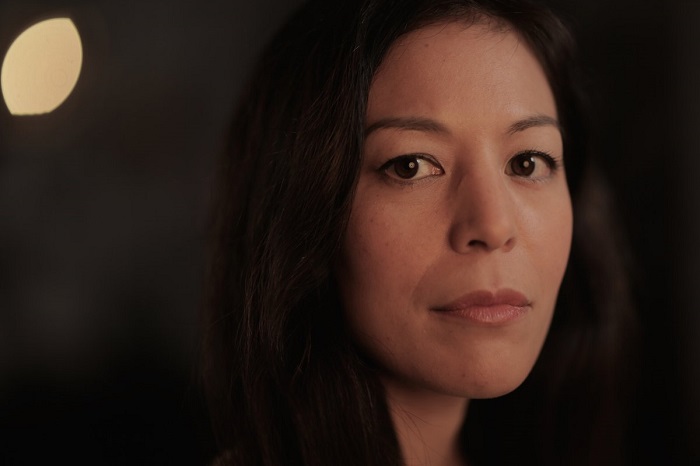
Why did you decide to make a film about drones as your first feature? “I come from television, so I’ve done shorter documentaries. I like the short-form documentary, but I understood from the beginning that this subject matter is too large for a short. My goal when I set out was not to speak to experts or pundits but to speak to people who were directly impacted – people from within the military and people in targeted countries – and that is a big project in itself.”
When did the drone programme actually start? Under Obama? “It started, I believe, in the fall of 2001 or early 2002. There was an article in The Atlantic that covered the first drone strike. The first reported one at least. While Obama is certainly the president who has increased the use of combat drones, it goes way back. Now the government has announced that it wants to increase the drone programme by 50%. It’s definitely going to be the weapon of the future.”
We know that the drone programme exists, but not much more about it other than what we see on the news following a strike of consequence. Is what we do not know about drones the result of the government or military suppressing information? “When I started the film three years ago, there was incredibly little information out. It was deliberately secret. As of three years ago, there had been only one single whistleblower who was speaking out. It has really progressed since then. And every time that some whistleblower or some article comes out and brings out information, even if it’s quoting anonymous sources, there seems to be a pattern of the government reacting and releasing more information. The issue of drones is so strong now. And after The Guardian article at the end of 2013, the responses have been overwhelming. People are interested in PTSD in the drone programme, and they want to encourage veterans to get help. The public wants to know what is being done.”
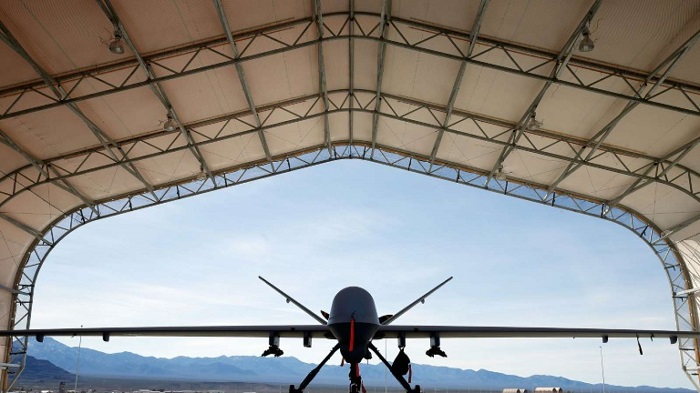
What would a whistleblower reveal? “Inaccuracy is the main thing. That’s why the three protagonists in my film are speaking out.”
People also don’t know that a drone strike in The Middle East or Asia can be initiated by pilots in Arizona. “Or New Mexico or Nevada. They think that everything takes place overseas. When I started my first conversations, even with broadcasters, three years ago, I didn’t realise that the general public, because the programme is so secret, doesn’t know a lot about the drone programme. I knew that I’d have to explain a lot, and that it would have to have an educational component. I see the first part of the film as being educational and bringing transparency to the programme. One of my favourite films is Apocalypse Now, which is set during the Vietnam War, and the connection that I wanted to draw is that the type of warfare has changed, but the moral and psychological injuries are the same.”
Jesselyn Radack is featured in your film. She’s the most prominent attorney for whistleblowers. She represented Edward Snowden, so I guessed that she gave you access to Heather, Lisa, and Daniel. “No. I met Heather first. A lot of people assume that I found Heather after she wrote the drone article in The Guardian that we talk about in the film, but I met her about three quarters of a year before it was published, when I was doing research. I always point out that I’m an investigative journalist because the research is the hardest part for a film like this. I was reading everything from articles that were out to congressional reports and declassified military investigations. I was also talking to activists and veterans that I knew and was surfing on their websites. I came across a photograph of a woman holding up a sheet of paper that said something along the lines of, ‘Not everything you hear about the drone programme is true. I know what I’m talking about.’ All you could see were her eyes because the rest of her face was covered. It was posted by an activist and he said that he didn’t know who the woman was. I was really curious if the person holding up this sign was the same person who wrote that quote. Eventually I saw a Facebook photo of Heather and I recognised her eyes. So I contacted her and asked, ‘Is this you in this photo? Do you actually know about drones or were you just holding that up for someone else?’ She said, ‘Yes, that’s me. I worked in a drone programme.’ I said, ‘Can we meet?’”
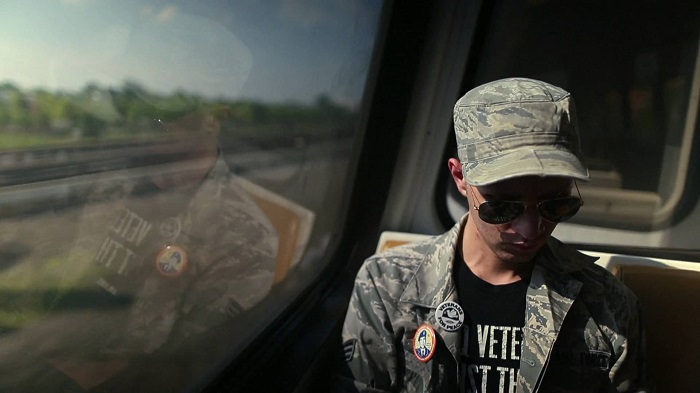
And she trusted you over the phone? She seemed pretty suspicious. “They all are. All three of my protagonists had top secret clearance and were told over and over again that they couldn’t reveal classified information – which they don’t do in the film. But there is an inherent fear in the programme that you can’t even talk about material that isn’t classified, or tell anyone if something is bothering you. Heather said that she lost three fellow airmen to suicide. Later, when The Guardian article happened, I put her in touch with Jesselyn. The same with the other two.”
Lisa talks about thinking that she’d be on the right side of history when she was recruited. She became disappointed in her own country. “Heather says something similar. She wanted to serve her country, which she thought would be like a big brother and help everyone out. All three went in with that kind of idealism. They were all patriots who wanted to do something good for their country. Terrorism is a real problem and they wanted to fight it. A reason I wanted to do this film is I was curious about how someone who wanted to go into this program would be so changed by it that they feel a need now to speak against it. What did they experience that made them change so much? Something on the inside doesn’t match up with the advertising of it.”
Did anyone in the government ever approach you? “They never approached me. What I think they did was worse. They intimidated my protagonists.”
Because of the movie? “We don’t know. That’s the thing about these espionage investigations. You don’t know. We don’t know if the investigation is still going on.”
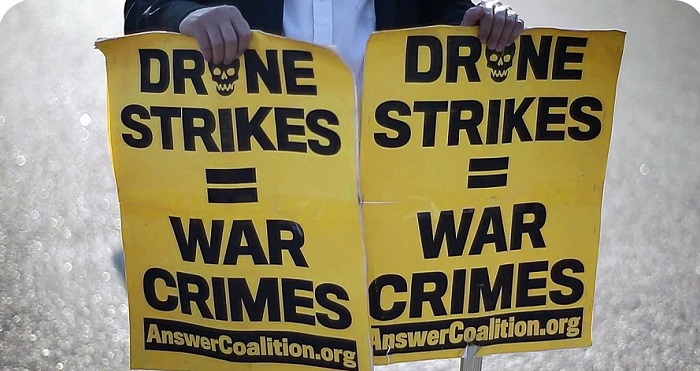
Daniel in particular seems concerned about people coming after him. “Heather as well. She and another whistleblower were approached by the Office For Special Investigations Of The Air Force and the FBI as well. They contacted two of Jesselyn’s clients. At first they were told that they were on some terrorist kill list. Jesselyn contacted the OSI and the FBI and said, ‘What type of kill list?’ They were told, ‘It’s not really a kill list. They’ve been showing up in some internet searches.’ They were intimidating them, but Jesselyn knows who to ask and what questions to ask. Eventually they said that there was no threat, and Jesselyn came to the conclusion that this was a ruse to silence the whistleblowers. But it really scared people. It’s obvious that they were intimidating Heather. It seemed to us that they were trying to interfere with the film.”
But you were never approached yourself? “No. My lawyer said that I should expect that, but they’re more careful about approaching journalists. I have contacts. I know exactly who to call. I think I’m safe, but I’ve never been concerned about my safety. My main concern was about my protagonists. You can see in the film, for instance, that Lisa is a very private person, so I wanted to make sure that she could just live her life without fear of reprisals. That’s why I didn’t use the last names of the three protagonists in the credits. I am so grateful that Wim Wenders and Errol Morris agreed to be executive producers after I showed them the film because their names give the film more legitimacy, and that adds protection to my protagonists.”
Is Obama the villain of the film? “Is that the impression you get?”
He’s kind of the face of the drone program. “It is, in a way, his legacy. But I would never describe him as a villain. I don’t think a documentary should have a villain. We are recording history here. I’ve worked on a lot on controversial issues and I’ve seen that it’s never black and white. Reality is full of shades of grey.”
Why do you think Obama has been so in favour of drones? “As Daniel says in the film, it’s such an easy type of warfare. By putting ground troops into a war, you get a lot more resistance from the public than by having people sit in complete safety somewhere in Nevada and fight a war overseas. At our Q&As, Lisa has been pointing out – and I think she’s quoting General Hayden [the former director of The National Security Agency] – that you don’t lose political capital because you’re not putting your own forces in physical harm’s way in another country. The reason that I included parts of Obama’s National Defense University drone speech is that I thought it was important to allow him to explain why he’s using drones, and to really show his point of view. He does explain that they go after imminent threats and not to punish individuals.”
To make it clear: Obama is not being misled and he knows exactly what’s happening in terms of collateral damage? “That’s an interesting question. There’s a point in the film where Heather asks, ‘Do politicians know what’s going on in their own war?’ My protagonists have wondered if all the information was really passed on to them, and whether the higher-ups really were fully aware of what was going on, especially after the politicians spoke. Transparency in this type of war is important. Why does this programme have to be so secret? It doesn’t make any sense.”
National Bird: Drone Wars is available on DVD and Digital from December 7.
