


By Erin Free & Dov Kornits
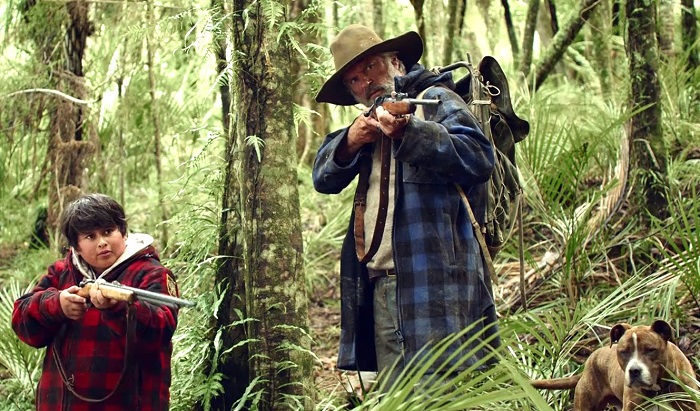
HUNT FOR THE WILDERPEOPLE “I don’t usually write the script until the very last stage,” writer/director, Taika Waititi, told FilmInk at The Sundance Film Festival. “My directing style is very changeable, because it depends on how much time we’ve got to do a scene, and how much money we’ve got. Sometimes you’ve got to rush and come up with solutions on the spot. Usually it’s relaxed, as I’m a relaxed person with a relaxed style. I’m an actor, so I like actors. It’s about being respectful while getting the job done.” It’s this uncanny sense of looseness that drove Hunt For The Wilderpeople into the hearts of audiences around the world. The tale of a troubled kid (the utterly charming Julian Dennison) on the run with a grumpy bushman (Sam Neill at his best) in the forests of New Zealand, Hunt For The Wilderpeople is certainly no breakout in terms of plotting, but the film’s tonal tightrope walk is unquestionably one of the most daring of the year. Mixing rich sentiment (erring just on the right side of sentimentality) with goofy humour, the film’s freewheeling vibe is utterly fresh and infectious. “I grew up watching these crazy, whacky adventure films,” Waititi told FilmInk. “The world’s full of depressing films, so it’s okay to make something fun!”
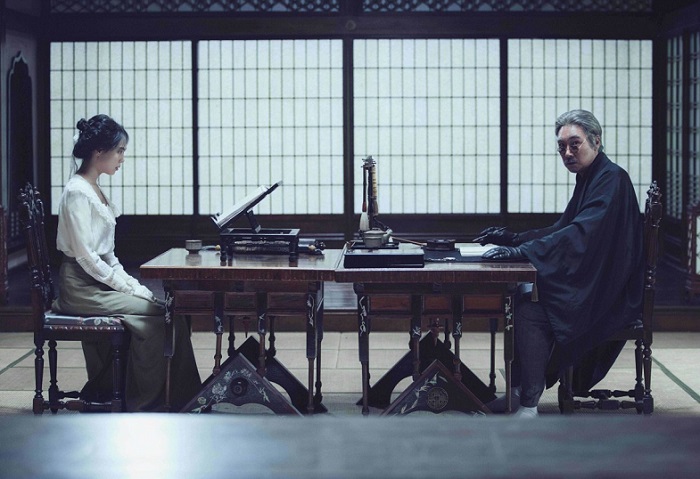
THE HANDMAIDEN Exploding onto the international scene after winning The Cannes Grand Prix for 2003’s Oldboy, Park Chan-Wook headlined a wave of South Korean cinema that tumbled riotously across screens in the early 2000s. His highly regarded The Vengeance Trilogy (comprising of the thematically linked Sympathy For Mr. Vengeance, Oldboy, and Sympathy For Lady Vengeance) artfully mixed frenetic violence, spectacular cinematography, and lyricism, cementing Park’s place as one of the world’s most stylish and sought-after directors. After detouring to America with 2013’s erotically charged Stoker, Park pushes it even further with his silky, beautifully crafted The Handmaiden. Double-crosses fly and identities morph in the director’s sexually explosive adaptation of Sarah Waters’ Booker Prize-nominated Sapphic opus, Fingersmith. Transposing the Victorian setting of the original into a vividly realised and sumptuously shot 1930s Korea, Park delivers a work of knife-edged humour and unexpected pleasures that will have you guessing right until the very end. Displaying an extraordinary facility for visuals (“I prefer to use audio-visual elements to convey information rather than dialogue,” Park once told FilmInk. “Usually when I make a film, the final product is almost exactly as I storyboarded it”), The Handmaiden is pure cinematic poetry, and a true original too.
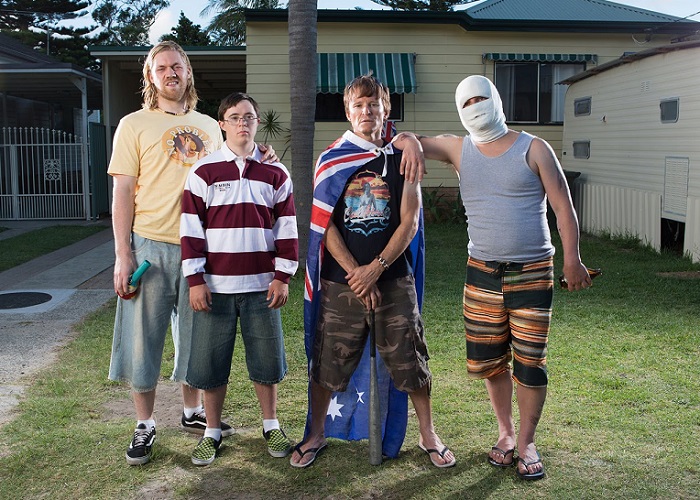
DOWN UNDER “I started thinking that if you were going to make a comedy about something that had been happening in Australia that was socially relevant, and making a comment about something, what would that be?” writer/director, Abe Forsythe, revealed to FilmInk about the inspiration for his second feature, Down Under. “That led me to the Cronulla riots.” A comedy about the Cronulla riots? That’s the definition of daring and original right there. 2005’s infamous Cronulla riots – which saw violent young Anglo youths wreaking havoc on the streets of Sydney’s famous beach suburb, looking for people of Middle Eastern background to assault – are merely the launch point for Down Under. This is no doco-style dissection of the horrors that occurred on that now blackened day in Australian history. Down Under offers a far more relatable, intimate approach, distilling the essence of the riots into two car loads of young men – one full of Cronulla “Aussies”, and the other driven by “Lebs” from Sydney’s south-west – caught up in the day’s heated aftermath, which saw retaliatory violence explode in different parts of the city. The film is hilarious and heartbreaking, and its brave tackling of recent real life events is something that we rarely see on the big screen in Australia, making it a culturally significant stand-alone.
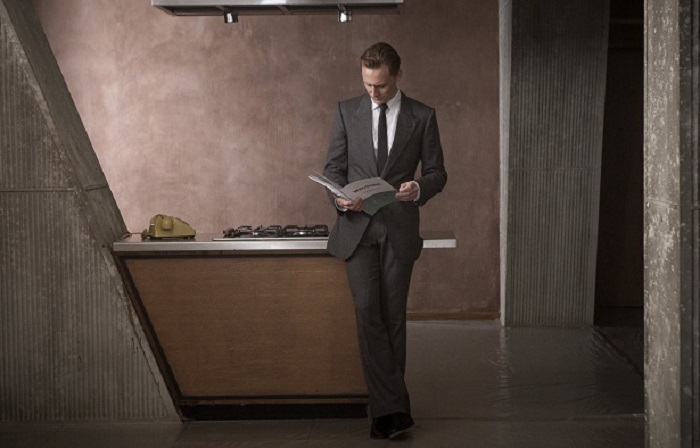
HIGH-RISE “J.G. Ballard was weird, because he was British, but he didn’t feel part of the British scene,” director, Ben Wheatley, told FilmInk of the famed sci-fi author, whose novel, High-Rise, is the source of the cult filmmaker’s latest release. “He felt other…he felt alien. His work was so outside everybody else’s; you read it and it was so odd and dangerous and subversive in a way. A lot of the British sci-fi stuff from that period seems to have become dated; Ballard’s stuff seems to hold its own.” Putting the inherent weirdness of Ballard (who challenged the written form with outré works like Crash and The Atrocity Exhibition) in the bold, unconventional hands of Ben Wheatley could only possibly result in a film of true invention, and that’s exactly what High-Rise. A demented slice of social commentary, the film uses a foreboding apartment block as a microcosm for all that’s not-quite-right in the world. Bolstered by uninhibited performances from Tom Hiddleston, Luke Evans, Sienna Miller, and Elisabeth Moss, Wheatley (whose growing resume – Down Terrace, Kill List, Sightseers, A Field In England – has already established him as one of Britain’s most daring auteurs) really aims for the sky with the deliriously strange and admirably ambitious High-Rise.
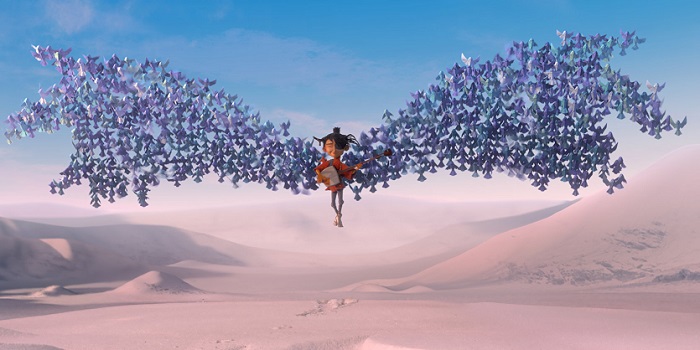
KUBO AND THE TWO STRINGS The most poetic and artful of American animated films, Kubo And The Two Strings is set in a fantastical version of ancient Japan, and follows the clever, kind hearted youngster, Kubo (voiced by Art Parkinson), who sets out on a quest to save his family and solve the mystery of his fallen father, with the help of two unlikely friends and mentors: Monkey (Charlize Theron) and Beetle (Matthew McConaughey). With its stunning, painterly visuals, rich plotting, unusual approach to music, and daring take on what qualifies as family entertainment, Kubo And The Two Strings marked another against the grain win for production house, Laika Studios (Coraline, ParaNorman, The Boxtrolls). “We always strive to tell new and original stories,” the film’s director (and the main man at Laika), Travis Knight, told FilmInk. “We want to do things that are thematically rich, and emotionally resonant. We want our films to be challenging, and to tell beautiful stories. Every single time out, we try to do something new. We don’t want to keep repeating ourselves. We’re always trying to do something new and interesting and exciting. We want to push the medium beyond where it’s been before.”
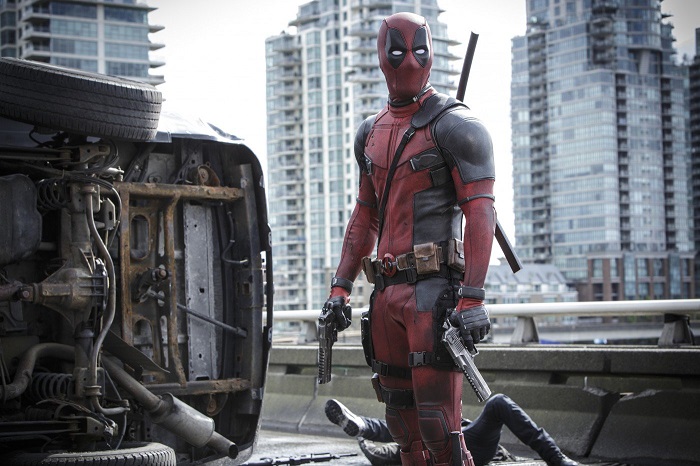
DEADPOOL He swears, he kills, he loves Bea Arthur, and he’s not afraid to let you know about how bad his previous on-screen depiction was in the god-awful X-Men Origins: Wolverine. He’s the Marvel Comics super-anti-hero, Deadpool – played with sass, spirit, and bold-as-brass comic timing by Ryan Reynolds – and he summarily kicked aside a whole slew of his more famous colleagues at the worldwide box office earlier this year. After copping lots of love from fans in the states, Deadpool also enjoyed a big opening weekend bang in Australia thanks to local punters, with the flick hauling in a mammoth $14,951,406 in its first few days of release. There’s been much discussion about what prompted the enormous success of Deadpool (the mid-budget production has been greenlit for a sequel, which has been experiencing a few production problems), but much of that can likely be attributed to its fresh, funny, and highly original stab at the superhero genre. With the best breaking of the fourth wall since Ferris Bueller’s Day Off and the best breaking of skulls since The Raid, Deadpool plays in a familiar sandbox, but gleefully changes the rules, with others now looking to lock-step with its wildly original tone.
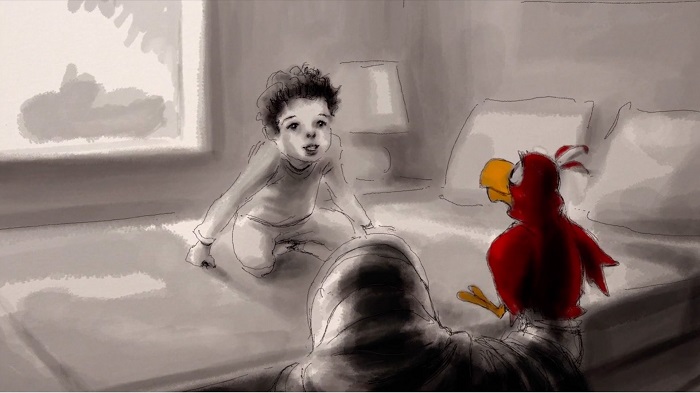
LIFE, ANIMATED Based on the book by Ron Suskind, Life, Animated is the latest documentary work by Roger Ross Williams, who helmed 2013’s God Loves Uganda, and debuted with 2010’s Music By Prudence, which won the Oscar for Best Documentary Short Subject, making Williams the first African-American director to win an Academy Award. Life, Animated tells of Owen Suskind, who, at the age of three, was diagnosed with autism, and whose love of Disney films has allowed him to find ways to connect with his family and the world around him. When Life, Animated begins, Owen is ready to graduate and move into his own apartment, and Williams was there to detail his momentous year. What follows is deeply and profoundly moving, and shocking in its intimacy. That’s nothing new when it comes to the best documentary filmmaking, but it’s the manner in which it plays with form that makes Life, Animated such a game-changer. Williams brilliantly uses stunningly rendered animation to take us into the mind and heart of Owen Suskind, making this a cinematic journey like no other. “It was about invoking Owen’s inner world,” Williams told FilmInk. “I had these brilliant French animators, geniuses out of animation college. And everything had to be hand drawn because Owen connects to the emotion of hand drawn animation.”
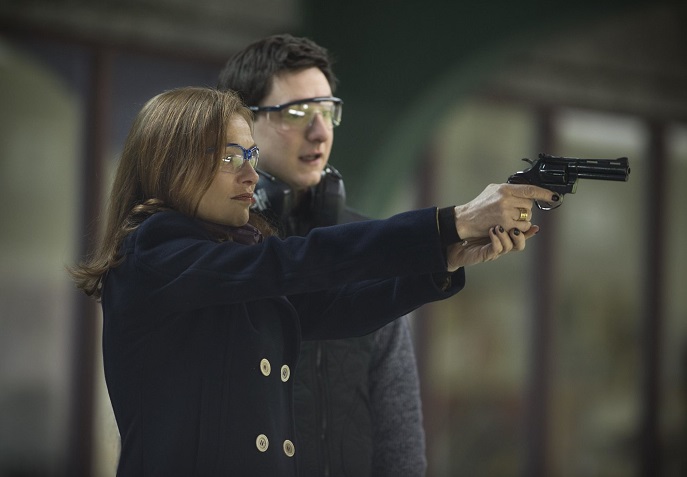
ELLE “We wanted to make an American movie, and we wanted to do it with American stars,” Paul Verhoeven told FilmInk of his latest film, Elle, at The Cannes Film Festival. “But they saw this ‘amoral’ tale. That made it impossible for American stars to participate. We started to realise that we had the wrong idea.” Sensibly, Verhoeven – the great provocateur behind shock-and-awe efforts like Basic Instinct and Showgirls – took the film to France, where he was happily unshackled by convention and political correctness. The resulting work is a sly tour de force, with a towering Isabelle Huppert brilliant as the CEO of a company specialising in violent video games who is raped in her own home. Her reaction to the assault – along with the film’s dry, acerbic, darkly comic tone – sets Elle apart from any film before it that has tackled the subject of rape. “If it was going to be a revenge movie, the Americans might have said done it,” says Verhoeven. “But, of course, it doesn’t go into revenge. It goes another way.” And that way is singularly unexpected, making Elle a quietly shocking feat from one of cinema’s most controversial artists.
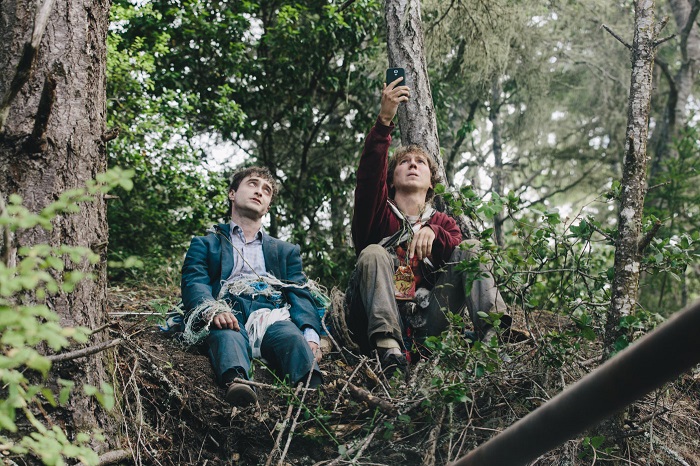
SWISS ARMY MAN “A lot of times, I make movies because I’m angry,” Swiss Army Man co-director, Daniel Scheinert, told The Verge. Like, ‘Why aren’t there movies like this?’ or ‘Screw those guys!’” To say that there aren’t many movies like Swiss Army Man would be the understatement of the year. Shot on the cheap by Scheinert and his regular collaborator, Daniel Kwan (under the moniker of Daniels, they’ve directed a clutch of truly eye-popping shorts and video clips), this acclaimed surprise package follows the despondent Hank (a fine piece of solitary acting from Paul Dano), who is marooned on an island and contemplating suicide, until he finds Manny (the always daring Daniel Radcliffe, pushing even harder against his Hogwarts pedigree), a gas-filled, crumbling corpse who proves to have a surprising array of functions, both physical and emotional. The two men develop an oddball “friendship”, resulting in one of the weirdest buddy movies since Ratso Rizzo and Joe Buck bonded in Midnight Cowboy. “It’s not as much fun to make strange movies when people let you do it,” Daniel Kwan told The Verge. “This was a lot of fun to make because there was a lot of inertia in the process.”
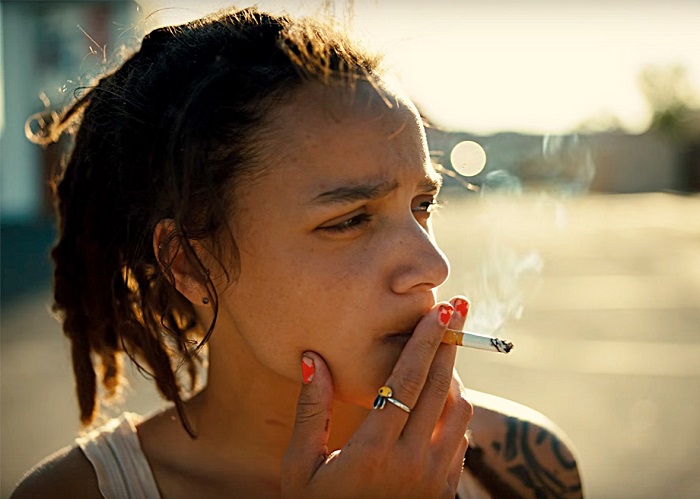
AMERICAN HONEY “I get away with murder in America because of my accent,” British director, Andrea Arnold, told FilmInk at The Cannes Film Festival. “Just because I’ve got an English accent, they think that I’m posh.” There’s a long and rich history of “foreign” directors making great movies in and about America. From Billy Wilder and Milos Forman through to Sam Mendes and Nicolas Winding Refn, the vision of America captured through the lens of the outsider is often far more original and striking than that of filmmakers born and bred in the country. With the gritty but poetic intimate epic, American Honey, Andrea Arnold (Fish Tank, Red Road, Wuthering Heights) can safely be added to that list. The film follows Star (played by absolute beginner, Sasha Lane, who Arnold literally picked off a Florida beach during Spring Break), a dreamy, boundary-pushing adolescent girl from a troubled home who runs away with a travelling sales crew who drive across the American Midwest selling magazine subscriptions door to door. Long, involved, and with a relaxed attitude to sex and drugs, American Honey dances wildly to the beat of its own drum. “I like to take risks,” Arnold told FilmInk. “But I like to push myself and learn each time. And with this one, I pushed myself even further.”
