



By Christine Westwood
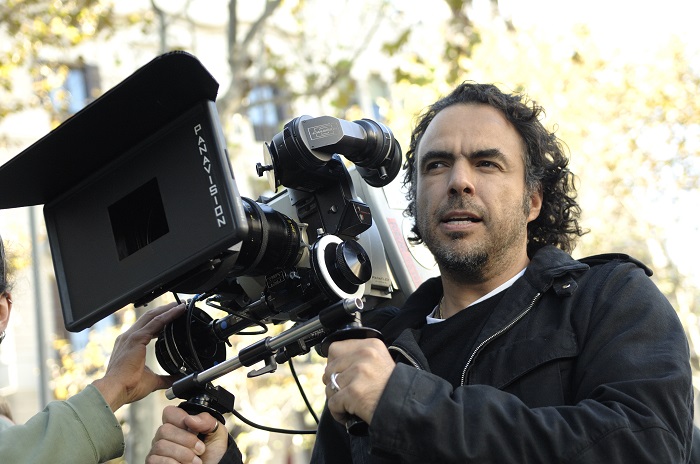
Years before his Oscar winning success with Birdman and The Revenant, Mexican director, Alejandro G. Inarritu, was always convinced of the power of a Latin American voice in global cinema. FilmInk spoke to Inarritu in 2006 during the filming of his award-winning drama, Babel, and was struck by his clear vision of what the diversity and uniqueness of Latin American films offered. “Latin American people express themselves very openly, sometimes very dramatically,” he explained. “We’re very straightforward, without many taboos about things like death or sex, where in other cultures, it can be seen as ‘bad.’ It’s not a bad thing for us, it’s just what it is. The most important thing is to be able to see one’s frailty and not to judge it. Some films can reveal part of our human nature, not to teach us or preach to us about it, but just to discover it and make it more real. My own intention is to create a catharsis, because emotional involvement is very important in the dialogue between the art and whoever is watching it. I’ve been privileged for my films to have been shown around the world. That wasn’t my main goal, but if the film touches human themes, that’s great. Every human is the same…even when we speak different languages, we are the same in the end.”
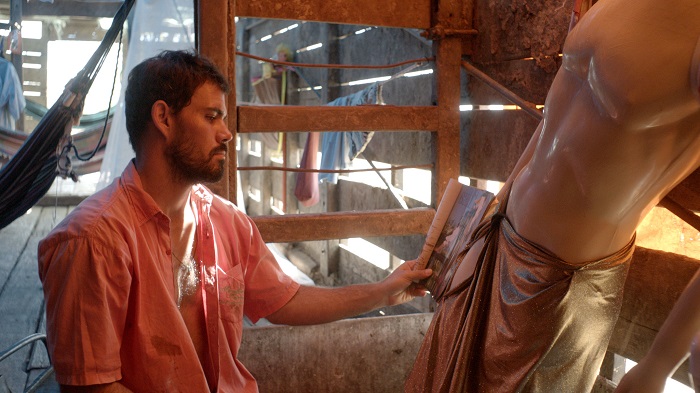
Universal themes and bold stories have continued to emerge from countries all over Latin America. Giselle Gallego, the programmer for The Sydney Latin American Film Festival (which plays at Sydney’s Dendy Quays, from September 8-12), credits the ongoing and developing profile of Latin American films to global successes like Inarritu and fellow Mexicans, Alfonso Cuaron (Y Tu Mama Tambien, Gravity) Guillermo Del Toro (Pan’s Labyrinth), and actor, Gael Garcia Bernal (The Motorcycle Diaries, No), along with Brazil’s BAFTA winning director, Walter Salles (Central Station, The Motorcycle Diaries). “Because of those big successes outside Latin America, more interest was generated inside the countries, meaning more film schools, and more film festivals,” Gallego explains. “Things have changed very much in the last ten years. Back then, seeking film entries for The Sydney Latin American Film Festival, we were dealing with film schools, governments, and cultural organisations. It was almost underground, and it was really hard to get material. You had to put the call for entries everywhere, and do a lot of networking. Also, Facebook and Twitter had barely started. With story themes, there are still things that are very local to each country, like the violence and drug trafficking in Colombia. In Mexico, there are always films about migration and crossing borders, and in Brazil and Venezuela, there are issues of social class. Those things are still there, but the universal themes have been going on for a while too, with what you would call more independent cinema. You can particularly see it in Brazil. There’s this new wave of very young directors like Gabriel Mascaro [Neon Bull] and Ives Rosenfeld [Hopefuls] that take a very different look into mundane life with very poetic stories.”
Back on Babel (a film notable for its global themes and locations), Inarritu had something to say about the changes that led to the new vision in Mexican cinema that occurred ten years ago. “For me, Alfonso Cuaron, and Guillermo Del Toro, our films are different from past years, where there was a very primitive or local way of thinking. All the films that I saw when I was young were terrible because they had a very limited vision. They were proud in a nationalism that arguably didn’t touch or reach anybody because even when they tried to be ‘Mexican’, they weren’t because of this parochial vision.”
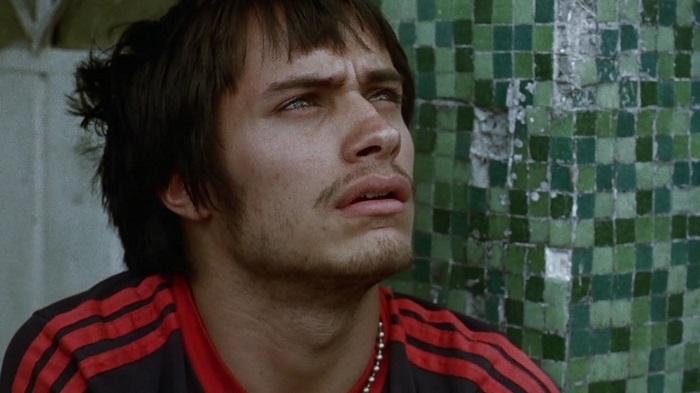
A landmark in that change of vision came in 2000 with Inarritu’s fast paced, visceral cult favourite, Amores Perros, which starred Gael Garcia Bernal. In three interweaving stories, the movie yanks us inexorably into the trapped and intense lives of its characters, and the overcrowded, violent landscape of modern Mexico City. Amores Perros was Mexican alright, but it was a far cry from the stereotypes of mariachi, bandidos, and sombreros. The film won over 50 awards including a BAFTA, and broke box office records not only in Spanish speaking countries but across the world.
Professor Maria Delgado, the programme consultant for The London Film Festival at that time said, “There have been so many exciting developments in Argentine cinema over the last ten years, and Brazilian cinema over the last five years, so people have started to look more to the southern hemisphere. But Mexico has always been a bridge between the north and south, and the presence of some very pertinent Mexican films and the fact that Mexican filmmakers have made the transition to Hollywood has meant that people are much more curious about what’s happening in Mexico than they were a few years ago. And Mexican cinema has always been strong historically. Luis Bunuel went to Mexico when he was in exile [1946-72] and made twenty films.”
The year after Amores Perros, Gael Garcia Bernal starred alongside fellow Mexican, Diego Luna (Milk, Rogue One: A Star Wars Story), in another high impact Mexican movie, Y Tu Mama Tambien. They played two teenagers who take a trip with an older woman (Maribel Verdu) that results in an awakening for all of them. Funny, rude, and touchingly honest, Y Tu Mama Tambien was the brainchild of Alfonso Cuaron, who wrote it with his brother, Carlos. The film showed Mexico in a new and poignant light, with the narrative underpinned by a raw social commentary as the characters pass through the nation’s often troubled socio-political landscape.
Alfonso Cuaron grew up in Mexico City, and graduated in philosophy and filmmaking before starting his working career as a technician and director in TV. His choice to work nationally and internationally is another reflection of the shift away from nationalism to a more global consciousness. “It’s increasingly possible to have an international career and still be connected to the local industry,” Cuaron has said. “You can have a foot in both camps.”

In an interview with Gael Garcia Bernal in 2005, the actor commented: “Coming from Mexico gives me the opportunity of not belonging completely to the Hollywood infrastructure, and that gives me a lot of freedom. The cinema industry is controlled by a few potent nations, but national films show us that there are a lot of exciting things going on in other parts of the world. When it comes to themes, wherever you go in the world, there are issues about territory. Identity is another issue. People can think for themselves if they are given a chance to have a point of view.”
Bernal and Luna continue to develop their international profile while investing time in Mexico, where they have set up their production company, Canana, specifically to develop home grown movies. In 2007, Luna attended The Venice Film Festival to promote a Canana production, Cochochi, the sensitive tale of two boys in the indigenous Sierra. “It’s an area almost unknown in Mexico, never mind Europe,” he said at the press conference for the film. “There have been a number of films set in Mexico City, but this takes you into the countryside and the lives of indigenous people. The genuine character of the project attracted me, and Canana were thrilled with the story.”
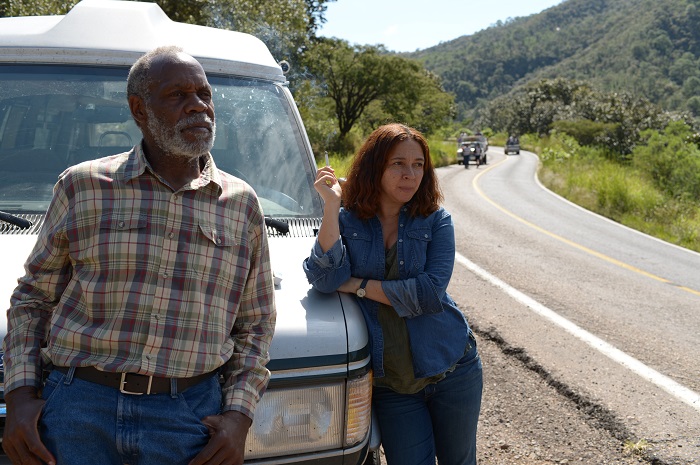
Fast forward to this year’s Sundance Film Festival, and Luna presented another Canana production, also set in the Mexican landscape. Mr. Pig, starring Danny Glover, is a much bigger feature production, funded by government money. Speaking at a panel discussion, Luna said, “Mexican law means that there is a certain amount of money that the government has to spend – you just have to do a cool presentation about it. This freedom comes out of a depressing reality that Mexico is a third world country, with the film industry having to be paid by the government to exist, but at the same time, those who have access to these funds are given freedom like no one else. When you’re shooting, you’re not hearing anyone’s voice but yours. Then you finish the film, and you go out, and it’s completely yours.”
There is still private investment, but a system of government funding is behind many films coming out of Latin America. As The Sydney Latin American Film Festival’s Gallego explains, “Now you see more films coming out, and that’s clearly a link with the government putting money in. For example, Venezuela was receiving big budgets, so a lot of bigger movies were coming out. Then in the last few years, the country was hit by a financial crisis; oil prices were down, so the government support is not there, and film production goes down. You can see the straight link. In my own country, Colombia, there’s huge money going into helping people fund film projects, so now you can see all these big productions coming out of Colombia, like the recent release, The Embrace Of The Serpent.”
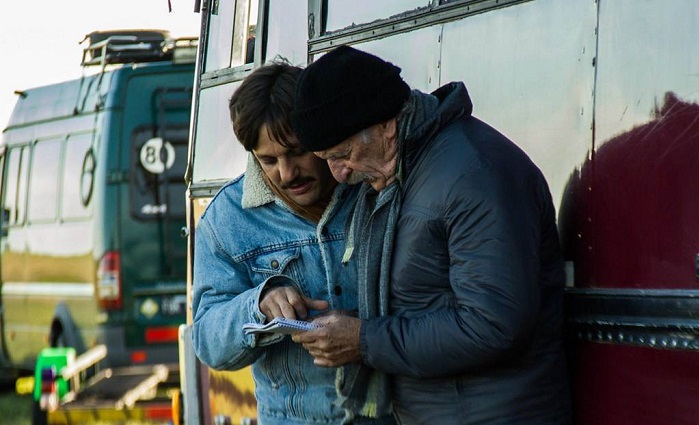
Argentinian director, Francisco Varone, talked to Sydney Levine of Indiewire about the funding for his film, Road To La Paz, which will be featured at The Sydney Latin American Film Festival. It’s a road movie starring Rodrigo De La Serna (who played Che Guevera’s friend, Alberto Granado, in The Motorcycle Diaries) in a beautifully naturalistic performance as a man converting to Islam during a trip from Buenos Aires in Argentina to La Paz in Bolivia. As is often the case for independent films, money and support came from a myriad of sources, starting with Argentina’s film production agency, INCAA, and including Argentina’s Concreto Films, Netherlands Film Fonds, Colombia’s FICCI PuertoLAB, and Doha. With the film completed, Varone’s strategy was to show it at festivals in Asia, Europe and north and South America, picking up a few awards and building public interest along the way before going on commercial release in Argentina where it played for several months. Varone’s journey to have his film seen is an example of the enormous stamina and commitment needed to make independent films, even with a great story and, as in Varone’s case, professional experience in advertising and scriptwriting.

The rest of the slate of eleven films at The Sydney Latin American Film Festival come from all over the continent, and include Jules And Dolores, an imagined story about the theft of the World Cup (Caito Ortiz, Brazil); Walking Distance, a poignant tale of an obese man finding connection (Alejandro Alvarez, Mexico) and Between Sea And Land (Carlos Del Castillo, Colombia), which won the Audience and Acting Awards at The Sundance Film Festival. Opening and closing night fiestas complete the Latino experience. Jury member, Mathieu Ravier, tells FilmInk, “I can’t point to any one film because I’m a jury member, but I’ve had a really good look at the programme now, and I’m incredibly happy to see all the films selected. I tend to look first and foremost for a personal vision from a filmmaker who is compelled to express what they need and then hopes that the audience will connect with it. The more regionally specific, the better. I’m not necessarily looking for something that I can easily relate to. I want to step into someone else’s shoes. Festivals are the last bastion of diversity in films, because they are run by incredibly passionate individuals. For example, the team at The Sydney Latin American Film Festival are all volunteers, and putting on a festival of this magnitude is incredibly hard work. I have a great admiration for people who are doing this for the sheer passion of wanting to share these stories with audiences. And what’s amazing about The Sydney Latin American Film Festival is that the proceeds that they make from the festival go to charities. So not only do they work for no money, but their proceeds help fund projects in Latin America!”
Those proceeds have run to $116,000 since The Sydney Latin American Film Festival began over a decade ago, and include projects assisting fair trade in Paraguay, rural poverty in Peru, and saving acreage in the Ecuador rainforest. In The Sydney Latin American Film Festival press release, festival programmer, Lidia Luna, states, “We live and breathe Latin American film and culture. We live in your community and will bring you the best films and events with the broadest spectrum throughout the year. But we still have a lot of work to do. Even in a multicultural city like Sydney, stereotypes abound about being Latino/a. The Sydney Latin American Film Festival has a responsibility to represent the diversity of stories, cultures, and voices coming from the vast Latin American continent.”
The Sydney Latin American Film Festival plays at Sydney’s Dendy Quays from September 8-12. For all ticketing, session, and venue information, head to the official site.
