



by Jamie Henry
Worth: $16.00
FilmInk rates movies out of $20 — the score indicates the amount we believe a ticket to the movie to be worth
Cast:
Sarah Karei, Norng'aruani Kipuker, Davina Leonard, Amos Leuka, Irungu Mutu, Boniface Saitabau
Intro:
… an angry, funny and surprisingly sharp film about ownership, identity, womanhood and the uncomfortable business of deciding what other people need.
A woman is given a bra when what she really wants is the land beneath her feet. It sounds ridiculous, and in Vincho Nchogu’s One Woman One Bra, it often is. But underneath the absurdity is an angry, funny and surprisingly sharp film about ownership, identity, womanhood and the uncomfortable business of deciding what other people need.
Star (Sarah Karei) is a 38-year-old woman living in the Kenyan village of Sayit. She is an orphan, unmarried and, most importantly, without the family connections that allow other villagers to establish their claim to the land they live on. When title deeds are distributed, Star suddenly finds herself in danger of losing her home.
It is a deceptively simple setup, but Nchogu uses it to explore much bigger questions. What makes somewhere your home? Is it blood, paperwork or simply having spent your life there? And what happens when a system built around ancestry has no place for someone who cannot prove where she came from?
Star’s search for answers takes an unexpected turn when she discovers a photograph of herself as a child on the cover of a book. She tracks down the photographer, hoping the image might provide a clue to her family history. When that fails, desperation leads her towards an NGO whose founder believes she can help the women of Sayit.
This is where the film’s title really starts to make sense.
The NGO’s solution to the women’s problems is, rather wonderfully, bras. Star becomes involved in a promotional campaign built around the slogan “One woman, one bra”, only for the scheme to create even more problems within her community.
It is funny because it is absurd, but Nchogu is also making a serious point about the difference between helping people and deciding what people need without actually listening to them. Having previously worked making promotional films for NGOs across East Africa, she has a particularly personal understanding of the machinery that she is satirising.
Yet One Woman One Bra never lets its politics overwhelm Star herself. Karei gives her a terrific mixture of determination, frustration and humour. She is not presented as a perfect victim. She makes mistakes, takes questionable decisions and sometimes contributes to the problems around her, which makes her struggle feel all the more human.
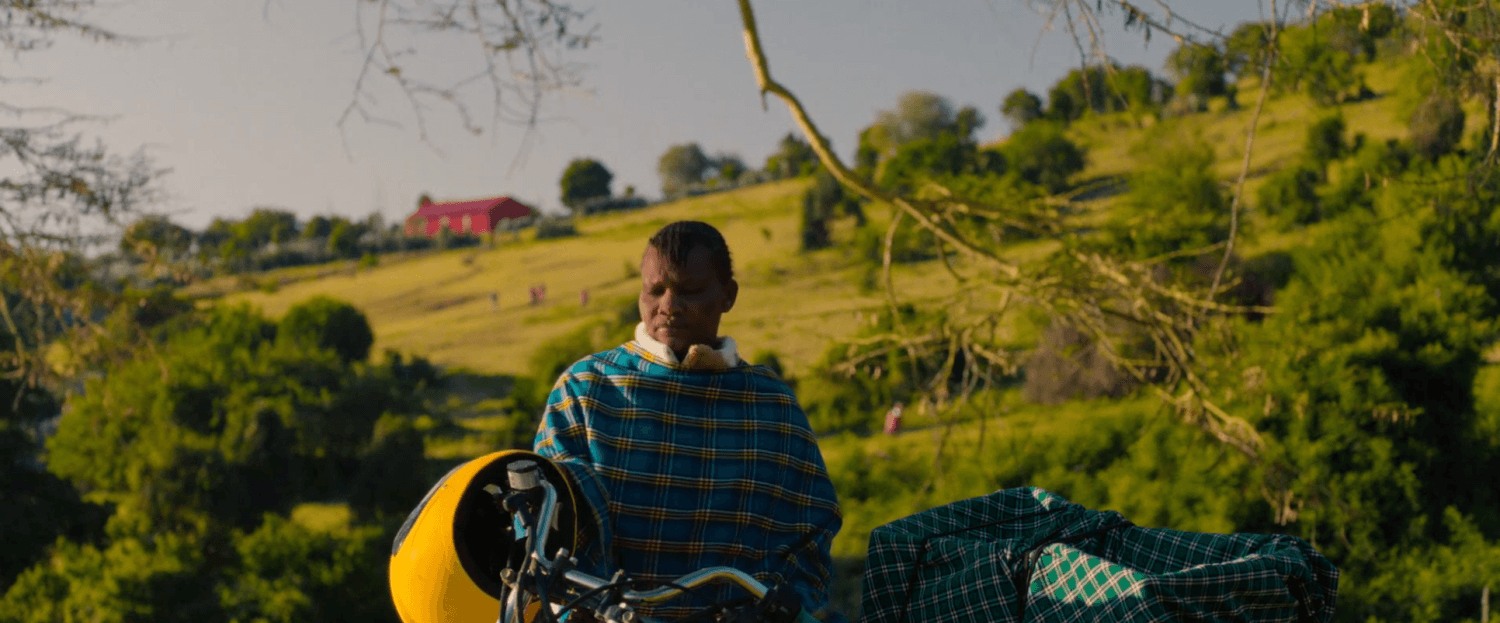
The film looks beautiful too. Cinematographer Muhammad Atta Ahmed makes striking use of the Kenyan landscape, with rolling countryside and vast open spaces giving Star’s increasingly desperate situation a sense of scale. The vivid colours of the traditional Maasai shawls worn by the women stand out against the greens and earthy tones of the landscape. There is a documentary-like quality to some of these images. Nchogu worked with women from a travelling theatre troupe alongside members of the local community, and the film often feels as though it is observing a real place rather than constructing anything artificial.
The film isn’t perfect. Its brisk running time means that some characters and ideas are introduced and moved on from quickly, while some performances from the largely non-professional cast have a rawness that can occasionally work against the drama. There is an energy to the filmmaking, though, and those rough edges are part of what gives the film its personality.
And then there is the land itself. Nchogu understands that it is more than a backdrop. It is the thing that Star is fighting for. When the film pauses to simply look at the hills, fields and changing light, they carry a different weight. We understand why losing this place would mean losing much more than a piece of property.
For a first feature, One Woman One Bra is a confident effort. It can be funny without making light of its subject and political without becoming preachy, while the Kenyan setting is captured with warmth and colour.
Most importantly, the film understands that the right to tell your own story is not so different from the right to call somewhere home. Sometimes the people offering to help simply need to listen first.
