



by Shahran Morshed
Worth: $18.00
FilmInk rates movies out of $20 — the score indicates the amount we believe a ticket to the movie to be worth
New York Film Festival
Cast:
Misael Saavedra, Catalina Saavedra
Intro:
The film’s slow pace is central to its achievement ...
In 2001, Lisandro Alonso made La Libertad, a film about a woodcutter whose life seemed to exist beyond the reach of the modern world. Misael Saavedra worked, ate, slept and returned to the forest, with little apparent need for anything beyond the boundaries of his daily existence. The film offered no dramatic escape from this routine, nor did it try to explain the man through the usual language of cinema. His life was simply there, unfolding before the camera. Twenty-five years later, Alonso returns to Misael in Double Freedom (La Libertad doble), but the passage of time has changed the meaning of that existence. Misael is older, his routine continues, and the solitude that once seemed like a form of independence now faces a new demand. His sister, Micaela, is being released from a psychiatric institution that can no longer afford to care for her. He must take her home. What follows is a quiet, often uncomfortable film about work, family, and the limits of a freedom that depends on being left alone.
The return to Misael carries a particular weight because Alonso does not treat the intervening years as an opportunity for a conventional sequel. There is no need to reconstruct his life or explain everything that has happened since the first film. His daily work remains the centre of his existence. He cuts trees, prepares wood and sells it to make a living. Alonso watches these activities with the patience that has always defined his cinema, allowing physical gestures and the passage of time to shape the film. Cutting wood is not simply a detail of Misael’s character; it is the work through which he maintains his independence. His body, his tools and the land around him form a world that appears self-sufficient. Yet the return also reveals what this apparent independence conceals. Misael may live far from the city, but he is not outside the economic system. He must sell what he produces, maintain his equipment and continue working to survive. The forest gives him space, not immunity from material necessity.
The history of Argentine cinema adds another dimension to this return. When La Libertad appeared in 2001, Argentina was experiencing the aftermath of a severe economic crisis, and a new generation of filmmakers was challenging the country’s established cinematic traditions. Alonso’s work belonged to a movement that found its subjects in ordinary lives, marginal figures and places rarely represented through conventional dramatic narratives. Rather than explaining social reality through dialogue or plot, these films often allowed it to emerge through bodies, landscapes and the rhythms of everyday life. The title La Libertad was already ambiguous. Was Misael free because he lived according to his own rules, or was his solitude simply the condition imposed on someone who had to depend entirely on his own labour? Double Freedom returns to this question after twenty-five years, when the idea of individual independence has acquired a more troubling meaning.
Micaela’s arrival brings the outside world into Misael’s carefully maintained existence. After fifteen years in psychiatric care, she is being sent home because the institution can no longer provide for her. The decision is presented with an almost bureaucratic calm. There is no dramatic announcement of a crisis, only the practical information that Misael must now deal with the consequences. This is where the film’s political force becomes clear. The institution’s failure is transferred to a family, and a man who has organised his life around solitude must suddenly become responsible for another person’s daily needs. He has to make room for his sister, consider the cost of her medication and work out how to accommodate her within a life that has never been built for two. The system’s absence becomes a physical reality inside his home.
The contemporary political situation in Argentina makes this development especially significant. Under Javier Milei’s government, austerity and cuts to public spending have intensified debates over healthcare, social protection and the responsibilities of the state. Alonso does not turn his film into a direct illustration of government policy, and its political meaning does not depend on references to particular politicians. Instead, he concentrates on what happens when public care fails at the level of everyday life. Micaela is not simply leaving an institution; she is being returned to a society that has not necessarily prepared a place for her. Misael is not being asked whether he can provide the support she needs. He is expected to do so because the institution can no longer continue. The distinction matters. Family care can be an expression of affection, but when it becomes the only alternative to a failed public system, it also exposes the unequal distribution of responsibility.
The title takes on a different meaning through the relationship between the siblings. Micaela’s release might appear to offer her freedom, but what kind of freedom is possible when the support that made her life manageable is withdrawn? For Misael, independence has always depended on controlling his own time and attending to his own needs. His sister’s presence changes that arrangement, introducing obligations he cannot ignore. Their circumstances create a conflict, but neither character is responsible for the conditions that have produced it. The film’s quiet tragedy lies in this fact: two people are left to negotiate the consequences of decisions made elsewhere. One is expected to provide care without necessarily having the means to do so; the other must begin a new life without knowing what that life will offer.
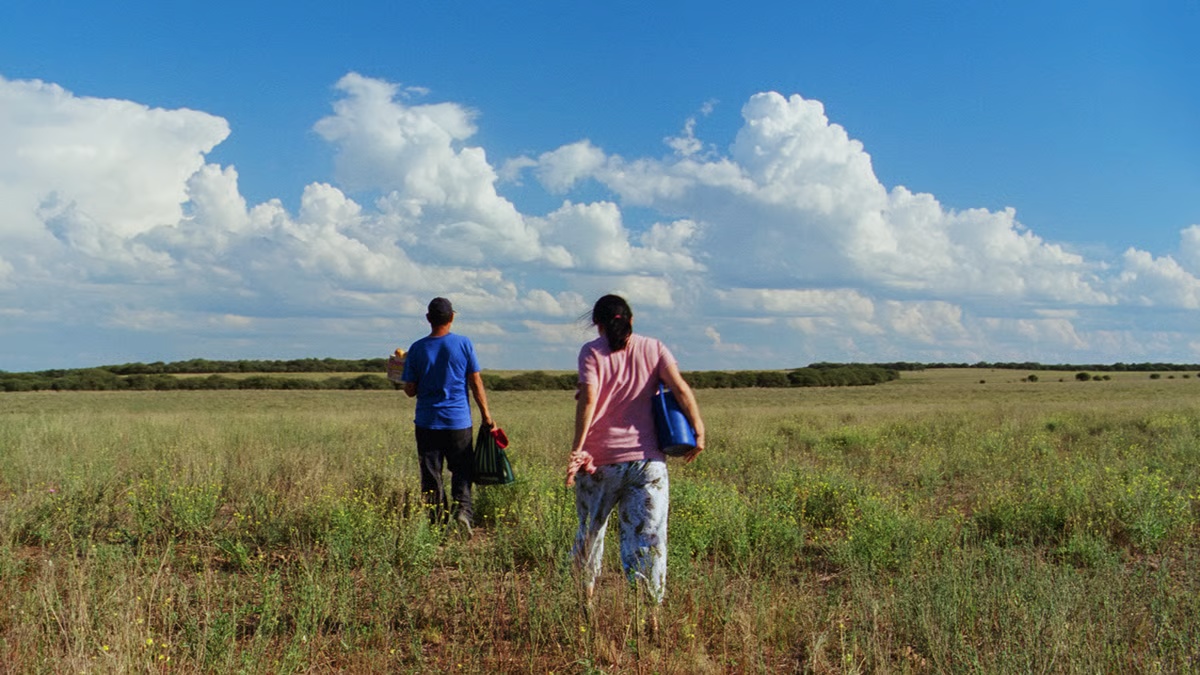
Alonso also avoids reducing Micaela to the role of a burden. She experiences the countryside differently from her brother, paying attention to objects, gestures and details that have become familiar to him through years of work. Misael understands his surroundings through practical knowledge. Micaela approaches them with a curiosity that unsettles his routine. Their different ways of inhabiting the same landscape gradually become one of the film’s most engaging elements. Yet it would be too easy to interpret her relationship with the natural world as a simple form of liberation. Her vulnerability remains real, and the film is less convincing whenever her difference threatens to become a poetic contrast to her brother’s rigid existence. Nature can offer space and freedom, but it cannot replace medical care, social support or the security that both characters lack.
The landscape, photographed on 35mm by Cobi Migliora, never becomes a romantic escape from these problems. The trees are part of Misael’s world, but they are also the material of his labour. He cuts them, prepares them and sells them. His relationship with the land is intimate, yet it is shaped by economic necessity. The film’s attention to work gives these images their weight. The body must keep moving, tools must be maintained, and time must be spent to earn a living. Even when Misael appears to be free from the demands of modern society, his independence rests on a fragile arrangement between his labour and the market. The passage of twenty-five years has not erased this dependence. If anything, it has made the limits of his freedom more visible.
The film’s slow pace is central to its achievement, although it occasionally leaves the relationship between the siblings at a distance. Alonso trusts the camera to observe rather than explain, and many of the strongest moments emerge from small changes in behaviour rather than from dramatic confrontations. The return to Misael’s routine also gives the film a sense of historical duration: we see a life continuing while the conditions around it change. At times, however, the contrast between his practical habits and Micaela’s unpredictable responses feels too carefully arranged. The film’s ideas become more apparent than the characters themselves, and some scenes seem to circle around a tension that never develops much further. Its restraint is valuable, but restraint alone cannot always deepen a relationship.
What remains is a film that understands freedom as something more complicated than the ability to live alone. Misael’s solitude has given him a measure of control over his life, but it has never made him entirely independent of the world. Micaela’s arrival exposes this contradiction without resolving it. He must make room for another person, while she must find a way to live outside an institution that has failed her. Their shared life may offer moments of tenderness and mutual recognition, but it cannot repair the larger structures that have abandoned them.
In Double Freedom, Alonso returns to the question that shaped his first film and finds that it has become harder to answer. The freedom to work, live and make one’s own choices means little when the basic conditions of survival remain uncertain. And when public institutions withdraw, the burden does not disappear; it falls on people who may have very little to spare. Misael and Micaela are not symbols in need of a solution. They are two people trying to live within circumstances that they did not choose. The film’s political argument lies in its attention to that simple fact. A society cannot claim to value freedom while leaving the vulnerable to depend entirely on private goodwill. Sometimes, the right to live independently depends on having somewhere to turn when independence is no longer enough.
