



by Jamie Henry
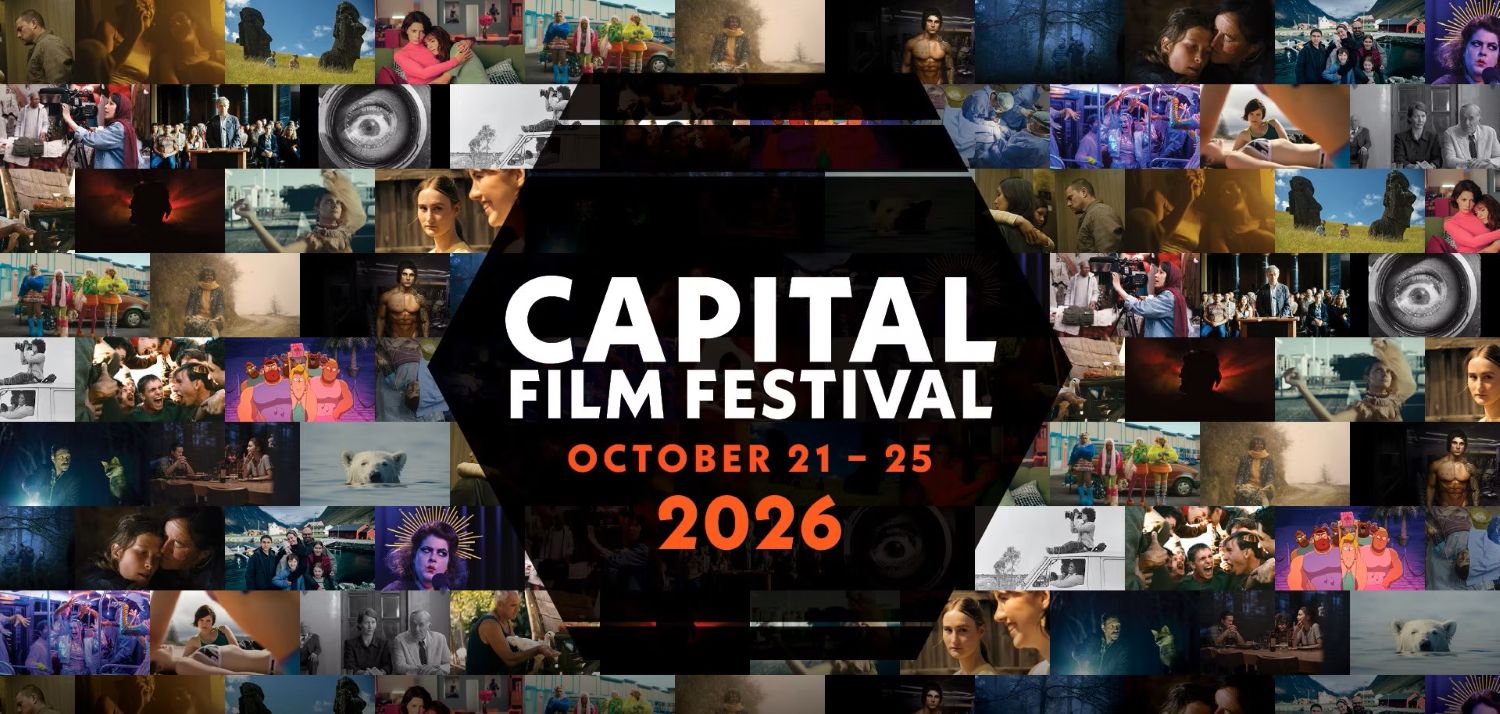
The Capital Film Festival will return to Canberra from 21–25 October, bringing five days of international and Australian cinema, ACT premieres, documentaries, filmmaker Q&As and industry events to the capital.
The 2026 program was unveiled at Dendy Cinemas Canberra on 28 September, with Festival Director Karina Libbey returning for her second year and the festival expanding beyond its founding home through a new partnership with the National Film and Sound Archive of Australia (NFSA).
Dendy remains at the heart of the festival, while the addition of the NFSA gives this year’s event a second Canberra screen venue and marks the first time the festival has partnered with one of Canberra’s iconic buildings.
“Returning for a second year is incredibly exciting for me, to have the opportunity to build on the strong foundations, partnerships and collaborations established in 2025 and take the festival even further,” said Libbey.
Libbey took audiences through the program at the launch, regularly stopping on films that had caught her attention or stayed with her. It is a varied line-up, moving from major international award winners to Australian films, documentaries, LGBTQIA+ stories, animation and shorts, with plenty in between.
One of the Australian highlights is The Fox, the debut feature from Australian writer-director Dario Russo. The film stars Jai Courtney and Emily Browning, with Olivia Colman voicing the titular fox and the late Sam Neill as a foul-mouthed magpie. Russo will also attend the festival screening for a Q&A.
The film brings together Australian comedy, fantasy and folklore, following fox catcher Nick as his already complicated life takes an increasingly strange turn.
International award winners make up a sizeable part of the line-up, with Fjord arriving in Canberra after taking home the Palme d’Or at Cannes. Directed by Cristian Mungiu and starring Sebastian Stan and Renate Reinsve, the film follows a Romanian-Norwegian family whose move to a Norwegian village brings cultural and political tensions to the surface.
Minotaur, directed by Andrey Zvyagintsev, took out the Grand Prix at Cannes and was one of the films that Libbey returned to during the launch, describing it as a powerful examination of moral ambiguity.
Then there is Fatherland, the latest film from Ida and Cold War director Paweł Pawlikowski, which won Best Director at Cannes. Shot in black and white, the 82-minute drama follows writer Thomas Mann and his daughter Erika as they travel through post-war Germany.
Josephine, which won both the Grand Jury Prize and Audience Award in the U.S. Dramatic Competition at Sundance, stars Channing Tatum and Gemma Chan. Beth de Araújo’s film follows eight-year-old Josephine after she witnesses a crime, exploring the way a child processes fear and trauma. It is a difficult film, but one that Libbey clearly believes audiences will take something from.
The Australian premiere of I Love Boosters brings filmmaker Boots Riley and star Demi Moore into the program, with the film turning its attention to consumer culture and taking things in decidedly unexpected directions.
There is plenty here for audiences looking for something outside the usual festival fare. Erupcja explores the volatile relationship between two old friends, while Jim Queen is an adult animated comedy built around a virus that turns gay people straight. Libbey described it as funny, rude and particularly well suited to a Saturday night screening.
New Zealand film Big Girls Don’t Cry explores queer adolescence, while Bitter Christmas comes from Spanish filmmaker Pedro Almodóvar and is presented as part of the festival’s LGBTQIA+ program.
Coward, from Belgian director Lukas Dhont, is another Cannes title, with its two lead actors sharing the festival’s Best Actor award. Set during World War I, the film follows two soldiers who find an escape from the surrounding brutality through a travelling theatre troupe.
Documentaries are another strong thread running through this year’s festival. Libbey was particularly enthusiastic about Whispers in the Woods, a film about the recording of rare albums, featuring a score by Warren Ellis.
To Hold a Mountain looks at hardship and resilience, while American Doctor follows doctors working in Gaza. Nuisance Bear heads to Churchill, Manitoba, examining the increasingly complicated relationship between polar bears and the people living alongside them.
Cycle of Love takes a very different path, following an Indian street artist whose life changes after an astrologer makes a prediction. After meeting a woman from Sweden, he buys a bicycle and sets out on a journey towards Sweden, with archival footage helping piece together the story.
The program also leaves room for films that are a little harder to put into a box. Australian documentary Whistle is among the more family-friendly selections and will screen on Saturday with director Christopher Nelius attending for a Q&A, while the short film program includes Our Choir Has Always Been Travelling, Focus, Downpour and 7 Reasons Why.
Industry events will run alongside the screenings, including Poster Boy, which revisits the rise and fall of early internet influencer Zyzz. The free screening will be followed by a panel discussion focused on ‘Storytelling for Change’.
Another Australian film included in the program is Boss Cat, the first feature film from Bus Stop Films, and which follows Sonja, a young woman born with Down syndrome, as she deals with the loss of her mother and discovers krump dancing. The film is part of the festival’s focus on emerging filmmakers and accessible filmmaking, with a Q&A and discussion around inclusive production also planned.
The expanded partnership with the NFSA adds another dimension to the festival this year. Capital Film Festival began at Dendy and has continued to grow since its launch, and the move into the Archive gives the festival another space in which to bring audiences together around cinema.
The Capital Film Festival runs from 21–25 October 2026 at Dendy Cinemas Canberra and the National Film and Sound Archive of Australia.
Tickets go on sale from 29 September 2026. Click here for more information.
