


by Jamie Henry
Worth: $17.00
FilmInk rates movies out of $20 — the score indicates the amount we believe a ticket to the movie to be worth
Cast:
Jay-Z, Rick Rubin
Intro:
For anyone interested in hip-hop, songwriting, or the strange process of turning a life into art, it is an intimate and genuinely fascinating watch.
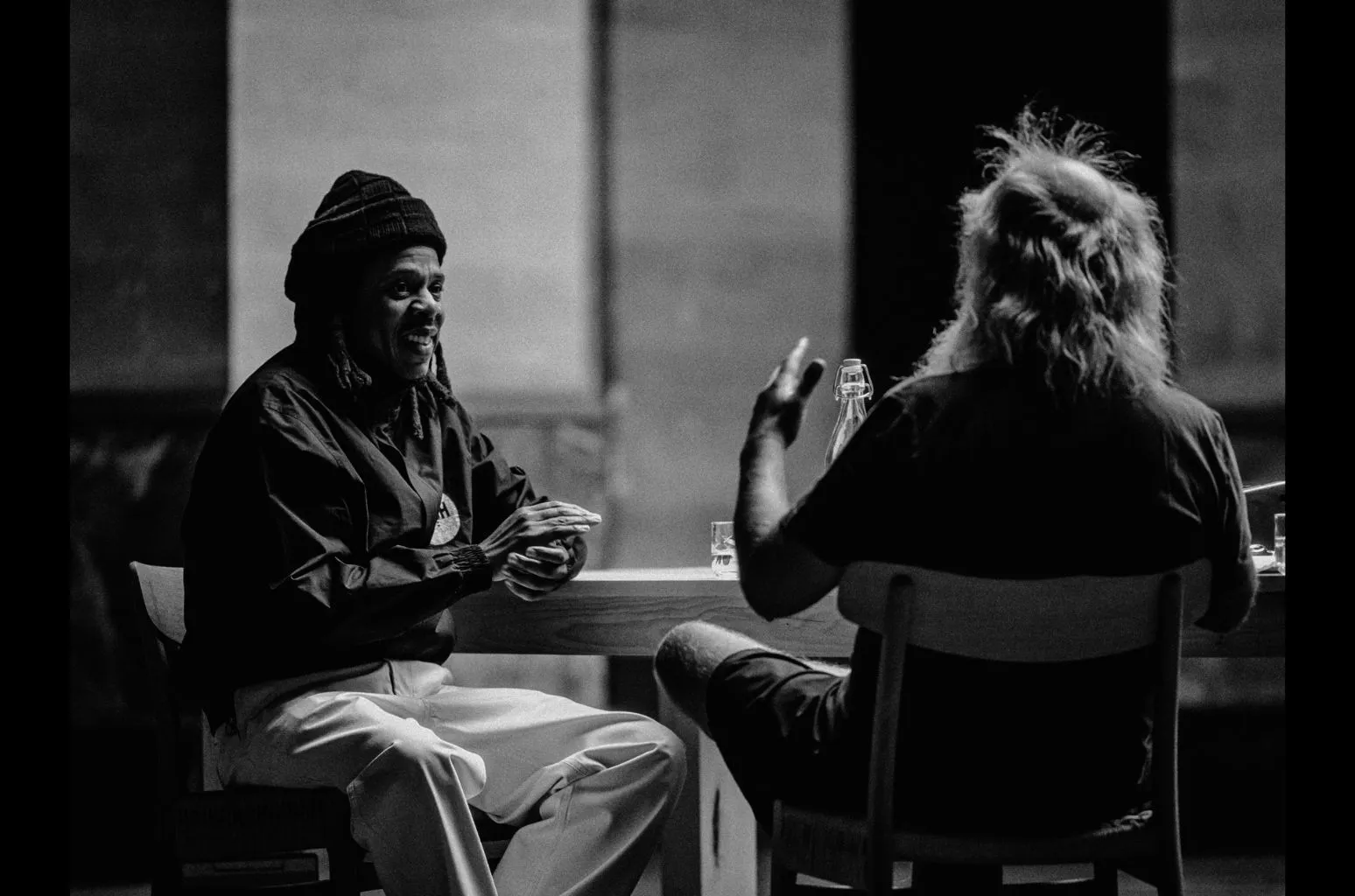
There is something wonderfully disarming about JAŸ-Z in 8. It does not feel like a conventional music documentary, nor does it particularly behave like a television interview. Instead, it feels like an invitation into the mind of one of hip-hop’s most significant figures, with storied music producer Rick Rubin quietly opening the door and allowing Jay-Z to wander through his own history.
It gets straight into it. Jay-Z is immediately immersed in his own work, surrounded by lyrics, memories, and moments from a career that has stretched across decades. There is almost no opportunity to look away. Words appear on screen — lines he wrote years ago suddenly given new weight as he reads, remembers, and reflects on them. It becomes a fascinating reminder of just how extraordinarily precise his writing can be.
Rubin is central to the experience. Calm, curious, and seemingly in no hurry, he creates an atmosphere in which Jay-Z can actually think. There is no sense of Rubin trying to extract a headline or manufacture a revelation. Instead, he listens. His questions are often simple, but they allow Jay-Z to go somewhere more interesting. The two also share a history of collaboration, which gives their conversations an added familiarity. Rubin knows the music, but more importantly, he understands the creative process behind it.
That intimacy is what makes the series so compelling. Jay-Z discusses success, failure, ambition, business, creativity, and the circumstances that shaped his writing. Yet the most interesting moments often come when he is simply considering his own words. Hearing him revisit lyrics with the benefit of hindsight makes the songs feel strangely alive again.
There is also something almost therapeutic about watching an artist confront his own archive. Jay-Z has spent much of his career turning personal experience into mythology, but here the mythology is stripped back. The songs remain enormous, but the man behind them is allowed to be reflective, occasionally amused, and sometimes surprisingly vulnerable.
The presentation is stylish without being showy. Nothing feels excessively produced or desperate to convince the audience that what they are watching is important. The material speaks for itself. The lyrics, archival footage, and conversation are carefully arranged, but there is enough space between them to allow the viewer to make their own connections.
Ultimately, JAŸ-Z in 8 feels less like a documentary about Jay-Z than a carefully curated examination of a life’s work. It is not simply asking what he achieved, but why the words mattered in the first place.
And perhaps that is its greatest achievement. By giving Jay-Z the space to revisit his own history, the series makes that history feel fresh again. For anyone interested in hip-hop, songwriting, or the strange process of turning a life into art, it is an intimate and genuinely fascinating watch.
