


by Liam Heitmann-Ryce-LeMercier
Australian film and television has a celebrated history of unique voices and experiences from within the LGBTQ+ community. Recent television hits include gay swimming drama Barracuda and last year’s coming-of-age series Invisible Boys, while big-screen classics are almost too numerous to list. Head On, Holding the Man, and Walking on Water, just to name a few.
Moreover, the coming months will see two major LGBTQ+ film festivals screen both local and internation cinema, Sydney’s Queer Screen Film Fest (September 2-8), and the Melbourne Queer Film Festival (November 13-22).
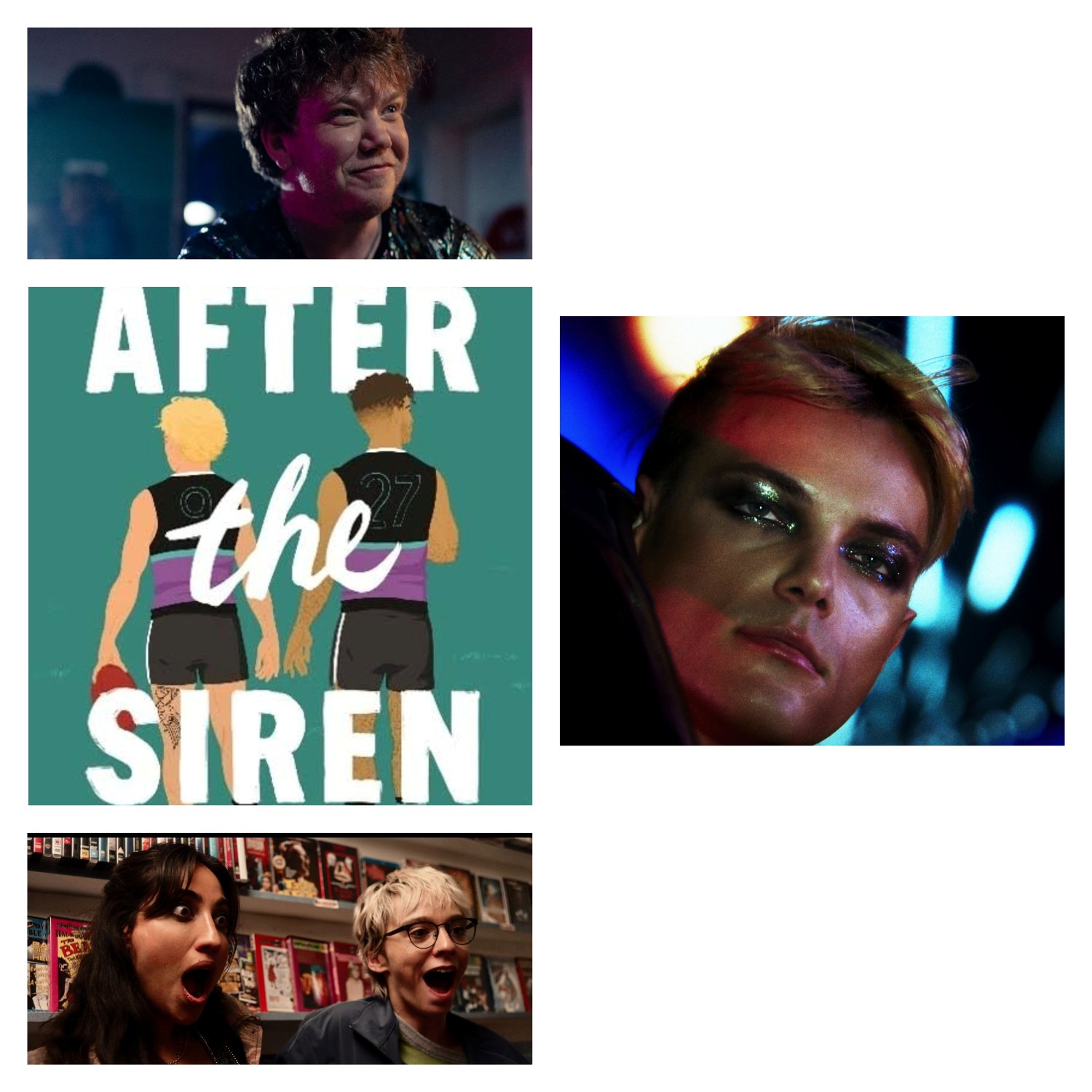
In the future, Aussie viewers will have another series to enjoy on the small screen, as Melbourne-based author Darcy Green’s AFL love story After the Siren has been optioned by Mad Ones Films.
Green maintains that the role of queer representation onscreen is to equip those in the LBGTQ+ community with the language and ideas to explain their own identity. “When I was a child and teenager,” Green says, “there were very few representations of queerness on screen – particularly in mainstream cinema and TV – and the majority of those depictions were negative or ended in tragedy. What does it say to queer people if we’re not present at all, or only allowed to serve a tragic narrative?
“Queer people and communities deserve to see our stories and experiences on screen. As we have more diverse stories on screen, there is less pressure on any individual story or character to bear the weight of representation and expectation. We get to exist on screen authentically,” Green proposes. “Messily, joyfully, imperfectly.”
Antoine, 38, a web developer based in Melbourne, recognises the impact of recent TV shows and films in normalising the presence of queer characters. The sexual orientation of a queer character in older screen stories, he suggests, would have been the driving plot point of the narrative.
“I think that is a great shift,” he says. “It’s a sign that society has moved on and us queers are not seen as a curiosity. We’re finally blending in.”
Antoine points to the current slate of queer-centric narratives on the small screen, citing the 2022 Heartbreak High and its assembly of mostly queer characters. HBO’s recent Sex and the City spin-off, And Just Like That…, is another example.
“Miranda is now pansexual, and Charlotte’s kids are either non-binary or polyamorous,” Antoine says. “Straight characters, often monogamous, represent traditional, outdated values.”
Evan, 53, an education strategy advisor, recalls Australia’s significant output of queer filmmaking over the decades. Perhaps the most significant – and obvious – touchpoint is 1994’s The Adventures of Priscilla, Queen of the Desert, which anchored its plot around three queer men while offering a respectful portrayal of trans identity, in the midst of the AIDS crisis.
“Priscillia was important,” Evan says, “as everyone was seeing it, talking about it, and – importantly – enjoying it. Everyone seemed to be seeing it multiple times, and it showed a positive trans storyline and romance, without any big cliché storyline.”
Evan underlines the film’s important role in introducing the concept of the ‘found family’, an experience common for many queer people who do not find acceptance within their own immediate family. Priscilla’s overarching sense of camaraderie and concern for one another’s wellbeing is one of its most valuable, long-lasting qualities.
“[The three leads] teased each other and mocked each other,” Evan says, “but also fought for each other. It was refreshing, also, that there was no debate about a gay man being an appropriate father; and how beautifully and easily a child will just accept people for who people are. The son was so cool with his dad being a gay drag queen that it surprised the adults.”
Another key title in Australia’s history of LGBTQ+ stories is, also from 1994, The Sum of Us, based on the play by David Stevens and featuring an early leading role from Russell Crowe. The two main characters in the story, comfortable in their sexuality, occupy unusually non-stereotypical roles: one a plumber, and the other a horticulturist.
“The dad was a very ‘Aussie battler’ type, who totally accepted and loved his son,” Evan says, “which made a refreshing change from movies where the father kicks the queer child out of the home. The setting was standard suburbia and, for me, real places I can recognise. This grounded the stories in the real world, presenting what might be achievable and what we might truly experience.”
Catch the wave by seeing Body Blow, Goran Stolevski’s Shorts Package, Our Effed Up World and Sweet Milk Lake at the Queer Screen Film Festival
