


by Cain Noble-Davies
Worth: $17.00
FilmInk rates movies out of $20 — the score indicates the amount we believe a ticket to the movie to be worth
Cast:
Jeremy Irons (narrator)
Intro:
… an oddball guided tour through a filmic graveyard, where movie posters are the headstones.
Overlayed onto the opening credits for Last Movies is a cacophony of studio logo and themes from Universal, MGM, etc., layered on top of each other. It sounds like a noise wall take on a Neil Cicierega shitpost mash-up, like the ending moments of Alanis, and for an artist with such a propensity for art prank shenanigans as Stanley Schtinter, it prologues his latest work with a certain mischievous irreverence for the studio system. But for the rest of the running time, while tempered with a morbid sense of humour, there is an immense sense of awe for film art and its impact on our lives… and deaths.
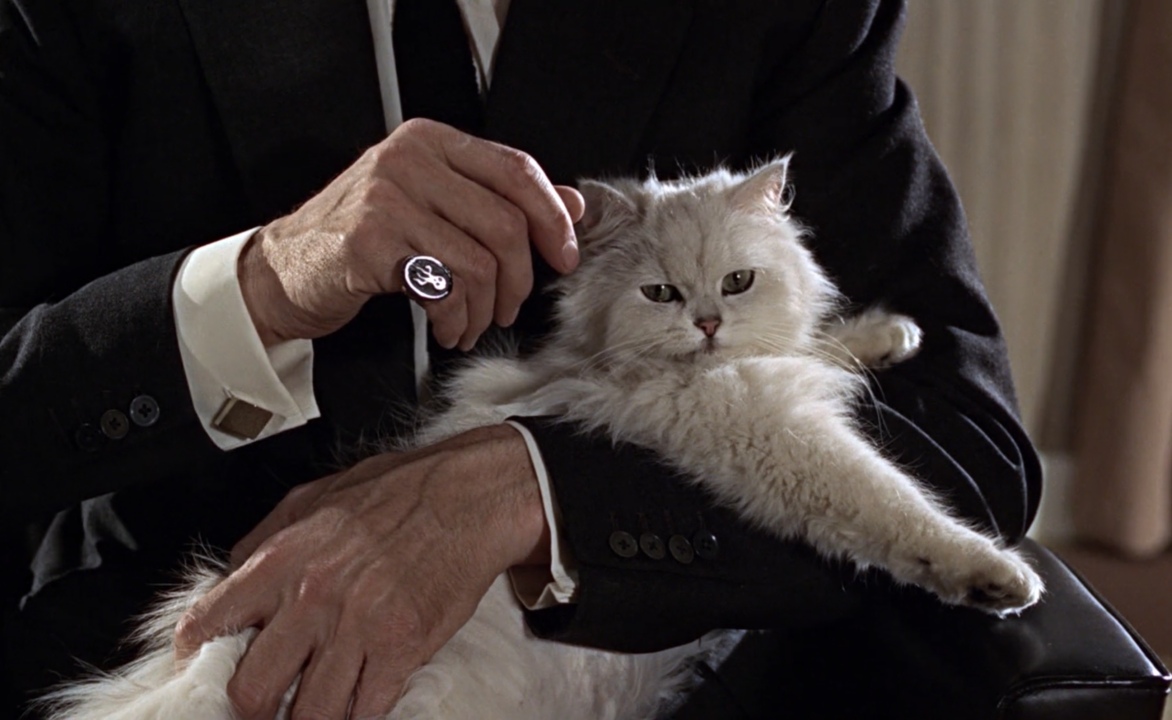
Guided by the dulcet narration of Jeremy Irons, Last Movies reads like a necromantic game of cinematic telephone, sprawling across film history through the lens of the final films watched before the passing of key figures, from Franz Kafka to John F. Kennedy to Jean-Luc Godard and beyond. The editing daisy-chains between Chaplin and Kubrick, between Campion and Van Sant, between Bond and Elvis Presley, weaving a dense tapestry that offers some pareidolic musings on what, if any, connections can be made between subjects, but nevertheless makes some striking statements about cinema as it relates to celebrity, politics, and the nature of sensationalised violence.
It approaches the topic of film history through an emphatically niche lens, delivered with the kind of conviction that makes it enthralling from end to end. Schtinter’s cheekiness, both as craftsman and as narration writer, helps keep things from becoming morose (as opposed to morbid), employing sly jabs like a blown-up image of Mickey Mouse right as Irons says “demonic”, and even commenting on certain film watching habits within the White House, like JFK’s apparent disinterest in Alain Resnaïs, and Trump’s first in-house viewing as President being Finding Dory. It also mentions the latter’s favourite film being Casablanca, although it would have been interesting if it included this interesting 2002 interview where he instead chose Citizen Kane.
Given Schtinter’s dalliances with politics, between his pandemic era ‘Dear John’ project requesting favourite art pieces from British politicians, and his audacious word-for-word re-enactment of Princess Diana’s funeral complete with mariachi band, it fits that the film gets particularly pointed where it intersects with cinema. John Dillinger (described in-film as “anti-careerist”) is a nexus point for this mode of discussion, linking his influence on cinema, his death following a screening of Manhattan Melodrama (shown through its dramatisation in Michael Mann’s Public Enemies), and the later establishment of the Hayes Code as a continuous link. “The movie had the class to hide the execution. The state would thrive in its reproduction. His body was paraded, defiled. Dillinger had become cinema.”
Its perspective on Hollywood and global cinema as containing the trappings of a death cult (even without factoring Heaven’s Gate and its Trekkie-isms into the equation) is reminiscent of David Robert Mitchell’s Under the Silver Lake, but without its nihilistic outlook. The cutting together of Dillinger re-enactments in particular suggests a kind of filmed purgatory, an image left to forever relive its death, and its depictions of assassination either coincidentally framed by films or, in the case of Boris Vian, directly because of it, but the bulk mainly focuses on living reflections in art and artistic reflections in life. It turns the simple act of viewing into something profound, with media as mile markers designating life’s winding, and eventually tragic, path.
Last Movies is an oddball guided tour through a filmic graveyard, where movie posters are the headstones. It carries an intoxicating, inescapable fascination that is the mark of a great documentary, weaving through the history of Hollywood and elsewhere with Wellesian fervour as it aligns fallen stars into a map of constellations. There are notes of conspiratorial thinking peppered throughout, but its perspective on the relationship between art and death is thoroughly grounded and makes for a healthy, neutral alternative to the more sensationalised approach that often bleeds into marketing for certain pictures (The Dark Knight, anyone?). To slightly butcher a quote from Stan Lee: “Every film is someone’s first”. So, it only makes sense to honour those that were the last, and what an impactful and awe-inspiring tribute this is.
