

by Cain Noble-Davies
Worth: $19.00
FilmInk rates movies out of $20 — the score indicates the amount we believe a ticket to the movie to be worth
Cast:
Angga Yunanda, Maudy Ayunda, Anggun, Chicco Kurniawan, Bryan Domani
Intro:
… looks and sounds like the most intense physical meditation that the human body is capable of processing.
Taken at face value, Levitating has the makings of a typical dance movie. Flautist Bayu (Angga Yunanda) competes in a competition to raise enough funds to stop his family home from being bought out by property developers. He practices his craft, interacts with fellow competitors, and struggles with his family who say that he’s wasting his time helping people become possessed by animal spirits. Again, only when taken at face value.
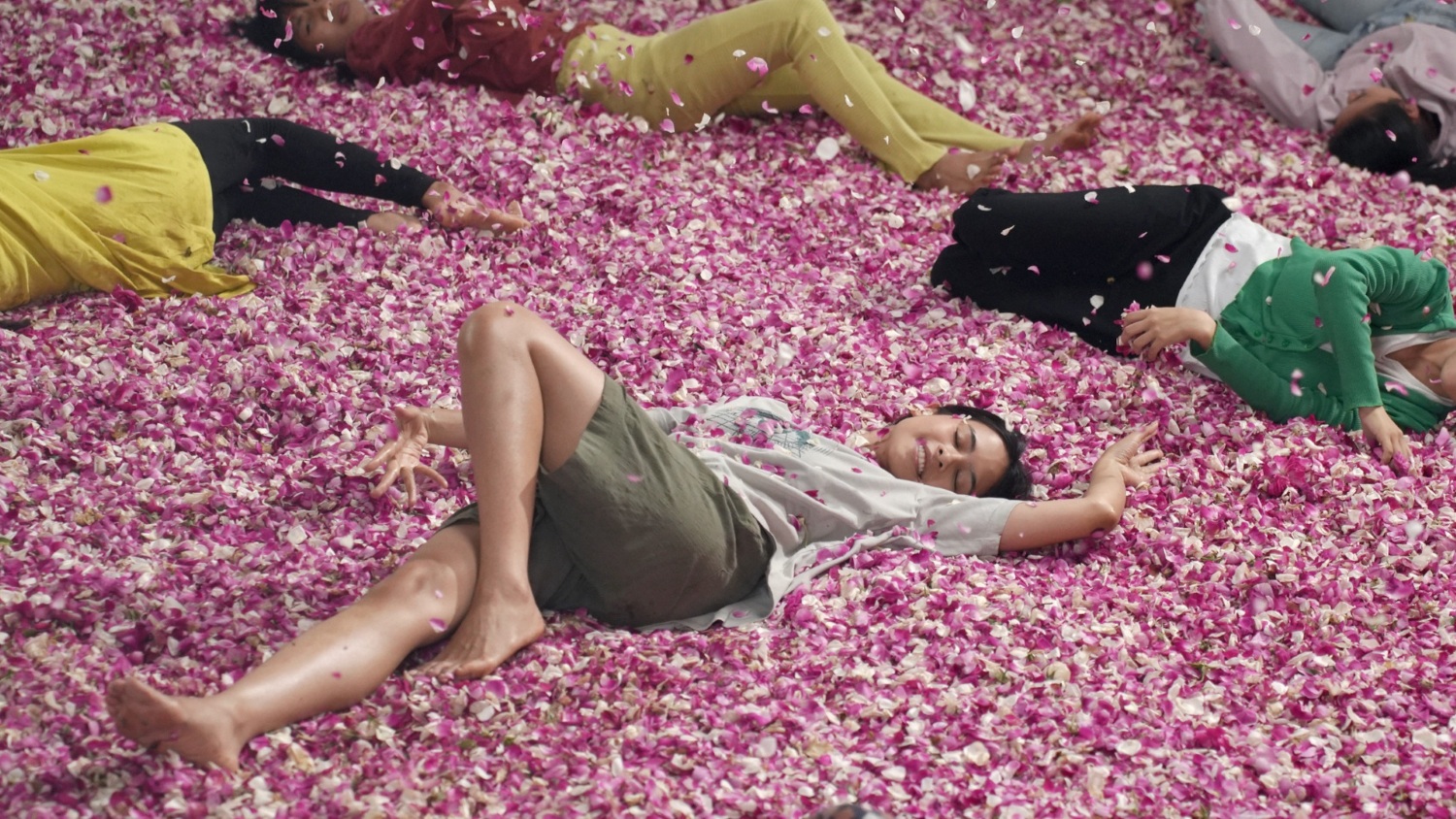
The plentiful scenes showing the Indonesian musical dance tradition of wuru can feel repetitive at times, but only in the way that a holistic chant held for minutes on end can feel repetitive; that’s the point. Right from the opening scene, with writhing bodies against a spiritual plane of flower petals and raining nectar, the more metaphysical bent to director Wregas Bhanuteja’s visual presentation allows for the audience to enter in a serene mental state, like the people on-screen. This becomes supercharged by Yennu Ariendra’s soundtrack, combining traditional gamelan instrumentation, modern electronica, flutes, harmonicas, an electric guitar, and Anggun’s mesmerising vocals to create an overwhelming wash of thrilling song. This film both looks and sounds like the most intense physical meditation that the human body is capable of processing.
As Bayu becomes further obsessed with using his musical chops as part of these larger ceremonies, the film’s perspective on this level of spiritual power is at once cautious and liberating. For Western audiences, this kind of possession might conjure thoughts of Satanic Panic-era hysteria about demons in the music them kids always listen to, or even viral videos of churches exorcising spirits from convulsing congregants. But more pointedly, it focuses on what that power is used for, and the ways in which it can harm the self as much as it can uplift the masses. Bayu’s determination to make it as a shaman muso leads him down a dark path, where the promise and questing for power is measured against what he seeks to lose, framing the need to grow beyond the trappings of the mortal realm by highlighting that one’s family, and even one’s own self, could be that which needs to be left behind.
But more so than regional spirituality, Leviating’s interior depiction of Bayu’s mental space makes for some of the film’s most potent sequences. Much like how sport or dance movies are often more about personal growth and achievement than the specific activity being highlighted, his arc involves him overcoming traumas and the aspects of his life that he cannot change, but hold him back from what he can change. Bayu’s socioeconomic background is a key factor here, with fasting as part of the wuru and, to hear Bayu tell it, a way of reclaiming his family’s recurring struggles with food as a path to inner peace; turning a matter of circumstance into a matter of choice.
As dark and disturbing as the film’s perspective can get on becoming one with nature, to the point of potentially giving the audience a lifelong ick for leeches and seahorses, its ultimate stance of radical compassion and forgiveness works as its own form of transcendental meditation, irrespective of the greater magical realism at play. When Bayu reaches his true moment of enlightenment, of fully recognising the potential he wields, the film shows how the healing of all begins with the healing of self.
Levitating is aptly named (locally, at least) for the sensation of watching it in full. It is an emotionally and psychologically intense audiovisual ritual, rejecting the chaotic noise of the industrialised world and finding serenity and joy in nature. The visuals, from the earthen tones of the village of Latas to the surreal splendour of the hallucination realms, meld and gyrate with the absolutely fantastic soundtrack and physical performances to create the feeling that any good dancefloor should: a space where one can let go of their inhibitions and live in the moment. Sit down, get comfortable, and leave your body for a couple hours; it’ll do you good.
