


by James Mottram
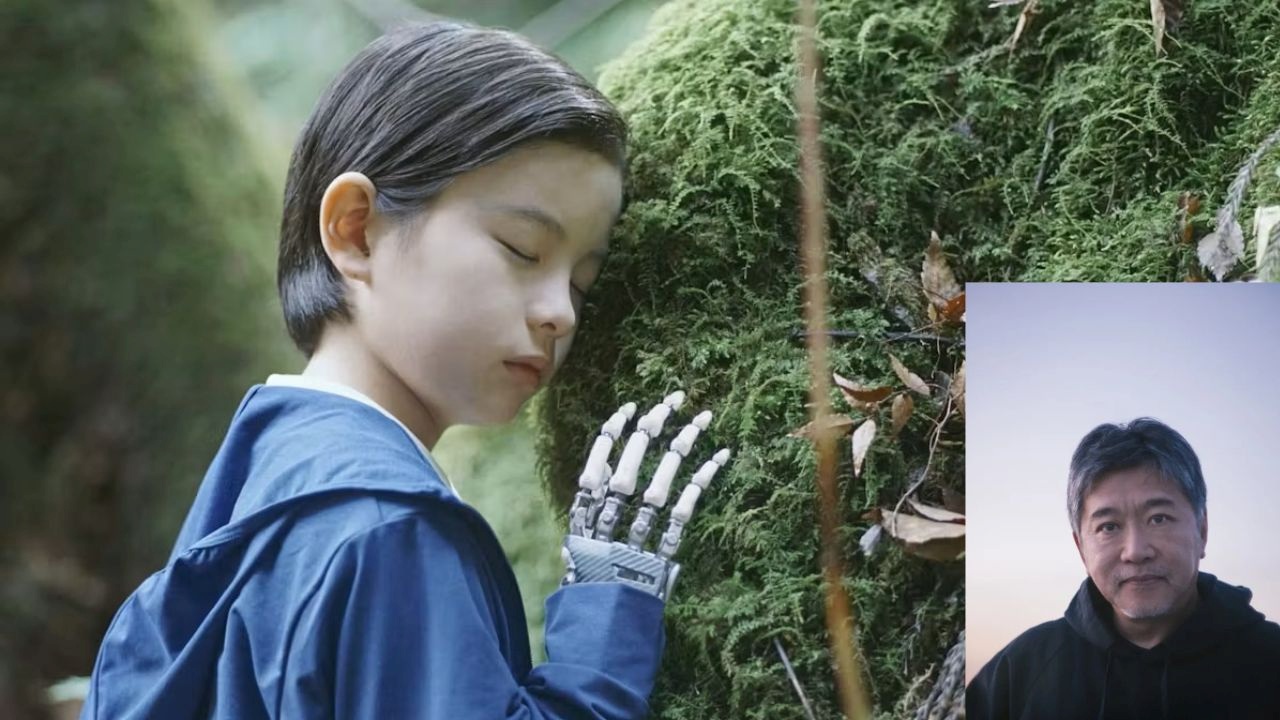
It’s midway through the 2026 Cannes Film Festival when FilmInk meets Japanese filmmaker Hirokazu Kore-eda. The festival has been good to him in the past; he won the Jury prize for 2013’s Like Father, Like Son and, five years later, the prestigious Palme d’Or for Shoplifters, lifting him into the upper echelons of world cinema. Now the 64-year-old is back in competition with what might be considered the timeliest film of his career, Sheep in the Box, a domestic drama that touches on the subject of artificial intelligence.
Sitting alongside his translator, there is a long pause as Kore-eda contemplates the question of the hour: what is your opinion on AI as it relates to filmmaking? It is, of course, the topic on everyone’s lips right now, especially in the entertainment industry. The rise of Tilly Norwood, the AI-created ‘actress’, led to understandable concern that the profession of acting is under threat, existential or otherwise. After what feels like an eternity, he smiles. “I want to direct people who enjoy acting.”
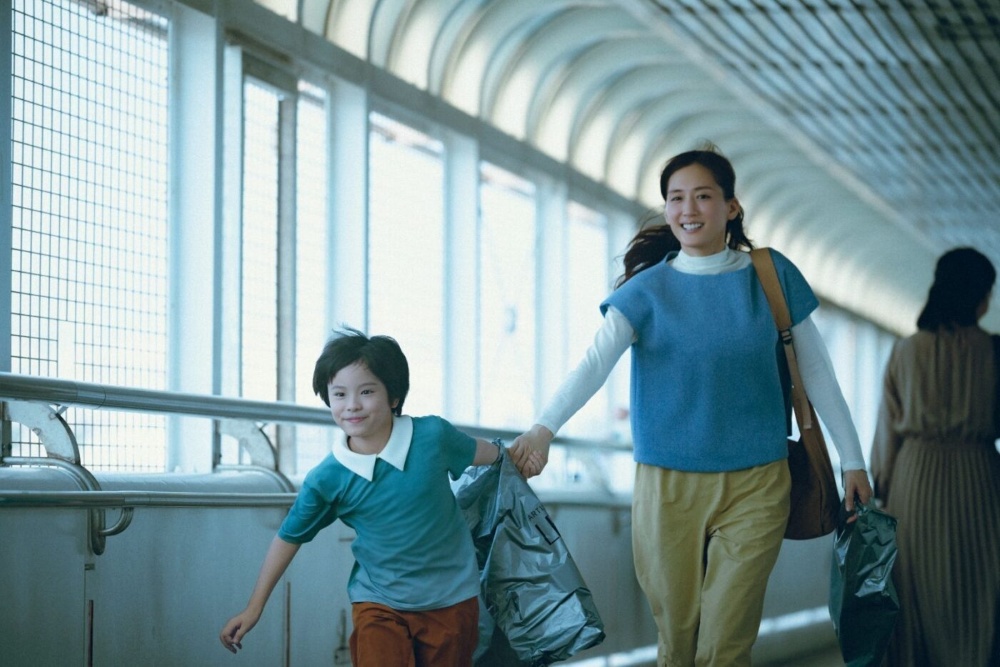
While Sheep in the Box isn’t set around the world of moviemaking, it perhaps offers a glimpse of the future. The story revolves around architect Otone (Haruka Ayase) and her husband Kensuke (Daigo Yamamoto), a construction worker who built the chic-looking home they live in, designed by his wife. Two years earlier, tragedy befell the couple when their 7-year-old son Kakeru died. But this is an age where advanced robotics allows for the creation of a synthetic substitute.
As we quickly discover, Otone and Kensuke were approached by representatives of REbirth, a company that specialises in replacing deceased loved ones with AI replicas. When the film begins, a drone drops off a package – a heart-shaped box that contains their introduction into this brave (or is it foolhardy?) new world. Kensuke even makes jokes, referencing Tamagotchis, the toy that became a craze, allowing users to nurture and care for a digital ‘pet’.
The sleek tech looks like something Apple might design, though Kore-eda thinks otherwise. “It’s a bit dodgy, deliberately so,” he says. “When the mother opens it and the father says that looks like a cult or something, she’s actually really moved and crying.” While it’s not sinister, it’s undeniably a commercial enterprise that is playing on people’s pain. “The videos that you see in the company headquarters, they’re all deliberately slightly dodgy.”
When REbirth offers a free trial, the grief-stricken Otone is keen to participate and bring her son back, even while her husband is more sceptical. Gradually, however, they grow to love this lifelike child, with Kore-eda preferring to avoid the usual AI doom-and-gloom. “Through having brought that humanoid into their lives, they’ve also regained that ability to imagine, which is a positive thing,” he says.
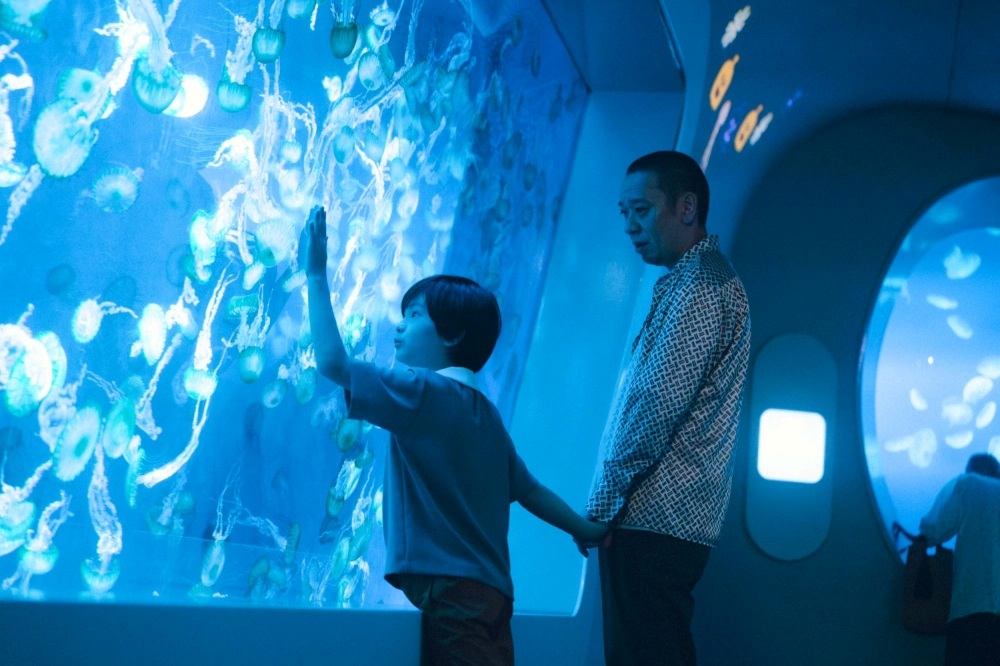
With the title alluding to The Little Prince, the novella by Antoine de Saint Exupéry about a young prince who visits different planets, the film will inevitably draw comparisons to Steven Spielberg’s A.I. Artificial Intelligence, which tackled similar topics. Primarily, Kore-eda wanted to explore the essence of humanity through AI. “What is it that makes us human at the end of the day?” he says. “I think, for now at least, one of the things that differentiates us from AI is imagination.”
It’s just one of the myriad themes that Sheep in the Box toys with, as it delves into feelings that will be all too familiar to students of Kore-eda’s movies. “Something that I’ve been told is that quite often in my films, there is a critical child’s eye view that is giving a critique on adult society, and at the same time, there is a dead character’s point of view looking at society from the outside. With this one, the two have been combined because the dead character is a child, so it’s a variation on the theme.”
As the couple’s robot boy becomes more sentient, he inevitably seeks independence from his ‘parents’, just as a normal child eventually does. That he does so in nature is one of the film’s more original ideas. “This vision of a better world, a coexistence between technology and nature, doesn’t feature humans because the generative AI we see has outgrown humans and it’s chosen not to live with them,” explains Kore-eda. “It’s chosen to go off and live with the trees, so probably a complicated feeling for humans as the ones who are not chosen.”
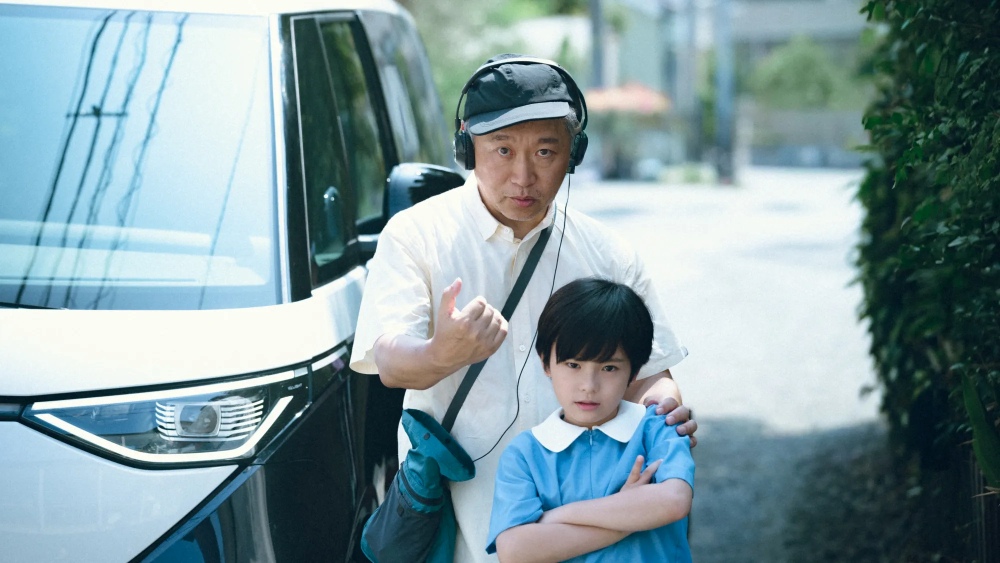
Of course, the film may be dealing with the artificial but the emotions at its core are very real, something Kore-eda had to consider when he was casting. While Japanese star Daigo comes from the background of TV comedy, Ayase – who previously played the lead in Kore-eda’s 2015 film Our Little Sister – is from the world of drama. So, what made him select such diametrically opposed actors? “Because it’s very difficult and interesting to fuse two different materials like wood and glass,” he says. “But don’t you think those materials came together into a beautiful house?”
As for Rimu Kuwaki, who plays the son, how did Kore-eda approach directing him to play an artificial humanoid? “There are moments when he looks like a robot, but there are moments when human children look like they’ve somehow surpassed the adults around them. And in those moments, it’s not down to him. It’s up to the mother because she’s the one who feels like he’s seen inside of her heart, and surely that can’t be human. So, I didn’t tell him at any point to act less human. Although I did tell him sometimes not to blink for seven seconds or to stand still.”
While Kore-eda, like so many other filmmakers, is suspicious of AI in filmmaking, we wonder if he’d ever consider adopting a robot child, should the technology come to pass. “I don’t think I would. I think if it were possible to bring people back in this way, I thought about what would I do, and I think I would err more towards my parents because I feel like I didn’t have closure in my relationship with my dad particularly, so I might use it to bring my dad back, but at the same time, if I were to do that, we’d probably just fall out again. So maybe better not.”
Sheep in the Box screens at the Melbourne International Film Festival on August 16 and 23 August 2026, click here for tix.
