



by James Mottram
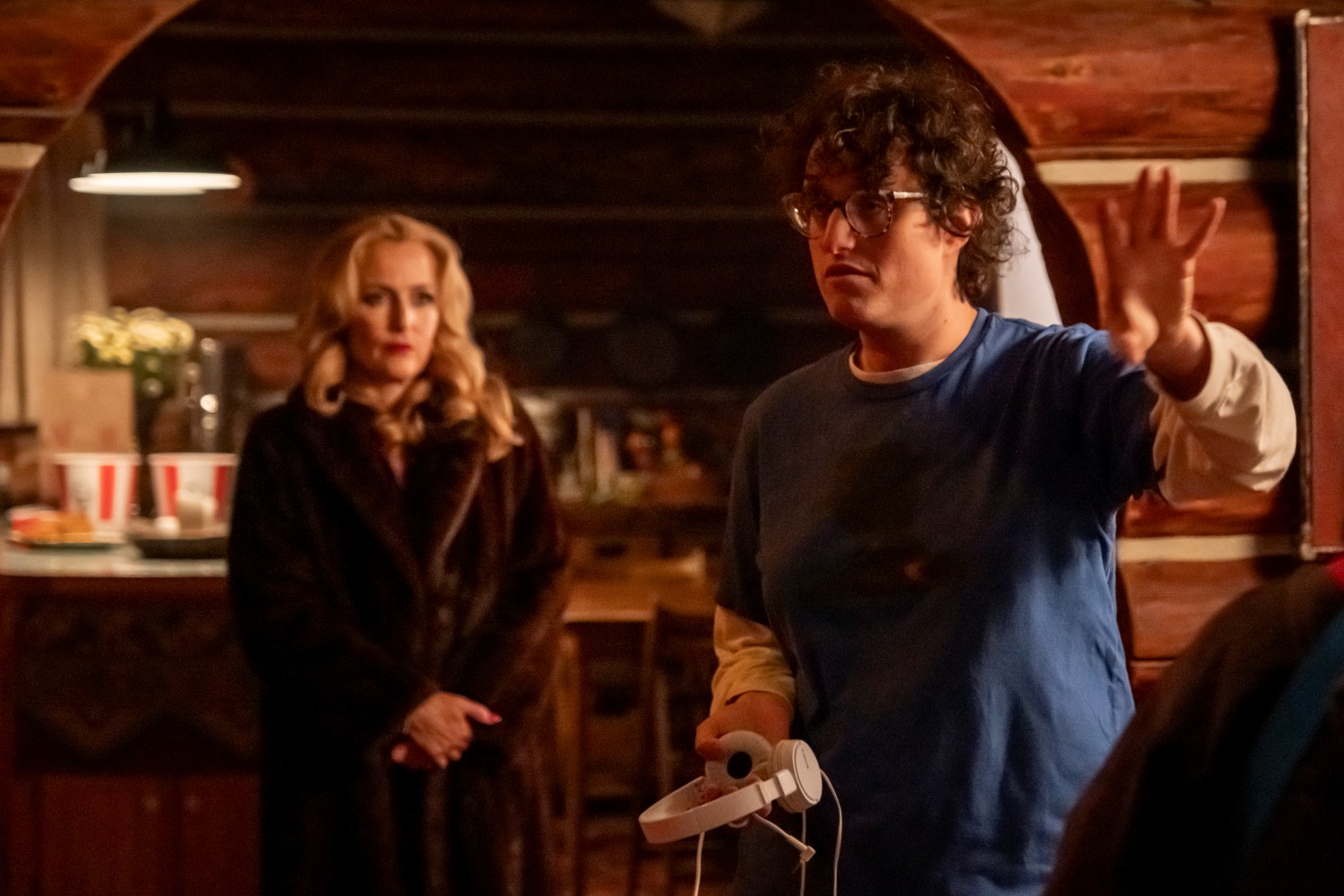
Jane Schoenbrun is a director who plunders their personal history more than most. The filmmaker – who is transfeminine, non-binary and uses they/them pronouns – leapt to fame with their second film, 2024’s coming-of-age psychodrama I Saw The TV Glow. “That movie was written in the direct aftermath of this insane, reality-warping, overwhelming experience of being a 32 or 33 year-old, and telling everyone in your life – your family, your wife – that you’re about to transition,” Schoenbrun explains, when FilmInk meets them at this year’s Cannes Film Festival.
Now Schoenbrun is back with what might be considered, thematically at least, a follow-up. Teenage Sex and Death at Camp Miasma stars Hacks’ Hannah Einbinder as Kris, a Queer filmmaker hired to reboot a (fictional) once-popular slasher franchise: ‘Camp Miasma’. To do so, she insists on hiring Billy Presley (Gillian Anderson), the reclusive star of the original Camp Miasma movie. Visiting her rural hideaway, the very spot where the first movie was filmed, Kris finds herself drawn to Billy, experiencing a true sexual awakening.
Schoenbrun suggests that, deep down, a significant theme of the film is learning to enjoy sex after transition. “It’s a movie about the strange and beautiful and tender process of – for the first time in your life, in your thirties – experiencing what most people do in their teen years, which is coming into a body and a sexuality and an identity as an adult that feels right and feels good and feels like yourself – specifically because you’ve lived a lot of years as the opposite.”
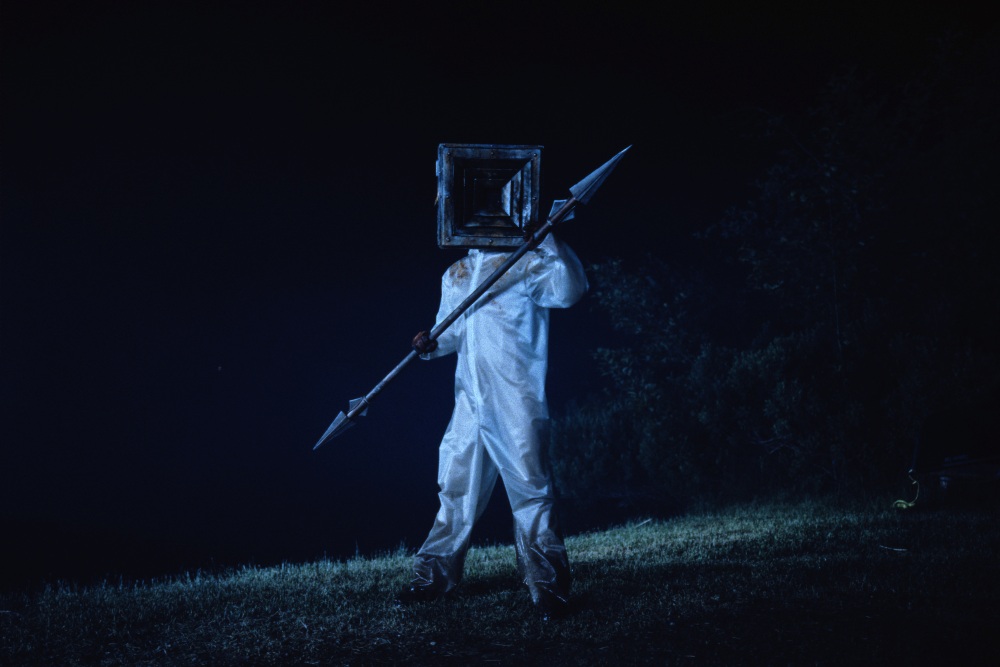
While it sounds heavy, Schoenbrun wraps its themes inside an uproarious tribute to the era of 1980s video nasties. Here, the Camp Miasma killer – seen in clips from the franchise and dubbed ‘Little Death’ – wears a giant HVAC vent on their head. “I knew I need a slasher killer. He should be fun … he should be action figure-able in some way,” says Schoenbrun, who had a flash of inspiration over Christmas 2023 during the “birthing” of the script. “I was staring up at the ceiling. I couldn’t sleep and there was the vent and I was like ‘There it is’.”
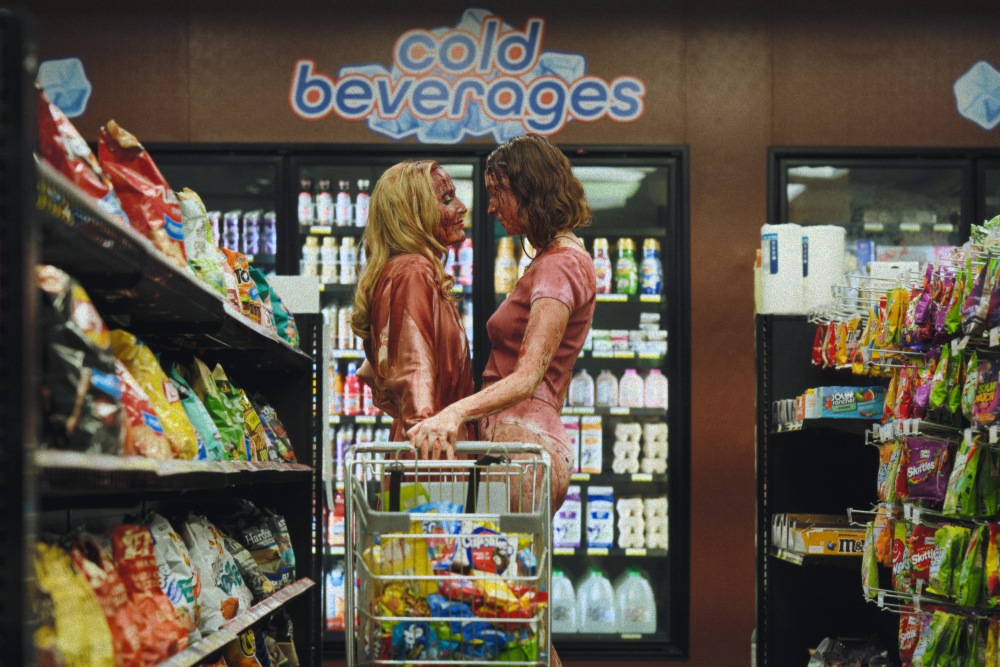
The film is gloriously over-the-top – with geysers of blood spurting everywhere, especially in a climactic murderous spree cut to Counting Crows’ hit ‘Long December’. But as Schoenbrun tackles the remake culture, Teenage Sex and Death at Camp Miasma emerges also as a witty satire on modern-day Hollywood. “It’s about a filmmaker trying to make something personal in a commercial capitalist hellscape system,” says Schoebrun, alluding to the hilarious Zoom call scene as Kris chats with various executives – including a brilliant Dylan Baker – who attempt to water down the project.
So, is this a reflection of Schoenbrun’s own experiences? “Certainly, certainly,” they nod. “This was my second movie made for real money … millions of dollars. It’s not coming from other trans people, I’ll tell you that. It’s coming from white men in Hollywood, and that money … a lot of it is dark money. All of it is certainly dirty money, and I know what I’m doing by taking it, and I know then the equation of art versus commerce that needs to get played out there, and I like it. It’s kind of perverse to like it, but I really do like doing battle in some way and trying to slip bombs into culture.”
Ever since Schoenbrun’s 2021 debut, We’re All Going to the World’s Fair premiered at the Sundance Film Festival, the filmmaker has wrestled with the notion of working with the Hollywood hegemony. “It’s the only way to reach people. But I would be lying if I said that it didn’t have a bad effect on my emotional health. I built a life for myself that I love, and I really keep Hollywood at arm’s length. And they kind of like it. They like to be dom’d a little bit.”
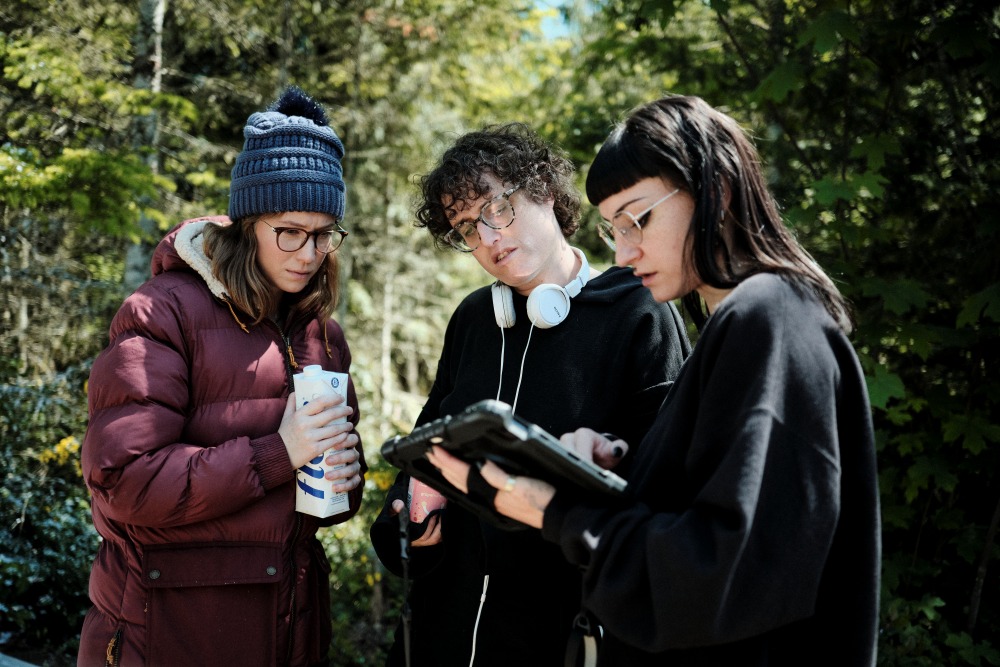
While they may be reluctant to fully engage with the studio system, Schoenbrun – who was raised in Ardsley, in Westchester County, New York – grew up on Hollywood-made horror. They recall one week, with a friend, watching every Nightmare on Elm Street movie. More than that, equipped with a camcorder, Schoenbrun recruited their friends to come over after school and act in amateur slasher films. “I literally made slasher movies. I have a copy of one of them, and it will never be released!” Not even as a bonus feature on a Blu-ray? “I repeat, it will never be released.”
Schoenbrun was hooked on this high-camp bloodletting from a young age. “There’s a festivity to horror that I think is very specific to the genre, and so many of those ‘80s slasher movies have this festivity element where there’s a sense of humour, or it’s really not even trying to scare you. It’s like a ritual that you’re participating in: I’m gonna get my candy, I’m gonna get my friends, and we’re just gonna hoot and holler when there’s the most outrageous death possible, the most blood possible, and that’s very joyful.”
Yet, as Schoenbrun points out, there is a transphobic side to horror – “the lineage of the trans monster” – from Norman Bates in Psycho to Buffalo Bill in The Silence of the Lambs and the killer in the more obscure 1983 film Sleepaway Camp, which Camp Miasma alludes to. At the time Schoenbrun first watched these movies, they didn’t yet think of themselves as a trans person. “Maybe that was because my primary association with transness was, ‘Oh, that means you’re like the guy who tucks his penis back and does that freaky dance [as Buffalo Bill does in Silence of the Lambs].”
Schoenbrun, as a 9-year-old, also spent time on forums, posting fan fiction for paranormal show The X-Files, while their “most prized possession” was an X-Files novelization of an episode. “My love of genre and my nerdiness or whatever, has always been a cousin or a bedfellow to my queerness and my otherness, and the work is about trying to learn to love that.” Certainly, I Saw The TV Glow touched on this, as two adolescents become obsessed by a psychedelic 1990s television show that gets suddenly cancelled.
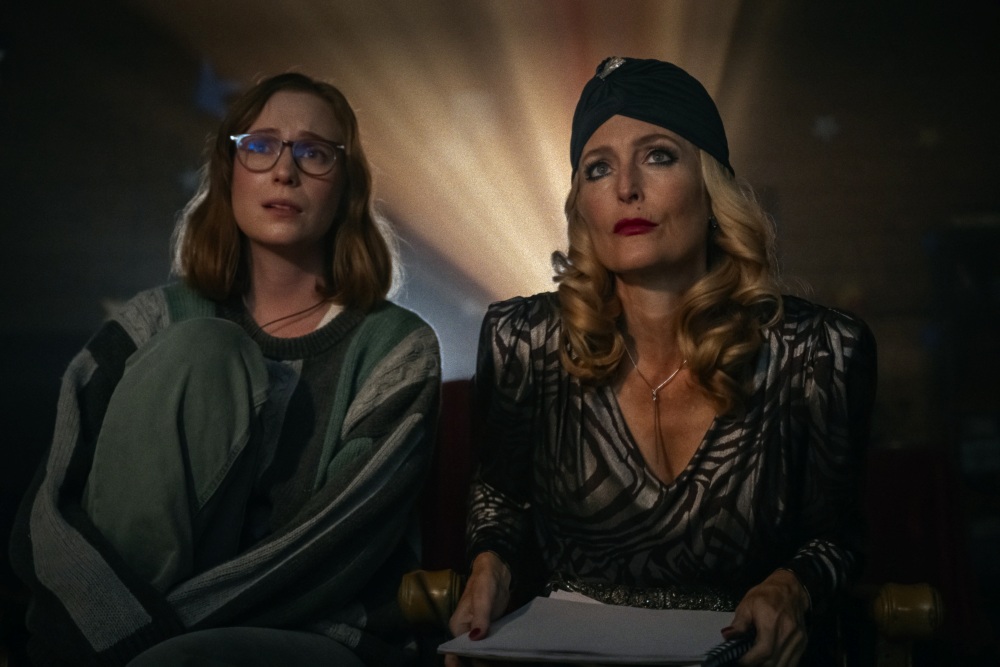
All of which meant Schoenbrun was boiling over with excitement to work with X-Files star Gillian Anderson. “The first time I met her, it was so surreal. We were on Zoom, and it just felt like I was meeting someone who I knew from way back. But then very quickly, I just got to know her. And she’s such a serious artist. She’s not Dana Scully! She’s a full and rich and tender human being. Collaborating with her – like many of the collaborations that I’ve been lucky to have in my career so far – was just an emotionally rich human experience.”
While Schoenbrun seems delighted by the response to the film – which is landing in cinemas at the height of the US summer, aptly enough – they strike a note of caution, especially coming from a divided America. “I’m making a pretty joyful queer movie at a time when I and other trans people and many, many others are under a lot of attack and really feeling the strain of ‘Holy shit, am I gonna need to leave my country?’ But making a movie that’s sexy and imbued with queer joy and desire … that’s not against the grain. That’s an act of defiance unto itself.”
Teenage Sex and Death in Camp Miasma opens in cinemas 6 August 2026
